How Much Is Adam Worth?
Last updated: May 8, 2026
Quick Facts
- Methodology
- comparable analysis
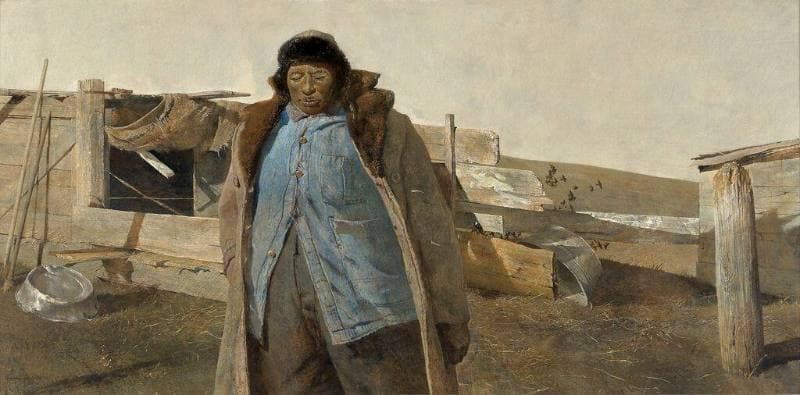
Andrew Wyeth’s Adam (1963), tempera on panel (24¼ × 48 in.), is held by the Brandywine River Museum and has no public auction record. Based on medium, dimensions and institutional provenance, a hypothetical market range if sold is approximately $250,000–$1,000,000, contingent on condition, documentation and exhibition/publication history.
Valuation Analysis
Valuation summary: Andrew Wyeth’s "Adam" (1963), tempera on panel, 24¼ × 48 in., is held in the Brandywine River Museum (accession 2002.9; Gift of Anson McC. Beard, Jr.) and therefore has no public auction record [1]. Taking into account medium, dimensions, and confirmed museum provenance, a hypothetical market range if the work were to be offered for sale is approximately $250,000–$1,000,000. Final placement within that band will be driven by condition, documentation, and any exhibition or publication history that can be produced.
This opinion uses comparable analysis as the primary methodology. The Wyeth market is highly tiered: top tempera panels from major collections have realized multi‑million dollar results (Day Dream, $23.29M) while studies, works on paper and lesser known panels more commonly trade in the high five to low six figure bands [2]. I scaled comparables by four principal factors—medium (tempera on panel carries a significant premium over paper), dimensions (24¼ × 48 in. positions the work as larger than many studies), provenance (museum accession raises buyer confidence), and art‑historical prominence (Adam is not identified in popular series such as Helga or Christina). Applying that scaling to recent results produces the reported range.
Provenance and institutional status: Brandywine’s accession is a clear strength — institutional ownership confirms attribution, indicates curatorial vetting, and typically enhances market confidence. At the same time, museum ownership means there is no sale record to anchor value and the work is effectively off‑market. If Brandywine or donor records document exhibition history, publications, or catalogue raisonné entry, the painting could advance toward the top of the range; absent that, the market will treat it as a quality but not iconic Wyeth panel, limiting competitive bidding to a narrower collector base.
Condition and technical considerations: tempera on panel can be very durable when structurally sound, but it is sensitive to panel movement and previous restoration. A complete in‑hand conservation assessment — noting surface integrity, craquelure, retouching, panel flatness, and any past interventions — is required to finalize value. A painting in excellent original condition could realize a premium within the range; significant conservation requirements would materially reduce final price and marketability.
Sale strategy and practical next steps: If the objective is a market sale, a specialist pre‑sale consultation with a major auction house or a private treaty route to institutional buyers is recommended. For insurance or academic valuation, obtain a conservator’s report and request provenance documentation from Brandywine. The $250k–$1M band is conservative and market‑tested; with added publication, exhibition history, or exemplary condition, the work could achieve a higher result within the broader Wyeth panel market.
Key Valuation Factors
Art Historical Significance
Medium ImpactAndrew Wyeth occupies a central place in mid‑20th century American realism, admired for his tempera technique, restrained palette and psychological portraiture. 'Adam' (1963) dates from Wyeth’s mature period when he produced many intimate portraits and rural narratives, but it is not a widely cited or iconic image in secondary literature compared with Christina’s World or the Helga series. The sitter, Adam Johnson, is documented in the Brandywine accession which affirms context and subject identification. Therefore the painting’s art‑historical importance is moderate: it is a solid example of Wyeth’s portraiture but currently lacks the exhibition and publication profile necessary to elevate it to a high‑impact, market‑driving work.
Provenance / Exhibition History
High ImpactProvenance is a primary value driver. 'Adam' benefits substantially from institutional provenance: the Brandywine River Museum accession (2002.9; Gift of Anson McC. Beard, Jr.) confirms ownership history and curatorial acceptance, significantly reducing attribution risk and increasing buyer confidence [1]. However, institutional holding also means the work has not circulated in the commercial market and therefore lacks a sale record to benchmark price. Additional provenance such as exhibition loans, catalogue entries, donor correspondence, or catalogue raisonné citation would materially increase marketability and likely push the work toward the upper end of the estimate. Absence of this documentation keeps buyer interest more selective.
Condition & Medium
High ImpactCondition and medium are high‑impact determinants for Wyeth temperas. Tempera on panel, when original and well conserved, commands premiums because Wyeth’s surface handling and subtle texturing are central to his aesthetic. Key condition issues include panel flatness and stability, craquelure patterning, evidence of inpainting or overpaint, and any structural repairs to the panel. Without an in‑hand conservator’s report and high‑resolution imaging, the estimate must remain provisional. If the panel exhibits an original, stable surface with minimal restoration, the painting could realize the top half of the band. Significant structural or cosmetic interventions would diminish buyer interest and reduce achievable price.
Comparable Auction Results / Market Position
High ImpactComparable auction data define the Wyeth market spectrum. Iconic tempera panels have sold for multi‑million dollar sums (e.g., Day Dream at $23.29M), while smaller studies and works on paper commonly realize high five to low six figures [2]. Mid‑career temperas with sound provenance often occupy the mid‑market panel bracket—several hundred thousand to low seven figures—depending on size, subject prominence and condition. Because 'Adam' is museum‑held and not publicly sold, valuation requires interpolation from these comparables, adjusting downward for lower public profile and upward for strong institutional provenance.
Market Demand / Liquidity
Medium ImpactWyeth enjoys a dedicated collector base, but demand is concentrated on a relatively small set of signature images and exceptionally preserved panels. Liquidity for a non‑iconic panel is moderate: a well‑documented, well‑conserved 'Adam' would attract regional museums, American‑art collectors and specialist dealers, but competitive bidding and targeted marketing are necessary to achieve top value. Deaccession from a museum is uncommon; private treaty sales or institution‑to‑institution transactions are more realistic pathways. The medium impact rating reflects steady interest but selective buyer depth.
Sale History
Adam has never been sold at public auction.
Andrew Wyeth's Market
Andrew Wyeth (1917–2009) is one of the most commercially significant American realists of the 20th century. His tempera panels and watercolors command robust demand among institutional and private collectors, particularly for iconic images and works with strong provenance. The artist’s auction record ($23.29M for Day Dream in 2022) demonstrates peak market strength, while a broader cohort of works trades in the high five to low seven figure range depending on medium, size and documentation. Collectors and institutions place a premium on condition, exhibition history and catalogue raisonné inclusion; those attributes disproportionately affect realized prices.
Comparable Sales
Day Dream
Andrew Wyeth
Artist's auction-record sale (Paul G. Allen collection) — sets the market ceiling for major Wyeth figure/tempera/watercolor works; useful as an upper‑end benchmark even though it differs in date/series from Adam.
$23.3M
2022, Christie's New York
~$24.9M adjusted
Ericksons
Andrew Wyeth
High seven‑figure tempera panel from 1973 — demonstrates strong demand for mature Wyeth tempera works and helps define the upper‑market tier for panel paintings.
$10.3M
2007, Christie's New York
~$14.5M adjusted
Above the Narrows
Andrew Wyeth
Seven‑figure Wyeth panel sale representing the upper‑mid market for significant non‑iconic works; useful for scaling Adam's potential if condition/provenance are strong.
$6.9M
2009, Christie's New York
~$9.3M adjusted
Blue Day
Andrew Wyeth
Smaller watercolor/works‑on‑paper sale in the low six‑figures — illustrates the lower/mid market for studies and works on paper and helps set a floor for less prominent Wyeth pieces.
$164K
2023, Christie's New York
~$170K adjusted
Current Market Trends
Demand for blue‑chip 20th century American artists, including Wyeth, has remained durable with headline sales reinforcing scarcity premiums for museum‑quality panels. Since 2020, selective high‑value results have buoyed market confidence, while mid‑market activity is steady but sensitive to macroeconomic shifts. Collectors increasingly prioritize clear provenance, exhibition pedigree and sound conservation; these attributes determine whether a Wyeth panel attracts competitive bidding. For 'Adam,' current conditions favor well‑documented, well‑conserved works marketed through major houses or specialist dealers; without those elements the buyer pool is narrower and price sensitivity increases.