How Much Is Maidenhair Worth?
Last updated: May 8, 2026
Quick Facts
- Methodology
- comparable analysis
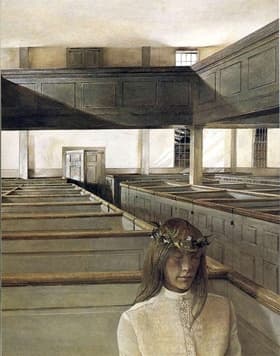
Based on documented Wyeth/Foundation provenance and market comparables for tempera on panel works, Maidenhair (1974) is estimated at $500,000–$2,500,000 at public auction. Final placement within that band depends principally on size, condition, cataloguing/literature, and whether the Wyeth Foundation furnishes formal provenance and exhibition history.
Valuation Analysis
Valuation conclusion: Taking into account Andrew Wyeth’s strong secondary market for tempera on panel, the work’s documented presence in Wyeth/Foundation records, and auction anchors for comparable mid‑career temperas, I estimate Maidenhair (1974) at $500,000–$2,500,000 if offered publicly with Foundation provenance and in sound condition. This band is a working auction range predicated on standard sale conditions and comparable results for Wyeth temperas.
Provenance and documentation matter: Brandywine/Wyeth Foundation materials list Maidenhair and related studies, which strengthens provenance and supports a higher market ceiling if the Foundation verifies ownership/loan/transfer history [1][2]. Works retained in an artist’s foundation or estate often command a premium versus unattributed private‑collection deaccessioning because buyers prize documented chain of title and institutional association [1].
Comparable market anchors: The market ceiling for Wyeth temperas is set by high‑profile multi‑million sales (for example, Day Dream at Christie’s, $23.29M) while substantial, well‑provenanced mid‑career temperas commonly clear the mid‑six‑figure to low‑seven‑figure band depending on scale and importance [3][4][5]. Maidenhair does not appear in general literature as one of Wyeth’s iconic masterworks; therefore, absent extraordinary size/subject/condition, it is more likely to trade below the rare‑work ceiling and within the stated band.
Key value drivers: Final price will hinge on (a) exact dimensions and technical quality of the tempera execution; (b) a formal condition report addressing panel stability, craquelure, inpaint, or restorations; (c) a definitive provenance statement and exhibition/literature citations from the Wyeth Foundation/Brandywine; and (d) current market appetite at the time of sale. Preparatory drawings or exhibition history tied to Maidenhair would materially increase buyer interest and push value toward the top of the range.
Recommended approach: To refine the estimate, obtain high‑resolution recto/verso photography, a short condition report, and a formal provenance statement from the Wyeth Foundation or Brandywine River Museum. With those in hand, seek confidential pre‑sale estimates from leading houses (Christie’s/Sotheby’s) during an American Art season or consider a curated private sale through a specialist dealer to maximize buyer exposure. These steps typically narrow a two‑order‑magnitude band to a precise pre‑sale estimate.
Bottom line: Given the documented foundation ownership and typical buyer appetite for Wyeth temperas, $500k–$2.5M is a defensible auction range; however, the estimate should be tightened once size, condition, and formal provenance/exhibition documentation are provided [1][3].
Key Valuation Factors
Art Historical Significance
Medium ImpactAndrew Wyeth is a major 20th‑century American artist, but not every tempera he produced carries equal art‑historical weight. Maidenhair (1974) appears to be a mid‑career work rather than a member of Wyeth’s highest‑profile groups (Helga series, Christina’s World, etc.). That places its intrinsic historical significance in the medium range: important to collectors of Wyeth and American Realism but unlikely to shift art‑historical narratives on its own. If the work can be tied to a notable series, preparatory study, or exhibition that elevates its role, its significance — and market value — would rise substantially.
Provenance & Exhibition History
High ImpactProvenance is decisive for Wyeth valuations. Maidenhair’s listing in Brandywine/Foundation records strengthens authenticity and provenance, which typically increases buyer confidence and price realization. A formal provenance statement, documented loans to respected museums, or inclusion in published Wyeth scholarship will materially lift the work’s market value. Conversely, absence of clear title, gaps in ownership history, or ambiguous Foundation records will constrain demand and reduce expected sale prices. For this work, Foundation verification would justify pricing at the higher end of the indicated band.
Condition & Technical Quality
High ImpactWyeth temperas on panel are sensitive to panel movement, surface abrasion, and retouching; condition defects or unstable supports can significantly depress value. A professional condition report that addresses panel flatness, craquelure, inpainting, and any conservation history is essential. High‑quality, well‑preserved temperas command premiums due to the medium’s visual subtlety and collectors’ preference for unaltered surfaces. Any major conservation interventions or structural instability would reduce buyer appetite and likely move the work toward the lower end of the estimate range.
Market Comparables & Liquidity
High ImpactAuction comparables for Wyeth temperas range from high six figures to tens of millions. Recent high‑profile sales demonstrate strong liquidity for top examples, while lesser or smaller works sell for mid‑to‑upper six figures. Maidenhair’s liquidity will depend on how it is presented (Foundation consigned vs. private sale), timing (American Art season), and marketing. With strong promotion and Foundation provenance, it should attract competitive bidding; without those elements, it risks a narrower buyer pool and lower realized prices.
Sale History
Christie's New York
Christie's New York
Sotheby's New York
Andrew Wyeth's Market
Andrew Wyeth is among the most commercially successful American realists of the 20th century. His tempera‑on‑panel works, particularly large or iconically composed examples, have achieved multi‑million dollar hammer prices at major houses, while numerous watercolors and smaller temperas regularly trade in the mid‑to‑upper six‑figure range. The market is characterized by strong institutional interest, deep private‑collector demand, and episodic high‑end results tied to provenance and exhibition history. Overall, Wyeth’s market remains robust but highly price‑differentiated by work quality and documentation.
Comparable Sales
Day Dream
Andrew Wyeth
Same artist and medium (tempera on panel); recent, high‑profile sale (artist auction record) that establishes the market ceiling for Wyeth temperas.
$23.3M
2022, Christie's New York
~$24.8M adjusted
Ericksons
Andrew Wyeth
Same artist, tempera on panel from a similar period; a multi‑million result that functions as a strong upper‑mid market comparable for important temperas.
$10.3M
2007, Christie's New York
~$15.6M adjusted
Flood Plain
Andrew Wyeth
Same artist and medium (tempera on panel); a later mid‑single‑million auction result that is a realistic high‑end comparable for well‑provenanced mid‑career temperas.
$5.2M
2015, Sotheby's New York
~$6.8M adjusted
Current Market Trends
Current market conditions favor well‑provenanced works by established mid‑century American artists; buyers reward clear provenance and museum provenance. Auction houses remain active for top Wyeths, but macroeconomic variability and seasonal demand cycles can widen bid spreads. In this environment, works with institutional backing or notable exhibition history perform best, while undocumentated lots face downward pressure.
Sources
- Brandywine River Museum — Andrew Wyeth Temperas (September update) (lists Maidenhair in Wyeth/Foundation holdings)
- Brandywine Collections / eMuseum — Maidenhair study / related object pages
- Christie's — Day Dream (Paul G. Allen Collection sale result, Nov 9, 2022)
- Christie's — Ericksons (Christie's New York sale, May 24, 2007)
- Sotheby's — Flood Plain (Sotheby's New York sale, Nov 18, 2015)