How Much Is Wind from the Sea Worth?
Last updated: May 8, 2026
Quick Facts
- Methodology
- comparable analysis
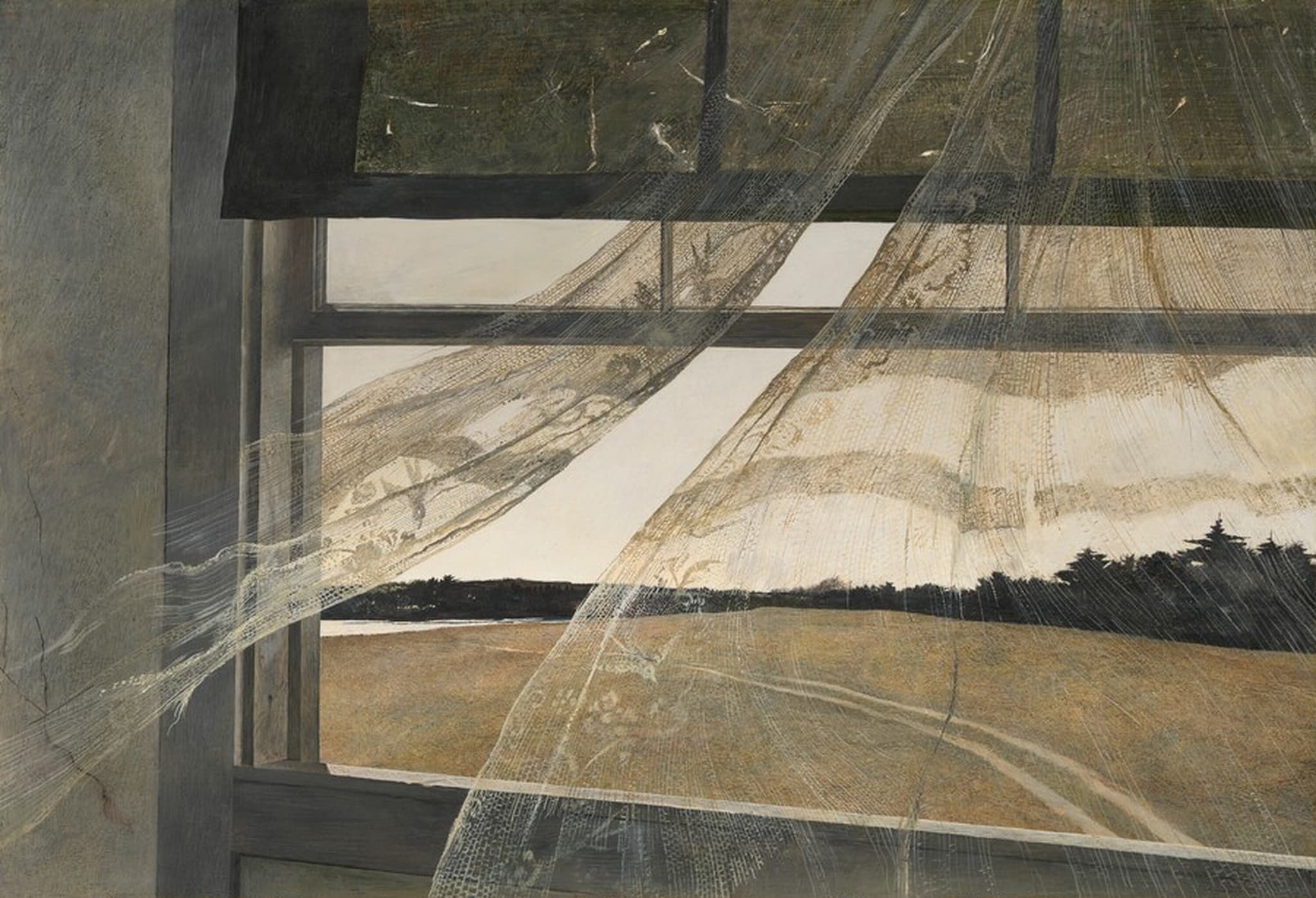
If Andrew Wyeth's Wind from the Sea (1947, tempera on hardboard) were offered on the market as a museum-quality, primary tempera with standard provenance and stable condition, a realistic market estimate is $3,000,000–$12,000,000. This range reflects the work's canonical status, documented National Gallery of Art ownership, and auction comparables for top Wyeth temperas, with final outcome dependent on condition, sale format, and competitive bidding.
Valuation Analysis
This valuation assumes Andrew Wyeth's Wind from the Sea (1947, egg tempera on hardboard) were to come to market as a primary, museum-quality work with clear provenance and no serious condition issues. Based on the artist's auction history and the painting's canonical status, my realistic market range is $3,000,000–$12,000,000. The painting is accessioned in the National Gallery of Art (NGA accession no. 2009.13.1), which means it is not currently market-available and this appraisal is hypothetical for market purposes [1]. Museum ownership both elevates perceived benchmark value and constrains liquidity; a deaccession would almost certainly be handled with major institutional oversight and likely attract competitive institutional and private interest.
The top of the Wyeth market demonstrates the ceiling this painting could reach in an exceptional, highly marketed sale. Most notably, Day Dream from the Paul G. Allen collection realized $23.29 million at Christie’s New York in November 2022, an outlier that illustrates buyer appetite for canonical temperas when presented in a blockbuster sale context [2]. Ericksons, sold at Christie’s in 2007 for just over $10.3 million, shows that multi-million results for mature temperas are attainable in normal high-end markets [3]. By contrast, Wyeth watercolors and studies regularly sell in the mid-five to low-six-figure range, underlining the premium collected for finished temperas of museum caliber.
Value will be driven materially by five elements: art-historical significance, provenance and exhibition/publication history, condition and conservation record, medium and scale, and sale context. Wind from the Sea is repeatedly cited in Wyeth literature and frequently exhibited, which supports institutional and collector demand. Its provenance, documented from the artist through MacBeth Gallery and private collectors to a gift to the NGA, is strong and value-enhancing. Tempera on hardboard is a durable but conservation-sensitive medium; any structural panel issues or invasive restorations would reduce price. The painting's modest physical scale relative to some trophy works can temper price expectations, but its iconic image and rarity on the market compensate.
Practically, maximizing value would require a globally marketed sale or a high-profile private treaty offered with scholarly support, exhibition loan history, and a full conservation report. Given current comparables and the painting's status, the lower bound of $3M reflects a conservative realization under routine market conditions; the $12M upper bound assumes active competition from institutions or deep-pocketed private collectors and exceptional sale architecture. This estimate is provisional: a definitive market valuation requires high-resolution imagery, an up-to-date condition report, and verification of exhibition and catalogue-raisonnè references prior to any formal listing [1][2][3].
Key Valuation Factors
Art Historical Significance
High ImpactWind from the Sea is regarded as one of Wyeth's iconic early temperas and is frequently reproduced in monographs and exhibition catalogues. The painting exemplifies Wyeth's mature approach to intimate interior/landscape interplay and finely modeled tempera technique; as such it functions as a representative, career-defining image. Collectors and institutions place a premium on canonical works that illustrate an artist's signature concerns, and Wind from the Sea meets that criterion. This art-historical prominence supports higher realizations relative to peripheral studies and reduces downside volatility because institutional buyers and well-funded private collectors value works with demonstrable scholarly importance.
Provenance & Museum Ownership
High ImpactDocumented provenance that traces the painting from the artist through MacBeth Gallery and private owners to a gift to the National Gallery of Art is a strong positive for market credibility. Clear title and institutional vetting lower attribution and legal risk, which underpins premium pricing in the marketplace. At the same time, museum accession means the work is effectively off-market; deaccession is rare and controlled, so the painting's scarcity as a market offering increases hypothetical value but makes actual sale unlikely. If a deaccession or private sale were to occur, the robust provenance would be a key selling point for top-tier buyers.
Market Comparables & Auction Record
High ImpactComparable sales establish both ceiling and realistic expectations. High-profile temperas such as Day Dream (Christie's, 2022) realized $23.29M, indicating what a canonical Wyeth can achieve in exceptional circumstances. Other major temperas, for example Ericksons (2007), realized just over $10M, offering a nearer-term high-tier benchmark. The contrast with watercolors and studies, which trade in the mid-five to low-six-figure range, underscores the discrete value premium for finished temperas. Because the universe of directly comparable public tempera sales is limited, price extrapolation has a wider confidence interval, which is reflected in the $3M–$12M range.
Condition, Medium & Scale
Medium ImpactPhysical condition is a determinative factor for tempera works. Egg tempera on hardboard is capable of long-term stability but can suffer from panel distortion, surface craquelure, or past conservation interventions that affect market value. Wind from the Sea is modest in scale (NGA dimensions approximately 18½ x 27⅝ inches), which can limit certain buyer categories relative to monumental works. A pristine conservation record and full restoration documentation support top-end pricing; unresolved structural issues, non-original overpaint, or an incomplete conservation history will reduce buyer confidence and depress realizable price by material percentages.
Market Timing & Demand
Medium ImpactThe sale context and market timing materially influence final price. Demand for canonical Wyeth temperas is concentrated among U.S. institutions, legacy collectors, and a small cohort of well-funded private buyers. A sale tied to a major retrospective, a significant provenance narrative, or competitive single-owner interest will push the painting toward the upper bound; conversely, a soft market or limited marketing channel will tend toward the lower bound. Macroeconomic conditions, liquidity in the collectibles market, and competing high-value lots in the same sale week all affect bidder appetite and final realization.
Sale History
Wind from the Sea has never been sold at public auction.
Andrew Wyeth's Market
Andrew Wyeth is a cornerstone figure in 20th-century American realism with deep institutional representation and a dedicated collector base. His market exhibits a wide range: studies and watercolors commonly sell in the tens of thousands to low six figures, while finished temperas by canonical works can achieve multi-million-dollar results and, in exceptional circumstances, exceed ten million. Scarcity of museum-quality temperas on the open market, combined with strong provenance and exhibition histories, supports price resilience. For top-tier Wyeth temperas, buyer competition among institutions and high-net-worth collectors tends to set premium realizations.
Comparable Sales
Day Dream
Andrew Wyeth
Trophy tempera by Wyeth sold from the Paul G. Allen collection in 2022; same medium (tempera on panel) and shows the ceiling that a canonical Wyeth tempera can reach in an exceptional sale.
$23.3M
2022, Christie's New York
~$25.3M adjusted
Ericksons
Andrew Wyeth
Major tempera on panel (1973) that realized a multi‑million price in 2007; a strong mid/high‑market comparable for major Wyeth temperas similar in medium and market importance to Wind from the Sea.
$10.3M
2007, Christie's New York
~$15.9M adjusted
Knapsack (study)
Andrew Wyeth
Watercolor/pencil study (1978) — different medium and smaller scale than Wind from the Sea; useful as a lower‑end comparable showing market levels for works on paper by Wyeth in recent sales (price reported inclusive of premium).
$318K
2024, Bonhams, New York
~$324K adjusted
Stair Door
Andrew Wyeth
Watercolor & gouache on paper laid down (1955); closer in date to Wind from the Sea but different medium — indicates mid‑five‑figure demand for paper works even when subject/period are mid‑century.
$176K
2024, Christie's (Modern American sale)
~$180K adjusted
The Lookout / Borestone Mountain
Andrew Wyeth
Watercolor landscape sold at a regional house (price listed excluding buyer's premium); useful to illustrate the low end of the market for Wyeth watercolors versus temperas.
$44K
2023, Pook & Pook
~$46K adjusted
Current Market Trends
Current conditions show steady, selective demand for blue-chip American realism. The 2022 sale of a top Wyeth tempera demonstrated that trophy works can attract exceptional competition and set new price ceilings, though such results depend heavily on sale context and provenance. Supply of museum-quality Wyeth temperas is limited, which supports prices when comparable works are offered. Nonetheless, macroeconomic cycles and shifts in collecting priorities introduce variability; outcomes depend on sale architecture and buyer concentration at the time of offering.