How Much Is Jael and Sisera Worth?
Last updated: May 8, 2026
Quick Facts
- Methodology
- comparable analysis
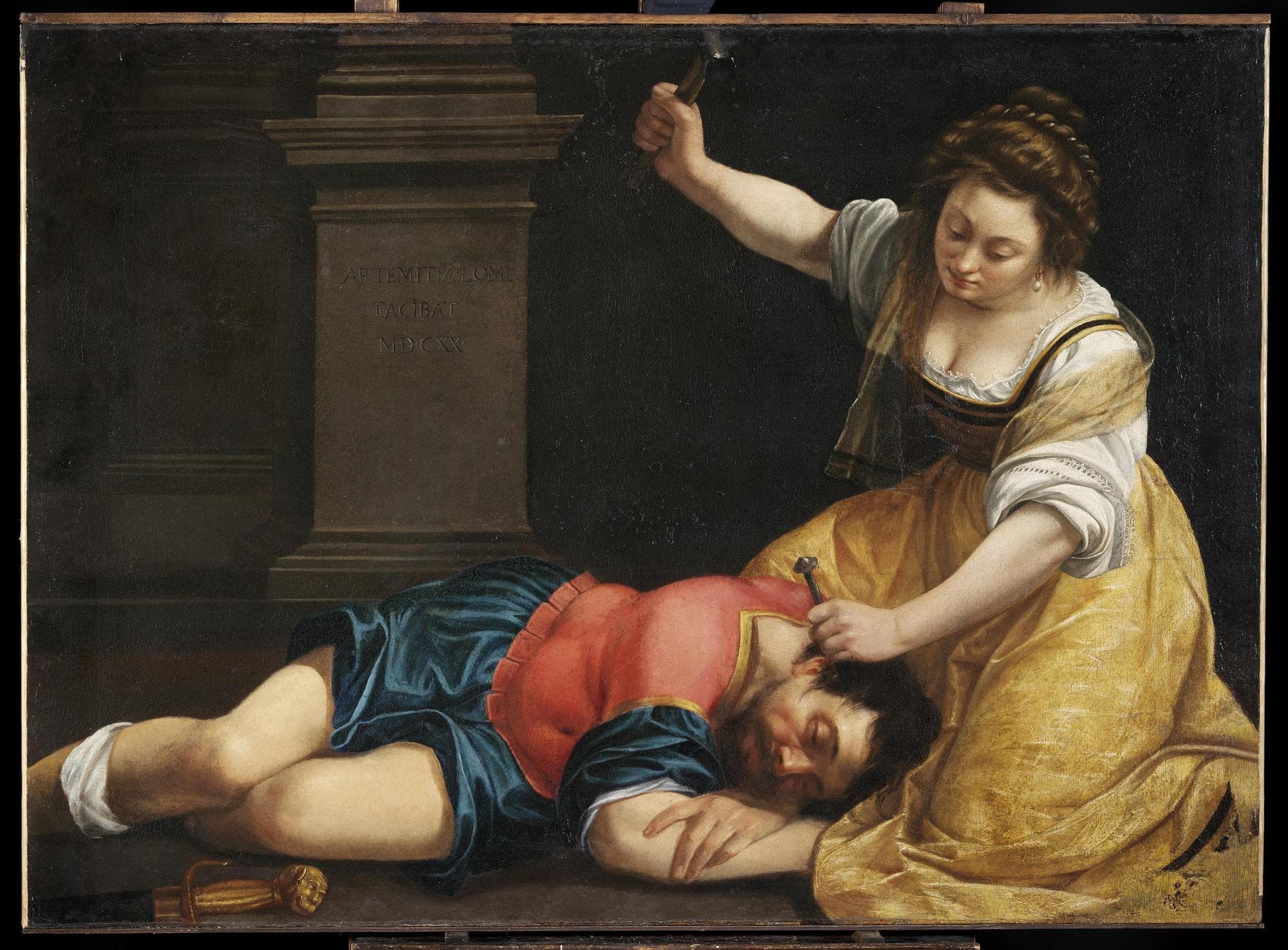
Hypothetical market valuation for 'Jael and Sisera' (c.1620, Szépművészeti Múzeum, Budapest, inv. 75.11): a reasoned auction band today is USD 3,000,000–8,000,000 if accepted as an autograph in good or restorable condition. The range is anchored to recent Artemisia public‑auction benchmarks and will tighten or move materially with technical, provenance and condition findings.
Valuation Analysis
Valuation conclusion: The painting 'Jael and Sisera' (c.1620), inventory no. 75.11 at the Szépművészeti Múzeum, Budapest, has no modern public‑auction sale record and therefore any market price must be treated as hypothetical and conditional on attribution, condition and provenance [1]. Based on directly relevant public comparables for securely attributed Artemisia canvases and the work’s size and dramatic biblical subject, a responsible public‑auction valuation band is USD 3,000,000–8,000,000. This assumes autograph authorship accepted by leading specialists, no disabling conservation problems, and absence of unresolved legal or restitution encumbrances.
Comparable rationale: Public auction ceilings for museum‑quality Artemisia canvases establish the market context. Artcurial’s 2019 sale of Lucretia (≈€4.78M) and Christie’s 2026 sale of a Self‑Portrait as Saint Catherine ($5,687,000) show institutions and collectors paying mid‑single‑million sums for comparable narrative, museum‑quality works [2][3]. Those results form the empirical anchor for the upper portion of the band; the lower portion reflects customary market discounts for works with limited exhibition history, incomplete technical corroboration, or conservable condition issues.
Upside and downside scenarios: Upside is clearly possible: conclusive technical imaging (infrared reflectography, X‑ray), pigment cross‑sections consistent with an early 17th‑century Roman/Neapolitan palette, and prominent institutional interest can push value to or beyond the upper limit, particularly in negotiated private/institutional sales. The downside is steep: unresolved attribution doubts, extensive modern overpainting, structural loss, or provenance problems — notably the documented ownership gap around 1933–1945 flagged in due‑diligence material for this Budapest holding — would materially impair marketability and could reduce value into the low six figures or into the workshop/follower range [4].
Next steps to firm value: commission a full technical dossier (IRR, X‑ray, paint cross‑sections, pigment analysis), obtain a conservator’s condition and treatment estimate, and request the museum’s complete accession/provenance files. With those materials an Old Masters specialist at a major house can supply a formal auction estimate and an institution can set an insurance or deaccession reserve. Until that work is completed, USD 3,000,000–8,000,000 should be treated as a reasoned working market band for a museum‑quality autograph 'Jael and Sisera'; movement outside that band will hinge almost entirely on the forthcoming technical, condition and provenance outcomes.
Key Valuation Factors
Art Historical Significance
High ImpactThe subject 'Jael and Sisera' aligns precisely with Artemisia Gentileschi's most valued thematic repertoire—forceful, narrative depictions of women exercising agency in violent biblical and historical scenes. If accepted as an autograph from her mature period, this painting would be considered a thematically central work that contributes to scholarship on Artemisia’s iconography and practice. Museums and major collectors prize large, dramatic canvases in her oeuvre because they anchor exhibitions and publications; such institutional interest materially supports higher market valuations. The painting’s documented signature/date and inclusion in published catalogues or exhibition histories would further elevate its art‑historical importance and translate into market premium.
Attribution & Technical Evidence
High ImpactAttribution is the single most determinative factor for value. Decisive technical evidence (infrared reflectography revealing underdrawing and compositional changes consistent with Artemisia’s hand, X‑ray showing brushwork and pentimenti, pigment and ground analysis matching early 17th‑century Roman/Neapolitan practice) and agreement by leading Artemisia specialists convert a hypothetical number into market certainty. Conversely, ambiguous technical results or disagreement among scholars will depress the estimate dramatically. A signed painting backed by robust technical and connoisseurial support will command the top of the proposed band; a work lacking that support will trade with workshop/follower discounts.
Provenance & Ownership History
High ImpactClear, continuous pre‑20th‑century provenance and a documented exhibition/publication history materially increase buyer confidence and therefore price. The Budapest holding is published in museum literature, but due‑diligence reports have flagged a provenance gap around 1933–1945; unresolved wartime ownership issues introduce legal and reputational risk that can suppress market value and limit institutional interest. A cleaned, early provenance chain reduces transaction risk, eases export/loan considerations, and often brings institutional buyers into play—frequently the source of the highest prices for Artemisia works. Resolving gaps or demonstrating lawful title will therefore be essential to capture the upper market band.
Condition & Conservation
Medium ImpactCondition directly affects saleability and net proceeds. Issues such as heavy retouching, thick varnish layers, extensive relining, canvas or panel splits, or significant inpainting can reduce bids or require costly conservation before sale. A well‑preserved or conservably restorable canvas will realize substantially more than one requiring structural intervention; buyers routinely price estimated conservation into their bids. While expert restoration can return a painting to marketable condition, the cost, timing, and disclosure of treatments influence buyer confidence and are typically reflected in a 10–50% adjustment to estimates depending on severity.
Market Demand & Comparables
High ImpactMarket demand for Artemisia is concentrated and institutionally driven: a small pool of collectors and museums competes for a limited supply of securely attributed canvases. Recent public results (Artcurial 2019, Christie’s 2026) and notable museum acquisitions have set mid‑single‑million benchmarks and removed important works from the private market, supporting higher prices for remaining material. Comparable sales determine realistic auction ceilings; the scarcity of comparable autograph canvases makes single successful sales highly influential. If 'Jael and Sisera' were offered and cleared attribution/provenance/condition hurdles, it would draw competitive bidding from institutional and private buyers operating in that constrained market.
Sale History
Jael and Sisera has never been sold at public auction.
Artemisia Gentileschi's Market
Artemisia Gentileschi is among the most sought‑after Old Masters today, with institutional acquisitions and high‑profile rediscoveries driving record public prices in the mid‑single‑million range. Her market is characterized by scarcity of securely attributed canvases, heavy institutional interest, episodic 'discovery' events and a collector base that prizes strong narrative, signed works. Public auction records since 2019 have established a new plateau for museum‑quality examples; however, attributional clarity and early provenance remain decisive. As museums continue to acquire key works, available high‑quality supply for private buyers is shrinking, reinforcing premiums for any authenticated autograph canvases.
Comparable Sales
Self-Portrait as Saint Catherine of Alexandria
Artemisia Gentileschi
Recent public-auction artist record; museum-quality, securely attributed Artemisia; sets the current auction ceiling for autograph works.
$5.7M
2026, Christie's New York
Lucrèce (Lucretia)
Artemisia Gentileschi
Same artist, similar dramatic female narrative and museum-quality execution; prior public-auction high and subsequently acquired by a major institution (validates market demand).
$5.3M
2019, Artcurial, Paris
~$6.2M adjusted
Mary Magdalene in Ecstasy
Artemisia Gentileschi
Recent high-profile institutional acquisition (price undisclosed) demonstrating museum willingness to acquire major Artemisia canvases — important market signal though not an open-auction price.
Price unknown
2026, National Gallery of Art (acquisition)
Current Market Trends
The current market for Artemisia and comparable Italian Baroque works is selective and institutionally driven. Major museums have recently purchased important canvases, reducing private supply and supporting higher prices when autograph works appear. The market responds strongly to technical confirmations, publication and conservation narratives; single high‑profile sales set benchmarks and produce episodic spikes rather than steady pricing growth. Overall demand remains robust for museum‑quality works but is highly sensitive to attribution, provenance, and condition.
Sources
- Google Arts & Culture / Szépművészeti Múzeum — 'Jael and Sisera' (inv. 75.11)
- Artcurial — Sale: 'Lucrèce' by Artemisia Gentileschi (13 Nov 2019)
- Christie’s press release — Old Masters sale (4 Feb 2026) — Artemisia result
- National Gallery (London) IFS due‑diligence note on Artemisia holdings (provenance considerations, 2020)