How Much Is Judith and Her Maidservant with the Head of Holofernes Worth?
Last updated: May 8, 2026
Quick Facts
- Methodology
- comparable analysis
If authenticated as an autograph, museum‑quality Artemisia Gentileschi, this Judith composition would most likely command between $5,000,000 and $25,000,000 on today’s market. If attribution is weaker (studio/attributed) value falls materially (typically $200k–$1.5M), and copies/followers sit in the tens‑to‑low‑hundreds of thousands.
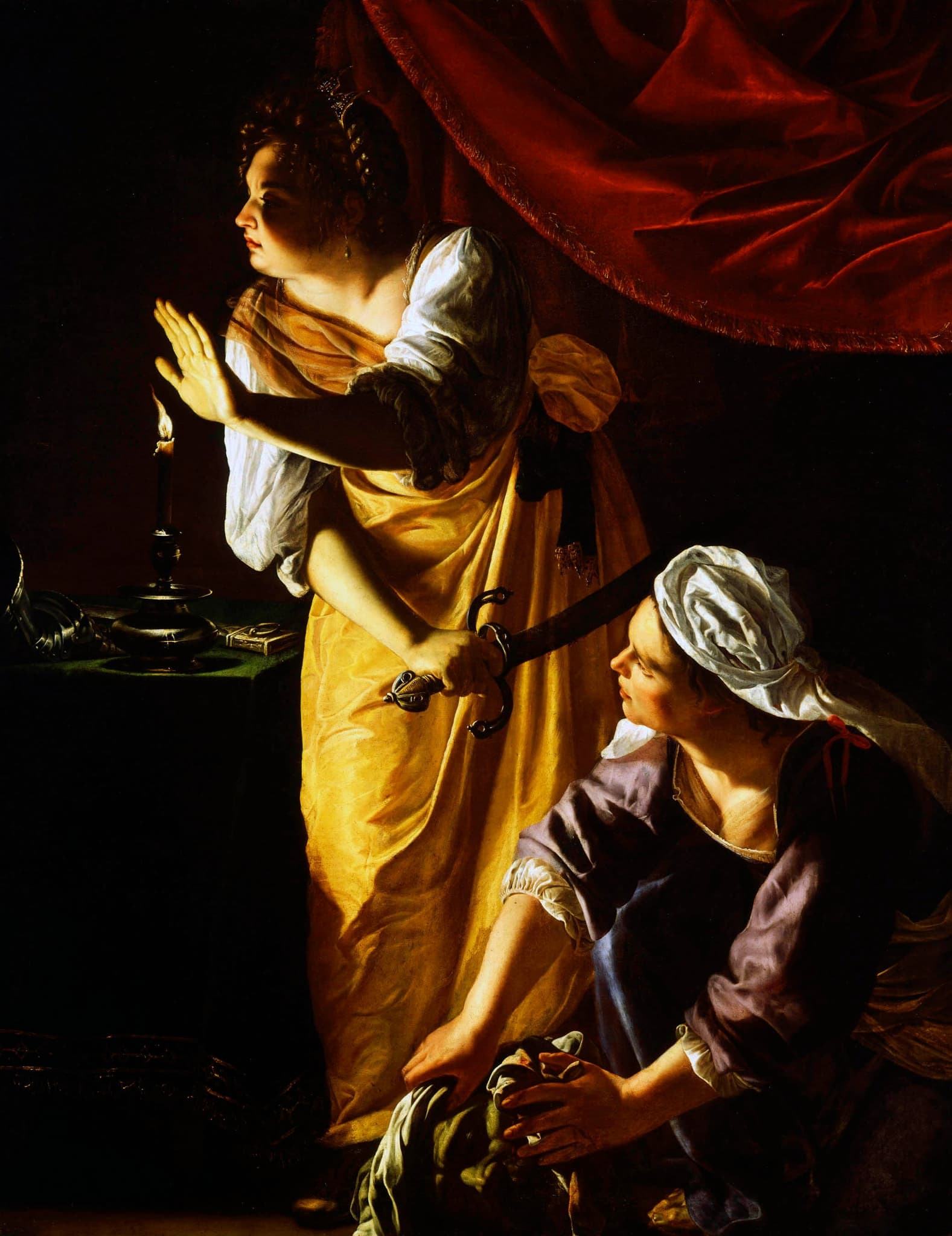
Judith and Her Maidservant with the Head of Holofernes
Artemisia Gentileschi • Oil on canvas
View more by Artemisia Gentileschi →Valuation Analysis
Executive valuation conclusion: On the balance of recent auction comparables, institutional buying, and the scarcity of securely attributed Judith compositions by Artemisia Gentileschi, a museum‑quality autograph "Judith and Her Maidservant with the Head of Holofernes" would most likely realize between $5,000,000 and $25,000,000 in today’s market. This range presumes a confirmed autograph attribution supported by technical analysis, a sound provenance chain, and a condition consistent with major‑house presentation. In the absence of those elements the market re‑prices the work sharply downward.
Why this range: Recent public auction and institutional activity establish practical anchors. Rediscoveries and securely attributed canvases by Artemisia have traded in the mid‑single to low‑double million band and institutional purchases/reports have set comparable reference points for the top of the market. These outcomes show that canonical, museum‑quality canvases are capable of achieving multi‑million results while less secure or smaller works sit lower on the scale [1].
Primary value drivers: The single most important determinant is attribution certainty; a consensus of leading Artemisia scholars plus corroborating technical imaging (IRR, X‑ray, pigment and cross‑section analysis) will place the work at the high end of the range. Provenance and exhibition/publication history act as the second most important driver: Judith canvases already in documented museum groups are rarely offered, and works that can be loaned to major exhibitions attract institutional interest and premiums [2].
Condition and conservation history will move the mid‑point within the stated band. A large, structurally sound canvas with minimal invasive overpainting and a stable ground will command strong bidding; conversely, extensive loss, aggressive 19th/20th century restorations, or unstable support will materially reduce market appetite and price realization.
Market context and sales strategy: Demand for Artemisia has strengthened following high‑profile exhibitions and institutional acquisitions; supply remains constrained. A well‑provenanced autograph Judith presented by a top international house in an evening Old Masters sale (or marketed by auction with prior museum‑level loans and scholarship) will maximize competitive tension and institutional bidder participation. Without market‑grade attribution and a professional technical dossier, the sensible strategy is private sale with conservative pricing or formal attrition before public sale.
Next steps to tighten this estimate: obtain high‑resolution photography and technical imaging, commission pigment and cross‑section analysis, compile exhaustive provenance documentation, and consult leading Artemisia specialists and a major‑house Old Masters department. With those reports the $5–25M band can be narrowed to a specific reserve and sale plan.
Key Valuation Factors
Art Historical Significance
High ImpactArtemisia's Judith compositions are among her most iconic and heavily studied works; they sit at the center of scholarly narratives about her career, gendered iconography, and Caravaggesque practice. A canonical Judith attracts interest from major museums, curators, and scholars, which in turn raises market desirability and institutional willingness to pay premiums. Because several of the most important Judith canvases are already in public collections, any securely attributed, exhibition‑quality example offered on the market becomes a trophy lot and is priced accordingly; the work's centrality to Artemisia's oeuvre therefore exerts a sustained, high positive effect on value.
Attribution Certainty and Technical Evidence
High ImpactAuthorial certainty is the decisive economic factor. Confirmatory technical work — infrared reflectography showing autograph underdrawing, X‑radiography revealing changes consistent with Artemisia’s practice, pigment and binder matches to her known palette, and cross‑sections showing period layer structure — materially increases buyer confidence. When technical and connoisseurial evidence align, competitive bidding and institutional interest rise substantially. Conversely, ambiguous technical results or persistent scholarly disagreement reduce the work to an attributed/studio tier and typically drop value by multiple factors.
Provenance & Exhibition History
High ImpactA demonstrable, ideally continuous provenance and a history of exhibitions/publications are powerful value multipliers. Works that have been catalogued in major collection inventories, loaned to blockbuster exhibitions, or included in catalogue raisonnés attract both museum and deep‑pocket private bidders. Gaps in provenance, prior attributions that are suspicious, or absence from the scholarly record introduce risk that buyers price in heavily. Provenance can also influence export/cultural property considerations, which in turn affects marketability and buyer pool.
Condition & Conservation History
Medium ImpactPhysical condition and the nature/quality of past restorations moderate value within attribution tiers. A well‑preserved large canvas will realize premiums; conversely, works with extensive overpainting, problematic past restorations, or unstable supports require restoration investment and deter institutional buyers. Transparent conservation documentation that shows reversible, well‑executed treatments mitigates buyer concerns. Condition typically determines whether a work achieves the top of the estimate band or falls toward the mid or low end, but it rarely substitutes for unresolved attribution risk.
Market Comparables & Institutional Demand
High ImpactComparable auction outcomes and museum acquisitions set practical price anchors. Recent high‑profile Artemisia sales and museum purchases have created reference levels in the multi‑million range; these comparables are the direct basis for the $5–25M bracket. Institutional collecting trends (major exhibitions, national museum purchases) heighten demand and can lift final results above house estimates. The competitiveness of a sale (evening Old Masters sale vs. lower‑profile session or private treaty) also determines realized price relative to comparables.
Sale History
Judith and Her Maidservant with the Head of Holofernes has never been sold at public auction.
Artemisia Gentileschi's Market
Artemisia Gentileschi occupies a rapidly strengthened and institutionally validated niche within the Old Masters market. Since her late‑20th century rehabilitation, major exhibitions, technical studies, and several high‑profile rediscoveries have pushed securely attributed canvases into multi‑million territory. Supply is scarce — many canonical works reside in museums — so when museum‑quality, autograph works appear they attract both institutional interest and deep private collectors. Auction records and recent museum acquisitions now act as practical price anchors for the market.
Comparable Sales
Lucretia
Artemisia Gentileschi
Top public auction benchmark for an autograph Artemisia canvas (rediscovered Old Masters sale); comparable as a museum-quality, large figural work of a female heroic/virtuous subject.
$5.3M
2019, Artcurial, Paris
~$6.3M adjusted
Venus and Cupid
Artemisia Gentileschi
Securely attributed autograph canvas sold at a major house in 2021; useful as a mid‑range auction comparable showing multi‑million demand for autograph Artemisia works even when subject is less iconic.
$3.4M
2021, Christie's, London (Old Masters Evening Sale)
~$3.8M adjusted
David with the Head of Goliath
Artemisia Gentileschi
Figurative Artemisia work with decapitation/heroic theme closely related to Judith subject matter; recent 2025 sale shows competitive mid‑tier pricing for re‑emerging/confirmed autograph works.
$2.7M
2025, Sotheby's, London
Self-Portrait as Saint Catherine (museum acquisition)
Artemisia Gentileschi
High-profile institutional acquisition reported in the press; indicates museum willingness to pay mid‑to‑high millions for canonical Artemisia works and serves as an institutional anchor for valuations.
$4.7M
2018, National Gallery (reported purchase)
~$5.8M adjusted
Current Market Trends
The Old Masters segment is selective: overall turnover is muted relative to contemporary art, but demand for high‑quality, well‑provenanced works remains strong. Rediscoveries and reattributions, plus institutional buying of underrepresented artists like Artemisia, have tightened price support. Buyers are cautious about attribution and provenance, so technical validation and exhibition-ready dossiers materially improve sale outcomes.
Sources
- Artnet News: Christie’s New York sale — Artemisia Gentileschi record (Feb 2026)
- Detroit Institute of Arts — Judith and Her Maidservant with the Head of Holofernes (collection record)
- The Art Newspaper: Artcurial sale of Artemisia 'Lucretia' (Nov 2019)
- National Museum of Norway press release: Rare Artemisia Gentileschi painting acquired (2022)
- Christie's: Venus and Cupid (Artemisia) — lot and sale record (July 2021)