How Much Is Judith Slaying Holofernes (Capodimonte, Naples) Worth?
Last updated: May 8, 2026
Quick Facts
- Methodology
- comparable analysis
Treating the Capodimonte canvas as the museum 'Giuditta che decapita Oloferne' (and therefore not a market lot), a hypothetical commercial valuation for a museum‑quality, securely attributed Artemisia 'Judith' is $8–25 million USD. The lower bound applies to autograph works with attribution or condition issues; the upper bound reflects a unanimously accepted, pristine autograph judged a top‑tier Artemisia masterpiece.
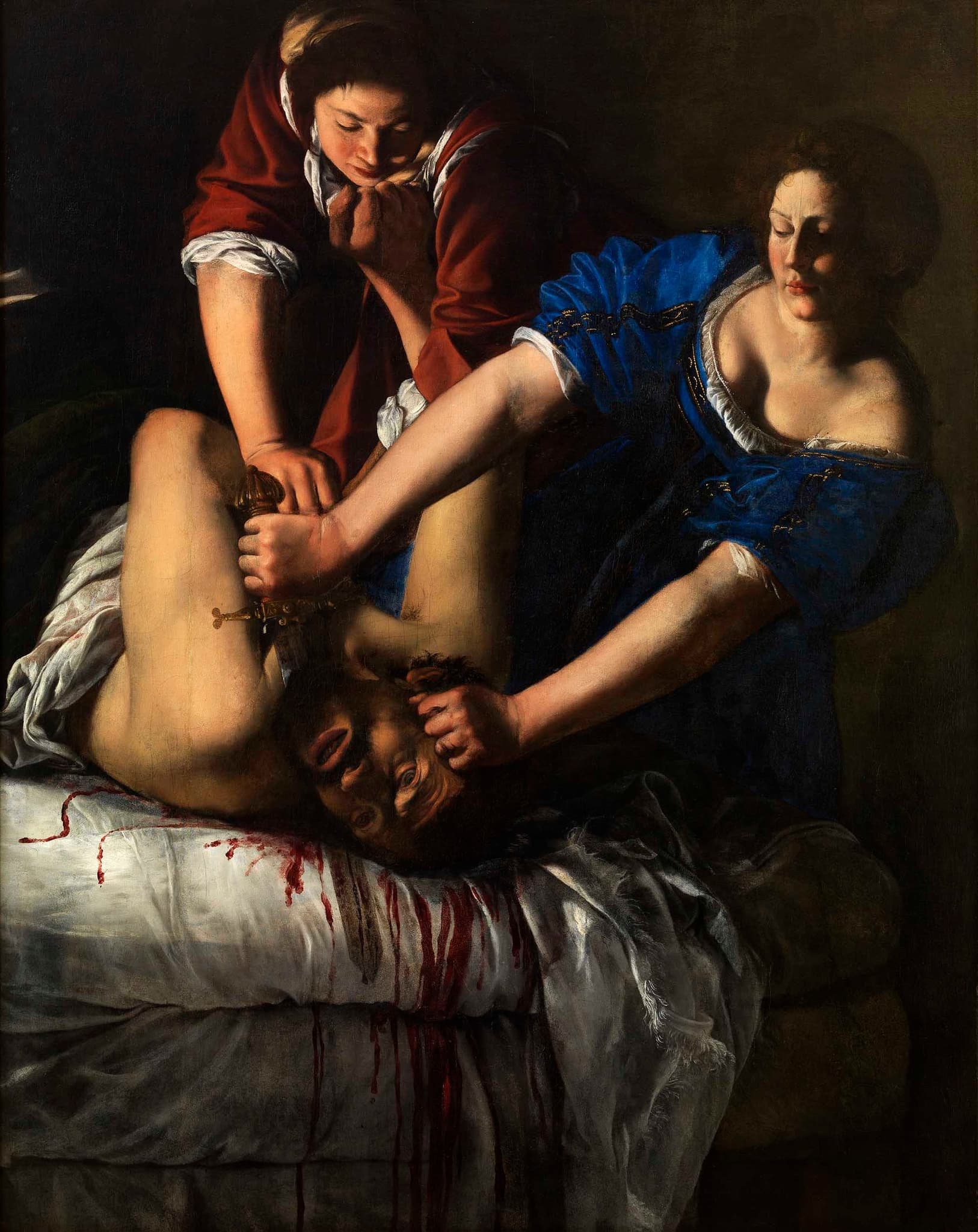
Judith Slaying Holofernes (Capodimonte, Naples)
Artemisia Gentileschi • Oil on canvas
View more by Artemisia Gentileschi →Valuation Analysis
Hypothetical commercial valuation and context: This assessment treats the Museo e Real Bosco di Capodimonte's Giuditta che decapita Oloferne as the painting in question and therefore frames any market figure as hypothetical, since the work is museum‑held and not available for commercial sale or public auction [1]. For a museum‑quality, securely attributed, autograph Artemisia Gentileschi "Judith Slaying Holofernes," I recommend a commercial valuation band of $8,000,000–$25,000,000 USD. This range is intended to be used for insurance, loan valuation or a hypothetical deaccession scenario rather than as an immediate sale expectation.
Comparables and rationale: Publicly recorded Artemisia sales are rare and typically settle in the low‑to‑mid single‑millions; the modern public benchmark is Artcurial’s 2019 sale of "Lucretia" at roughly €4.65M (≈ $5.1M) [2]. Because the Judith subject is one of the artist’s most iconic and institutionally prized compositions, a top‑quality, unanimously accepted autograph Judith would command a meaningful premium above those benchmark sales—hence the upper end of the band. At the same time, works with unresolved attribution, poor condition, or limited provenance typically sell at a substantial discount, supporting the lower bound.
Primary value drivers: Attribution certainty is the single largest determinant of value. Technical corroboration (IRR, X‑ray, pigment analysis) showing pentimenti and consistent underdrawing, together with endorsement by recognized Artemisia scholars and inclusion in major catalogues, moves a lot from "attributed" into the autograph tier and multiplies its market price. Condition and conservation history are the next critical factors; heavy overpainting, unstable lining, or invasive restorations materially reduce marketability even for a strongly attributed work.
Provenance and institutional context: Long, well‑documented provenance—royal or notable private collections—and exhibition history (major loans and catalogue citations) add quantifiable premiums. The Capodimonte example benefits academically from its Bourbon/royal collection associations, which increase scholarly importance but do not alter its non‑market status; deaccession by national collections is uncommon and tightly regulated, so commercialization is unlikely and values are therefore largely theoretical.
Practical next steps: To tighten this band I recommend obtaining high‑resolution recto/verso images, full conservation and technical reports (IRR/X‑ray/pigment analysis), and complete provenance documentation back to first recorded ownership. With those materials, an auction house or independent Old Master specialist could narrow the range, often substantially. Absent new technical or provenance evidence, the $8–25M band best reflects current market comparables, subject importance, scarcity and the premium attached to a canonical Artemisia composition.
Key Valuation Factors
Art Historical Significance
High ImpactThe "Judith Slaying Holofernes" composition is among Artemisia Gentileschi’s signature and most culturally resonant works; it sits at the center of her modern critical rehabilitation. A securely attributed, high‑quality Judith is therefore a top‑tier work in her oeuvre and attracts major institutional and private collector interest. That iconic status translates into a substantial premium relative to less famous subjects or portraits, because canonical works are repeatedly cited in scholarship, exhibition programming and pedagogy—factors that increase both perceived and real market value. Collectors and museums prize canonical images for display and reputational reasons, not just decorative or decorative‑market logic, which amplifies the price for a confirmed autograph Judith.
Attribution Certainty / Scholarly Acceptance
High ImpactAttribution is the single largest determinant of value for an Artemisia painting. Inclusion in catalogues raisonnés, publication by leading specialists, and unequivocal technical evidence (pentimenti, underdrawing patterns, characteristic brush handling, pigment palette consistent with Artemisia’s documented practice) can move a work from the 'attributed' tier to a securely accepted autograph, often multiplying market value several times. Conversely, persistent scholarly doubt, competing attributions, or lack of technical corroboration will depress price sharply and limit institutional buyers. Thus, formal opinions from recognized Artemisia scholars and robust conservation/technical reports materially increase marketability and price.
Condition & Conservation History
High ImpactCondition status—historic restorations, overpaint, varnish discoloration, lining interventions and paint losses—directly affects both buyer confidence and insurability. Heavy, invasive restoration or unstable supports create conservational liabilities that reduce the number of viable bidders, lowering realized prices even when attribution is strong. Conversely, well‑documented, minimal restoration with clear stratigraphy and stable conservation improves market appetite. Technical imaging that demonstrates original brushwork and pentimenti beneath any overpaint is especially valuable; when condition is borderline, professional conservation treatment and an independent condition report can restore a substantial portion of market value.
Provenance & Exhibition History
High ImpactContinuous, well‑documented provenance—especially links to major collections, historical inventories or direct museum acquisition—adds measurable value by reducing title and attribution risk. Record of loans to major exhibitions, citations in monographs and presence in catalogue raisonnés raise both academic standing and market demand. The Capodimonte/royal collection context increases scholarly importance and exhibition potential, which are pricing enhancers; however, museum ownership also makes market transactions unlikely. Gaps in provenance, especially across the 18th–19th centuries, introduce risk and typically result in large price discounts.
Market Scarcity & Demand
High ImpactAutograph Artemisia canvases rarely come to market; scarcity, coupled with strong institutional demand and rising collector interest in historically neglected women artists, supports robust prices for top examples. Recent rediscoveries and museum acquisitions have lifted public awareness and validation levels, pushing well‑documented works into the low‑to‑mid single‑millions at auction and creating a premium for canonical subjects. However, the market is thin and attribution‑sensitive: supply is minimal, but buyer confidence depends heavily on technical and provenance evidence, producing volatility around any given lot.
Sale History
Judith Slaying Holofernes (Capodimonte, Naples) has never been sold at public auction.
Artemisia Gentileschi's Market
Artemisia Gentileschi’s market standing has strengthened markedly over the last decade. Select rediscoveries, high‑profile museum acquisitions and major exhibitions have elevated demand, but the secondary market remains thin—few autograph works are offered and auctions are therefore episodic and volatile. Public sales of securely attributed works commonly reach the low‑to‑mid single‑millions; truly canonical, museum‑quality canvases (especially signature compositions like Judith) command significant premiums when attribution and condition are beyond dispute. Institutional validation continues to be the main catalyst for price appreciation.
Comparable Sales
Lucretia
Artemisia Gentileschi
Autograph Artemisia, high‑profile rediscovery and the modern public‑sale benchmark for the artist; large single‑figure, dramatic female subject comparable in artistic importance (though Lucretia is generally considered less iconic than a museum Judith).
$5.1M
2019, Artcurial, Paris
~$6.4M adjusted
Portrait of a Seated Lady (attributed to Artemisia)
Artemisia Gentileschi
Example of a high‑end Sotheby's result for a work with attribution/market questions; useful as a mid‑market comparator showing how attribution confidence and subject (portrait vs dramatic biblical scene) affect realized price.
$2.7M
2022, Sotheby's, New York
~$3.1M adjusted
Allegory of Sculpture (newly attributed to Artemisia)
Artemisia Gentileschi
New attribution sold in an Old Masters sale—illustrates the London market for newly‑attributed Artemisia works and the price uplift possible when scholarship supports attribution (subject differs from Judith but same artist/period).
$2.4M
2023, Christie's Old Masters, London
~$2.5M adjusted
David with the Head of Goliath
Artemisia Gentileschi
2025 rediscovery / auction for an autograph Artemisia with dramatic narrative subject—useful recent example of market appetite for rediscovered autograph works and competitive demand for narrative scenes.
$2.7M
2025, Sotheby's, London
Mary Magdalen in Meditation
Artemisia Gentileschi
Religious/devotional subject by Artemisia sold in late‑2024; shows demand for devotional/smaller works and provides a lower‑end anchor for market pricing of securely attributed but less monumental works.
$1.8M
2024, Sotheby's, London
~$1.8M adjusted
Current Market Trends
The Old Masters market is presently selective: aggregate turnover has been uneven, but rediscoveries and scholarship‑driven attributions produce outsized interest. Institutional demand for historically overlooked women artists has created structural support for Artemisia, while buyers now insist on strong provenance and technical documentation. The resulting market favors well‑provenanced, technically authenticated works and penalizes uncertain attributions.