How Much Is Mary Magdalene in Ecstasy Worth?
Last updated: May 8, 2026
Quick Facts
- Last Sale
- $1.2M (2014, Sotheby's, Paris)
- Methodology
- comparable analysis
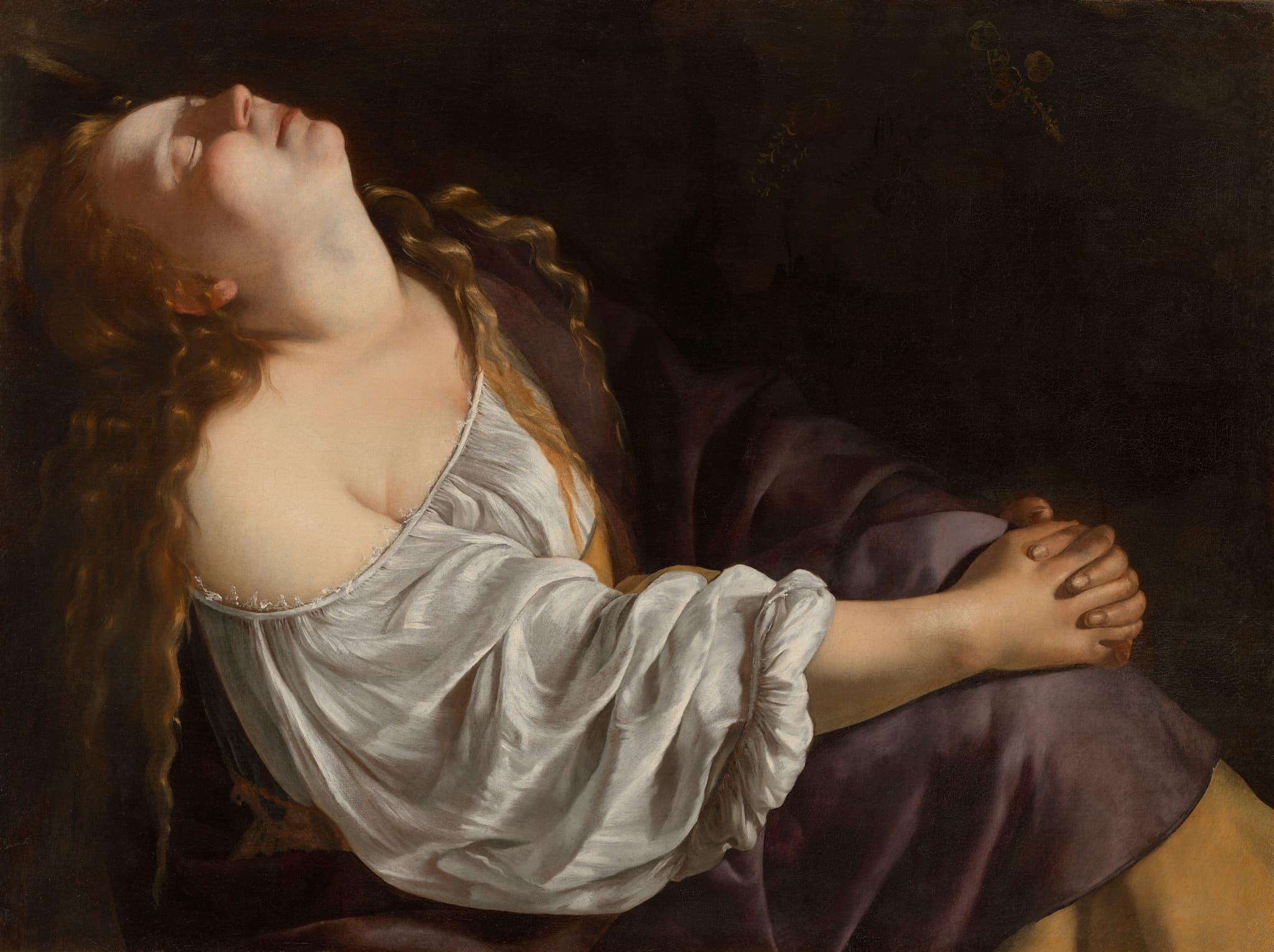
Based on the painting's public sale at Sotheby’s Paris in 2014 (reported €865,500 ≈ US$1.18M) and its institutional acquisition by the National Gallery of Art in early 2026, the fair market range for Artemisia Gentileschi’s Mary Magdalene in Ecstasy is estimated at $1.5–$6.3M. The lower bound is anchored to the verified 2014 realization adjusted for market appreciation and institutional premium; the upper bound is supported by high‑end Artemisia comparables and museum‑quality demand.
Valuation Analysis
Valuation conclusion: The most defensible market range for Artemisia Gentileschi's Mary Magdalene in Ecstasy is approximately $1.5–$6.3 million. This assessment uses the 2014 Sotheby's Paris sale (reported final ≈ €865,500 / ~US$1.18M) as the public‑market baseline [1], and it incorporates the material market signal of the painting’s acquisition by the National Gallery of Art in 2026 (accession 2025.88.1) [2].
The 2014 hammer provides a concrete starting point: where an authoritatively attributed Artemisia already achieved ~US$1.18M in an international auction. Since 2014 the market for securely attributed Artemisia works has moved upward; top comparables (for example the 2019 Artcurial Lucretia and recent Christie’s fresh‑to‑market self‑portraits) demonstrate that museum‑quality examples can now realize in the mid‑single millions and, in exceptional cases, approach the $5–6M band [3][4]. Institutional acquisition typically raises both scholarly acceptance and future market comparables, justifying an uplift above the 2014 public result.
Drivers and sensitivities: The valuation hinges on a handful of determinative factors. First, attribution confidence and scholarly consensus (now strengthened by inclusion in exhibition histories and specialist literature) materially reduce buyer risk. Second, continuous provenance from the southern France collection through the 2014 Sotheby’s sale and subsequent loans/exhibitions enhances value. Third, condition and conservation history—and the presence or absence of intrusive restorations—can move an appraisal materially in either direction. Technical analyses (IR, x‑ray, pigment tests) that corroborate autograph authorship will push the painting toward the upper band; unresolved technical questions will compress value toward the lower band.
How the range was derived: the lower bound (~$1.5M) is set modestly above the documented 2014 auction result to reflect market appreciation and the institutional premium for works validated by museum acquisition. The upper bound (~$6.3M) is informed by recent highest‑quality Artemisia sales and the demonstrated willingness of institutions and collectors to pay premiums for canonical or defining works. Because the NGA purchase price is undisclosed, this range is a market estimate, not a replacement‑cost or insured limit.
Recommendation: For formal insurance or sale listing, obtain a full condition report and any NGA technical/examination dossiers, then commission a written appraisal from a senior Old Masters specialist (auction‑house or independent) who can review the technical files and link the lot to the strongest comparables. With that due diligence the range above can be narrowed to a single-point insured value or prescriptive reserve price.
Key Valuation Factors
Art Historical Significance
High ImpactMary Magdalene is a recurrent Baroque devotional subject and, in Artemisia’s oeuvre, such female penitents are important for understanding her treatment of religious emotion and female agency. While Mary Magdalene is not as universally cited as Artemisia’s Judith series or her celebrated self‑portraits, a securely attributed, museum‑quality Mary Magdalene can be regionally and thematically significant—especially where it demonstrates compositional or painterly innovations. If the NGA now houses this autograph work with substantial exhibition and bibliographic history, its scholarly significance becomes elevated, and that enhancement translates directly into market value via institutional validation and collector interest.
Attribution and Scholarly Consensus
High ImpactAttribution is the single most decisive valuation factor. A painting accepted as securely autograph by leading Artemisia scholars and supported by technical analysis (infrared reflectography, pigment study, dendrochronology if panel) can command multiples over an attributed or workshop piece. The painting’s public exhibition history and published scholarship reduce attribution risk; institutional acquisition by the NGA further signals curatorial confidence. Conversely, any residual doubts about autograph status—visible pentimenti inconsistent with Artemisia’s known practice, or technical anomalies—would materially suppress value into the attributed/workshop band.
Provenance & Exhibition History
High ImpactContinuous, documented provenance and demonstrable exhibition and publication history materially increase liquidity and price. This painting’s provenance (southern France private collection, Sotheby’s 2014 sale) plus subsequent loans and scholarly references provide evidence of custody and acceptance. Museum acquisition increases the work’s catalogue comparability and market credibility; bidders and insurers place a premium on works that have passed institutional and curatorial vetting. Gaps, dubious ownership claims, or missing documentation would reduce the market multiple relative to fully provenanced comparables.
Condition & Technical Support
Medium ImpactCondition drives buyer confidence and net realizations. Minor, reversible restorations have limited negative impact; major overpainting, losses, or structural instability can reduce value sharply. Independent technical reports that confirm original paint layers, a consistent ground, and period pigments support attribution and push valuations upward. For insurance and sale estimates, a full conservation report is required; the absence of such documentation adds a risk discount, while a clean technical dossier can add 10–30% to an appraisal relative to an undocumented state.
Market Comparables & Institutional Validation
High ImpactRecent high‑end Artemisia results (notably the 2019 Artcurial Lucretia and fresh‑to‑market works that have realized mid‑single millions) set the contemporary ceiling for top examples. The painting’s 2014 auction result establishes a reliable lower baseline. Institutional acquisition by the NGA functions as a market multiplier: it increases scholarly acceptance, raises provenance weight, and typically pushes comparables upward in future sales. Competitive auction conditions or museum deaccessioning can still influence realized outcomes, but the institutional signal here materially supports a higher mid‑market valuation.
Sale History
Sotheby's, Paris
National Gallery of Art (Washington) acquisition
Artemisia Gentileschi's Market
Artemisia Gentileschi is currently among the most sought Old Masters, benefiting from scarcity of securely attributed works, strong institutional interest, and sustained scholarly reappraisal. Top authenticated examples have established a new price ceiling in the mid‑single millions (with record and near‑record sales in recent years), while well‑provenanced, high‑quality works commonly realize in the low‑to‑mid millions. At the same time the market is two‑tiered: fragments, dubious attributions or heavily restored pieces trade in the mid‑to‑high hundreds of thousands, while canonical, museum‑quality works command significant premiums.
Comparable Sales
Lucretia
Artemisia Gentileschi
Same artist; high-quality, securely attributed work from the same period — represents the market ceiling established for Artemisia in recent years.
$5.3M
2019, Artcurial, Paris
~$6.3M adjusted
Mary Magdalene (catalogued as 'Marie Madeleine')
Artemisia Gentileschi
This is the same painting (previous public sale) — the direct auction baseline for the work before institutional acquisition and subsequent market reappraisal.
$1.2M
2014, Sotheby's, Paris
~$1.5M adjusted
Portrait (seated lady in gold‑embroidered costume) — Safra collection
Artemisia Gentileschi
Same artist, securely attributed early- to mid-career work selling in the mid‑single‑millions — useful mid‑market comparable for a well‑provenanced, exhibitioned Artemisia.
$2.6M
2022, Sotheby's, New York
~$2.9M adjusted
Allegory of Sculpture
Artemisia Gentileschi
Same artist and period; a mid‑market sale (reported result in the low‑millions) that helps define the strong middle tier for securely attributed works.
$2.4M
2023, Christie's, London
~$2.5M adjusted
David with the Head of Goliath
Artemisia Gentileschi
Same artist; recent 2025 sale of a biblical subject in the mid‑single‑millions — directly reflects buyer demand in the market year of valuation.
$2.7M
2025, Sotheby's, London
Current Market Trends
The Artemisia market is strong but selective: institutional purchases and high‑profile exhibitions have raised the ceiling, but Old Masters market caution creates volatility. Demand is concentrated on securely attributed, museum‑grade works; rediscoveries and scholarly reattributions continue to supply the market, while clear provenance and technical validation remain decisive for premium pricing.
Sources
- Sotheby's — Tableaux anciens et du XIXe siècle, Paris, 26 June 2014, Lot 24 (Marie Madeleine)
- National Gallery of Art — Press release: National Gallery of Art acquires Mary Magdalene in Ecstasy by Artemisia Gentileschi
- The Art Newspaper / Artcurial reporting — 'Lucretia' (Artemisia) sale coverage, Nov 2019
- Christie's press coverage — recent high‑end Artemisia sale (Christie's Feb 2026 results)