How Much Is Self-Portrait as Saint Catherine of Alexandria Worth?
Last updated: May 8, 2026
Quick Facts
- Last Sale
- $5.7M (2026, Christie's New York)
- Methodology
- comparable analysis
If authenticated as an autograph Artemisia Gentileschi self‑portrait in good condition with secure provenance and publication/exhibition history, the painting is best valued at approximately $3,000,000–$12,000,000 on the open market. If attribution or provenance is doubtful, or the work proves to be a workshop copy, expect a steep reduction to the low six‑figures (roughly $50,000–$800,000). This estimate is driven primarily by recent auction comparables and institutional demand.
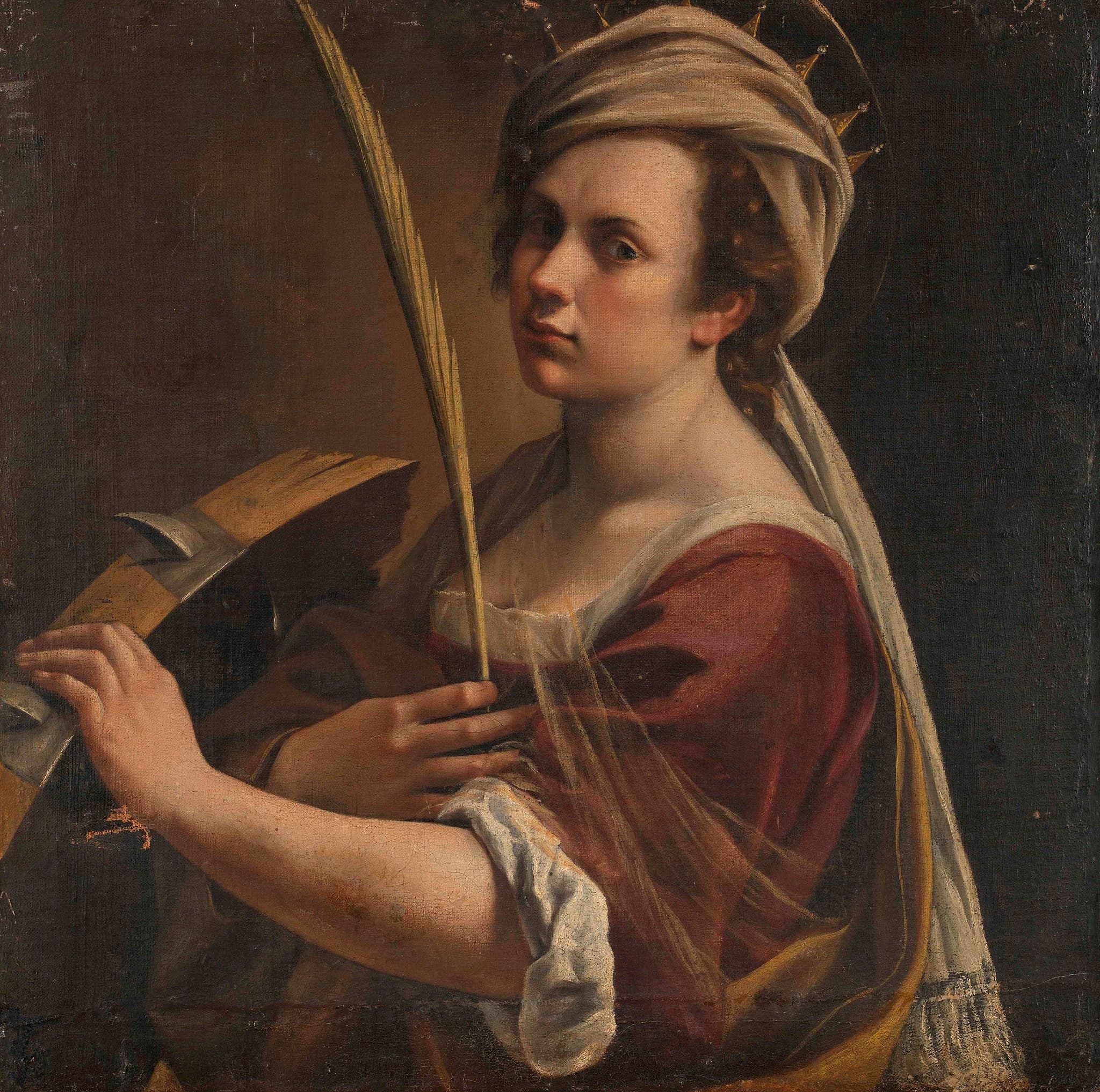
Self-Portrait as Saint Catherine of Alexandria
Artemisia Gentileschi • Oil on canvas
View more by Artemisia Gentileschi →Valuation Analysis
Valuation conclusion: Based on recent market comparables, institutional buying and the artist’s current market trajectory, a securely attributed, well‑provenanced Self‑Portrait as Saint Catherine by Artemisia Gentileschi in good condition should realistically command roughly $3.0–$12.0 million at auction. This range reflects mid‑single‑million outcomes for typical museum‑quality works, with room at the top for exceptional provenance, publication and exhibition history.[1]
The primary market evidence is recent: a small panel self‑portrait titled Self‑Portrait as Saint Catherine sold at Christie’s New York in February 2026 for $5,687,000 (price realized), establishing a new public‑sale benchmark for the artist and demonstrating active buyer competition for authenticated self‑portraits [1]. A canvas with the same subject sold at Hôtel Drouot in December 2017 (later acquired by the National Gallery), and institutional acquisition demonstrates museums’ willingness to pay a premium when attribution and condition are convincing [2]. Earlier rediscoveries such as the Artcurial Lucretia (2019) set a similar pre‑2026 comparable in the mid‑multi‑millions and underline that fully authenticated major works can reach the higher end of the band [3].
How the range is applied: At the conservative end (~$3M) you would place an autograph painting with solid but not exceptional provenance, modest exhibition history and some condition compromises. A mature, well‑documented autograph with full scholarly backing, prominent exhibition placements and publication can reasonably reach $6M–$12M, with the very top realized for objects that fill institutional gaps or generate competitive bidding. If technical analysis or connoisseurship reduces confidence (workshop hand, later copy, heavy overpaint), market value will compress sharply to the low six‑figures.
Key uncertainties and recommended next steps: The single largest value driver remains attribution/authenticity; I recommend immediate technical testing (infrared reflectography, X‑ray, pigment analysis and support study), a formal condition report and solicitation of written opinions from leading Artemisia specialists. With robust technical and provenance documentation, approach major Old Masters desks at Christie’s, Sotheby’s or a targeted museum acquisition route; without it, consider private sale to a specialist collector or conservative retail pricing.
In short: the $3–12M window is the actionable market range for an authenticated, market‑ready autograph; any doubts reduce the price materially. The Christie’s 2026 result and recent institutional purchases provide clear precedent and upward momentum but also illustrate how sensitive pricing is to scholarly validation and museum endorsement [1][2][3].
Key Valuation Factors
Art Historical Significance
High ImpactArtemisia’s self‑portraits are central to scholarship on her career and to broader narratives about female self‑representation in the Baroque. A Self‑Portrait as Saint Catherine combines personal likeness with a charged iconography — the saint’s attributes and martyrdom narrative speak to status, learnedness and virtuous suffering, themes frequently linked to Artemisia’s oeuvre. Because there are relatively few undisputed self‑portraits by Artemisia, each authenticated example fills an important gap in the catalogue and museum displays. This intellectual and curatorial importance translates directly into market value: museums and informed private collectors pay premiums for works that alter or consolidate the scholarly record.
Attribution / Authenticity
High ImpactAttribution is the single largest determinant of value. An autograph attribution to Artemisia — supported by connoisseurship, IRR imaging, pigment and binder analysis, and comparative brushwork study — elevates the work into the multi‑million tier. Conversely, attribution to the studio, a follower or a later copy reduces liquidity and demand sharply. Technical analysis can often distinguish period materials and a master’s hand from later interventions; written opinions from established Artemisia scholars and inclusion in catalogues or exhibition histories are frequently required by major auction houses and museums before aggressive bidding ensues.
Provenance & Exhibition History
High ImpactClean, traceable provenance and an exhibition/publication record materially increase price. Works that have passed through reputable collections, been published in scholarly literature and displayed in major exhibitions attract institutional bidders and reduce buyer uncertainty. The market reaction to the Drouot-to‑National Gallery trajectory illustrates how institutional endorsement lifts value and market confidence. Gaps in ownership history, anonymous sales, or unresolved restitution issues depress price and can deter museums from competing.
Condition & Conservation
Medium ImpactPhysical condition and conservation history significantly affect marketability. Original surface integrity, minimal later overpainting and a stable support (panel or canvas) support higher bids. Extensive restoration, heavy inpainting, unstable relining or major losses create downward pressure and increase buyer risk, often reflected in reduced estimates. A high‑quality, documented conservation treatment can enhance value if it clarifies original paintwork and reveals autograph technique; conversely, invasive or undocumented interventions reduce trust and price.
Market Comparables & Demand
High ImpactRecent auction results establish the near‑term market ceiling and buyer appetite. The Christie’s 2026 self‑portrait result ($5.687M) sets a clear modern auction benchmark for authenticated self‑portraits, while the Artcurial Lucretia (2019) and the Drouot/National Gallery example demonstrate sustained institutional and private demand in the mid‑millions. The buyer pool includes major museums, foundations and specialist Old Master collectors; competition among these parties for scarce, well‑documented Artemisia works pushes prices upward, while lesser attributions attract a more limited collector base.
Sale History
Christie's New York
Hôtel Drouot (Paris) — subsequently acquired by the National Gallery, London
Artcurial (Paris)
Artemisia Gentileschi's Market
Artemisia Gentileschi is one of the most sought‑after early‑modern women artists in today’s market. Scarcity of securely attributed works, combined with intensive recent scholarship, museum exhibitions and conservation projects, has raised her profile and pricing. Auction records moved into the mid‑single‑millions in 2019 and again in 2026, and institutions have actively acquired rediscovered paintings. The market is now stratified: top authenticated works achieve multi‑million results, while workshop pieces, fragments and uncertain attributions typically sell in the six‑figure band.
Comparable Sales
Self‑Portrait as Saint Catherine of Alexandria
Artemisia Gentileschi
Same artist and same subject/title (small panel self‑portrait). Highest public‑sale benchmark (new auction record) showing market ceiling for securely attributed self‑portraits.
$5.7M
2026, Christie's New York
~$5.6M adjusted
Self‑Portrait as Saint Catherine of Alexandria (canvas)
Artemisia Gentileschi
Same title/subject by the artist (larger canvas); subsequently acquired by the National Gallery — strong institutional demand and provenance uplift.
$2.8M
2017, Hôtel Drouot (Paris)
~$3.7M adjusted
Lucrèce (Lucretia)
Artemisia Gentileschi
Same artist; high‑quality rediscovered autograph history painting that set the pre‑2026 auction benchmark — useful top‑end comparable for museum‑quality autograph works.
$5.3M
2019, Artcurial (Paris)
~$6.6M adjusted
David with the Head of Goliath
Artemisia Gentileschi
Rediscovered/reattributed Artemisia figure painting sold at auction in 2025 — demonstrates mid‑market willingness to pay for securely attributed works after scholarly backing.
$2.7M
2025, Sotheby's (London)
Mary Magdalen (fragment)
Artemisia Gentileschi
Small/fragmentary work by the artist — useful lower‑end comparable showing how size, condition and completeness materially reduce prices (six‑figure outcomes).
$997K
2026, Dorotheum (Vienna)
~$977K adjusted
Current Market Trends
Current market conditions favour high‑quality, well‑provenanced Old Masters and artworks by historically significant female artists; institutional buying and rediscoveries have increased demand for Artemisia. However, the market remains attribution‑sensitive and segmented. Expect continued strong interest for museum‑grade rediscoveries, cautious pricing for works with gaps, and price volatility tied closely to scholarly validation and exhibition exposure.