How Much Is Self-Portrait as the Allegory of Painting (La Pittura) Worth?
Last updated: May 8, 2026
Quick Facts
- Methodology
- comparable analysis
The canonical Self‑Portrait as the Allegory of Painting (La Pittura) is held in the Royal Collection and has not been market‑tested. Based on recent Artemisia auction benchmarks and an applied premium for iconographic importance, royal provenance and severe market scarcity, a reasoned, non‑binding insurance/replacement estimate is USD 10,000,000–40,000,000.
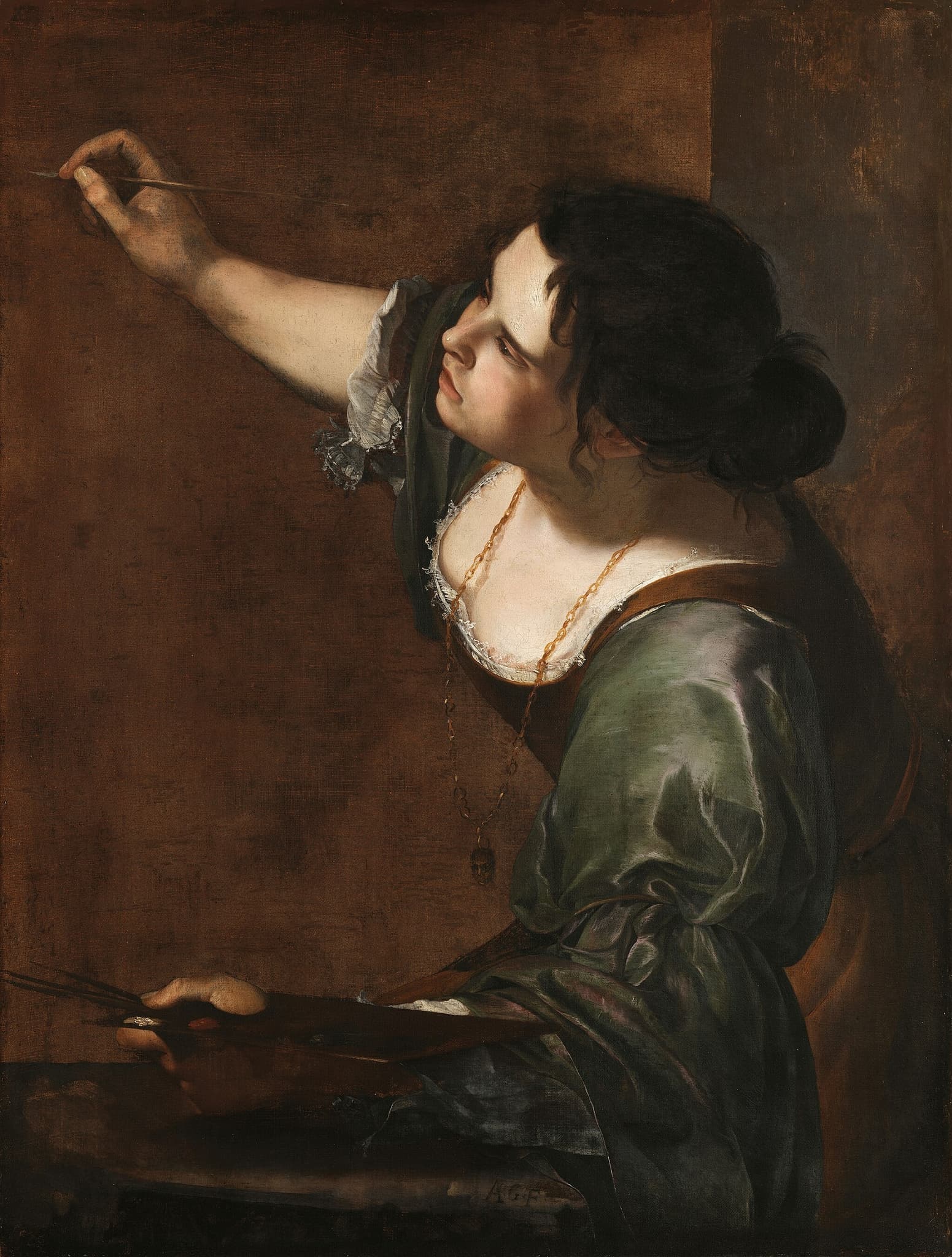
Self-Portrait as the Allegory of Painting (La Pittura)
Artemisia Gentileschi • Oil on canvas
View more by Artemisia Gentileschi →Valuation Analysis
Object and context. Self‑Portrait as the Allegory of Painting (La Pittura), c.1638–39, is the canonical Artemisia Gentileschi self‑portrait in the British Royal Collection (RCIN 405551) and has not been offered on the modern public market; therefore any monetary figure is hypothetical and should be treated as an insurance/replacement or theoretical market value rather than a realized sale price [1].
Methodology. This valuation uses a comparable‑analysis approach: it anchors to recent, publicly reported Artemisia auction outcomes and then applies a reasoned premium to reflect La Pittura’s exceptional art‑historical significance, continuous royal provenance and the scarcity of comparable museum‑quality works. Key market anchors include Christie’s New York (Self‑Portrait as Saint Catherine, Feb 4, 2026, realized c. $5.687M) and Artcurial’s Lucretia (Nov 2019, ~€4.7M), which together establish a pragmatic auction ceiling in the mid‑single‑digit millions [2][3].
Why a premium is justified. The public auction band for Artemisia (recently roughly $2.7–5.7M) is a useful market signal but does not capture the intangible cultural and reputational loss associated with a flagship, museum‑quality work in royal custody. Insurers and specialist appraisers commonly apply multipliers above an artist’s auction record when pricing unique, iconic masterworks that are effectively off‑market; such premiums reflect replacement cost, reputational impact, and the practical cost of procuring an equivalent object [2][3].
Resulting estimate. Applying a conservative-to-prudent multiplier range to the auction ceiling produces a non‑binding valuation range of USD 10,000,000 to USD 40,000,000. The lower bound (~$10M) is defensible as a near‑term institutional anchor (≈1.8× the auction record) that acknowledges current price discovery; the upper bound (~$40M) represents a replacement/insurance scenario in which iconographic prominence, Royal Collection provenance and acute scarcity command a substantial premium (≈7× the auction ceiling). The midpoint (~$22.5M) is a practical working figure for budgeting or internal insurance discussions.
Caveats & next steps. This range is hypothetical: it would be materially refined by (1) a full technical and conservation report, (2) access to the Royal Collection’s provenance documentation and any internal valuation/insurance figures, and (3) formal written appraisals from major Old Masters specialists. Market momentum from recent institutional activity (notably high‑profile museum acquisitions and retrospectives) can raise these benchmarks further, while adverse condition findings or restrictive legal/ownership constraints would reduce realisability and could lower a hypothetical sale price [4][5].
Key Valuation Factors
Art Historical Significance
High ImpactLa Pittura is one of Artemisia’s most iconic and frequently cited works: simultaneously a self‑portrait and an embodiment of the Allegory of Painting, it functions as a professional manifesto and signature image. Its centrality to scholarly literature, exhibition programming and popular reception increases the cultural and reputational costs of loss or restricted access. For insurers and institutional appraisers this symbolic prominence drives a strong premium because the work’s value is not purely market‑based but also reputational and pedagogical. That combination supports valuation materially above routine auction comparables.
Provenance & Institutional Ownership
High ImpactThe painting’s long Stuart/royal provenance and current place in the British Royal Collection materially strengthen attribution credibility and curatorial esteem—attributes that increase replacement value. Simultaneously, perpetual institutional ownership makes the object effectively non‑marketable under ordinary circumstances: deaccession would be politically and legally sensitive. The dual effect is a higher hypothetical replacement price coupled with very low liquidity; appraisers therefore model both a premium for provenance and a discount for the practical improbability of voluntary sale.
Market Scarcity & Institutional Demand
High ImpactOnly a small number of Artemisia masterworks of unequivocal quality reach the market; most major canvases remain in public collections. Institutional demand has intensified in recent years (museum acquisitions and retrospectives), tightening supply. Scarcity combined with high institutional appetite produces concentrated bidding when top examples become available, supporting premiums well above routine auction outcomes. For insurance/replacement purposes scarcity is a primary upward driver of value.
Comparable Sales & Price Discovery
High ImpactRecent auction evidence places the artist’s public‑sale band in the mid‑single‑digit millions (e.g., Christie’s Feb 2026 realized c. $5.687M; Artcurial 2019 Lucretia ~€4.7M). These results establish a practical market anchor but do not equal La Pittura’s institutional and iconographic weight. Appraisers therefore apply multipliers to the public auction ceiling to arrive at replacement valuations for unique museum works; the multiplier choice (here ~1.8–7×) drives the broad USD 10–40M range.
Condition & Legal/Export Constraints
Medium ImpactA comprehensive conservation/technical report could move value substantially: excellent, original condition would support the high end of the range, while significant restoration needs would lower realizable value. Separately, legal and institutional constraints (export licenses, Crown property status, donor covenants and deaccession policy) materially limit transferability and therefore market liquidity. These constraints reduce the plausibility of a sale but do not necessarily diminish replacement valuations used for insurance purposes.
Sale History
Self-Portrait as the Allegory of Painting (La Pittura) has never been sold at public auction.
Artemisia Gentileschi's Market
Artemisia Gentileschi’s market has strengthened markedly in the past decade. Rediscoveries, restorations and institutional acquisitions (notably recent purchases and displays by major museums) have validated attributions and driven demand for museum‑quality works. Public auction records have moved into the mid‑single‑digit millions and the market is thin but highly competitive: a limited number of top examples attract intense institutional and private interest. Price discovery is episodic and driven by headline sales and museum buying rather than frequent turnover.
Comparable Sales
Self-Portrait as Saint Catherine of Alexandria
Artemisia Gentileschi
Same artist; self-portrait genre and recent public-auction record — establishes the current auction ceiling for securely attributed Artemisia works.
$5.7M
2026, Christie's, New York
~$5.6M adjusted
Lucretia
Artemisia Gentileschi
Museum-quality major subject by Artemisia that set a pre-2026 public benchmark; later institutional interest (Getty) increased the artist's market profile.
$5.2M
2019, Artcurial, Paris
~$5.9M adjusted
Self-Portrait as Saint Catherine (hammered at Hôtel Drouot)
Artemisia Gentileschi
Earlier auction example of a self-portrait-type work; lower hammer price demonstrates the range for less-prominent/less-securely-attributed lots and the effect of subsequent institutional acquisition on perceived value.
$2.8M
2017, Hôtel Drouot (Christophe Joron-Derem), Paris
~$3.3M adjusted
David with the Head of Goliath (attributed/rediscovered)
Artemisia Gentileschi (attributed)
Recent mid-market sale for an attributed/rediscovered Artemisia work; illustrates pricing for works with stronger attribution/condition questions versus firmly established museum pieces.
$2.7M
2025, Sotheby's, London
Current Market Trends
The Old Masters/Italian Baroque market has shown renewed selective strength in 2024–2026. Institutional acquisitions, restorations and major retrospectives have tightened supply of top‑tier Artemisia works and lifted bidder interest; momentum is concentrated on securely attributed, museum‑quality pieces. The market remains thin and can re‑price quickly around headline transactions, so valuations for flagship works should be viewed as dynamic and sensitive to new institutional activity.
Sources
- Royal Collection Trust — Self‑Portrait as the Allegory of Painting (La Pittura), RCIN 405551
- Christie’s press release and sale results (Christie’s New York, Feb 4, 2026)
- The Art Newspaper — coverage of Artcurial’s Lucretia sale (Nov 2019)
- National Gallery of Art — press release on recent Artemisia acquisition (Feb 4, 2026)
- Getty Museum — press materials on Artemisia acquisitions and conservation