How Much Is Susanna and the Elders (Pommersfelden / Schloss Weißenstein) Worth?
Last updated: May 8, 2026
Quick Facts
- Methodology
- comparable analysis
Assuming the Schloss Weißenstein canvas is an accepted autograph Artemisia Gentileschi in museum‑quality condition, the market value today is estimated at USD 3.0–12.0 million. The lower bound reflects typical market outcomes for securely attributed early works with limited recent sale history; the upper bound reflects institutional competition or a high‑profile sale following technical confirmation and exhibition history.
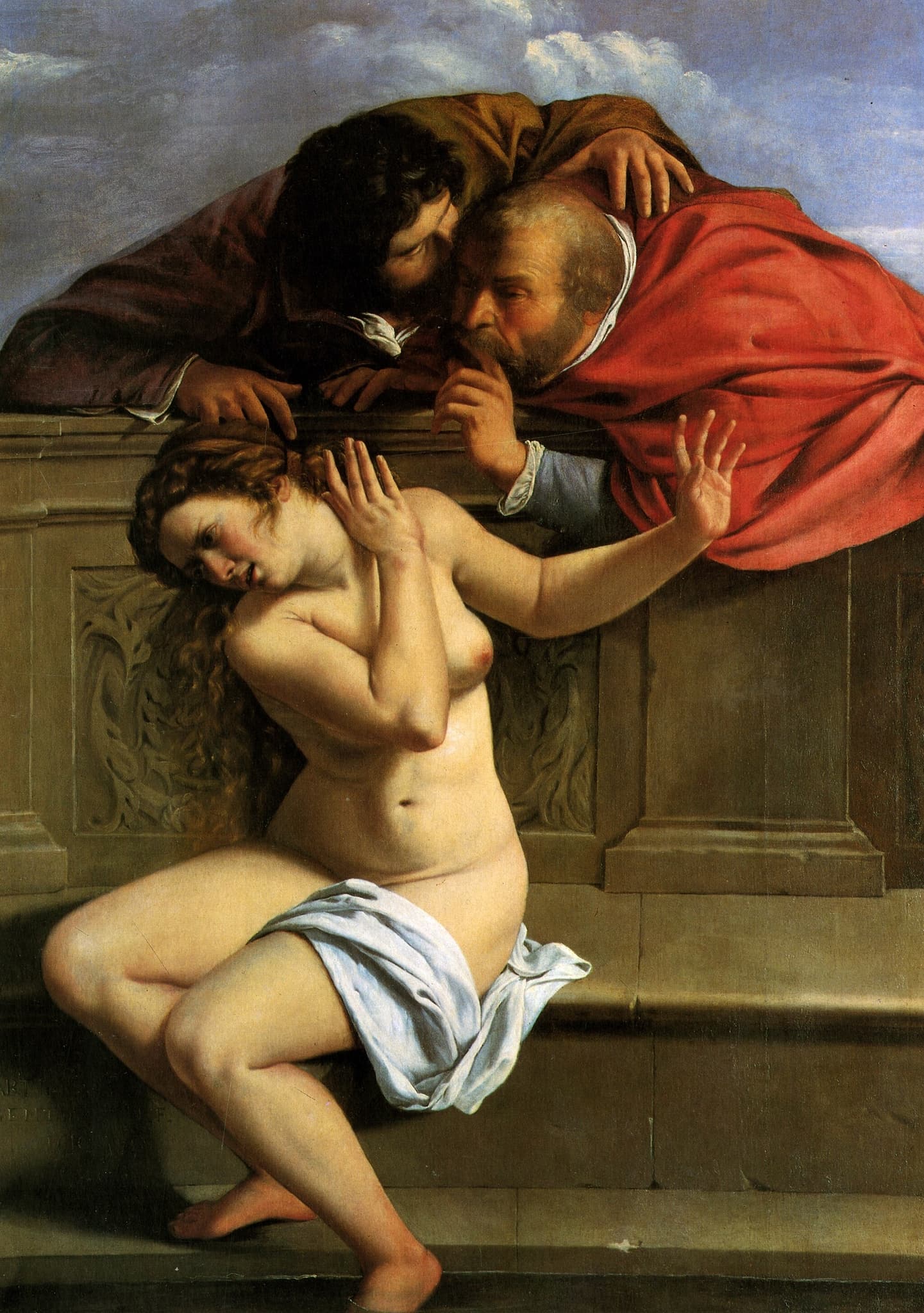
Susanna and the Elders (Pommersfelden / Schloss Weißenstein)
Artemisia Gentileschi, 1610 • Oil on canvas
View more by Artemisia Gentileschi →Valuation Analysis
Valuation conclusion: Based on available comparables, institutional interest in Artemisia, and the Pommersfelden work’s long museum ownership, a market range of USD 3.0–12.0 million is appropriate for a sale in today’s market under the assumption of secure autograph attribution and typical museum‑quality condition. The Schloss Weißenstein Susanna (c.1610, ca. 170 × 119 cm) has not appeared on the modern auction market and is normally held by the Kunstsammlungen Schloss Weißenstein, which constrains direct sale comparables [4].
Key market anchors include a recent artist record at Christie’s (Self‑Portrait as Saint Catherine realized $5.687M) and mid‑single‑million auction outcomes for narrative works by Artemisia; a Susanna variant sold at Sotheby’s NY in 2022 for roughly $2.14M and Artcurial’s 2019 Lucretia sale (~€4.7M) are useful touchpoints that show the artist’s market sits in the low‑to‑mid single millions for museum‑quality works, with headline results above that level in exceptional cases [1][2][3].
The lower bound of USD 3M reflects a conservative market position: despite academic importance, long museum ownership reduces frequency of comparable sales and can depress speculative private‑buyer valuations. Condition issues, historic restorations, or any lingering attribution doubts would push realizations toward or below this floor. Conversely, the upper bound of USD 12M is a practical ceiling in the present market absent an unforeseeable revaluation: it assumes incontrovertible technical/autograph confirmation, pristine condition, a major travelling exhibition or catalogue raisonné attention, and active institutional/competitive private bidding that can produce a substantial premium over ordinary auction outcomes [1][3][5].
Risks and value drivers: The principal upside drivers are (1) firm technical evidence of autograph authorship and 17th‑century materials consistent with Artemisia’s Rome period, (2) outstanding condition or high‑quality conservation, and (3) demonstrable exhibition/publication history that raises institutional demand. Principal downside risks are deaccession constraints (a public/museum owner), export/legal restrictions, unresolved attribution questions, and condition/restoration that diminish aesthetic or scholarly value [4][5].
Recommended next steps to firm the estimate: obtain the Schloss Weißenstein catalogue entry and provenance chain, secure high‑resolution recto/verso photography plus IRR/X‑ray/pigment reports, and commission a condition report and specialist appraisal from an Old Masters department at a major auction house. With those materials the range can be tightened to a single‑figure estimate appropriate to an auction or private‑treaty context.
Key Valuation Factors
Art Historical Significance
High ImpactArtemisia’s Pommersfelden Susanna is an early Roman‑period example (c.1610) that is important for understanding her formative handling of female protagonists and Caravaggesque lighting. As an early Susanna it is academically significant but typically ranks below her canonical mature Judiths in collector prestige. Nevertheless, works that are both early and clearly autograph gain value from scholarship because they materially inform the artist’s chronology and are therefore highly sought by museums and specialist collectors. That scholarly value translates into market value when attribution is secure and exhibition/publication potential is demonstrable, which is why historical importance is a primary value driver for this canvas.
Attribution & Authenticity
High ImpactSecure autograph attribution is the single most important determinant of market value. Where technical analysis (infrared reflectography, X‑radiography, dendrochronology if applicable, and pigment chronology) corroborates connoisseurship, price expectations for Artemisia rise sharply. Conversely, if debate persists or the work is downgraded to school/workshop, realized prices typically fall by large multiples. For the Pommersfelden Susanna, decisive technical confirmation would materially tighten the estimate upward; lack of such confirmation or contradictory evidence would justify discounting toward the lower bound.
Condition & Conservation
Medium ImpactCondition is a practical market constraint: relined canvases, heavy inpainting, varnish discoloration, or unstable paint layers can all materially reduce buyer appetite and price. Museum‑held works often benefit from professional conservation, but historic restorations can also complicate attribution narratives. A clean condition report and clear conservation history increase confidence and support the upper half of the valuation range; by contrast, evidence of significant overpainting or structural instability will push a buyer to apply steep discounts. Obtain a full condition/canvas support report before marketing.
Provenance & Museum Ownership
High ImpactLong, stable provenance in Schloss Weißenstein confers scholarly legitimacy and lowers title risk — both positives for value. However, public/museum ownership also makes a sale operationally rare and legally/ethically sensitive; deaccession processes, export licenses and institutional reluctance can limit market access and reduce competitive bidding. If the museum were to deaccession with full documentation and a clear legal pathway, institutional buyers and high‑net‑worth collectors would likely bid strongly; absent that, practical marketability is constrained despite the favorable provenance.
Market Demand & Comparable Sales
High ImpactRecent comparable sales for Artemisia demonstrate a market in which museum‑quality works clear low‑to‑mid single millions, while headline or rediscovered works can push higher. Examples: a recorded artist auction high at Christie’s ($5.687M) and a Sotheby’s Susanna at roughly $2.14M illustrate current bidding dynamics, while Artcurial’s Lucretia (~€4.7M) shows rediscoveries can command strong prices. Because securely attributed Artemisia canvases are scarce, comparable outcomes strongly influence realized value; current demand from museums and collectors supports the stated valuation band.
Sale History
Susanna and the Elders (Pommersfelden / Schloss Weißenstein) has never been sold at public auction.
Artemisia Gentileschi's Market
Artemisia Gentileschi’s market has undergone a sustained revaluation driven by museum exhibitions, institutional acquisitions, and a growing appreciation of women Old Masters. Secure, museum‑quality autograph works now routinely achieve low‑to‑mid single‑million results at auction, with headline results above that level for rediscoveries or works that attract institutional bidding. Scarcity of accepted works and active scholarship make attribution and condition decisive factors; when those align, competitive bidding from institutions and private collectors can lift prices significantly.
Comparable Sales
Susanna and the Elders (Jacqui Safra sale)
Artemisia Gentileschi
Same artist and same composition (Susanna and the Elders); later-date variant (c.1630s). Direct subject match provides a strong market benchmark for Susanna compositions by Artemisia.
$2.1M
2022, Sotheby's New York
~$2.3M adjusted
David with the Head of Goliath
Artemisia Gentileschi
Same artist, biblical narrative subject and comparable market tier; sold in mid‑2025 and shows where single-figure narrative works by Artemisia land in a competitive sale.
$2.7M
2025, Sotheby's London
Galatea (fragment)
Artemisia Gentileschi
Small/fragmentary Artemisia example sold in 2025 — useful as a lower‑end floor comparable showing demand for fragments or lesser‑quality/attribution‑sensitive material.
$428K
2025, Christie's New York (day sale)
Madonna del Latte
Artemisia Gentileschi
Early/lesser-known Artemisia work selling in the low six‑figures (euros) — indicates the lower band for early or less prominent compositions and smaller market interest where provenance/condition are limited.
$600K
2024, Dorotheum (Vienna)
~$618K adjusted
Self‑Portrait as Saint Catherine of Alexandria
Artemisia Gentileschi
Record public‑sale for Artemisia (Feb 2026). Although after 2025, it functions as a recent high‑water mark and shows strong institutional/collector appetite for top‑quality autograph works.
$5.7M
2026, Christie's New York
Current Market Trends
Current market conditions favor high‑quality, well‑provenanced works by Artemisia: institutional buying, major exhibitions, and continued rediscoveries have increased demand. Supply remains constrained, which supports firm prices for museum‑grade pictures. However, volatility persists — attribution disputes, condition problems, or legal/deaccession hurdles can produce sharp discounts. The near‑term outlook is positive for top authentic works but selective.
Sources
- Christie’s press release — Old Masters sale (Self‑Portrait as Saint Catherine realized $5.687M)
- Sotheby’s lot image/record — Susanna and the Elders (Jan 27, 2022) / public sale reporting
- Artsy coverage — Artcurial sale of Artemisia’s Lucretia (Nov 2019)
- Schloss Weißenstein / collection entry — Susanna and the Elders (Pommersfelden) catalogue references
- National Gallery of Art press release — institutional acquisition and market context (NGA acquisition news)