How Much Is Les Quatre Saisons (The Four Seasons) Worth?
Last updated: March 11, 2026
Quick Facts
- Last Sale
- $9.4M (2017, Sotheby's, London)
- Methodology
- comparable analysis
For the complete four‑panel cycle Les Quatre Saisons (1872–73) by Camille Pissarro I estimate a market value of approximately $9.0–$25.0 million. This range is grounded in direct auction precedents for the reunited set, catalogue‑raisonné recognition and present Impressionist market conditions; final outcome depends on sale configuration, provenance clarity, condition and sale venue.
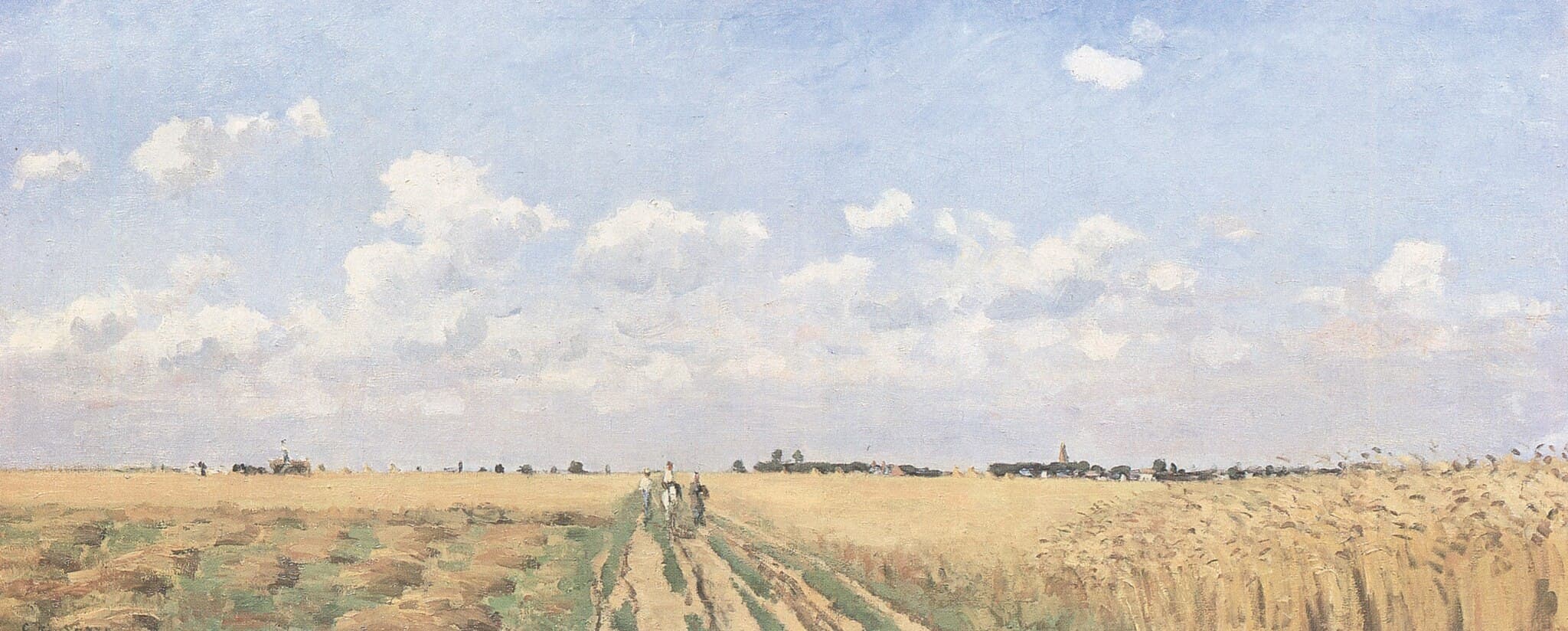
Les Quatre Saisons (The Four Seasons)
Camille Pissarro, 1872 • Oil on canvas
View more by Camille Pissarro →Valuation Analysis
Valuation conclusion: Based on documented auction precedents and current market indicators, the complete four‑panel cycle Les Quatre Saisons (1872–73) is reasonably valued at approximately $9,000,000 to $25,000,000 (USD) in today’s market. This estimate assumes the panels are the canonical, authenticated set in good or conservation‑stable condition and with clean provenance.
The primary market anchors are the repeated public sales of the reunited quartet: Christie’s New York realized $14,601,000 for the set in November 2007 [2], and Sotheby’s London sold the quartet for £7,696,250 (≈$9.45M) on 1 March 2017 [1]. Earlier and intermediate offerings (reported 1991/2004 appearances) show the work trades as a marquee, evening‑sale lot when presented intact; the set is entered in authoritative scholarship and catalogue‑raisonné material, which reinforces attribution and institutional desirability.
Value drivers are straightforward: completeness of the cycle (substantial premium), museum‑level provenance and exhibition history, physical condition across four matching panels, and the sale channel (top evening sale vs regional sale or private treaty). Negative modifiers include condition issues or heavy restorations, any provenance gaps particularly in the 1930s–1940s, and offering the panels separately. The buyer pool for a reunited, high‑quality Pissarro cycle is specialist: major museums and deep‑pocket private collectors, so liquidity is narrower but capable of producing strong prices for the right lot.
The low end of the range (~$9M) is effectively the most recent public sale benchmark (Sotheby’s 2017) and reflects a conservative expectation in a selective market; the mid‑range (~$10–$18M) aligns with historic realizations adjusted for market conditions and currency effects. The high end (~$25M) represents a best‑case scenario — pristine condition, exemplary provenance, fresh‑to‑market presentation with institutional interest or a guarantee in a marquee evening sale — and would approach the upper historic elasticity of demand for Pissarro multi‑panel works.
Practical next steps: to firm this opinion commission a full condition report and technical imaging (X‑ray/IR), assemble complete provenance/exhibition documentation, and obtain a specialist opinion (catalogue‑raisonné author or major house Impressionist specialist). For maximum value, present the set intact in an Impressionist evening sale with institutional outreach; if speed/liquidity is paramount, prepare for a private treaty but expect a discount to the evening‑sale band.
Key Valuation Factors
Art Historical Significance
High ImpactLes Quatre Saisons is a rare, commissioned four‑panel cycle executed 1872–73 at a formative moment in Pissarro’s Impressionist practice. As a thematically unified work (Winter, Spring, Summer, Autumn) with catalogue‑raisonné entries and recurring exhibition history, the cycle carries substantial scholarly and curatorial interest. Museum desire for complete, publishable cycles increases competitive bidding and institutional acquisition potential. The work's place in Pissarro’s oeuvre (early Impressionist period) and presence in standard scholarship elevates its status above run‑of‑the‑mill studio pieces, supporting higher estimate ceilings.
Provenance & Exhibition History
High ImpactA long, well‑documented provenance (dealers such as Durand‑Ruel/Bernheim‑Jeune, important private owners, and major museum loans) materially enhances market value by reducing buyer risk and enabling institutional purchases or loans. Repeated exhibition and publication history increases freshness and buyer confidence. Conversely, any gaps or contested ownership histories, particularly in the wartime era, would require restitution diligence and can create significant discounts or limit buyer pools. Clear paperwork and catalogue citations materially tighten expectations.
Physical Condition & Conservation
High ImpactCondition is critical for multi‑panel works: structural integrity, consistent canvas tension, matching varnish and color across panels, and degree of past restorations all influence a buyer’s willingness to pay a premium. Differential restoration or cosmetic issues on even a single panel can reduce the ensemble’s marketability. Technical imaging (X‑ray, IRR), pigment analysis and a conservator’s report are necessary to quantify condition and to support a high‑end estimate. Clean, exhibition‑ready condition is a gateway to institutional bidders.
Market Comparables & Liquidity
Medium ImpactAuction record lines for the complete set (2004/2007/2017) provide the clearest comparables; single‑canvas Pissarros trade over a wide band (low five‑figures to multi‑millions), while canonical museum‑scale works have reached tens of millions. Liquidity for a reunited cycle is limited but deep when institutions are interested; therefore outcome volatility is higher than for ordinary single panels. Currency movements, sale timing, and house placement (evening sale with guarantees) materially affect results.
Sale Configuration (Set vs Single Panels)
High ImpactOffering the four panels as an intact set typically commands a substantial premium versus dispersed sales. Historical evidence shows the reunited quartet realized multi‑million totals at major houses; breaking the cycle risks reducing aggregate value because buyers pay for the conceptual and exhibitionary completeness. The recommended commercial strategy is to market and sell the set together unless market conditions or buyer interest indicate a strategic, documented split with prior expert consultation.
Sale History
Christie's, New York
Christie's, New York
Sotheby's, London
Camille Pissarro's Market
Camille Pissarro (1830–1903) occupies firm blue‑chip status in the Impressionist market. His works trade across a broad spectrum — from modest studio studies selling in the low five‑figures to canonical, museum‑scale canvases that have realized tens of millions at auction. Demand is strongest for museum‑quality, well‑provenanced works that are fresh to market and accompanied by scholarship. The market is segmented and selective: institutional buyers and established private collectors drive top prices while a deeper mid‑market exists for smaller oils and works on paper.
Comparable Sales
Les Quatre Saisons (L’Hiver, Le Printemps, L’Été, L’Automne) — complete set (4 panels)
Camille Pissarro
Exact same object (complete four-panel cycle) — definitive auction precedent and the highest reported realized price for this set; directly establishes market history for the work.
$14.6M
2007, Christie's, New York — Impressionist & Modern Evening Sale
~$23.1M adjusted
Les Quatre Saisons (L’Hiver, Le Printemps, L’Été, L’Automne) — complete set (4 panels)
Camille Pissarro
Same complete set sold a decade later at Sotheby's London; shows later-market realization, currency/exchange and demand effects—important for recent-market benchmarking.
$9.4M
2017, Sotheby's, London — Impressionist & Modern Evening Sale
~$12.6M adjusted
Les Quatre Saisons (L’Hiver, Le Printemps, L’Été, L’Automne) — complete set (4 panels)
Camille Pissarro
Earlier sale of the same set (reported as the prior record) — useful to show price trajectory and pre-2007 market level for the cycle.
$9.0M
2004, Christie's, New York — Impressionist & Modern Sale (reported)
~$15.4M adjusted
Le Boulevard Montmartre, Matinée de Printemps (Boulevard Montmartre series)
Camille Pissarro
Artist's auction record and a museum-scale, canonical Pissarro urban panorama — provides an upper-market ceiling for top-tier single Pissarro canvases and demand for major museum-quality works.
$32.1M
2014, Sotheby's, London — Modern & Impressionist Evening Sale (artist auction record)
~$44.3M adjusted
Matin, soleil d'automne à Eragny
Camille Pissarro
Recent sale of a single Pissarro panel from the Eragny period — useful as a near-term, single-panel market comparator to estimate per-panel values or tiers when the quartet is considered in parts.
$2.0M
2025, Christie's, New York — Impressionist & Modern Sale (day/representative example)
Current Market Trends
The Impressionist market was selective in 2023–24 and showed partial recovery in 2025; demand favors museum‑quality works with clean provenance and institutional narratives. Major retrospectives and exhibitions (such as the 2025 Pissarro museum tour) lift visibility and can materially improve realizations. Increased provenance/legal scrutiny since 2020 has raised buyer diligence and, in some cases, compressed prices for works with ownership gaps.
Sources
- Sotheby’s — Impressionist & Modern Evening Sale, London, 1 March 2017 (lot entry for Les Quatre Saisons)
- Christie’s — Impressionist & Modern Evening Sale price list / press materials, 6 November 2007 (reported sale: $14,601,000)
- Museum Barberini — 'The Honest Eye: Camille Pissarro’s Impressionism' (retrospective / scholarship raising market visibility, 2025)