How Much Is Las Hilanderas (The Spinners / The Fable of Arachne) Worth?
Last updated: April 27, 2026
Quick Facts
- Methodology
- comparable analysis
Las Hilanderas is a canonical, museum‑held masterpiece by Diego Velázquez; if hypothetically and unconstrainedly offered on the open international market it would be expected to fall in a broad indicative range of approximately $100–$400 million. This range reflects extreme scarcity, museum provenance and trophy demand, subject to significant legal and political limitations that make any real transactional price largely theoretical.
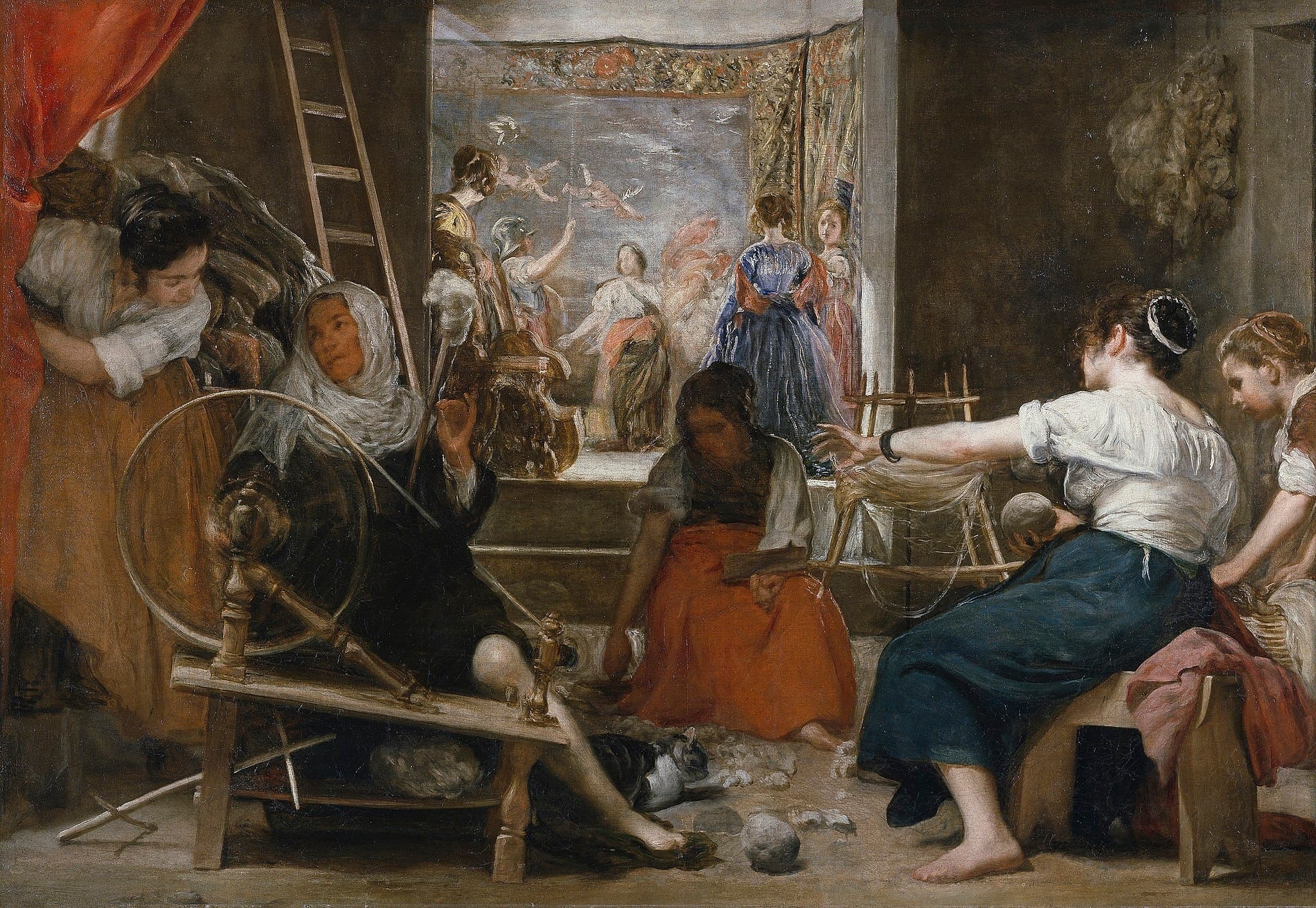
Las Hilanderas (The Spinners / The Fable of Arachne)
Diego Velazquez, 1657 • Oil on canvas
View more by Diego Velazquez →Valuation Analysis
Valuation conclusion: Treat this as a hypothetical open‑market estimate: because Las Hilanderas is a major late Velázquez in the Prado, its theoretical auction or private‑treaty value sits in the range of $100–$400 million. That range is an extrapolation derived from the artist’s sparse sale record, high institutional demand for canonical Old Masters, and extreme rarity of museum‑quality Velázquez canvases entering the market [1].
Comparables and market logic: Direct, recent Velázquez comparables at public auction are scarce and sit in the single‑ to low‑double‑digit millions (for example, the modern auction high for an accepted Velázquez is far below the top Old Master ceiling) so this valuation relies on a laddered comparable analysis: (a) realized Velázquez sales and rediscoveries provide a baseline floor for autograph or attributed material, (b) rare museum‑grade Old Master masterpieces that have reached the open market (or contested outliers) set an upper bound, and (c) institutional competition and trophy‑buyer dynamics justify a significant premium relative to ordinary auction comps [2].
Caveats and modifiers: The Prado’s long‑standing ownership and Spain’s cultural‑heritage protections materially reduce liquidity and make public sale unlikely; export restrictions or state rights of first refusal could prevent a commercial transfer, rendering this number largely theoretical. Condition and technical history (Prado conservation records) are favorable in concept for value preservation, but any unforeseen conservation issues would lower marketability. Finally, buyer type matters: national museums or sovereign institutions competing against ultra‑high‑net‑worth private collectors would push realized prices toward the upper end of the range, whereas a constrained buyer pool or legal intervention would depress realizable value.
Practical valuation use: Use the $100–$400M band as an indicative strategic range for policy, insurance‑scenario planning, or hypothetical sale modelling only. For an operational appraisal (insurance, loan indemnity, or an actual sale process) the following are essential: on‑site condition and technical report, formal provenance/legal clearance, and confidential consultation with top Old Master specialists at leading houses (Christie’s/Sotheby’s) and museum valuation teams. Until/unless the Prado deaccessions or legal barriers are removed, the painting’s market value will remain a highly qualified, hypothetical construct rather than a transaction‑backed price [1][2].
Key Valuation Factors
Art Historical Significance
High ImpactLas Hilanderas is one of Velázquez’s major late works (c.1657), essential to interpretations of his late style and compositional practice. The painting’s complex two‑plane structure (a foreground genre scene masking a mythological tableau) and masterly handling of space, light and paint texture give it exceptional scholarly and curatorial importance. That status produces an intangible cultural premium: institutions seeking to anchor displays of the Spanish Golden Age prize such works for exhibition and permanent collection status. The painting’s canonical place in scholarship and frequent inclusion in Prado programming and publications amplify its trophy value and justify a valuation multiple above routine Old Master lots.
Rarity & Market Supply
High ImpactAutograph Velázquez canvases rarely, if ever, circulate; most of his major works reside in national museums. This near‑zero supply creates a structural scarcity premium: if a major Velázquez were to appear in the open international market it would draw exceptional institutional and private attention. Historical public sales of accepted Velázquez works are few and sit orders of magnitude below the ceiling for the Old Masters category – but scarcity combined with institutional competition can produce very large premiums versus the artist’s auction history. Limited supply therefore pushes hypothetical valuation substantially higher than typical auction comparables.
Provenance, Ownership & Legal Constraints
High ImpactLas Hilanderas is held by the Museo Nacional del Prado with long royal/museum provenance; Spanish cultural heritage law and export‑control regimes (and frequent rights of first refusal) place strong legal and political constraints on any transfer. Those protections reduce transactional liquidity and can prevent commercial sale altogether. From a valuation perspective, legal immutability both elevates the painting’s cultural value and makes a market price hypothetical: the painting’s full market potential would only be realizable if deaccessioning and export approvals were granted — politically rare and publicly scrutinized events.
Condition & Conservation History
Medium-high ImpactConservation status is typically favorable for museum‑held major works because top institutions maintain rigorous technical programs; Prado documentation and technical study support attribution and condition stability. A clean, well‑documented conservation history and robust technical reporting increase buyer confidence and thereby support higher valuations. Conversely, evidence of invasive overpainting, unresolved technical issues, or poor restorations would materially reduce the market value. For Las Hilanderas the assumption in this estimate is of accepted autograph status and stable Prado conservation, a positive factor for a premium valuation.
Institutional Demand & Marketability
High ImpactThe principal buyers for a work of this stature would be national museums and a handful of trophy private collectors or sovereign patrons. Institutional demand is the principal price driver, since museums are both willing to pay premiums for canonical works and have budgets/governance frameworks for such acquisitions. However, because most institutions already possess seminal Velázquez canvases and because governments often block export, actual market interest is concentrated, making price outcomes binary and highly sensitive to political will, donor structures, and fund availability.
Sale History
Las Hilanderas (The Spinners / The Fable of Arachne) has never been sold at public auction.
Diego Velazquez's Market
Diego Velázquez occupies one of the highest cultural positions in the Old Master canon, but his market is defined by extreme scarcity: most autograph masterpieces are held by major museums (Prado, Met and others) and rarely appear for sale. Public auction records for secure Velázquez attributions sit in the single‑ to low‑double‑digit millions, reflecting supply constraints rather than demand weakness. Institutional competition, scholarship and exhibition endorsement are central to any high‑value sale; rediscoveries and attributions can sell for a discovery premium, yet canonical museum pieces typically remain off‑market and therefore command hypothetical premium valuations when considered for sale.
Comparable Sales
Portrait of Juan de Pareja
Diego Velázquez
Historic, record-setting public sale of a major Velázquez that demonstrates strong institutional demand; useful as an older benchmark for museum-calibre Velázquez works.
$5.5M
1970, Christie's (London)
~$45.7M adjusted
Saint Rufina (Santa Rufina)
Diego Velázquez
Modern public-auction high for an accepted Velázquez; directly comparable as same artist and auction context, showing the realized market ceiling for Velázquez in recent open sales.
$17.0M
2007, Sotheby's (London)
~$26.4M adjusted
Portrait of Monsignor Cristoforo Segni (attributed to Diego Velázquez & Pietro Martire Neri)
Diego Velázquez & Pietro Martire Neri
Recent sale of a Velázquez attribution/collaboration that illustrates current-market demand and typical mid-range price points for works offered with auction visibility.
$4.1M
2024, Sotheby's Masters Week
~$4.1M adjusted
Rediscovered Velázquez (Sotheby's example, 2019)
Diego Velázquez (attribution/rediscovery)
Illustrates the 'rediscovery' premium and how newly attributed Velázquez works (even when important) typically trade in the low millions at auction.
$3.0M
2019, Sotheby's
~$3.8M adjusted
Salvator Mundi
Leonardo da Vinci
Extreme outlier for Old Masters showing the ceiling possible when provenance, controversy and global competition align; used as contextual upper-bound (not a same-artist comparable).
$450.3M
2017, Christie's (New York)
~$587.6M adjusted
Current Market Trends
The Old Masters market is ‘top‑heavy’: trophy masterpieces still command strong interest while the middle market remains soft. Auction houses increasingly rely on private treaty sales, guarantees and curated presentations for high‑value works. Institutional acquisitions and blockbuster museum loans bolster demand for canonical pieces, but political and legal constraints on national treasures (export controls, right of first refusal) reduce liquidity and make realized prices for museum‑grade works highly contingent and often theoretical.
Sources
- Museo Nacional del Prado — The Spinners (Las Hilanderas / The Fable of Arachne)
- Sotheby's — Old Master Paintings Evening Sale (Santa Rufina, Velázquez lot, 2007) / press coverage
- Portrait of Juan de Pareja sale (historic benchmark) — summary and sale history
- Salvator Mundi (Christie's 2017) — contextual high‑end Old Master outlier
- Spanish Ministry of Culture — cultural heritage protections and export controls (guidance)