How Much Is Portrait of Juan de Pareja Worth?
Last updated: April 27, 2026
Quick Facts
- Last Sale
- $5.5M (1970, Christie's, London)
- Methodology
- comparable analysis
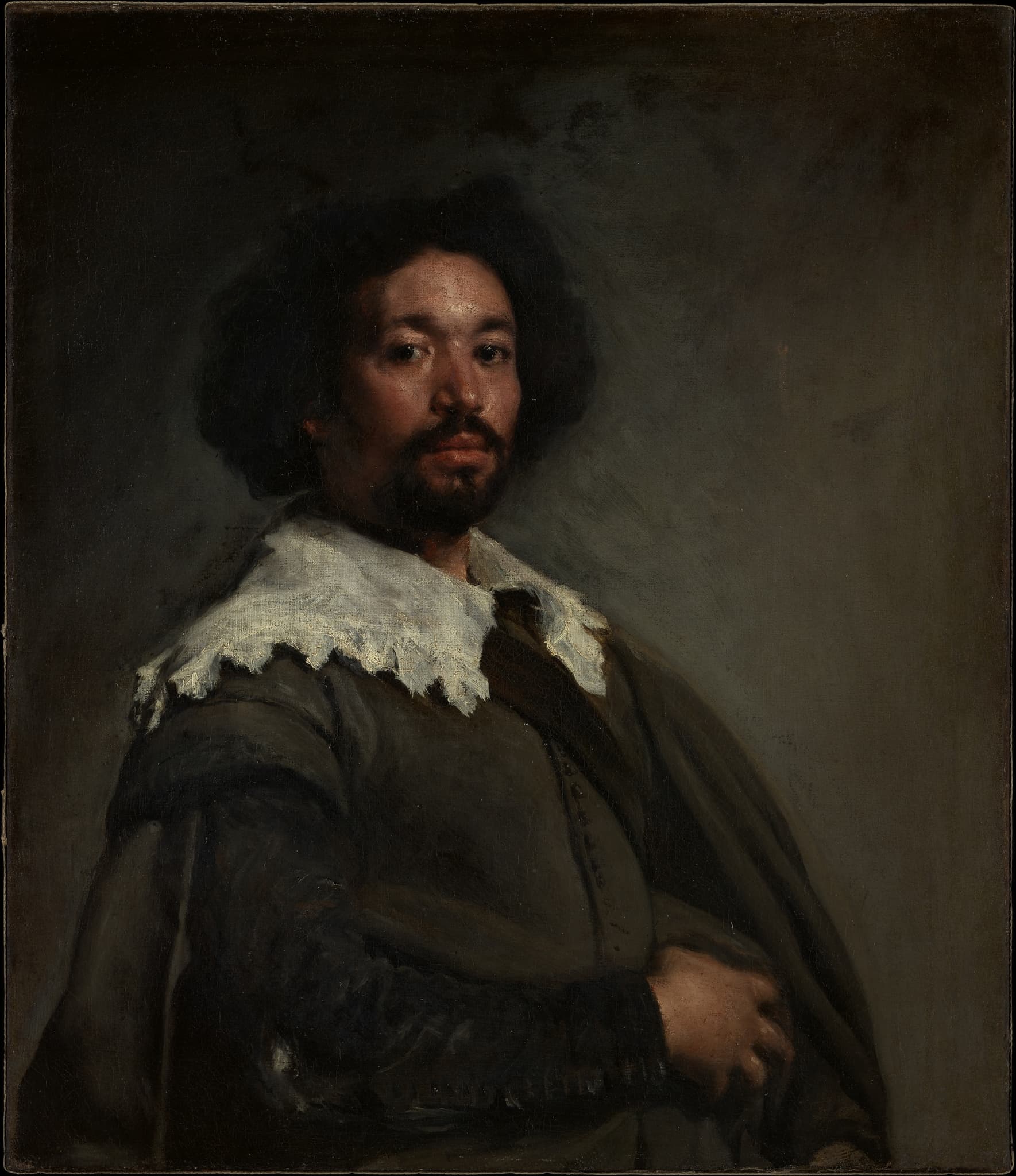
Portrait of Juan de Pareja (Diego Velázquez, c.1650) is a museum‑quality, canonical Velázquez in the Metropolitan Museum of Art and is effectively off‑market. In a hypothetical, unobstructed sale it would plausibly command US$100–150 million based on the painting’s art‑historical stature, scarcity of autograph Velázquez masterpieces, and high‑end Old Master trophy comparables.
Valuation Analysis
Bottom‑line context: Portrait of Juan de Pareja (Diego Velázquez, c.1650) is a museum‑quality, canonical work held by The Metropolitan Museum of Art (accession no. 1971.86) and is therefore effectively removed from normal commercial circulation [1]. The painting last appeared in a public auction at Christie’s, London, on 27 November 1970, when it was reported sold for £2,310,000 (approximately US$5.54M at the time) prior to the Met’s acquisition in 1971 [2].
Method and anchors: This valuation uses a comparable‑analysis approach. Direct modern auction comps for top‑tier Velázquez are scarce, so the estimate synthesizes (a) the painting’s historic transaction as a transactional anchor, (b) artist‑specific auction evidence (the relatively modest public auction record for Velázquez), and (c) cross‑category trophy transactions that define the ceiling for canonical Old Masters (for example, the Louvre/Rijksmuseum Rembrandt purchase and exceptional results such as Salvator Mundi).
Price rationale: The 1970 Christie’s sale supplies a concrete historical anchor; inflation and market context convert that anchor into a meaningful present‑day baseline. That baseline is then adjusted upward for three premium drivers: incontrovertible attribution to Velázquez, the work’s centrality in scholarly and museum narratives, and the near‑zero supply of comparable autograph Velázquez portraits available to global institutions. Given strong institutional/sovereign demand when a canonical Old Master does surface, and accounting for the uncertain sale mechanism, a conservative competitive band of US$100–150 million is a reasoned hypothetical.
Risks and limitations: The principal constraint on realizing this value is marketability. Institutional ownership, export and patrimony restrictions, potential state pre‑emption, and curatorial resistance to deaccessioning make a genuine open‑market sale highly improbable. Even if lawfully offered, sale mechanics (public auction vs negotiated treaty, guarantees, or joint museum purchase) and the composition of the bidder pool would strongly influence the final price—either compressing or inflating the result relative to the band above.
Next steps to firm the opinion: to convert this market opinion into a formal appraisal you should obtain the Met’s conservation and technical reports (X‑ray, infrared reflectography, pigment analysis), any insurer or internal valuation records, precise ledgers for the 1970 sale and currency conversions, and structured consultations with senior Old Master specialists at leading auction houses and Velázquez scholars to test sale scenarios and likely institutional interest. Until such diligence is completed, the US$100–150 million band should be treated as a professional, market‑oriented hypothetical ceiling rather than a transactional guarantee.
Key Valuation Factors
Art Historical Significance
High ImpactPortrait of Juan de Pareja is one of Velázquez's most famous and frequently cited portraits. Executed circa 1650, it exemplifies his late‑career mastery of paint handling, tonal subtlety and psychological presence, and it occupies a central place in Velázquez scholarship and museum displays worldwide. Because the painting is both aesthetically and historically indispensable—to exhibitions, catalogues raisonnés and academic study—its institutional and cultural value is exceptionally high. That significance translates directly into market value in the rare circumstances a museum‑quality canonical work becomes available: buyers pay a premium for works that define an artist’s reputation and are irreplaceable within public collections.
Rarity / Supply
High ImpactTop‑tier, undisputed Velázquez paintings are effectively absent from the international private market: major canvases are concentrated in national collections (the Prado, major European and American museums) and seldom change hands. This structural scarcity generates a pronounced scarcity premium—when a genuinely museum‑grade Velázquez appears, potential buyers are limited to a handful of wealthy private collectors, sovereigns and major museums. The tiny supply of comparable works means market pricing is driven more by institutional trophy demand and negotiation dynamics than by frequent auction comparables, supporting a valuation multiple well above ordinary Old Master benchmarks.
Provenance & Condition
High ImpactThe painting benefits from a documented ownership history (long UK private ownership followed by the Christie’s 1970 sale and Met accession in 1971) and an established scholarly consensus on attribution. These provenance features materially reduce attribution and authenticity risk—the primary value destroyers in the Old Masters market. Moreover, stewardship by the Metropolitan Museum implies professional conservation and condition management; confirmed excellent condition and technical reports (X‑ray, IRR, pigment analysis) would further strengthen buyer confidence and support the upper end of the hypothetical value range.
Marketability & Legal / Institutional Constraints
High ImpactMarketability is the key limiter: the Met’s ownership, combined with national patrimony considerations for Spanish Golden‑Age works, export controls and museum deaccessioning norms, make a sale highly unlikely. Even if a sale were negotiated, institutional pre‑emption, joint acquisitions, reputational concerns and legal steps can constrain the pool of bidders and alter price mechanics (private treaty vs. auction). These institutional and legal frictions mean the valuation functions as a theoretical market ceiling under optimal competitive conditions rather than a robust prediction of an actual sale outcome.
Sale History
Christie's, London
Diego Velazquez's Market
Diego Velázquez is the preeminent artist of the Spanish Golden Age and one of the most esteemed 17th‑century European painters. Market activity for his autograph masterpieces is extremely limited because many of his canonical works reside in national and major museum collections. Consequently, public auction records understate his cultural value; when authentic, museum‑quality Velázquez canvases do appear they attract intense institutional and sovereign interest. Pricing is governed more by scarcity, provenance and scholarly consensus than by frequent auction turnover, meaning any legitimate Velázquez trophy can command prices well above routine Old Master levels in competitive, unobstructed conditions.
Comparable Sales
Salvator Mundi
Leonardo da Vinci
Once-in-a-generation Old Master trophy sale that establishes the market ceiling for exceptional, museum‑quality works and demonstrates willingness to pay hundreds of millions for a canonical painting.
$450.3M
2017, Christie's New York
~$589.9M adjusted
Portraits of Maerten Soolmans & Oopjen Coppit (pair)
Rembrandt van Rijn
High‑end, museum/sovereign negotiated purchase of canonical 17th‑century portraits; directly comparable in terms of institutional/trophy demand and willingness to pay at the top end.
$176.0M
2016, Private treaty (Louvre & Rijksmuseum joint acquisition)
~$234.1M adjusted
Saint Rufina
Diego Velázquez
Modern public auction record reference for a Velázquez painting; useful as an artist‑specific auction anchor though far lower than trophy‑level cross‑category sales.
$17.0M
2007, Sotheby's London
~$25.8M adjusted
Portrait of Juan de Pareja (historic sale)
Diego Velázquez
Direct, historic sale of the same painting (Christie's 1970). Serves as the primary transactional anchor for this specific work when inflation‑adjusted.
$5.5M
1970, Christie's London
~$45.5M adjusted
Le Melon entamé
Jean‑Siméon Chardin
Recent (2024) high‑end Old Master sale showing renewed buyer appetite for top‑quality, well‑provenanced works in the category; useful for showing market momentum though different artist/genre.
$28.8M
2024, Christie's Paris
~$29.7M adjusted
Current Market Trends
The Old Masters market has experienced a selective recovery driven by a flight to quality: buyers concentrate on well‑provenanced, museum‑grade works. Spanish Golden‑Age paintings remain supply‑constrained and subject to patrimony protections, which supports valuations for top examples. Institutional and sovereign buyers lead at the top end, while private collectors participate cautiously. Guarantees and negotiated acquisitions increasingly shape outcomes for trophy lots. Overall demand for canonical Old Masters is resilient but final price realization depends on clear attribution, conservation documentation and a sale framework that accommodates institutional stakeholders.
Sources
- Metropolitan Museum of Art — collection entry: Portrait of Juan de Pareja
- Juan de Pareja by Diego Velázquez — The Metropolitan Museum of Art Bulletin (June 1971) / acquisition documentation
- Sotheby’s — Saint Rufina (Velázquez) sale listing, 2007
- Christie's press: joint Louvre & Rijksmuseum acquisition of Rembrandt pendants (press coverage of negotiated purchase)