How Much Is Portrait of Mariana of Austria Worth?
Last updated: April 27, 2026
Quick Facts
- Methodology
- comparable analysis
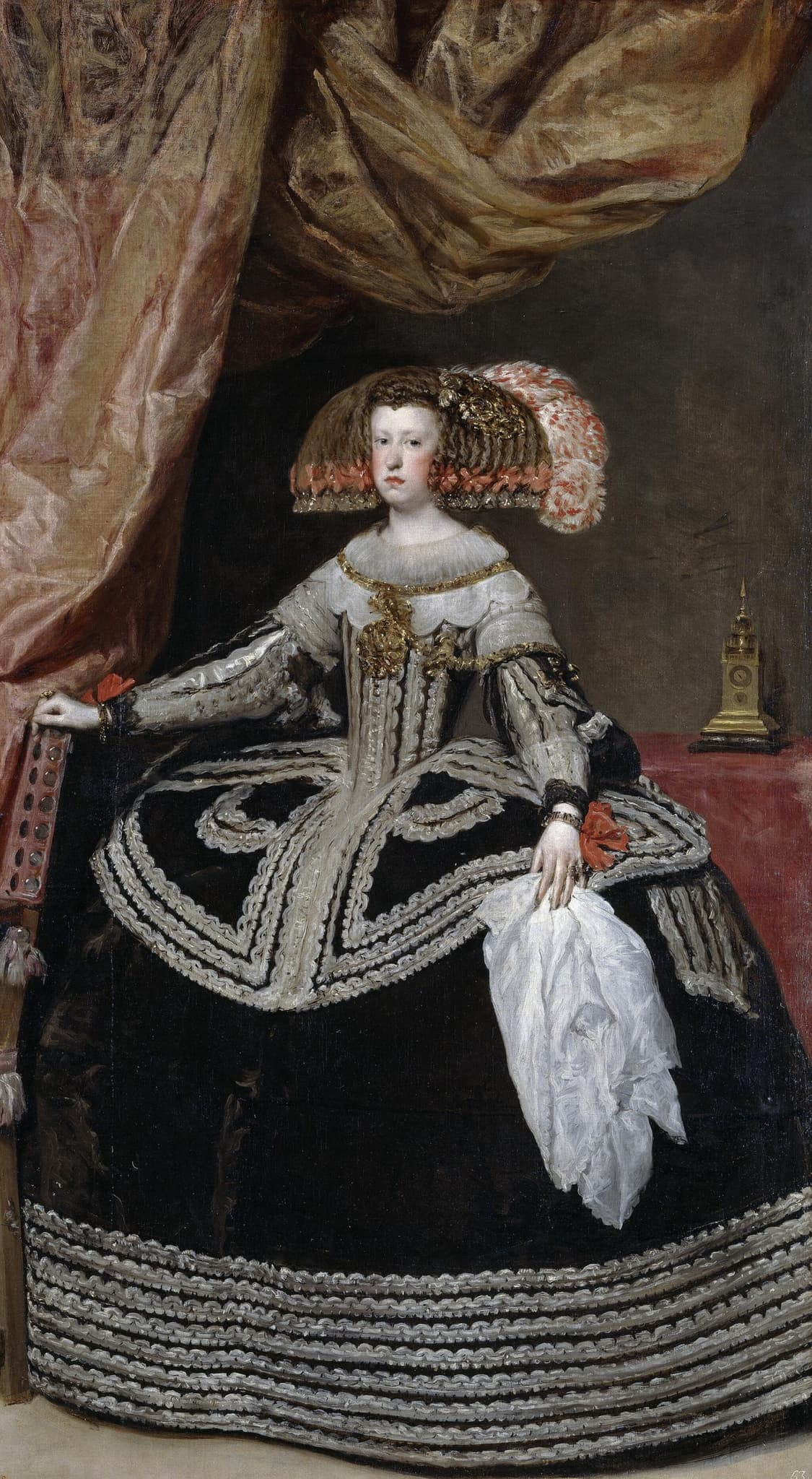
Assuming this is a securely attributed, museum‑quality, full‑length autograph Portrait of Mariana of Austria by Diego Velázquez (c.1652), the defensible market range is $100–150 million. If attribution, provenance, or condition are compromised, value falls sharply (see narrative).
Valuation Analysis
Assumption & headline: This valuation presumes the painting is a securely attributed, autograph, full‑length oil portrait of Queen Mariana of Austria by Diego Velázquez (c.1652). Under that assumption I place the market value at $100–150 million, a range driven by extreme scarcity, institutional demand and high trophy‑market elasticity.
Supply and institutional lock: The canonical autograph full‑length portrait is held by the Museo Nacional del Prado and has not been available on the open market in modern times, which effectively removes direct contemporary price discovery and concentrates buyer interest in the institutional and ultra‑high‑net‑worth channels [1]. That “museum‑locked” status is the primary structural reason an authenticated Velázquez of this subject would command a substantial premium.
Comparables & price anchors: Open‑market anchors for Velázquez are sparse. The most cited public result is the Sotheby’s 2007 sale of Saint Rufina (a securely attributed Velázquez example realized in the mid‑multi‑millions), which provides a conservative auction anchor [2]. Historic transactions such as the 1970 sale/acquisition of Portrait of Juan de Pareja (now at the Met) function as landmark precedents for portrait works and, when inflation‑adjusted and considered with present institutional appetite, support the proposition that a canonical royal portrait could sit well above usual auction anchors. Because comparable autograph works rarely reach the block, a private treaty or heavily guaranteed auction lot is the more likely route to market for a picture of this importance.
Key value drivers and downside risks: Attribution is decisive — a secure Velázquez autograph versus a studio or later copy changes value by orders of magnitude. Technical evidence (infrared reflectography showing underdrawing/pentimenti, X‑ray layers, pigment and ground analysis, canvas weave / thread‑count matches) and close connoisseurship are necessary to confirm autograph authorship. Provenance (royal or continuous museum lineage), exhibition and catalogue‑raisonné citations materially increase marketability and premium. Condition and conservation history (relining, heavy overpaint, loss or structural compromise) can reduce value substantially even for works with good attribution. Spanish patrimony/export controls and possible museum intervention are additional constraints that frequently alter sale structure and timing, and may force private treaty outcomes or national retention [3].
Market mechanics & conclusion: Given these factors, $100–150M is an appropriate working range for a fully authenticated, excellent‑condition, well‑provenanced autograph. The top of the range assumes active competition between major institutions/collectors and a clean export/clearance pathway; the low end of the range assumes institutional interest but less aggressive buyer competition or some condition/technical caveats. If the painting is instead a studio or later copy, expect valuations in the $50k–2M band; an autograph with significant condition or attribution doubts would trade in the tens of millions, not the hundreds. To refine this estimate I recommend immediate high‑resolution photography, complete provenance documentation, and technical imaging/pigment analysis followed by consultation with leading Velázquez scholars and Old Masters specialists.
Key Valuation Factors
Art Historical Significance
High ImpactA securely attributed, full‑length portrait of Queen Mariana by Velázquez is of high art‑historical importance: it is a primary court portrait by Spain’s foremost Golden‑Age painter and a central object within the mature court portrait corpus. While not as publicly iconic as Las Meninas, a royal portrait of this scale and context is highly desirable to national collections and major museums. This significance elevates cross‑market appeal (museums, sovereign collectors, major private collections) and supports a premium that is robust to short‑term market fluctuations. Inclusion in principal catalogues and museum displays amplifies value.
Attribution & Scholarly Consensus
High ImpactAttribution is the single largest determinant of value. Secure authorial attribution to Velázquez—supported by connoisseurship and technical proof such as pentimenti visible on infrared reflectography, consistent ground and paint handling, pigment palettes congruent with Velázquez’s known practice, and corroboration in catalogues raisonnés—raises the painting to trophy status. Doubt or split scholarly opinion immediately reduces marketability and can depress prices by an order of magnitude. For top‑end valuation, a consensus among leading Velázquez scholars and technical corroboration are prerequisites.
Provenance & Exhibition History
High ImpactClear, well‑documented provenance—especially royal, court, or long‑term museum ownership—significantly increases buyer confidence and price. Exhibition history in major institutions and citations in primary Velázquez literature reduce acquisition risk for museums and collectors and often justify a strong premium. Conversely, gaps in ownership, wartime transfers without documentation, or unverified early history create legal and reputational risks and can reduce achievable value or prevent international sale.
Condition & Technical Findings
Medium ImpactPhysical condition and visible technical characteristics have a material impact on price. Original ground, minimal invasive restorations, and structural soundness preserve value. Issues such as heavy overpaint, invasive relining, paint loss, or unstable supports reduce both aesthetic and market value. Technical studies that reveal autograph pentimenti, original pigments and brushwork will increase confidence and price; the absence of such signatures (or evidence of later repainting) will materially lower the estimate.
Market Scarcity & Legal/Patrimony Constraints
High ImpactCanonical Velázquez paintings are extremely scarce on the open market and many important works are held by national museums, producing a supply constraint that elevates price when genuine examples appear. Spanish patrimony laws and potential export restrictions often complicate sale and can lead to museum retention or national purchase, changing the sale dynamics from open international auction to domestic treaty sale. This scarcity and regulatory overlay both increase the ceiling and introduce execution risk—both factors are reflected in the valuation range.
Sale History
Portrait of Mariana of Austria has never been sold at public auction.
Diego Velazquez's Market
Diego Velázquez occupies a top tier in Old Masters art history but an unusually limited market presence: most canonical works are museum‑held and rarely appear in the private market. Public auction anchors are therefore few and relatively modest compared with the theoretical willingness of museums and sovereign collectors to pay for trophy pieces. When high‑quality Velázquez autographs do appear, routes to sale commonly include private treaty deals or heavily guaranteed auction consignments. This combination of scarcity and institutional demand supports very high theoretical values, but realisation depends on legal, attributional and buyer‑interest dynamics.
Comparable Sales
Saint (Santa) Rufina
Diego Velázquez
Autograph Velázquez; widely cited modern public‑auction anchor for the artist — useful as a ceiling/anchor for what an autograph Velázquez can realise in the open market.
$17.0M
2007, Sotheby's, London
~$26.5M adjusted
Portrait of Juan de Pareja
Diego Velázquez
Autograph, high‑profile portrait and landmark museum acquisition (historical price discovery). Useful as a precedent for portrait works by Velázquez when adjusted for inflation.
$5.5M
1970, Christie's, London
~$45.8M adjusted
Portrait of Monsignor Cristoforo Segni
Diego Velázquez and Pietro Martire Neri
Recent open‑market sale of a Velázquez‑associated portrait (collaborative attribution). Shows market outcomes for works with attribution/authorial complexity.
$4.1M
2023, Sotheby's, New York (Masters Week)
~$4.3M adjusted
Small portrait attributed to Diego Velázquez (Madrid sale)
Attributed to Diego Velázquez (contested)
Contested attribution sold for a high mid‑single‑digit/low‑eight‑figure sum — useful precedent for how attribution disputes materially depress or limit value compared with undisputed autographs.
$8.7M
2017, Madrid auction (reported in press)
~$11.5M adjusted
Current Market Trends
The Old Masters market remains selective and “spiky”: 2024 was softer overall, while 2025–2026 showed selective rebounds when museum‑grade material appeared. For Spanish Golden‑Age works, institutional interest and patrimony constraints are the dominant market forces; supply is tightly held and any authenticated Velázquez attracts disproportionate attention. Expect most top examples to transact privately or under guaranteed auction conditions rather than through frequent public competition.
Sources
- Museo Nacional del Prado — Portrait of Queen Mariana of Austria (object entry)
- Sotheby's — Old Master Paintings Evening Sale (Saint Rufina lot, 2007 result)
- The Art Newspaper — coverage of a high‑profile Velázquez consignment and market context
- The Metropolitan Museum of Art — Portrait of Juan de Pareja (collection / reference)