How Much Is Portrait of Pope Innocent X Worth?
Last updated: April 27, 2026
Quick Facts
- Methodology
- extrapolation
Final valuation range: $200–$350 million. This range reflects the painting's canonical art‑historical status, absolute supply scarcity of autograph Velázquez masterpieces, and the demonstrated ability of trophy, museum‑quality paintings to reach the low hundreds of millions in highly competitive private or sovereign acquisitions. The work has not been publicly sold and is unlikely to be offered, but if marketed under optimal competitive conditions it would command a top‑tier price.
Valuation Analysis
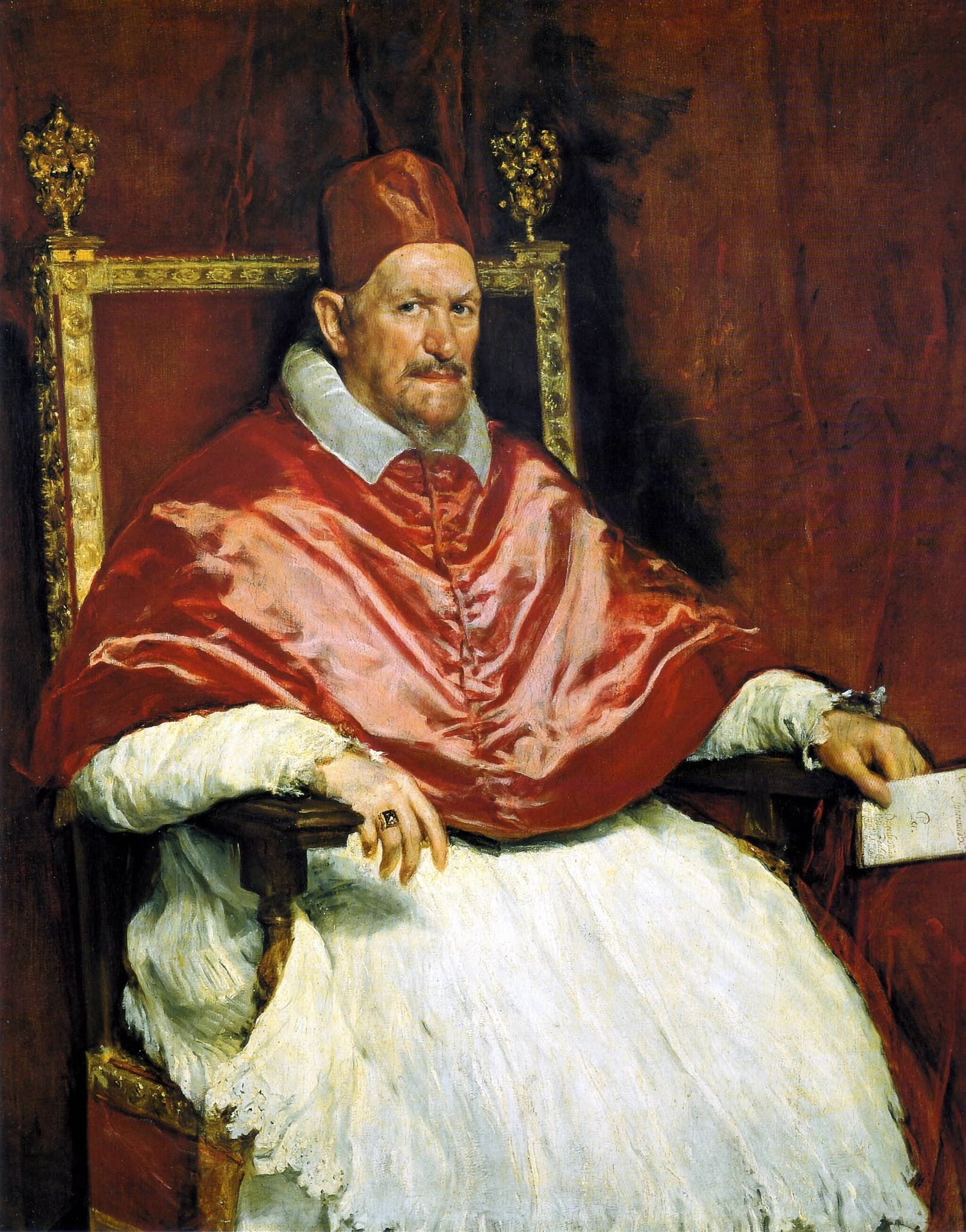
Final valuation range: $200–$350 million. The Portrait of Pope Innocent X by Diego Velázquez is a canonical, museum‑quality masterpiece in continuous custodianship (Galleria Doria Pamphilj) and has no modern public sale record [1]. The assigned range is an evidence‑based extrapolation: it combines the painting's unique cultural significance and near‑zero supply with market precedent for trophy single‑owner masterpieces and recent indications of buyer willingness at the ultra‑high end [2].
Why this scale? Public auction anchors for Velázquez (Juan de Pareja, Saint Rufina) sit far below the figure here when taken as isolated auction results, but they demonstrate that secure autograph works are scarce and capable of commanding elevated prices. More importantly, market mechanics for exceptional, single‑owner works have repeatedly pushed culturally paramount paintings into the low‑to‑high hundreds of millions when multiple deep‑pocket buyers contest ownership (for a market ceiling example see the Salvator Mundi sale) [3]. The Innocent X is one of a handful of paintings worldwide whose combination of artistic stature, iconographic resonance and provenance would attract national museums, sovereign buyers and elite private collectors simultaneously.
Risks and downward pressures. The principal factors that could materially reduce a realized price are (a) the owner's unwillingness to sell or decision to sell only to domestic institutions, which narrows the competitive pool; (b) export/patrimony or legal encumbrances that prevent open international marketing; and (c) any previously undisclosed conservation or attribution issues revealed on technical examination. Public market comparables are therefore noisy: Velázquez masterpieces rarely reach auction and examples that do are sometimes withdrawn (a recent high‑profile withdrawal of a major Velázquez consignment shows how offers and guarantees can fail to produce public price discovery) [2].
Net assessment and confidence. On balance, assuming clear title, exportability and sound conservation condition, I assign the painting a defensible market range of $200–$350 million. The lower bound recognizes conservative discounting for sale friction and the paucity of direct auction comparables; the upper bound reflects realistic trophy pricing if multiple competing sovereigns/institutions/collectors engage in a private sale or well‑managed auction campaign. Confidence is high that the work would be a top‑tier trophy lot; confidence is low that the Doria Pamphilj would place it on the open market. Recommended next steps: secure a technical condition report (X‑ray/IRR), confirm legal/ export status with trustees, and solicit confidential market indications from leading Old Master specialists at Sotheby’s and Christie’s to test competitive interest and private‑sale appetite [1][2][4].
Key Valuation Factors
Art Historical Significance
High ImpactThe Portrait of Pope Innocent X is among Velázquez's most celebrated portraits and is a central work of the Spanish Golden Age. Its psychological realism, technical mastery and prominent place in scholarship and exhibition history make it an iconic national and international cultural asset. Because cultural resonance is a primary driver of trophy pricing, its status as a canonical masterpiece elevates buyer competition and willingness to pay significantly beyond routine Old Master comparables. The painting's fame also generates continual institutional interest and confers a rarity premium that is unusually large compared with non‑canonical works.
Scarcity & Supply
High ImpactAutograph Velázquez masterpieces almost never come to market; many of the artist's best works are held in public museums or long‑standing family collections. This extreme supply constraint means any fresh offering of a secure, well‑provenanced masterpiece functions as a once‑in‑a‑generation market event. Recent market behavior—including withdrawals of high‑profile consignments—illustrates that even when works are prepared for sale, they may trade privately or be retained, amplifying the rarity premium for the rare surfaces that are actually available to potential buyers.
Market Demand & Buyer Pool
High ImpactPotential buyers for a canonical Innocent X include major national museums, sovereign wealth funds, ultra‑high‑net‑worth private collectors and private dealers acting for institutions. When multiple such parties engage, prices can escalate rapidly. The existence of buyers prepared to transact at multi‑hundred‑million levels for unique cultural objects demonstrates an available ceiling. However the form of sale matters: a competitive public auction can maximize discovery, while a negotiated private sale may yield a premium only if several deep‑pocket bidders are involved.
Condition & Provenance
Medium ImpactContinuous custodianship in a major family collection typically implies regular conservation oversight and a strong provenance chain, both positive for value. Nevertheless, any previously undisclosed restorations, overpainting or structural problems revealed by technical imaging (x‑ray, IRR) could reduce marketability and price substantially. Full technical and condition reporting is therefore a gating item and can shift final valuation materially either upward (if pristine or well‑restored) or downward (if treatment is extensive).
Legal / Export Constraints & Owner Intent
Medium ImpactThe painting's residence in Italy and its status within an historic family collection create potential patrimony and export restrictions, and owner intent is a major determinant of market outcome. If the owner restricts sale to domestic buyers or refuses to sell, price discovery cannot occur. Export controls, philanthropic preferences, or legal encumbrances will limit the buyer pool and bargaining dynamics, typically reducing realized price versus an unconstrained international competitive sale.
Sale History
Portrait of Pope Innocent X has never been sold at public auction.
Diego Velazquez's Market
Diego Velázquez occupies the highest tier of Old Master reputation; his autograph works are scarce and institutionally anchored. Public auction records are sparse and historic (Juan de Pareja, Saint Rufina), which means most price discovery for major Velázquez paintings occurs in private negotiations or exceptional public sales. Collectors prize museum‑quality Velázquez works highly, but the segment is illiquid: few masterpieces circulate and those that do attract concentrated, high‑net‑worth demand and institutional interest.
Comparable Sales
Portrait of Juan de Pareja
Diego Velázquez
Directly by Velázquez; landmark modern public sale that established a benchmark for autograph Velázquez portrait prices in the public market.
$5.5M
1970, Christie's, London
~$44.3M adjusted
Saint Rufina
Diego Velázquez
Autograph Velázquez sold in the 21st century; shows top-tier Velázquez works when offered can reach mid‑eight figures (public auction precedent).
$16.9M
2007, Sotheby's, London
~$25.3M adjusted
Portrait of Cristoforo Segni (attributed/Velázquez circle)
Attributed to Velázquez / studio or circle
Velázquez‑related court/papal portrait (studio/circle attribution) — useful as a recent market signal for demand in Velázquez‑adjacent, securely‑provenanced Old Master portraits.
$4.1M
2023, Sotheby's (Old Masters sale)
~$4.2M adjusted
Portrait of Isabel de Borbón (planned consignment)
Diego Velázquez
Recent high estimate/guarantee for a major Velázquez portrait that was marketed for a major auction (withdrawn before sale); not a realized sale but indicative of market expectations for top Velázquez works.
$35.0M
2024, Sotheby's (announced/withdrawn; guaranteed/estimate)
~$35.6M adjusted
Salvator Mundi
Leonardo da Vinci
Not the same period/artist but a recent ultra‑high‑end transaction for a unique, museum‑quality masterpiece — establishes a market ceiling for single‑owner, culturally paramount paintings.
$450.3M
2017, Christie's, New York
~$570.0M adjusted
Current Market Trends
The Old Masters segment has been uneven since 2023, with greater reliance on private sales, guarantees and negotiated transactions. While top‑end trophy works still achieve exceptional prices when competitive interest is concentrated, overall liquidity has softened and marquee lots are often sold privately or withdrawn from auction, reducing public price discovery.