How Much Is The Rokeby Venus Worth?
Last updated: May 22, 2026
Quick Facts
- Last Sale
- $219K (1906, Private treaty (Thos. Agnew & Sons to the National Gallery, London))
- Methodology
- comparable analysis
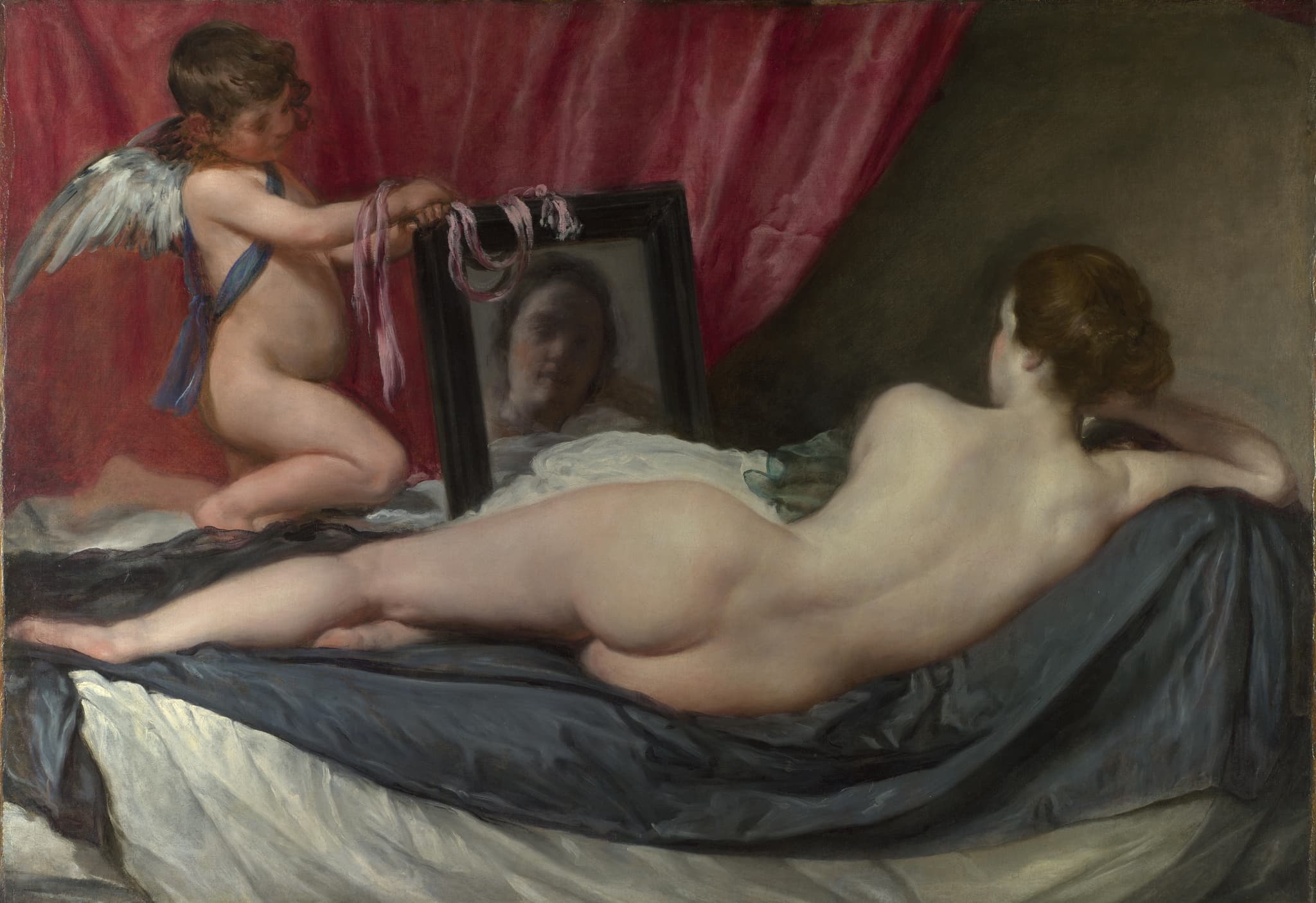
Hypothetical open‑market value for Velázquez’s The Rokeby Venus: $250–450 million. This range reflects its singular status as the artist’s only surviving female nude, its art‑historical fame, and triangulation against apex Old Master trophies (Leonardo, Rembrandt, Titian, Botticelli) amid extreme scarcity of autograph Velázquez works.
Valuation Analysis
Conclusion: In a freely transactable scenario, Diego Velázquez’s The Rokeby Venus would command approximately $250–450 million. This bracket reflects its singular position within Velázquez’s oeuvre (his only surviving female nude), iconic status in Western art, and the deep—albeit highly selective—capital available for apex Old Master trophies. The work resides at the National Gallery, London, which underscores its canonical stature and non-market status, but the estimate models what sophisticated buyers would pay if it were available. [1]
Uniqueness and stature: The Rokeby Venus (c.1647–1651) is widely taught and reproduced as a touchstone of Baroque painting. Its fame has been amplified by its cultural history, including the 1914 slashing by suffragette Mary Richardson and its rapid return to view after minor damage from a 2023 protest—followed by conservation and confirmation of stability. These factors enhance, rather than diminish, the work’s narrative power and public recognition—key ingredients in today’s trophy pricing. [1][2]
Price discovery for Velázquez: Public auction data for fully accepted Velázquez masterworks are vanishingly scarce. The standing auction record, Santa Rufina at £8.42m (~$16.9m, 2007), is not indicative of apex pricing; that work sold nearly two decades ago in a thinner market for Spanish Golden Age masterpieces. More recently, Sotheby’s prepared a major royal portrait (Isabel de Borbón) with an expectation around $35m before it was withdrawn, signaling a step-change in pricing for museum-caliber material even below this painting’s significance. [3][4]
Comparables and triangulation: The top of the Old Master market demonstrates a wide but meaningful band for singular, brand-defining works: Leonardo’s Salvator Mundi at $450.3m sets the absolute ceiling; Botticelli’s $92.2m portrait, Rembrandt’s Marten & Oopjen pair acquired for ~€160m, and the UK’s Titian acquisitions at £50m and £45m mark strong institutional and auction benchmarks. Against these, The Rokeby Venus—unique in subject within Velázquez’s oeuvre and globally iconic—merits positioning near the upper tier of Old Master trophies. Our range ($250–450m) recognizes the painting’s near-peerless art-historical importance while acknowledging that only a handful of buyers or institutions operate credibly at the $400m+ level. [5][9][7][6]
Provenance, condition, and context: The painting’s modern provenance culminates in its 1906 acquisition (roughly £45,000) for the National Gallery, London, with support from the National Art Collections Fund—an enduring imprimatur of museum-level quality. Conservation history is well documented, and the work’s swift reinstatement after the 2023 incident indicates stable, exhibition-ready condition—critical for liquidity and price realization at the top end. While UK national collection status makes an actual sale implausible, the valuation is framed as a hypothetical fair-market price under unconstrained conditions. [8][2][1][10]
Key Valuation Factors
Art Historical Significance
High ImpactThe Rokeby Venus is a canonical image within Baroque art and the only surviving female nude by Velázquez, placing it in an unparalleled position within his oeuvre. Its influence extends across centuries of art history, reproduction, and scholarship, and it is a centerpiece of the National Gallery’s narrative of European painting. This level of cultural capital is directly monetizable at the very top of the market, where buyers prioritize works that define art history itself. Relative to most Old Masters, its subject, authorship, and fame align to create an unusually potent combination that justifies a valuation near the apex of the category.
Rarity and Market Scarcity
High ImpactTop-tier, fully accepted Velázquez paintings almost never come to market; most reside permanently in museums. Recent public signals (e.g., the withdrawn Isabel de Borbón portrait at an indicated ~$35m) show meaningful depth for first-rate works, yet the leap from ‘first-rate’ to ‘singular, canonical’ is significant. With near-zero supply and a global trophy-buyer cohort willing to pay premiums for the best lone opportunities in a decade, scarcity exerts a strong upward pull on price. In this context, Rokeby Venus would encounter intense competition among a small set of institutions and private collectors, pushing it into the $250–450m band.
Provenance and Institutional Status
High ImpactThe painting’s provenance culminating in the National Gallery’s 1906 acquisition through Agnew’s and the Art Fund confers exceptionally strong, transparent ownership history. Its long institutional stewardship has cemented uncontested authorship and quality. While national-collection status makes an actual sale improbable and could, in practice, shape transaction structures or buyer pools, at the level of fair-market value such imprimatur and scholarly attention typically add, not subtract, to perceived worth. For valuation, we assume a hypothetical, unconstrained sale scenario; the museum-grade provenance remains a major positive factor supporting the high estimate.
Condition and Conservation
Medium ImpactFollowing the well-known 1914 attack and a minor 2023 incident, the painting has been professionally conserved and returned to display, signaling stability and presentational excellence. At this price tier, condition risk is heavily scrutinized; the National Gallery’s conservation standards, treatment records, and ongoing technical imaging mitigate concerns. While any transaction would require fresh, independent technical due diligence, current evidence supports a strong condition assessment for valuation purposes. This factor therefore neither constrains nor materially inflates the estimate, but it helps secure buyer confidence essential for realizing a nine-figure price.
Subject Matter and Brand Recognition
High ImpactIconic, immediately legible subject matter (a mythological nude) combined with the brand power of Velázquez maximizes global appeal. Among Old Masters, mythological nudes by apex names have a proven premium—seen in state-level Titian acquisitions and persistent collector demand. Rokeby Venus benefits further from widespread reproduction, museum exposure, and a compelling backstory that has entered the cultural canon. Together, these elements elevate the work beyond even ‘museum-quality’ into a narrow set of image-brands capable of reaching the top of the Old Master price spectrum in today’s trophy-driven market.
Sale History
Private treaty (Thos. Agnew & Sons)
Acquired for the National Gallery, London, for about £45,000, supported by the National Art Collections Fund; USD shown at rough 1906 parity (not inflation-adjusted). [8]
Diego Velazquez's Market
Diego Velázquez is one of the most important Old Masters, with an extremely thin public market due to the concentration of masterpieces in museums. The standing auction record is Santa Rufina at approximately $16.9 million (Sotheby’s London, 2007). A museum-caliber royal portrait consigned for February 2024 was withdrawn but publicly guided around $35 million, indicating a higher baseline for first-rate works than older records suggest. Because opportunities to acquire fully accepted, high-quality Velázquez paintings are virtually nonexistent, pricing for any undisputed, major work is driven by scarcity premia and by competition among a handful of institutions and top private collectors, making extrapolation from general Old Master data necessary.
Comparable Sales
Salvator Mundi
Leonardo da Vinci
Ultimate trophy Old Master; extreme scarcity and global fame comparable to a singular Velázquez. Sets an upper-bound benchmark for blue-chip Old Masters.
$450.3M
2017, Christie's New York
~$571.9M adjusted
Portraits of Marten Soolmans and Oopjen Coppit (pair)
Rembrandt van Rijn
Museum-caliber, apex Old Master private treaty; anchors high-end institutional pricing for canonical Baroque masterpieces.
$180.0M
2016, Private treaty (Rijksmuseum & Louvre joint acquisition)
~$234.0M adjusted
Diana and Actaeon
Titian
Mythological scene with prominent female nudes by a top Renaissance master; directly relevant subject/type for valuing a canonical Old Master nude.
$72.0M
2009, Private treaty (National Gallery, London & National Galleries of Scotland)
~$104.4M adjusted
Diana and Callisto
Titian
Companion mythological nude by Titian acquired by UK national collections; strong benchmark for museum-level Old Master nudes.
$71.0M
2012, Private treaty (National Gallery, London & National Galleries of Scotland)
~$96.6M adjusted
Portrait of a Young Man Holding a Roundel
Sandro Botticelli
Recent nine-figure Old Master auction bellwether outside Leonardo; signals contemporary appetite for singular, iconic works by top-tier names.
$92.2M
2021, Sotheby's New York
~$106.9M adjusted
Saint Rufina
Diego Velázquez
Artist record at auction; a rare modern-market sale of an autograph Velázquez. Useful floor/anchor for the artist’s pricing.
$17.0M
2007, Sotheby's London
~$25.7M adjusted
Current Market Trends
Old Masters remain a compact but resilient segment, with selective outperformance when best-in-class works surface. Trophy-level results for historical masterpieces (from Botticelli to Canaletto) confirm deep capital and institutional demand. Supply scarcity—especially acute for Spanish Golden Age icons—continues to be the main constraint on volumes, not demand. In this context, a singular, brand-defining Velázquez would likely leapfrog conventional Old Master price bands and compete with the highest tier of pre-Modern trophies, where buyer pools are small but intensely competitive and willing to pay for uniqueness, pristine provenance, and global name recognition.
Sources
- National Gallery (London): Work entry for The Toilet of Venus (The Rokeby Venus)
- The Art Newspaper: Rokeby Venus back on show after 2023 protest damage
- The Art Wolf: Velázquez’s Santa Rufina sold for £8.42m (2007)
- The Art Newspaper: Velázquez’s Queen Isabel de Borbón withdrawn from Sotheby’s (guided around $35m)
- Fortune: Leonardo da Vinci’s Salvator Mundi sells for $450.3m (2017)
- National Gallery (London): Acquisition of Titian’s Diana and Actaeon (2009)
- Louvre: Joint acquisition of Rembrandt’s Marten Soolmans and Oopjen Coppit (2016)
- Art Fund: The Toilet of Venus (The Rokeby Venus) acquisition details (1906)
- Sotheby’s: Botticelli Portrait of a Young Man Holding a Roundel sells for $92.2m (2021)
- National Gallery (London): Annual Report 2023–24 (collection inalienability context)