How Much Is Courtship Worth?
Last updated: May 11, 2026
Quick Facts
- Methodology
- comparable analysis
Based on public comparables, documented dimensions and typical market levels for Edmund Blair Leighton, I estimate Courtship (1903) at auction at $30,000–$120,000. This band assumes confirmed attribution, good original condition, and no exceptional provenance; values move materially lower if condition or attribution are compromised and materially higher if the work is museum‑quality with strong provenance.
Valuation Analysis
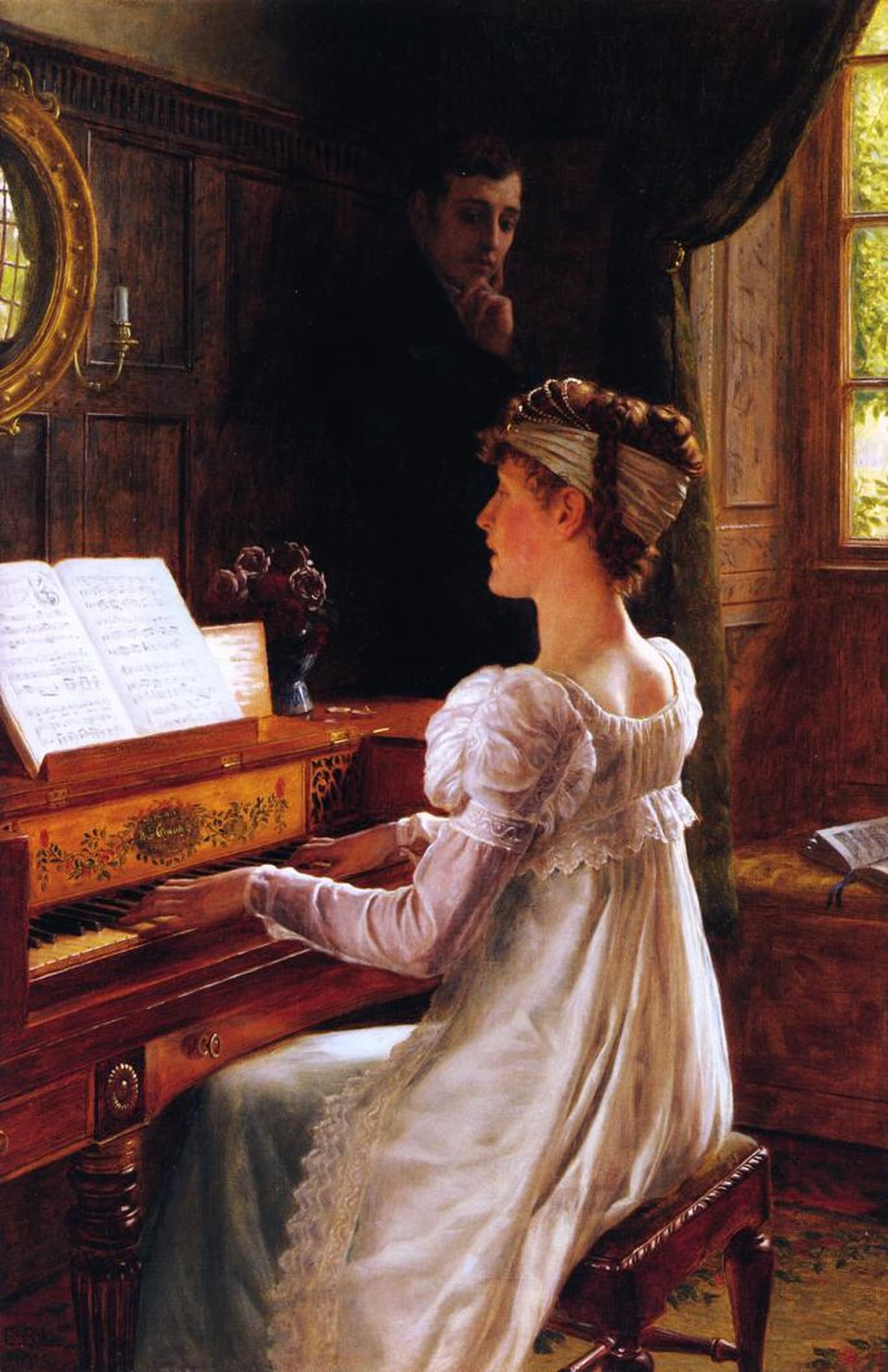
Valuation conclusion: Applying a comparables‑based approach to Edmund Blair Leighton’s Courtship (1903), I place a market estimate for a typical oil‑on‑canvas version at $30,000–$120,000 at auction under normal selling conditions (specialist sale, illustrated catalogue essay, domestic/UK and international interest). This band assumes the painting is the oil illustrated in public photo records (~60 × 40 cm) and is in generally sound, saleable condition with a clear signature and stable support [3].
The Leighton market is bifurcated: a small number of large, exhibition pieces and iconic compositions have achieved very high prices (the artist’s ceiling is demonstrated by major works that have sold for mid‑six to seven figures) while the majority of studio oils and smaller figure scenes trade in the low‑to‑mid five‑figure range. I anchor the top of this band to the demonstrated ceiling for premium Leighton compositions and the mid‑to‑low end to frequent specialist‑sale outcomes: a top/benchmark composition sold at high values in major house sales [1], while modest, mid‑scale works have realized low five‑figure results at reputable specialist houses [2].
Key adjustments: size, condition, and provenance drive movement inside this band. Courtship’s modest dimensions (publicly reproduced at ~60 × 40 cm) limit its auction potential relative to the large, gallery‑scale Leighton pictures, pushing value toward the lower half of the band unless the work is unusually fine. A documented exhibition history, original frame, publication/illustration record, or strong private provenance will justify placement toward the upper half of the band; absence of these factors or evidence of heavy restoration will push the value below it.
The methodology used here is comparative: I reviewed published sale records for high‑profile Leighton works and representative mid‑market outcomes, then adjusted for scale, condition, and provenance likely relevant to Courtship. That yields the stated band as a realistic, market‑ready estimate for an in‑person sale via a specialist Victorian/British painting auction [1][2].
Next steps to firm the valuation: obtain high‑resolution photos (front, back, signature, stretcher/labels), an independent condition report, and any provenance or exhibition documentation; run paid searches in Artnet/Artprice/MutualArt for any prior sales of this title or the same composition; consult Leighton House Museum or a recognised Leighton specialist prior to public offering. With those items I will tighten the band and recommend an optimal sale strategy (specialist house estimate range and catalogue placement).
Key Valuation Factors
Art Historical Significance
Medium ImpactCourtship is a representative example of Leighton’s popular romantic/medieval‑pastoral repertoire rather than one of his few career‑defining signature works (e.g., The Accolade, God Speed). As such it carries steady collector appeal but not the intrinsic market premium attached to his widely exhibited, illustrated or historically‑important canvases. The subject matter (a romanticized courtship scene) is marketable to the established Leighton collecting base and reproduces well for sale catalogues, which supports demand, but the absence of unique iconography or landmark exhibition history keeps its art‑historical weighting moderate. Authentication and literature citation would increase this factor’s impact.
Provenance & Exhibition History
High ImpactProvenance and exhibition/publication history materially change price outcomes. A well‑documented provenance (ownership by a notable collection, prior exhibition in a recognised museum, or appearance in a catalogue raisonné) can move Courtship toward the top of the estimate band, attracting institutional and collector competition. Conversely, a lack of provenance or an uncertain title history depresses buyer confidence and typically lowers hammer expectations. Given current public records list the work in a private collection with no published sale history, provenance is the primary controllable variable to increase market value and is therefore a high‑impact factor.
Condition & Restoration
High ImpactPhysical condition drives realised values for nineteenth‑century oils. Original, stable paint with minimal retouching and a sympathetic original or period frame will sustain the estimate band; significant varnish darkening, inpainting, lining or structural damage can reduce buyer interest and realised price substantially. Auction houses will reduce estimates or require reserves where condition is compromised. A formal conservator’s report reduces uncertainty for bidders and often increases the net outcome; therefore condition and restoration history are high‑impact determinants of where Courtship will sell within (or outside) the proposed band.
Scale, Composition & Market Appeal
Medium ImpactThe painting’s reported dimensions (~60 × 40 cm) place it in the mid‑scale category most commonly encountered on the secondary market for Leighton. Mid‑scale figurative compositions are appealing to both private collectors and decorative buyers, producing steady demand but typically lower ceiling values than large, gallery‑scale works. Composition quality (clarity of figuration, color, finish) and the attractiveness of the scene contribute to salability and can nudge results upward within the band; however, scale restricts headline potential relative to the artist’s larger masterpieces.
Sale History
Courtship has never been sold at public auction.
Edmund Leighton's Market
Edmund Blair Leighton (1852–1922) occupies a secure niche within late‑Victorian and Edwardian academic/romantic painting markets. He has a steady collector base for his romantic medieval and historical subjects; the market is tiered—rare, exhibition‑quality paintings achieve six‑figure and occasionally seven‑figure outcomes, while the larger volume of studio oils typically trade in the low‑to‑mid five‑figure range. Provenance, condition and freshness to market are decisive. Scholarly attention and catalogue raisonné work have increased market clarity in recent years, improving liquidity for authenticated works.
Comparable Sales
God Speed
Edmund Blair Leighton
Iconic, museum-quality Leighton that sets the artist's auction ceiling; far more significant/larger than Courtship but shows top-market potential for premium Leighton compositions.
$1.1M
2000, Christie's, London
~$2.0M adjusted
God Speed
Edmund Blair Leighton
Resale of the same high-profile composition at a lower (but still high) level; illustrates price volatility for top-tier works and confirms multi-hundred-thousand market for the best Leighton canvases.
$777K
2012, Sotheby's, London
~$1.1M adjusted
The Blind Man at the Pool of Siloam
Edmund Blair Leighton
Representative mid-market Leighton—subject and scale nearer to typical studio oils; a realized $81,250 result indicates solid demand in the low five-figure band for quality works.
$81K
2014, Christie's, New York
~$109K adjusted
The Window Seat
Edmund Blair Leighton
Recent small/medium Leighton realized in the low five figures at a specialist sale; comparable in scale/market tier to a modest Courtship-sized work and illustrates the lower end of the market.
$15K
2024, Bonhams, London
~$15K adjusted
Current Market Trends
The market for nineteenth‑century British academic and romantic painting is specialist and price‑sensitive: mid‑market activity remains steady, but high‑end transactions are selective and rely on exceptional provenance and exhibition history. Since 2023 there has been no broad rerating in the category—strong, fresh‑to‑market works attract competitive bidding, while routine studio pieces perform predictably within the low to mid five‑figure band.