Most Expensive Edmund Leighton Paintings
Edmund Leighton occupies an enviable niche in the market for late-Victorian and Edwardian historical genre painting, prized by collectors for his meticulous draftsmanship, cinematic compositions and romanticized medieval and chivalric themes. His top works regularly command strong auction results: The Accolade has traded in the $1.5–3.0 million range and A King and a Beggar Maid has reached $1.3–1.9 million, while God Speed sits comfortably within $750,000–1.3 million—figures that reflect both museum-quality technique and enduring public appetite. Lesser, yet still significant, pieces such as The Dedication ($500,000–900,000) and The Hostage ($300,000–600,000) demonstrate how condition, provenance and subject matter drive collector enthusiasm, as do romantic narratives like Tristan and Isolde (The End of the Song) and The Queen Kisses the Sleeping Poet, each cited around $200,000–600,000 and $300,000–600,000 respectively. Even more modestly priced canvases—Stitching the Standard ($220,000–420,000), The Boyhood of Alfred the Great ($30,000–150,000) and Courtship ($30,000–120,000)—remain collectible entries for institutions and private buyers seeking accessible examples of Leighton’s signature blend of historical atmosphere and painterly polish.
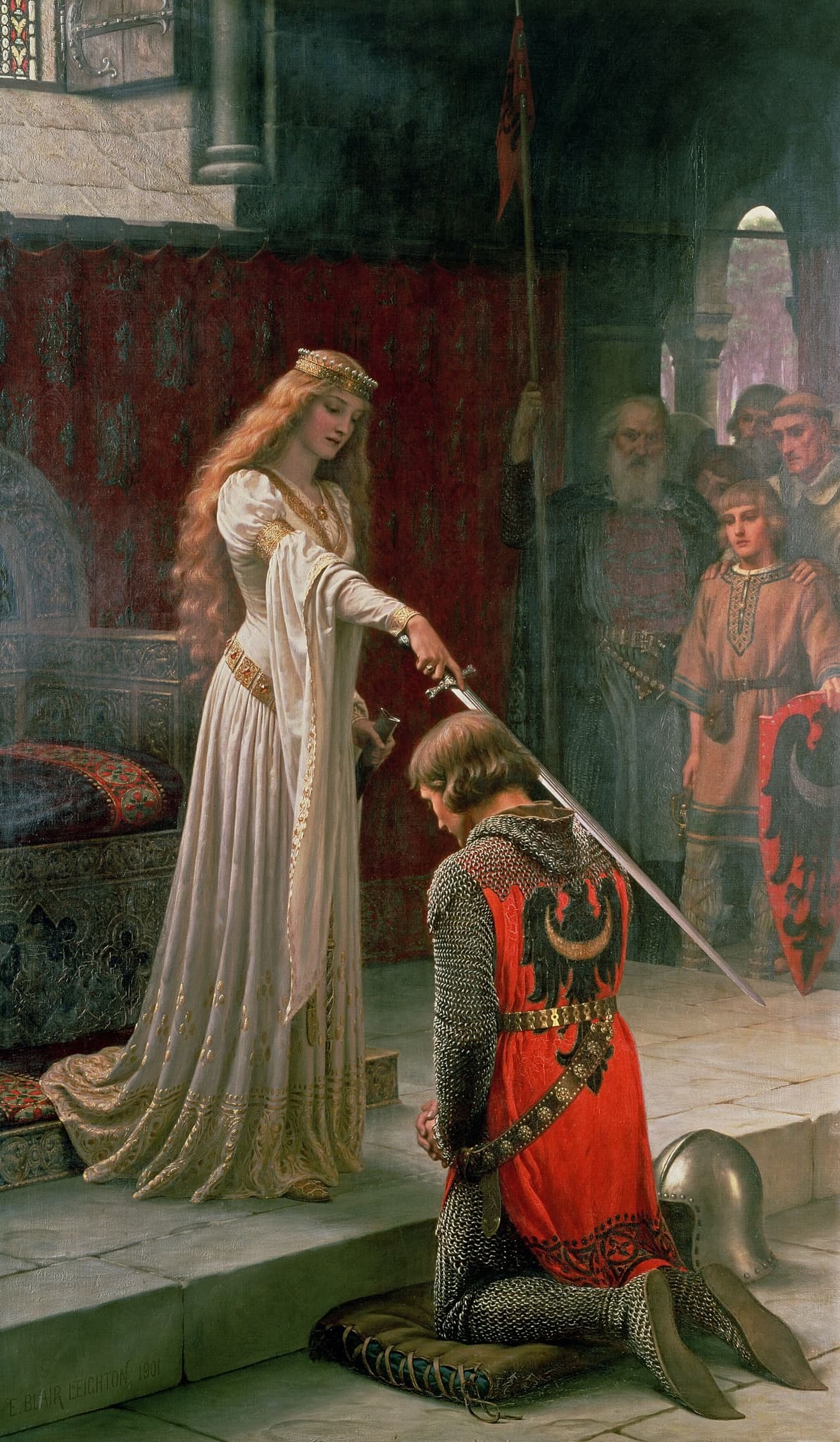
$1.5-3.0 million
Exhibited at the Royal Academy in 1901 and long privately held, its $1.5–3.0M estimate could surpass Leighton’s auction benchmarks with a top‑tier sale and strong campaign.
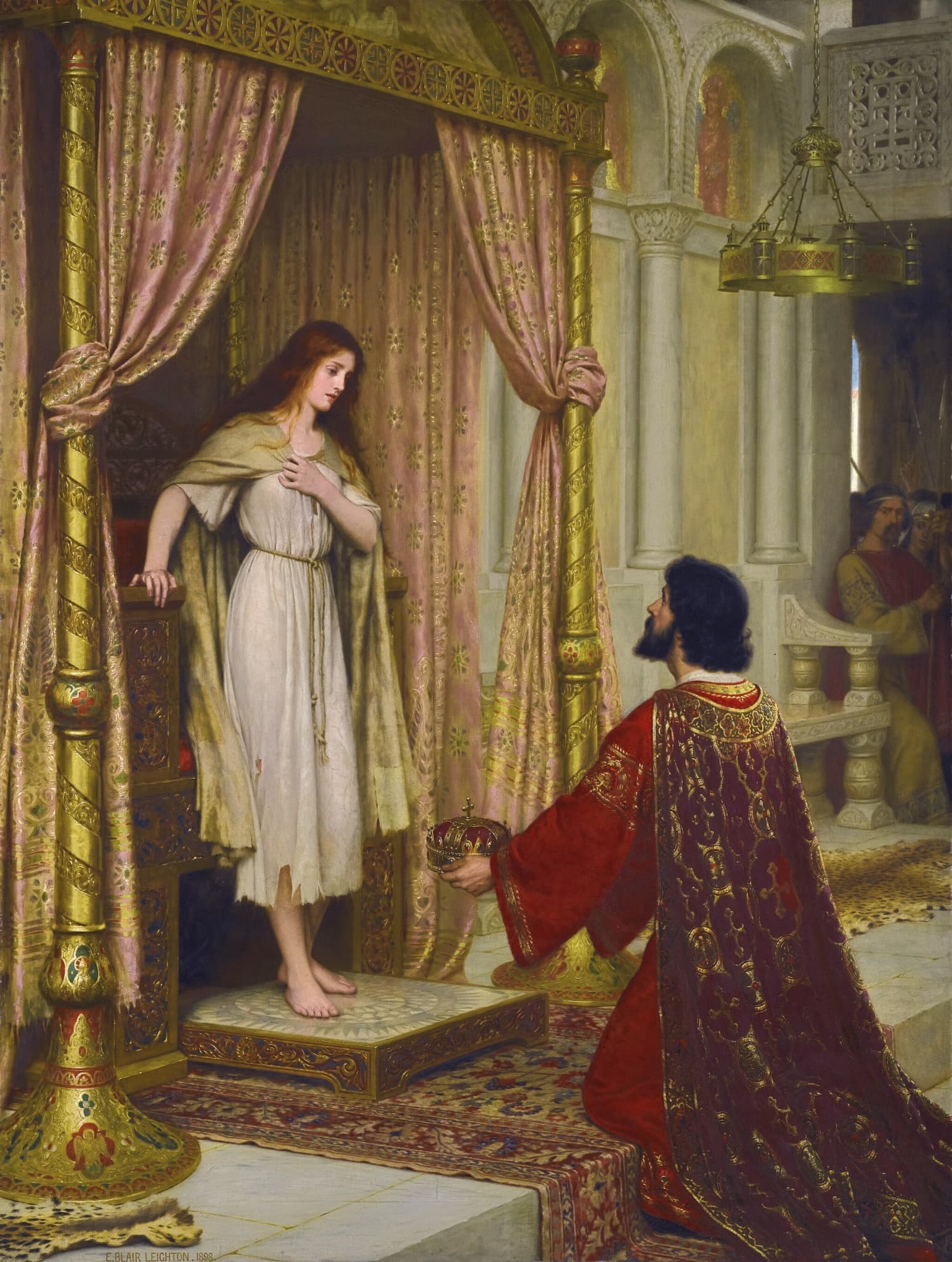
$1.3-1.9 million
Anchored to Sotheby’s London 22 May 2014 sale (GBP 662,500 realized), A King and a Beggar Maid’s $1.3–1.9M estimate reflects condition, RA provenance and marketing assumptions.
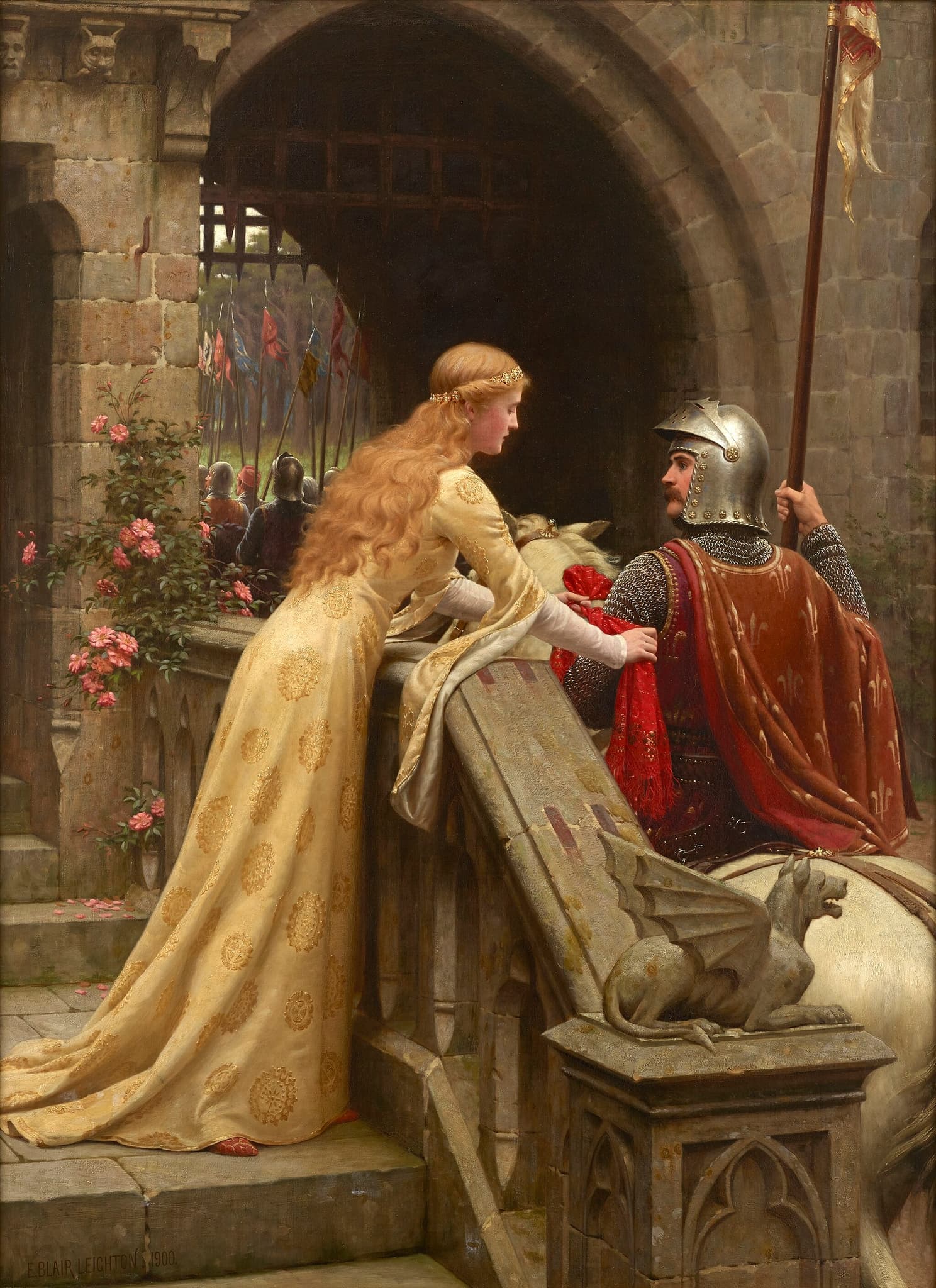
$750,000 - $1,300,000
Three major‑house identical‑composition auction precedents underpin the $750,000–$1.3M estimate for a 1900 exhibition‑quality God Speed with clean provenance and good condition.
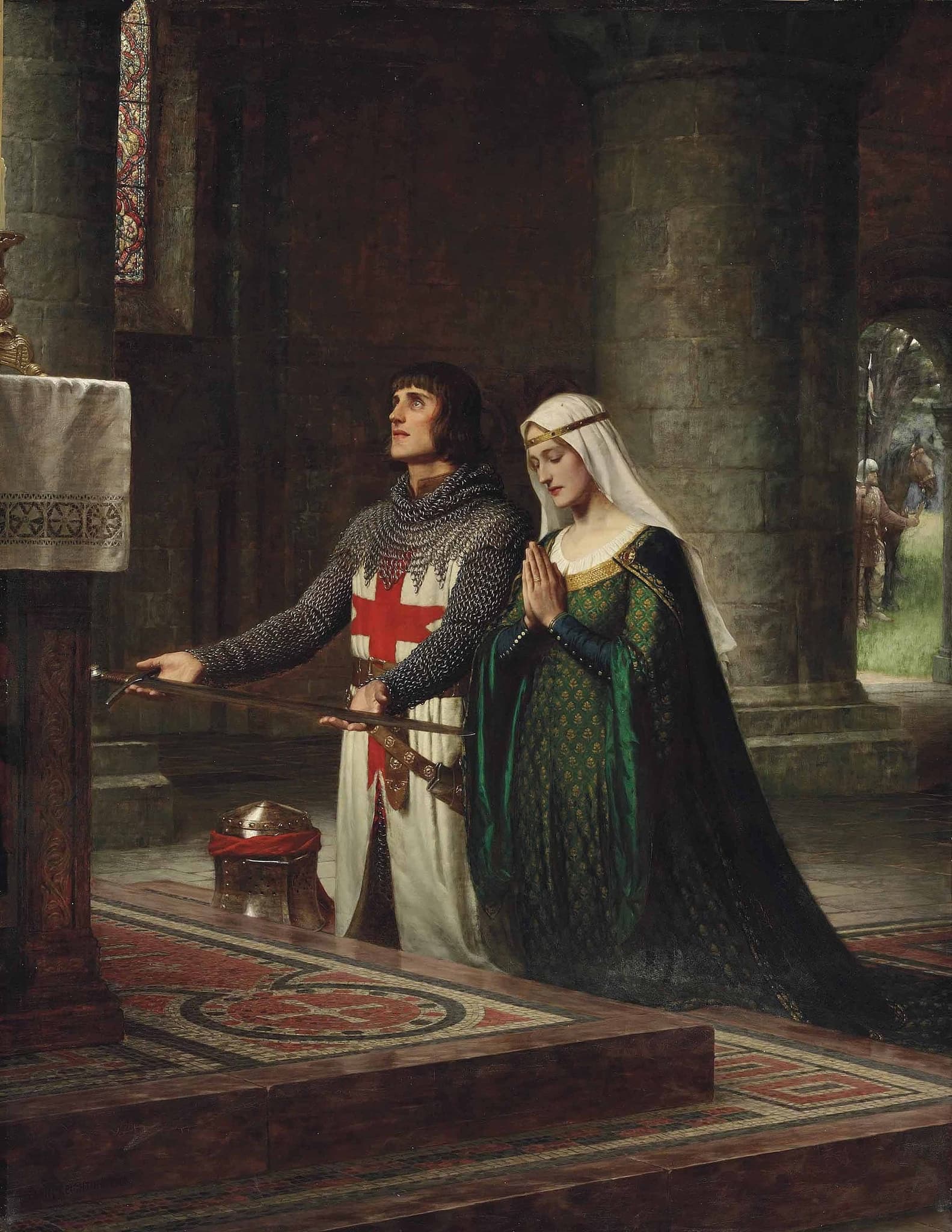
$500,000–$900,000
Christie’s London 12 Dec 2013 reported sale (£362,500) anchors the $500,000–$900,000 valuation for the 1908 RA‑exhibited The Dedication, assuming sound condition and major‑house sale.
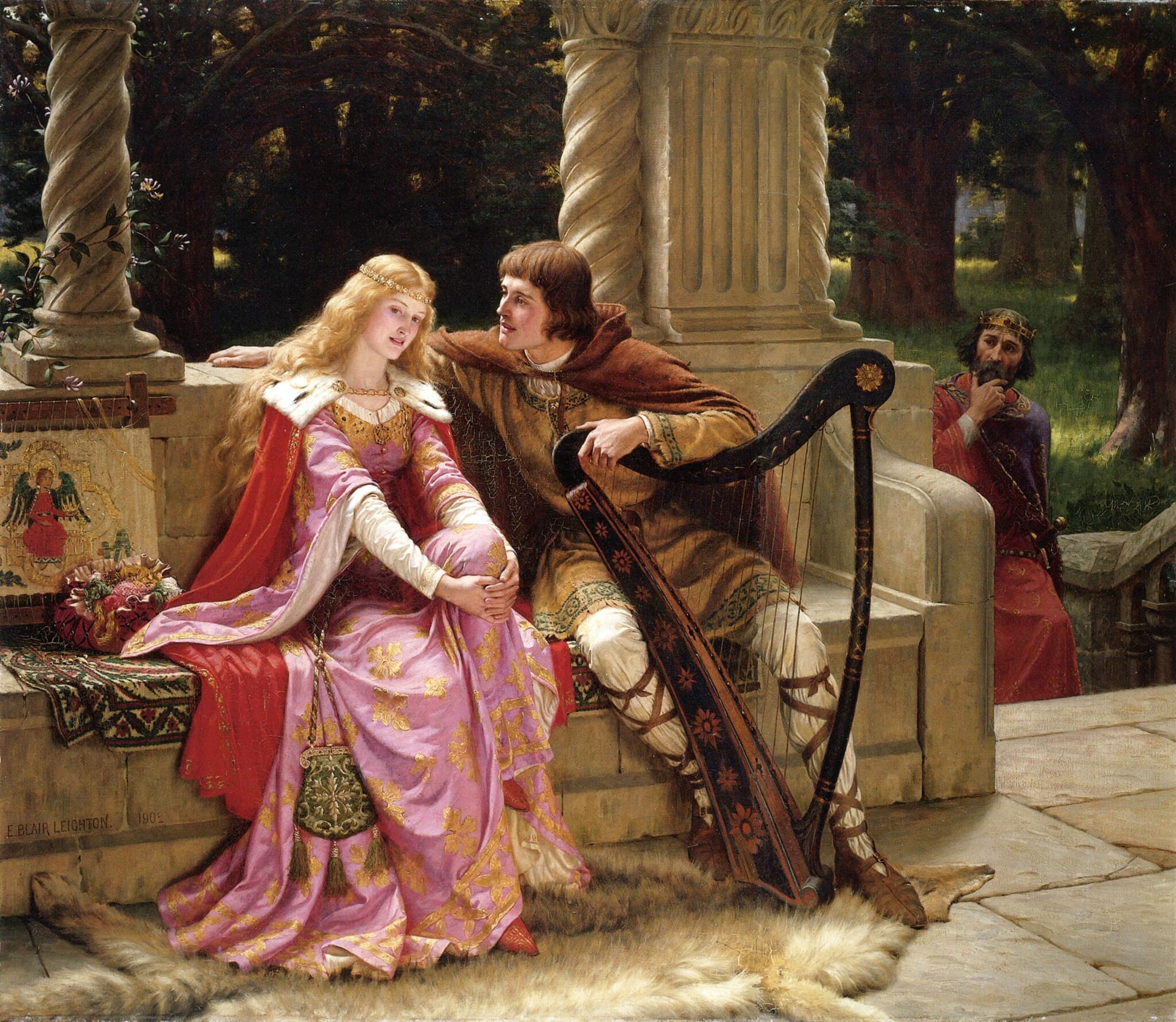
$200,000–$600,000
The documented 1902 RA‑exhibited Tristan and Isolde is valued at $200,000–$600,000, adjusted from Christie’s London 14 June 2000 sale (GBP 240,250) and current market dynamics.
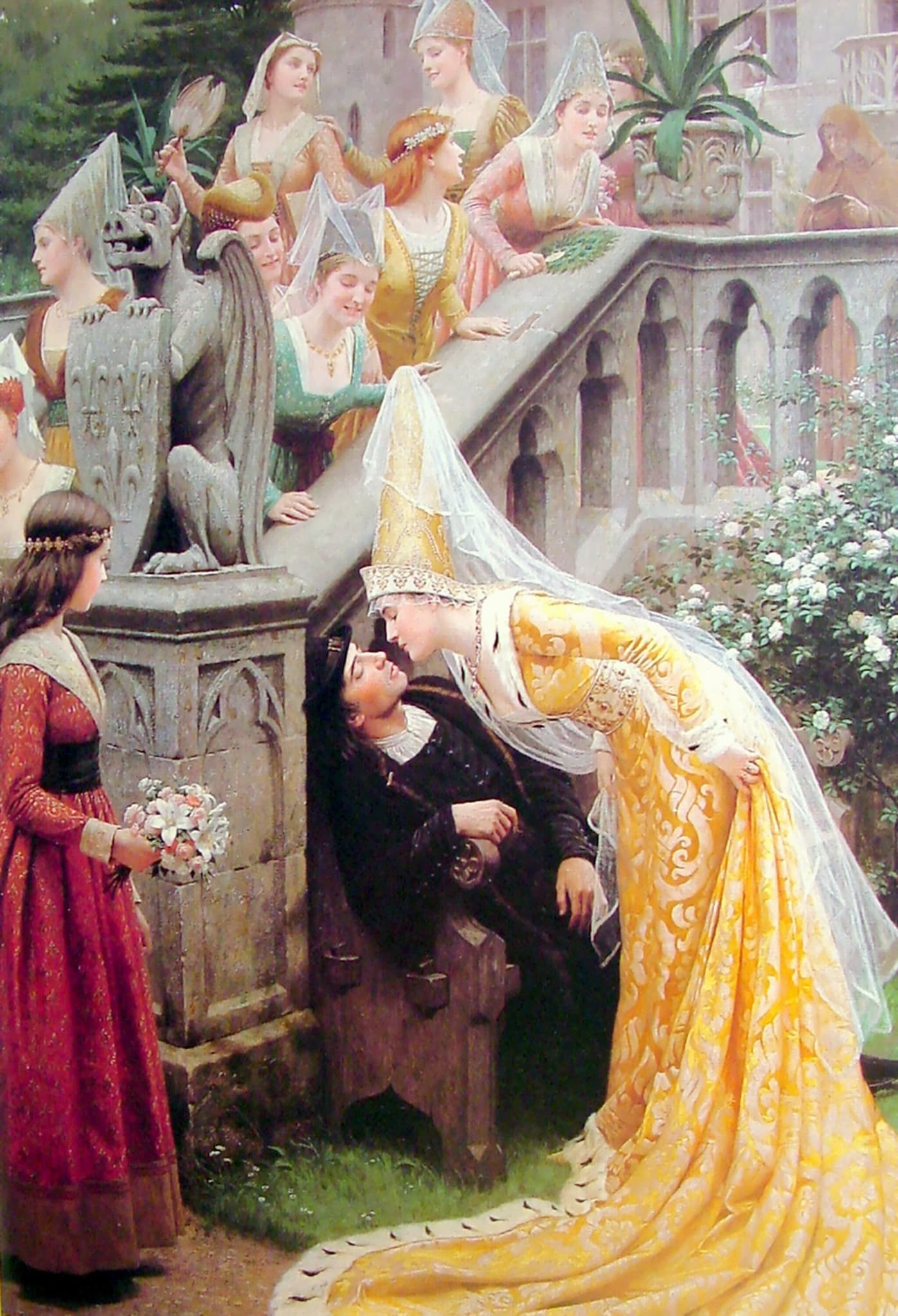
$300,000-$600,000
Anchored by Christie’s London 28 Nov 2001 sale (GBP 311,750), The Queen kisses the sleeping poet is valued at $300,000–$600,000 given matching dimensions, signature and good condition.
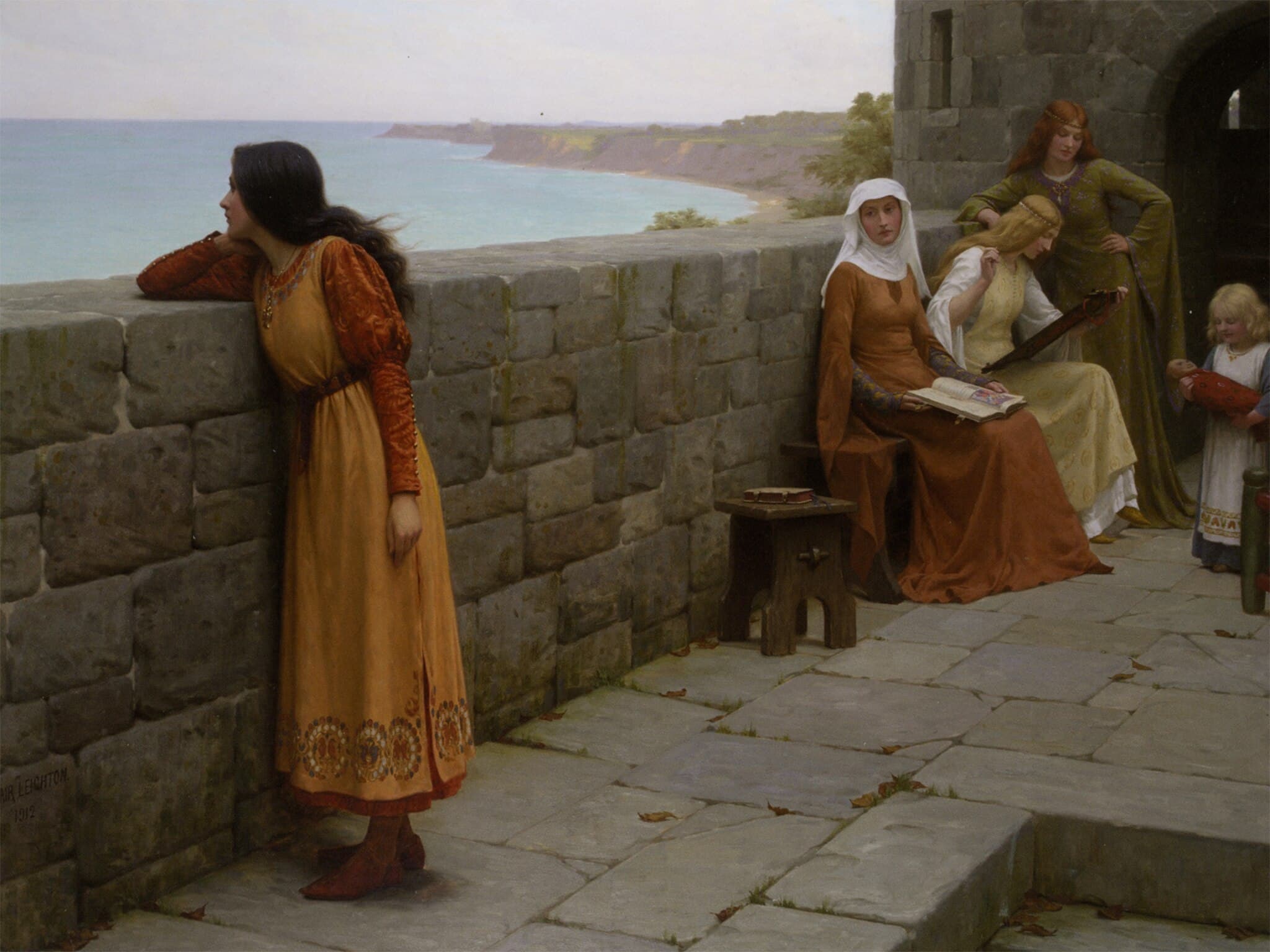
$300,000–$600,000
Adjusted from Sotheby’s 27 Nov 2003 Lot 33 (reported £173,600), The Hostage is estimated at $300,000–$600,000 today assuming matching RA provenance and sound condition.
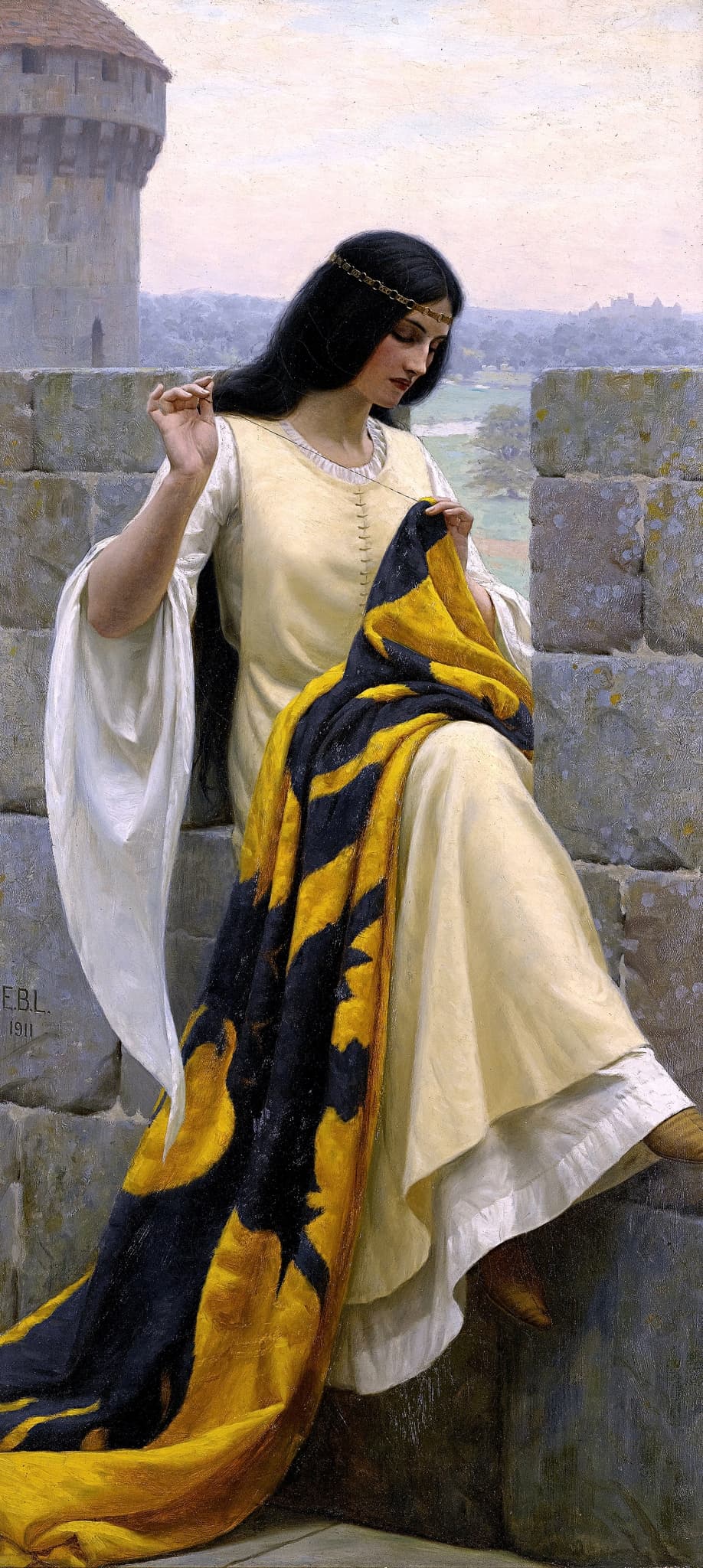
$220,000–$420,000
Assuming the documented 1911 oil is original, attributed and exhibition‑quality, Stitching the Standard is valued at approximately $220,000–$420,000 USD, with provenance materially affecting price.
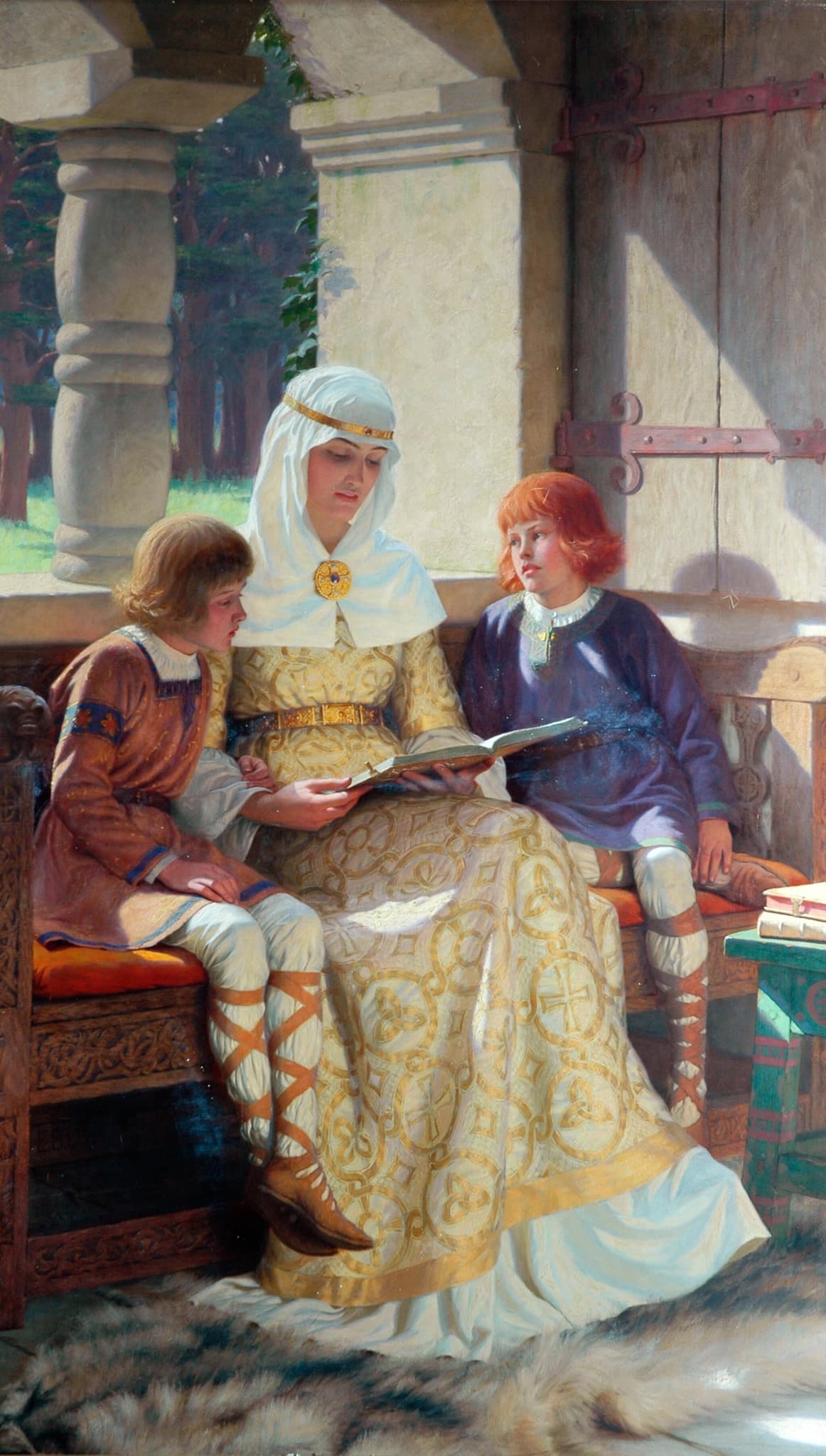
$30,000-150,000
If offered on the open market today, the 1913 Boyhood of Alfred the Great would most likely realize US$30,000–150,000 absent exceptional provenance or pristine condition.
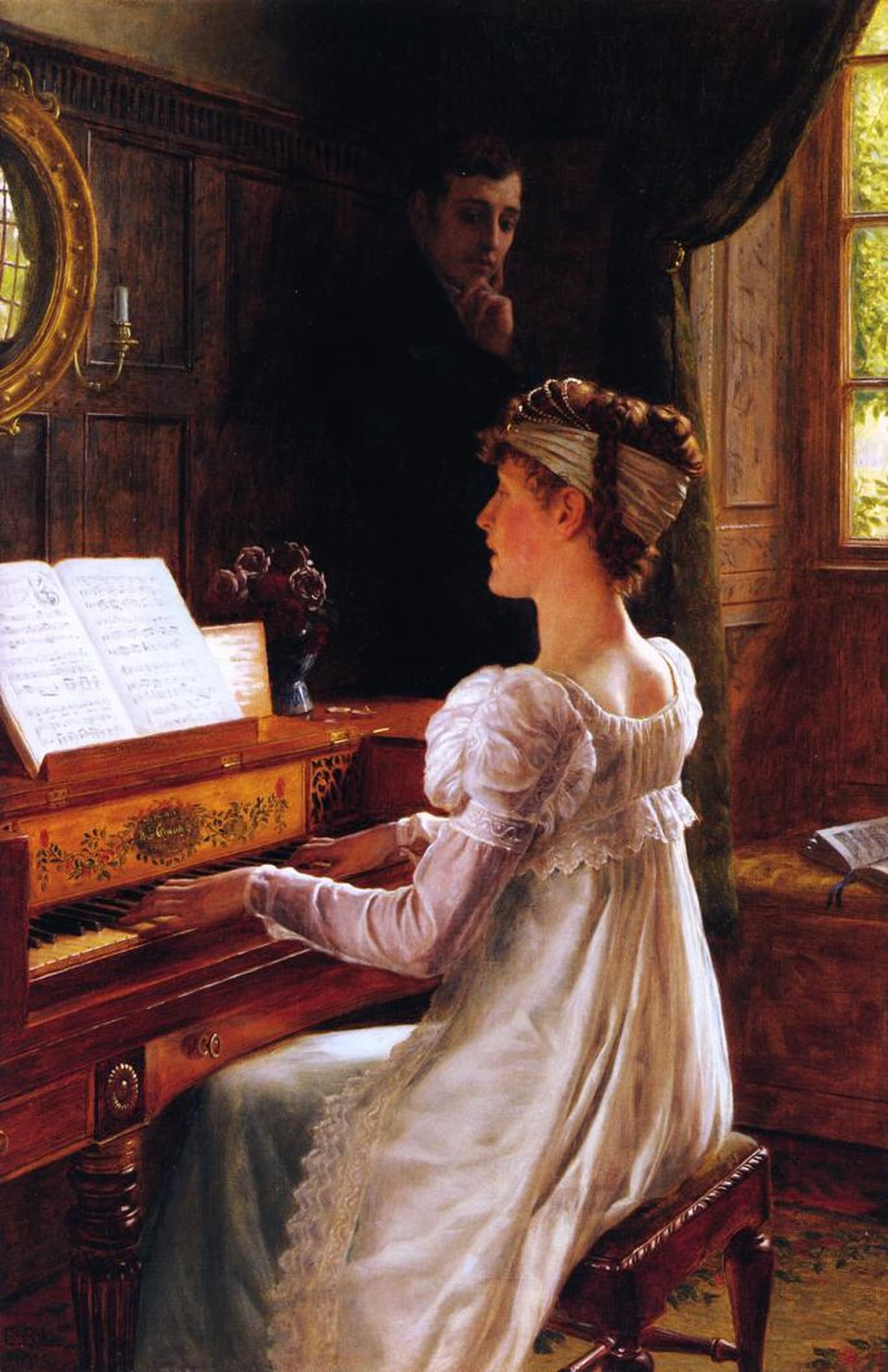
$30,000–$120,000
Based on public comparables and typical market levels for Leighton, Courtship (1903) is estimated at $30,000–$120,000 assuming confirmed attribution and good original condition.
What Drives Value in Edmund Leighton's Work
Royal Academy exhibition & reproduction pedigree
For Leighton, an RA entry or period illustration materially alters buyer appetite: RA‑exhibited canvases (The Accolade 1901, God Speed 1900, The Dedication 1908, Tristan and Isolde 1902, The Queen kisses the sleeping poet 1903) carry research/loan potential and institutional interest. Where a composition was widely reproduced in journals or posters (notably The Accolade), that documented public visibility turns a commercial painting into a museum‑quality candidate and justifies a distinct pricing uplift.
Iconic, widely reproduced compositions (the 'masterpiece' premium)
Certain Leighton images function as cultural icons and exceed normal market bands. The Accolade—extensively reproduced—and God Speed have demonstrably outperformed routine works, commanding a ‘trophy’ buyer pool and anchoring higher benchmarks. These specific compositions draw cross‑over bidders beyond Victorian specialists, so identical provenance/condition for these titles typically yields outsized results versus similarly dated but less famous canvases.
Autograph prime canvas versus studio replicas/variants
Leighton’s production includes studio repetitions and reduced variants; market value depends heavily on identifying the prime autograph state. A full‑scale, autograph RA canvas (e.g., the primary God Speed or the RA Tristan and Isolde) sells for multiples of studio variants or workshop copies. Auction notes repeatedly flag studio replicas as lower tier (A King and a Beggar Maid examples), so clear authentication distinguishing the main hand is critical to accessing top comparables.
Scale and level of finish (salon‑scale narrative > studies)
Large, fully finished history or chivalric canvases perform materially better for Leighton: examples include The Hostage (c.111.8×149.8 cm), The Dedication (c.55×43 in) and Tristan and Isolde (50½×58 in). These salon‑scale, richly finished works attract institutions and high‑net‑worth collectors, whereas small panels, sketches or informal studio pieces—even of the same subject—settle into much lower bands. Size plus high finish quality is a consistent price driver for Leighton.
Market Context
Edmund Blair Leighton occupies a stable, top‑heavy niche in the late‑Victorian/Edwardian market: his record public benchmarks—God Speed (Christie’s London, 2000, £707,750) and A King and a Beggar Maid (Sotheby’s London, 2014, ~£662,500)—illustrate the ceiling for museum‑quality, RA‑exhibited canvases, which can still achieve high six to low seven figures through leading departments. Recent activity shows moderated demand at the absolute top (2024–2026) but resilient transaction volume in lower price tiers; trophy “poster” images continue to attract international collectors, dealers and occasional institutions when offered with strong provenance, condition and scholarship. The market is selective: well‑marketed, exhibition‑ready works in marquee sales command premiums, while smaller studies and regional offerings typically trade in the low five‑figure band.