How Much Is The Hostage Worth?
Last updated: May 11, 2026
Quick Facts
- Last Sale
- $298K (2003, Sotheby's, London)
- Insurance Value
- $450K (Adjusted market precedent (Sotheby's 2003 sale plus market comparables))
- Methodology
- comparable analysis
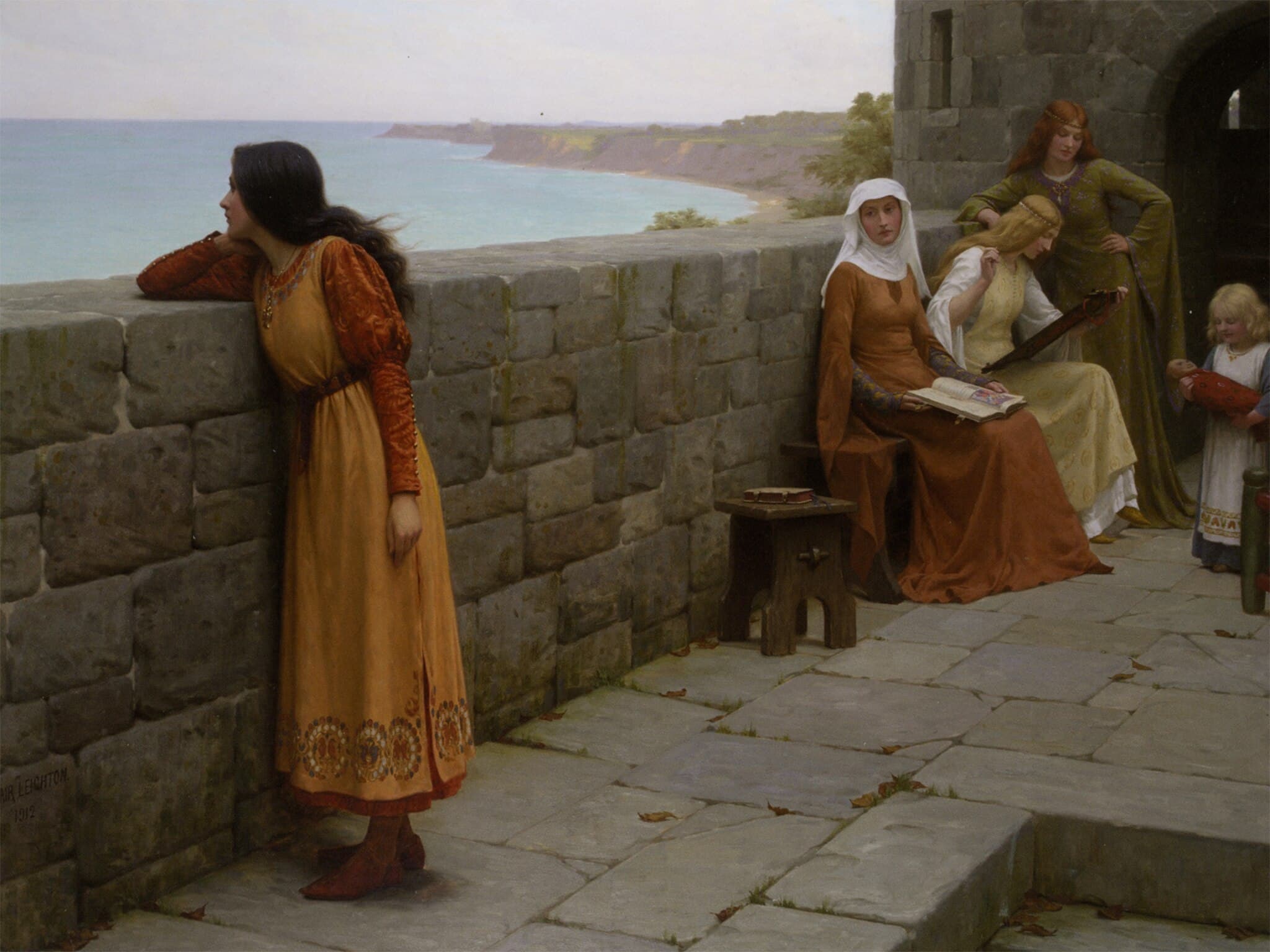
Anchored to a Sotheby’s offering (27 Nov 2003, Lot 33) commonly reported at £173,600 (≈ $297,800 at the time) and adjusted for inflation and market movement, I estimate Edmund Blair Leighton’s The Hostage (1912) at $300,000–$600,000 today. This range assumes the painting is the same RA‑exhibited work described in the Sotheby’s catalogue, is in sound condition, and carries the provenance listed in that sale [1][2].
Valuation Analysis
Valuation anchor and provenance: The primary market anchor for this valuation is the Sotheby’s Important British Pictures sale (London, 27 Nov 2003), Lot 33, in which The Hostage (1912) is recorded in the catalogue and public references note a reported figure of £173,600 (widely cited in secondary sources) [1]. The lot carried a strong provenance and Royal Academy exhibition history in the catalogue; those factors materially elevate marketability and price expectation relative to ordinary studio works.
Conversion and adjustment: The frequently‑reported 2003 sterling figure converts to roughly $297,800 at contemporaneous exchange rates; adjusting that realized datum for inflation/market movement gives an equivalent in the vicinity of $500k (approximate) in 2025 dollars. Because sale‑report formats vary (hammer only versus inclusive figures) and Sotheby’s online realized page for that lot is not publicly visible without archive access, this 2003 number is treated as a strong but not formally confirmed precedent — verification of the auction invoice or printed catalogue will confirm hammer vs. total price and should be obtained before contract‑level pricing [1].
Comparables & market context: Edmund Blair Leighton’s market is bifurcated: small studies and panels typically trade in the low thousands to low five figures at regional houses, while large, RA‑exhibited, museum‑quality canvases can trade in the high five‑figure to six‑figure band or above when properly marketed. The artist’s historical auction ceiling (e.g., God Speed at Christie’s, 2000) demonstrates a materially higher ceiling for exceptional works and guides the upper bound of this valuation range [2]. Recent mid‑market realizations (e.g., Deutscher & Hackett; Bonhams) show much lower results for smaller pieces, underscoring the rarity premium for large RA‑exhibited canvases.
Why $300k–$600k: The lower bound ($300k) is conservatively near the inflation‑unadjusted 2003 dollar equivalent and assumes the painting is genuine, marketable, but lacks an institutional buyer or exceptional fresh scholarship. The upper bound ($600k) reflects the inflation/market‑adjusted precedent plus a premium for ideal condition, intact original frame, flawless provenance/exhibition history, and competitive marketing through a top London sale where international institutional/private bidders are engaged. Buyer’s premium, taxes/VAT on import, and selling costs will affect net proceeds; consignors should expect estimates and house recommendations to reflect these factors.
Actionable next steps: verify the 2003 realized figure with Sotheby’s archive or a subscription sale database; obtain high‑resolution images, exact dimensions, and a professional condition report; secure any provenance documentation (labels, invoices, RA catalogue entries). With those in hand, a pre‑sale estimate from a specialist at Sotheby’s/Christie’s/Bonhams or an independent RICS/ISA valuer will narrow the range to ±20% and set an appropriate auction estimate or private‑sale strategy.
Confidence statement: This opinion is a market‑anchored, comparable analysis based primarily on the Sotheby’s 2003 offering and subsequent market behavior for Leighton works; it is practical and evidence‑based but contingent on condition verification and confirmation of the 2003 realized detail [1][2].
Key Valuation Factors
Art Historical Significance
High ImpactThe Hostage is recorded as a Royal Academy‑exhibited canvas (1912) in the Sotheby’s 2003 catalogue, which materially elevates its art‑historical interest and marketability. RA exhibition status places the work in a more collectible tier within Leighton’s output — it is more likely to attract institutional interest, catalogue entries and specialist collectors than un‑exhibited studio studies. While it is not generally cited as Leighton’s single most famous image (those remain works like God Speed), the combination of large scale, finished execution and RA provenance means the painting carries a significant premium compared with ordinary panels or studies.
Provenance & Exhibition History
High ImpactSotheby’s catalogue for the 2003 sale lists provenance back to purchase from the artist circa 1913 and gallery history (Antwerp/London) and notes Royal Academy exhibition — a strong chain that improves buyer confidence and value. Clear provenance that ties the work to the artist and to public exhibition reduces attribution risk and supports higher estimates at major houses. Absence of such documentation would materially lower a prudent auction estimate; conversely, additional archival proof or inclusion in scholarly literature would support the upper valuation band.
Size, Condition & Presentation
High ImpactThe Hostage is a large finished oil (c.111.8 × 149.8 cm per the catalogue), and size is a significant positive driver for Leighton works — large, salon‑scale pictures are more attractive to institutional and high‑net‑worth buyers. Condition is a critical variable; an original, stable paint surface with a sympathetic frame will retain or add to value, while heavy restoration, lining or structural issues can reduce marketability and price by 20–50% depending on severity. A professional condition report is essential to firm the estimate.
Market Comparables & Sale History
High ImpactA direct Sotheby’s precedent (2003, reported £173,600) is the chief pricing anchor. That sale, when converted and adjusted, places a realized historical datum roughly in the $300k–$500k band on a present‑value basis, and it strongly informs the current range. Smaller Leighton works selling at Bonhams/Deutscher demonstrate that most market turnover for the artist sits at much lower price points than the Sotheby’s precedent, reinforcing that The Hostage’s size, provenance and RA history are the primary reasons it commands a materially higher valuation.
Rarity & Demand
Medium ImpactLarge, RA‑exhibited Leighton paintings are rare on the open market; that scarcity increases the chance of competitive bidding when a properly marketed example appears. Demand is cyclical and concentrated among Victorian/Pre‑Raphaelite collectors and institutions; the category has seen renewed curatorial interest but not uniformly rising prices across all tiers. The rarity of comparable canvases for sale supports a premium but also makes pricing more sensitive to sale timing and marketing channel (major London sales strongly preferred).
Sale History
Sotheby's, London (Important British Pictures, Lot 33)
Christie's, London
Deutscher & Hackett, Sydney
Bonhams, London
Edmund Leighton's Market
Edmund Blair Leighton (1852–1922) occupies a collectible but varied market position: small studies and decorative panels commonly realize low‑to‑mid five figures, while rare museum‑quality canvases with solid provenance and exhibition histories can reach high five figures to six figures or more. His strongest public results are older headline sales (e.g., God Speed at Christie’s) that set the ceiling; however, recent annual turnover shows many Leighton works achieving modest sums at regional houses. Proper marketing at a major London sale is the principal way to access his top end.
Comparable Sales
The Hostage
Edmund Blair Leighton
Direct precedent — identical painting; large, finished oil with Royal Academy exhibition history and Sotheby’s catalogue provenance; provides the primary realized datum for this specific work.
$298K
2003, Sotheby's, London (Important British Pictures)
~$509K adjusted
God Speed
Edmund Blair Leighton
Artist auction record / large, museum-quality finished canvas — serves as the top-end benchmark for Leighton’s market and shows ceiling for highest-quality works.
$1.1M
2000, Christie's, London
~$2.0M adjusted
The Letter
Edmund Blair Leighton
Recent, publicly reported realized sale of a finished Leighton (smaller format) — useful to show the active mid/lower tier of the market for non‑museum works.
$20K
2022, Deutscher & Hackett, Sydney
~$21K adjusted
Tristram and Isolde (study/panel)
Edmund Blair Leighton
Recent small study sold at Christie’s — comparison for studies/panels (not full-scale, exhibited canvases); shows gap between studies and major canvases.
$14K
2023, Christie's, London
~$14K adjusted
The Window Seat
Edmund Blair Leighton
Recent regional-house sale of a mid-level Leighton — reinforces that many Leighton works on the market in 2023–24 realize low-to-mid five-figure sums.
$14K
2024, Bonhams, London
~$15K adjusted
Current Market Trends
The Victorian/Pre‑Raphaelite sector is currently bifurcated: institutional interest and headline works perform well, but mid‑market examples often trade quietly. Renewed exhibition programming supports demand for quality pieces, yet overall buyer activity is selective. For Leighton, this means large, well‑provenanced canvases can still command strong prices if presented at the right house; smaller works continue to sell at modest levels.
Sources
- Sotheby’s — Important British Pictures: Lot 33 (The Hostage), 27 Nov 2003 (catalogue entry)
- Christie’s — historic record for Edmund Blair Leighton (God Speed sale reference)
- Wikipedia — The Hostage (painting) (publicly cites the Sotheby’s sale)
- PoundSterlingLive / Bank of England — historical exchange rates used for date‑specific GBP→USD conversion
- Bonhams — recent Leighton sale examples (The Window Seat, 25 Sep 2024)