How Much Is The Queen kisses the sleeping poet (Alain Chartier) Worth?
Last updated: May 11, 2026
Quick Facts
- Last Sale
- $444K (2001, Christie's, London)
- Methodology
- recent sale
Anchored by the Christie's London sale of the same painting (28 Nov 2001, GBP 311,750 / c. USD 443,900), I value Edmund Blair Leighton’s The Queen kisses the sleeping poet (Alain Chartier) at USD $300,000–$600,000. This range assumes the work matches the documented RA‑exhibited 1903 picture (161.3 x 111.8 cm), is signed as recorded, and is in good/excellent condition; condition, venue and provenance will materially affect the final outcome.
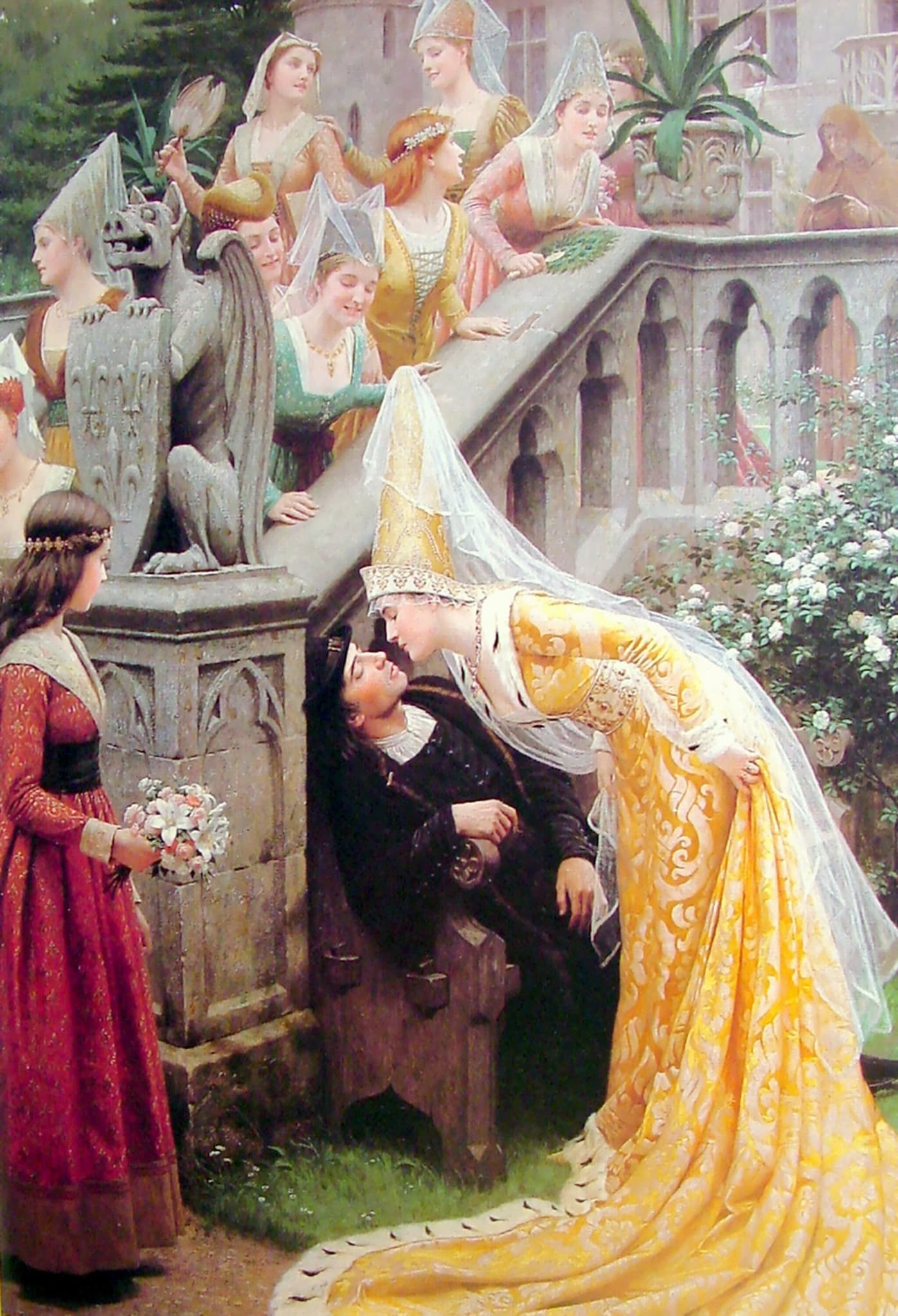
The Queen kisses the sleeping poet (Alain Chartier)
Edmund Leighton, 1903 • Oil on canvas
View more by Edmund Leighton →Valuation Analysis
Primary basis and precedent: This valuation is anchored to the documented Christie's, London sale on 28 November 2001 (GBP 311,750; c. USD 443,900 at contemporaneous rates) for the same composition recorded as exhibited at the Royal Academy in 1903 and illustrated in period journals. The Christie's lot page records the dimensions, signature and exhibition/publication history that convert this painting from a routine studio work into a major, market‑grade Leighton with demonstrable collector interest [1].
Method and adjustments: I used the 2001 hammer as the primary market precedent and adjusted for two factors: (a) subsequent market movement for late‑Victorian/Edwardian history painting (moderate softening at the very top end since 2014 but continuing demand for strong, documented examples) and (b) inflation and purchasing‑power changes since 2001. The 2001 real USD sale (c. $444k) provides a clear floor for a comparable evening‑sale result today; however, the broader high‑end market has been selective, so a conservative current guide is given rather than a strict inflation roll‑forward [2].
Price range rationale: For an RA‑exhibited, large, signed Leighton in stable, well‑conserved condition and offered through a major London/NY sale department with appropriate marketing, the expected hammer/realised range is about USD $300,000–$600,000. The lower bound reflects a market that is more cautious than in 2000–2014 and allows for variance in buyer turnout; the upper bound reflects what the same work could achieve with competitive bidding and strong provenance confirmation. If the picture has suffered significant restoration, is relined poorly, or lacks the documented provenance/labels, the market value could fall substantially (into low five‑figures). Conversely, museum interest or a particularly strong sale season could push the result above the stated top end.
Practical points: This guide assumes sale via a major auction house (buyer pool and marketing are critical). Estimates are hammer‑level equivalents; buyers’ premium, taxes and export controls will affect the net proceeds. Final valuation should be confirmed with up‑to‑date high‑resolution images, a current conservator’s condition report, and sight of any labels or inscriptions on the reverse. Recommended next steps are: obtain condition documentation, confirm the RA 1903 catalogue entry and image, and approach top‑tier Victorian/19th‑century picture specialists for a presale estimate and marketing plan.
Conclusion: The single strong market precedent makes this painting a high‑tier Leighton when the documented details align. For sale or insurance purposes, proceed to formal appraisal and condition reporting; for sale, plan for an evening or specialist sale to realise the indicated range [1][2].
Key Valuation Factors
Art Historical Significance
High ImpactThis painting carries above‑average art historical significance within Leighton's oeuvre because it is a finished, narrative history composition with a Royal Academy exhibition record (1903) and contemporary illustration in period journals. Such documented exhibition and publication history confers scholarly validation and collector confidence, moving the work into the top tier of Leighton’s market. The subject (Alain Chartier and the Queen) fits the artist's most desirable medieval/romantic themes, which historically attract the strongest bidding. In short, the combination of subject, finish and documented public exposure is a major positive that supports six‑figure pricing.
Provenance & Exhibition History
High ImpactA clear, traceable provenance (Royal Academy 1903; H.R. Hill purchase 1949; Leger Galleries 1966; Sotheby's 1982; Christie's 2001) materially reduces attribution risk and increases market confidence. Works with museum‑quality provenance or continuous ownership records typically command premiums versus anonymous or reconstituted provenance. Exhibition entries and period illustrations (Pall Mall Magazine, Art Journal) further strengthen the painting’s market position and make it attractive to institutional buyers and high‑end private collectors — a decisive factor in achieving the top of the estimate range.
Condition & Size
High ImpactThe painting’s large format (c. 161.3 x 111.8 cm as documented) is desirable in the market for history painting, but its value is highly sensitive to condition. Original, stable paint surfaces and sympathetic conservation support top prices; extensive overpainting, major relining or structural instability will reduce value—sometimes by 20–60% depending on severity. A current conservator’s report is essential; even strong provenance cannot fully compensate for severe condition issues. The size makes it attractive for museum display but also increases shipping and restoration costs, which buyers factor into bids.
Market Precedent & Comparables
High ImpactThe 28 Nov 2001 Christie's sale (GBP 311,750 / c. USD 443,900) is the primary comparable and sets a provable market level for this exact composition. Other high‑end Leighton blockbusters (eg. God Speed, A King and a Beggar Maid) demonstrate the ceiling for top museum‑quality canvases, while more recent regional sales and lower‑provenance lots show a clustered mid‑market. The existence of a firm, direct precedent in a major house is the single strongest factor supporting a six‑figure estimate for a well‑presented offering.
Sale Venue & Market Timing
Medium ImpactVenue and timing materially influence realisation. A major evening sale in London or New York with specialist departmental promotion and publication is likely to realise at or above the estimate; a regional or online sale will generally produce lower outcomes. Market cycles matter: the high‑end academic/Victorian market is selective and has softened at the very top since the early 2010s, although well‑documented works still perform strongly. Appropriate timing (catalogue inclusion, touring previews) and reserve strategy are important practical levers to achieve the estimate range.
Sale History
Christie's, London
Sotheby's, London
Christie's, London
Edmund Leighton's Market
Edmund Blair Leighton (1852–1922) occupies a strong mid‑market position among collectors of late‑Victorian and Edwardian romantic history painting. Finished, well‑provenanced large canvases with exhibition history achieve steady six‑figure sales in optimal conditions, while smaller or lesser‑documented works trade in the low‑to‑mid five‑figure band. Leighton enjoys a reliable collector base and periodic blockbusters; however, outcomes are sensitive to subject, quality, size and scholarly validation. The emergence of a published catalogue raisonné and continued specialist sales supports price clarity for his best works.
Comparable Sales
The Queen kisses the sleeping poet (Alain Chartier)
Edmund Blair Leighton
Exact same painting — large, signed, RA‑exhibited, fully documented work. Primary market precedent for valuation.
$444K
2001, Christie's, London
~$755K adjusted
God Speed
Edmund Blair Leighton
Major, museum‑scale Leighton history/romantic picture and one of the artist's auction blockbusters — shows top‑end demand for comparable large, narrative Leighton canvases.
$1.1M
2000, Christie's, London
~$1.9M adjusted
A King and a Beggar Maid
Edmund Blair Leighton
Another high‑profile Leighton history/romantic composition that realised a strong six‑figure/low‑seven‑figure result — useful for gauging ceiling for top examples.
$1.1M
2014, Sotheby's, London
~$1.5M adjusted
Faded Laurels
Edmund Blair Leighton
Recent regional specialist sale showing that strong Leighton examples can still attract significant sums outside London/NY — but materially less than blockbuster works.
$98K
2023, Bukowski, Stockholm
~$104K adjusted
The Window Seat
Edmund Blair Leighton
Recent low‑end market example for the artist — similar subject/genre but smaller scale and lesser provenance; useful to show the lower end of the current market.
$15K
2024, Bonhams, London
~$15K adjusted
Current Market Trends
The global art market has shown a selective softening at the very top end since 2022, with resilience in online and lower price segments. For Victorian and late‑19th‑century British painting, demand remains strongest for museum‑quality, well‑provenanced works; mid‑market lots continue to sell steadily. Timing, venue and departmental expertise are now more decisive in producing premium results than during the early 2000s boom.