How Much Is The Boyhood of Alfred the Great Worth?
Last updated: May 11, 2026
Quick Facts
- Methodology
- comparable analysis
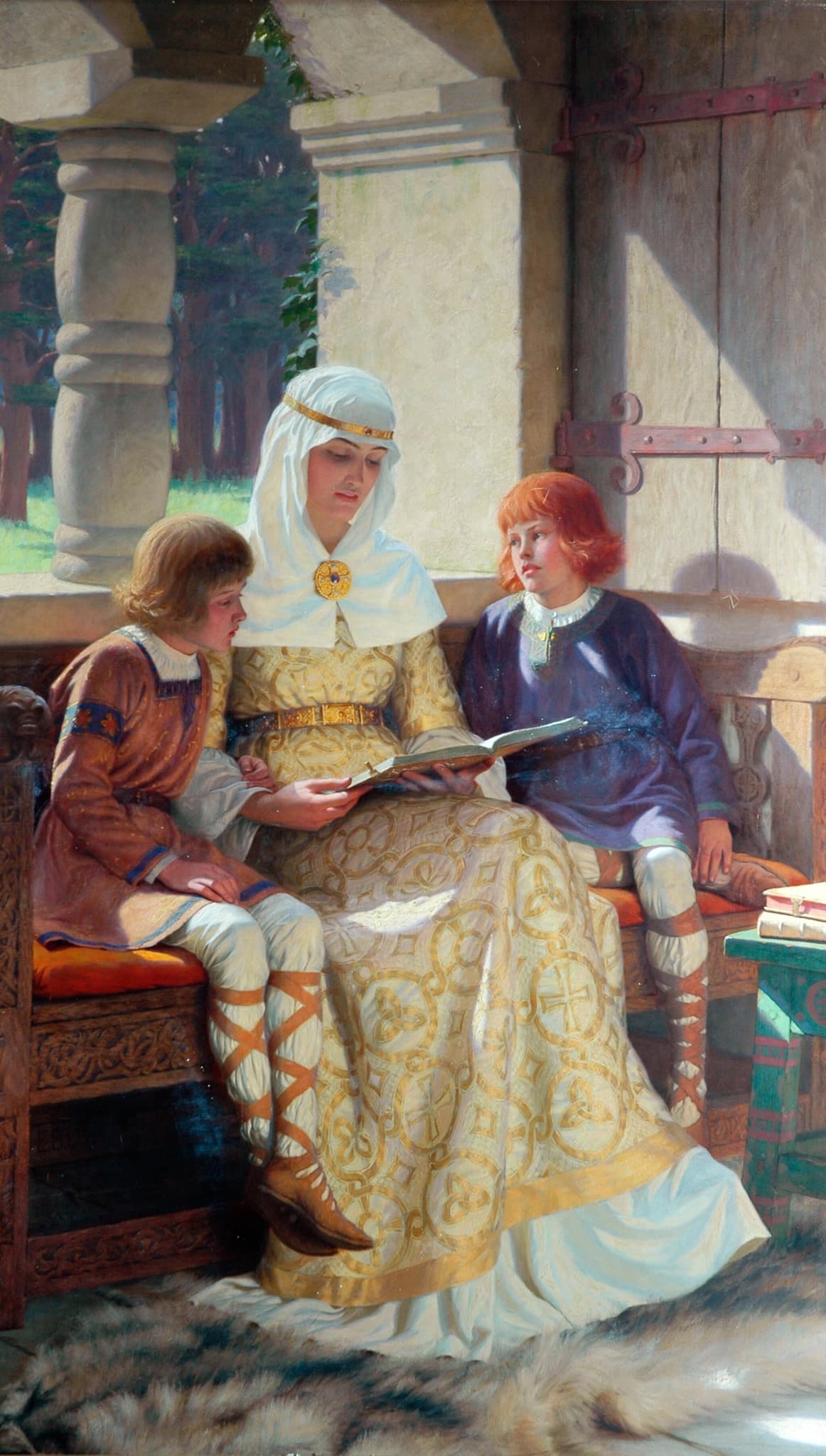
If offered on the open market today, Edmund Blair Leighton’s The Boyhood of Alfred the Great (1913, 148 × 87 cm) would most likely realize in the range US$30,000–150,000. Exceptional provenance, major‑house evening placement and pristine condition could push the outcome materially higher; poor condition or weak documentation would depress it toward the low end.
Valuation Analysis
Valuation conclusion: Based on comparable auction results for Edmund Blair Leighton and the object information available, if Kirklees Museums & Galleries' The Boyhood of Alfred the Great (Edmund Blair Leighton, 1913; 148 × 87 cm; accession 2005.775) were offered on the open market today a reasoned hammer range is US$30,000–150,000. The work is in a public collection and has no recorded modern auction appearance, which limits direct sale comparables and places it within the mid‑market band absent exceptional provenance or exhibition history [1].
Methodology: This opinion is drawn from a comparable‑analysis approach: situating the painting within the observed distribution of Leighton auction results. Large, iconic Leighton canvases have established the artist’s high‑end (for example the benchmark God Speed sale), while small studies and studio panels are realized at the low end—recent Christie’s sales of small studies illustrate the lower threshold of the market [2][3]. The range above brackets the most likely buyer interest for a non‑iconic, museum‑held Leighton of substantial size.
Key value drivers are clear: the substantial easel size is positive for marketability; museum ownership supports attribution and baseline provenance; and the absence of recent sale records constrains immediate comparables. Condition and conservation are the dominant multipliers—an original, stable surface and minimal intervention will favor the top of the stated band; extensive relining, heavy overpaint, or structural instability will materially reduce value. Public‑collection status also means any hypothetical sale would need to address deaccession policy and clear title.
Scenario guidance: an upside outcome (major‑house evening sale, established provenance, strong condition) could move realized bids into the US$150,000–350,000 window driven by competitive specialty collectors. Conversely, a downside outcome (regional sale, notable condition problems or uncertain provenance) would reasonably land in the US$10,000–30,000 band. Given current data, the mid‑range estimate is the best practical expectation.
Recommended immediate steps to firm value: obtain high‑resolution recto/verso images and stretcher/label detail; secure a professional condition/conservation report; and request full provenance/exhibition documentation from Kirklees. With those materials a Victorian/British specialist at a major auction house can provide a formal pre‑sale estimate and sale strategy. I can run paid database checks for any non‑public sale records on request.
Key Valuation Factors
Art Historical Significance
Medium ImpactEdmund Blair Leighton is a recognized practitioner of romantic historical and chivalric subjects within late‑Victorian/Edwardian British painting. The Boyhood of Alfred the Great (1913) is a later work with a nationally resonant subject but it is not among Leighton’s widely reproduced signature compositions (such as The Accolade or God Speed). That places the painting at a medium level of art‑historical desirability: it is attractive to genre and historical‑subject collectors and UK regional institution curators, but absent unique scholarly or exhibition distinctions it will not by itself command the premiums reserved for canonical, museum‑defining works.
Provenance & Museum Ownership
High ImpactThe painting’s recorded bequest and current holding in Kirklees Museums & Galleries (accession 2005.775; bequeathed by Mrs T. J. Hirst) is a significant provenance anchor. Museum ownership strengthens attribution and baseline authenticity, which is positive for value if the work is offered. However, public‑collection status also means the painting has been absent from the commercial market for decades, reducing the pool of recent comparables. If provenance can be further documented (prior owners, exhibition loans, period illustration) the market estimate would become more confident and likely increase; conversely, any title restrictions or deaccession constraints could complicate or reduce saleability.
Condition & Conservation
High ImpactCondition is a principal value multiplier for Victorian oils. Issues that materially affect price include relining, paint loss, inpainting, craquelure with flaking, and varnish discoloration. A stable, original surface with minimal intervention will support the higher end of the estimate; conversely, extensive restoration or structural work often reduces realizable value significantly and can limit buyer interest to regional markets. A written conservation report (vendor or independent) is therefore essential to confirm the likely competitive outcome and to prepare appropriate sale reserves or insurance valuations.
Market Comparables & Rarity
High ImpactLeighton’s auction record distribution is bimodal: a handful of large, iconic canvases have reached high five/six figures while most studio works and studies settle in the low thousands to mid five figures. That disparity means The Boyhood—large but not iconic—sits in a middle, price‑sensitive tier where comparable sales, sale venue, and marketing are decisive. The absence of prior public auction records for this exact title increases reliance on comparables (God Speed; other large Leighton canvases) to form an estimate, making precise valuation contingent on exhibition/provenance evidence and condition.
Exhibition & Publication History
Medium ImpactExhibition loans and inclusion in scholarly publications materially increase buyer confidence and demand; they provide narrative and institutional validation that can lift prices noticeably. At present there is no widely cited major exhibition or catalogue‑level publication identifying The Boyhood as a headline work. If documentation surfaces showing significant historic exhibition or high‑quality reproduction in period literature it would increase the painting’s market appeal and could push the estimate toward the upper end of the stated range.
Sale History
The Boyhood of Alfred the Great has never been sold at public auction.
Edmund Leighton's Market
Edmund Blair Leighton (1865–1922) occupies a collectible, specialist niche within late‑19th/early‑20th‑century British academic painting. The market is bifurcated: a small number of large, iconic works have produced high five‑figure to six‑figure results, while the majority of studies and non‑signature easel pictures trade at more modest levels. Demand persists among enthusiasts of Victorian romanticism and institutional buyers, but Leighton lacks the price depth and frequency of high‑end Pre‑Raphaelite blue‑chips. Scholarly work (including an anticipated catalogue raisonné) and targeted institutional interest can materially lift market confidence for well‑documented pictures.
Comparable Sales
God Speed
Edmund Blair Leighton
Same artist, large iconic easel picture and the established top-market benchmark for Leighton; similar period and historical/romantic subject though more widely reproduced and more market-significant than the Kirklees picture.
$961K
2000, Christie's London
~$1.7M adjusted
A King and a Beggar Maid
Edmund Blair Leighton
Same artist and period; cited in market commentary as a high-performing large easel work in 2014 — a useful upper-mid benchmark for well-documented, large Leighton canvases (figure estimated from reported 'high‑hundreds of GBP'—see notes).
$652K
2014, Major auction-house sale (reported 2014 high-value Leighton lot)
~$789K adjusted
Tristram & Isolde (working study)
Edmund Blair Leighton
Same artist and recent auction appearance; represents the lower end of market activity for small studies/panels by Leighton and helps define the market floor versus large easel works.
$15K
2023, Christie's London (Dec 14, 2023, small study)
~$15K adjusted
Current Market Trends
The Victorian/Pre‑Raphaelite segment is currently bifurcated: blue‑chip names maintain strong demand while mid‑market academic works are selective and price‑sensitive. In the last several years Leighton has appeared more often as small studies and online lots than as repeated major‑house evening offerings. Institutional exhibitions and scholarly cataloguing will support confidence over the medium term, but immediate buyer appetite for non‑iconic Leighton canvases remains concentrated and variable.