How Much Is God Speed Worth?
Last updated: May 11, 2026
Quick Facts
- Last Sale
- $777K (2012, Sotheby's, London)
- Methodology
- comparable analysis
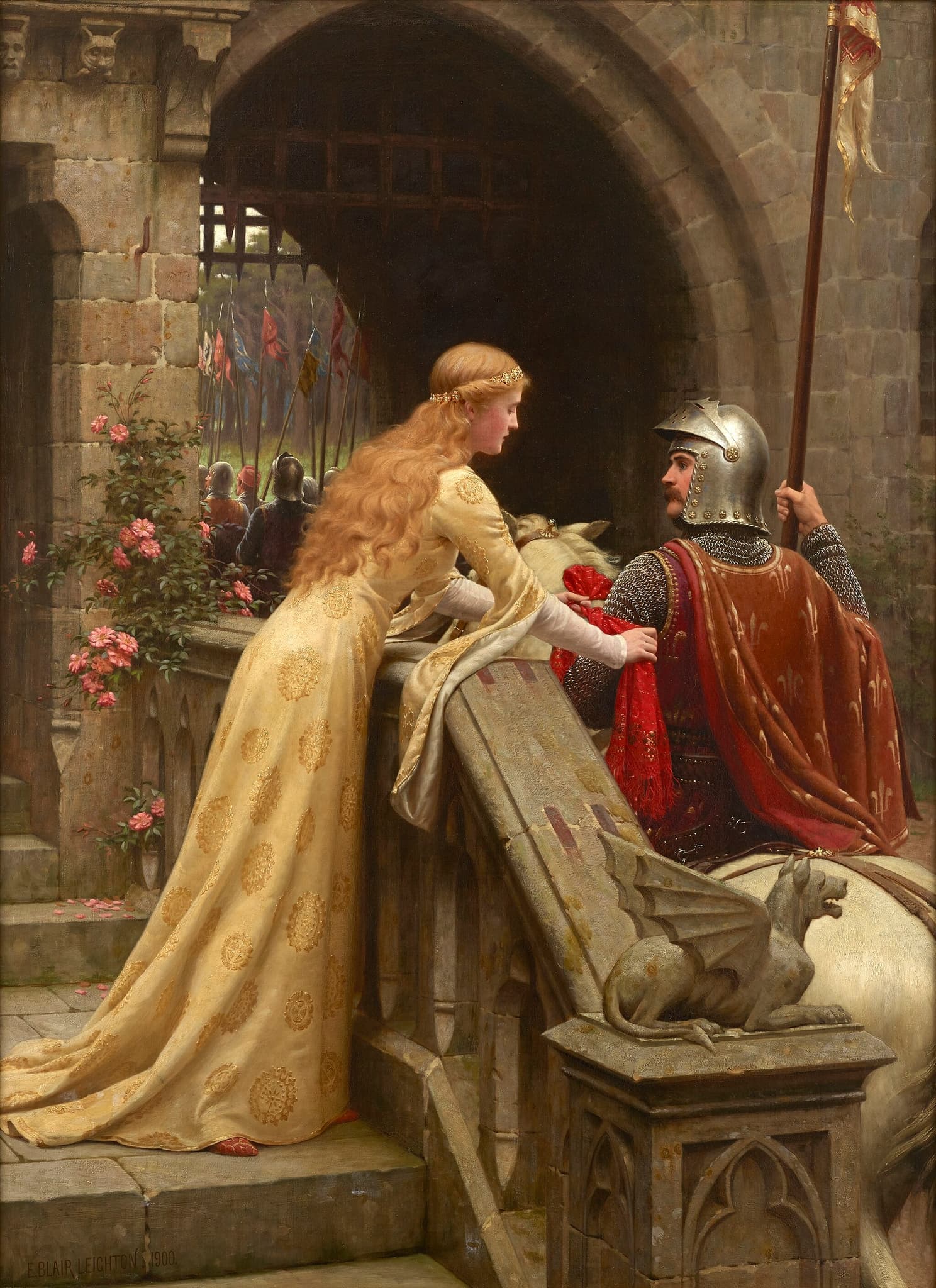
For an original, exhibition-quality 1900 oil on canvas of Edmund Blair Leighton’s God Speed with clean provenance and good condition, my valuation range is $750,000–$1,300,000. This is anchored to three major-house, identical-composition auction precedents and adjusted for present market dynamics and condition/provenance sensitivity.
Valuation Analysis
Valuation conclusion: For an original, exhibition-quality 1900 oil on canvas of Edmund Blair Leighton’s God Speed with verified provenance and sound condition I estimate a market value of $750,000 - $1,300,000. The range reflects direct auction precedents for the identical composition, current buyer concentration in the Victorian/19th-century niche, and the material impact of condition and provenance on realised outcomes.
The controlling comparables are the same composition sold at Christie’s London on 14 June 2000 (reported £707,750 ≈ USD 1,040,324) and at Sotheby’s New York on 18 April 2007 (≈ USD 1,048,000), with a later Sotheby’s London appearance on 10 May 2012 (reported £481,250 ≈ USD 776,544). These three identical-composition results demonstrate that when God Speed appears fresh, large, well-documented and with good condition it sits at the top of Leighton’s market; at other times outcomes fall back into the high-six-figure band depending on market conditions and condition/provenance factors [1][3][2].
Why this band: the two earlier sales (2000 and 2007) provide direct evidence of buyer willingness to reach roughly USD 1.0M+ for this composition under favourable circumstances; the 2012 result shows market volatility and highlights how condition, relining/restoration history, the selling house and pre-sale marketing materially affect the final price. I set the low end of the range ($750k) to reflect a conservative realisation for a good but not perfectly fresh example and the high end ($1.3M) to reflect a well-presented, museum-quality original with impeccable provenance and competitive international bidding.
Value drivers: primary factors are (1) confirmed original status versus studio copy or reduction, (2) scale (the composition’s large documented sizes command premiums), (3) exhibition/publication history (Royal Academy 1900 listing adds demonstrable value) and (4) condition/conservation history. A full conservator’s report and clear RA/exhibition provenance materially increase buyer confidence and price realisation; conversely, heavy restoration, uncertain provenance or a demonstrable reduction/copy will reduce value substantially.
Practical sales advice: if you propose to sell, present the work in a major-house evening or specialist nineteenth-century sale with strong catalogue entry, high-resolution photography and a conservator’s statement. For works with any condition or provenance questions consider a private-treaty sale or targeted dealer introduction. I can narrow the guide and recommend a reserve if you supply photographs (full, signature, verso), dimensions and the provenance/condition file.
Key Valuation Factors
Art Historical Significance
High ImpactEdmund Blair Leighton is a recognised late-Victorian/Edwardian painter whose medieval and chivalric subjects are emblematic of the market segment collectors seek. 'God Speed' is one of his more prominent compositions and, when identified as the primary 1900 original with Royal Academy exhibition entry, carries added scholarly and market cachet. This composition’s narrative and compositional clarity make it visually attractive to private and institutional buyers who collect high-quality Victorian genre canvases. The work’s standing in the catalogue and any published citations or inclusion in a catalogue raisonné materially increase market desirability and justify premium pricing.
Provenance & Exhibition History
High ImpactClear, traceable provenance — especially exhibition at the Royal Academy (1900), early sales or collection history and prior auction documentation — strongly supports value. The recorded chain of ownership and previous major-house appearances (Christie’s 2000, Sotheby’s 2007 and 2012) provide critical buyer confidence and have been central to the composition’s prior high realisations. Missing or ambiguous provenance, lack of exhibition/publication citations, or gaps in ownership lower buyer certainty and can reduce likely realisation by a substantial margin.
Condition & Conservation
High ImpactCondition is a determinative factor. Even well-composed Leighton canvases can see value declines if they have heavy relining, visible overpainting, patching or structural instability. The 2012 sale note for the sold example recorded relining with small areas of retouching but otherwise sound condition — an example of how a documented conservation history can be acceptable but still influential to result. A current, independent conservator’s report and high-resolution condition images are essential to achieve the top of the estimate band.
Comparable Sale History & Market Liquidity
High ImpactThis composition benefits from unusually strong direct comparables: identical works have sold at major houses for approximately USD 776k–1.05M. Those three sales are the primary anchors for valuation and demonstrate that bidders will pay seven-figure prices under favourable conditions. However, the market for Victorian works is concentrated; top results depend on fresh-to-market presentation and significant pre-sale marketing. Liquidity for top Leighton canvases exists but is conditional and intermittent.
Sale History
Edmund Leighton's Market
Edmund Blair Leighton is a well-established name within the Victorian/Edwardian academic-genre market. He enjoys steady collector interest for his large, narrative medieval and chivalric canvases; smaller studies and copies trade at much lower levels. The market is selective: museum-quality, well-provenanced works can achieve high-six to low-seven-figure prices when offered through major houses, while typical examples and studio pieces more commonly realise five-figure sums. Leighton's market performance is therefore top-heavy and highly dependent on freshness and provenance.
Comparable Sales
God Speed
Edmund Blair Leighton
Exact same composition by the same artist; large, exhibition-quality original with matched provenance and RA exhibition history — direct primary-market precedent for this picture.
$1.0M
2000, Christie's, London
~$1.9M adjusted
God Speed
Edmund Blair Leighton
Same composition sold at a major-house evening sale in a different market (NY); confirms sustained high-level demand across markets and dates for this specific work.
$1.0M
2007, Sotheby's, New York
~$1.6M adjusted
God Speed
Edmund Blair Leighton
Same composition sold more recently with published condition/provenance notes; lower realized figure provides evidence of market variability but remains a strong comparable.
$777K
2012, Sotheby's, London
~$1.1M adjusted
Current Market Trends
The broader Victorian/19th-century niche remains stable but concentrated: strong demand for fresh, exhibition-quality works, limited buyer pools and emphasis on provenance/condition. No recent major retrospective has materially re-rated Leighton’s market; prices for top works remain supported by intermittent competition at major houses while the majority of offerings trade modestly.