How Much Is The Dedication Worth?
Last updated: May 11, 2026
Quick Facts
- Last Sale
- $592K (2013, Christie's London)
- Insurance Value
- $900K (Christie's 2013 realized price and subsequent market comparables (presale/replacement guidance))
- Methodology
- comparable analysis
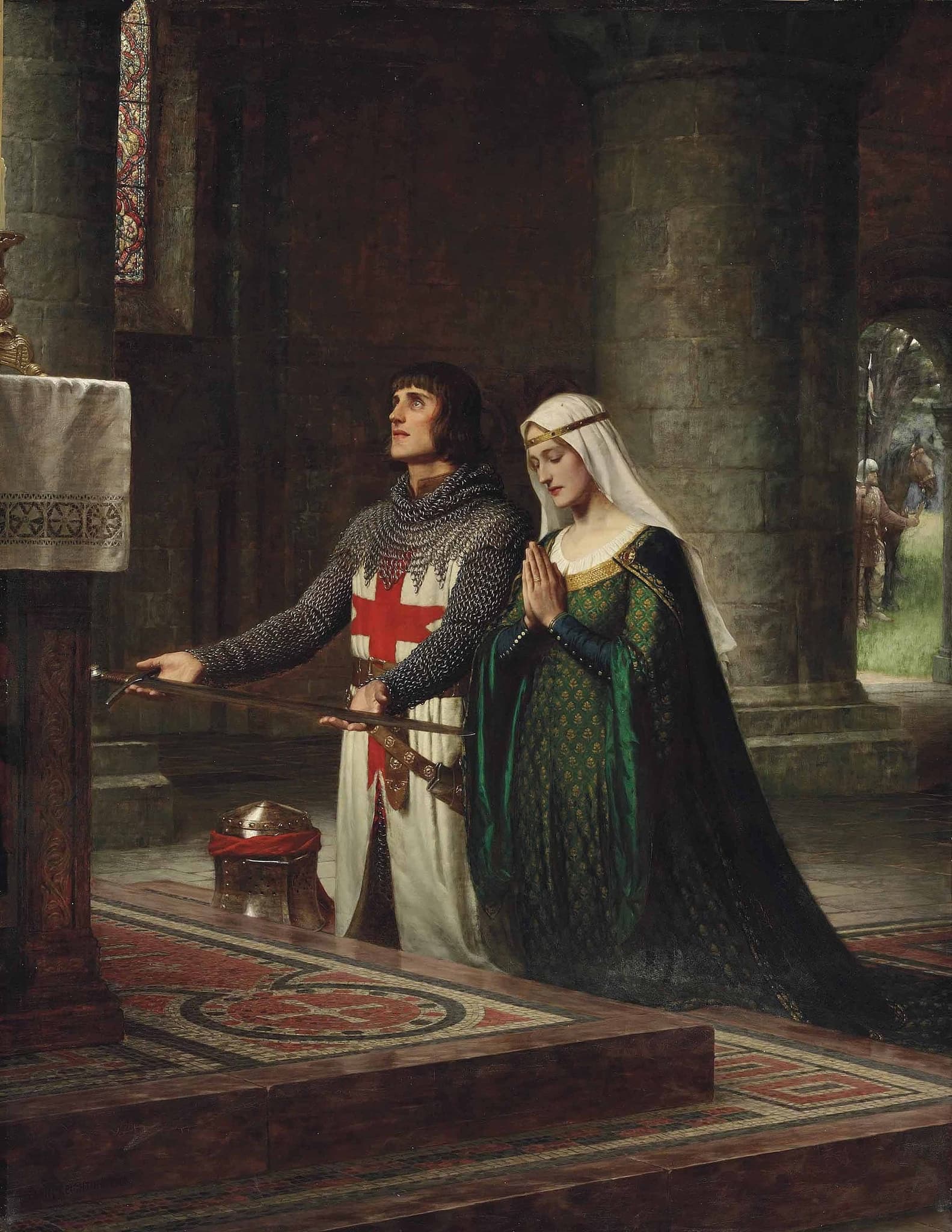
Anchored to the Christie’s London 12 Dec 2013 sale of The Dedication (reported £362,500) and top‑tier Leighton comparables, my working market valuation for the RA‑exhibited 1908 oil The Dedication (55 × 43 in.) is US$500,000–$900,000. This assumes sound condition, complete provenance and sale through a major specialist saleroom; condition or provenance weaknesses would push the value toward the low end or below.
Valuation Analysis
Valuation basis: The primary market anchor is the Christie’s London realization of The Dedication (reported £362,500 on 12 Dec 2013), which when converted at the contemporaneous rate and viewed against later market activity provides the best direct evidence for present valuation consideration [1]. That result, together with high‑end comparables (notably Sotheby’s strong Leighton sale in 2014) and several mid‑market regional results, informs the recommended working range of US$500,000–$900,000 for a sale today assuming good condition and documented provenance [2][3].
How the range is constructed: The 2013 Christie’s result functions as a reliable baseline; inflation/market movement since 2013 suggests that a conservatively updated market opening bid expectation is in the mid‑six‑figure zone. The lower bound (≈US$500k) reflects discounting for any significant condition issues, incomplete provenance documentation, or the possibility of sale in a less competitive venue. The upper bound (≈US$900k) reflects a scenario in which the canvas is structurally sound, fully documented (RA 1908 exhibition, Captain Mendoza/Bovey Castle provenance), and offered fresh to market with top‑room marketing—conditions that historically attract institutional and deep‑pocket private buyers for large Leighton canvases [1][2].
Market context and comparables: Leighton’s market is bifurcated: a very small top tier (museum‑quality, large, fresh works) achieves high six‑figure to low seven‑figure outcomes, while many smaller or studio pieces trade in the low‑to‑mid five‑figure or lower range. The 2013 Christie’s sale of this very painting is the single most important datapoint; larger top‑room comparables such as A King and a Beggar Maid at Sotheby’s demonstrate that top market ceilings remain well above US$1m in favourable circumstances [2]. Regional successes (e.g., Bukowskis, Deutscher & Hackett) show continued international demand for quality Leighton works but at lower price points [3].
Key caveats and next steps: This is a market guidance rather than a formal insured appraisal. Final value will be determined by close inspection (in‑hand condition report), documentary provenance (original bills, exhibition labels, RA catalogue citation), and sale channel. I recommend: (1) obtain a professional condition report; (2) gather and submit full provenance/exhibition documentation; (3) request written presale estimates from Christie’s/Sotheby’s/Victorian‑specialist desks; and (4) consider in‑person appraisal for insurance or tax purposes. With those steps completed the estimate can be tightened and, where appropriate, adjusted upward if institutional interest is confirmed [1][2][3].
Key Valuation Factors
Art Historical Significance
High ImpactThe Dedication’s date (1908) and reported Royal Academy exhibition entry give it above‑average scholarly visibility among Leighton works. While it is not as widely reproduced as The Accolade, an RA‑exhibited, finished large canvas by Leighton is more desirable to institutional and advanced private collectors than studio studies or copies. The composition and handling are typical of Leighton’s marketable strengths—careful costume detail, polished finish and academic composition—which help the painting stand out in catalogues and justify a premium versus unattributed or lesser‑documented works. This art‑historical cachet materially supports the valuation and reduces attribution risk in the market.
Provenance & Exhibition History
High ImpactProvenance reported in the Christie's lot (Captain Mendoza; Bovey Castle) and the RA 1908 exhibition listing significantly strengthen market confidence. Well‑documented provenance and exhibition history reduce buyer uncertainty, broaden the pool of institutional bidders and can elevate a lot into major‑sale marketing cycles. Conversely, gaps in ownership history or unverified labels would depress buyer confidence and the likely selling price. For The Dedication, verified provenance is a key value driver: it is one of the principal reasons the 2013 sale achieved a strong price and why similar canvases attract premium interest at top houses.
Condition & Conservation
High ImpactCondition has a primary impact on immediate marketability and net proceeds. Structural issues (weak canvas, relining, significant craquelure), large areas of inpainting, or major varnish discoloration materially reduce buyer bidding and attract lower conservation‑contingent offers. Conversely, a stable, original paint surface with minimal restoration supports top‑room estimates. For a painting of this scale, potential buyers will expect a full condition report; any required conservation will be reflected in seller reserves and buyer willingness. Consequently, condition is a decisive determinant between the lower and upper bound of the advised range.
Scale, Composition & Subject
High ImpactAt c. 55 × 43 inches the work is large and commercially attractive: Leighton’s larger, narrative medieval/historical subjects consistently outperform small studio studies because they display better in exhibitions and attract collector attention. The subject matter—medieval dedication/romantic historicism—is a known marketable genre for Pre‑Raphaelite and Victorian collectors. Size and subject together make the picture more saleable to both institutions and high‑net‑worth private buyers, which supports valuation toward the upper half of the working range when other factors (condition, provenance, fresh‑to‑market) are positive.
Market Liquidity & Comparables
High ImpactLeighton’s secondary market is bifurcated: a small number of large, fresh paintings bring strong six‑figure to low seven‑figure results (as shown by top records) while many smaller or studio‑quality works trade at modest levels. The Dedication’s 2013 Christie’s sale is the single best direct comparable and anchors current expectation; other regional sales show active but segmented liquidity. Overall, comparable sales data provide robust support for the recommended working range, but market liquidity at the top depends on auction house placement and marketing.
Sale History
Christie's London (Victorian & British Impressionist Art, lot 49)
Sotheby's London
Bukowskis (Stockholm)
Deutscher & Hackett (Sydney)
Stair Galleries (The Fine Sale)
Edmund Leighton's Market
Edmund Blair Leighton (1853–1922) occupies a collectible niche within late‑Victorian/Edwardian academic and historical painting. His best, large, exhibition‑quality canvases command significant international interest and have produced high six‑figure and occasional low seven‑figure results; however, the majority of his works trade in the low‑to‑mid five‑figure band. The market is selective: provenance, size and quality drive outcomes far more than sheer volume of offerings. Specialist auction houses and museum interest remain the primary channels for premium sales.
Comparable Sales
The Dedication
Edmund Blair Leighton
Same painting; direct market anchor — large-scale (55 × 43 in.), Royal Academy exhib. 1908; sold fresh-to-market at Christie’s in 2013.
$592K
2013, Christie's London
~$818K adjusted
A King and a Beggar Maid
Edmund Blair Leighton
Same artist; comparable large-scale medieval/romantic subject and a strong top-market result (used as a market-ceiling comparable).
$1.1M
2014, Sotheby's London
~$1.5M adjusted
Faded Laurels
Edmund Blair Leighton
Same artist; strong regional/top-house hammer (1,000,000 SEK) in 2023 — shows demand for quality Leightons outside UK/US but at a lower level than London top-room sales.
$96K
2023, Bukowskis (Stockholm)
~$102K adjusted
The Letter
Edmund Blair Leighton
Same artist; smaller work sold regionally in Australia (price includes buyer's premium) — illustrative of typical low/mid five-figure outcomes for modest compositions.
$14K
2022, Deutscher & Hackett (Sydney)
~$16K adjusted
My Lady’s Page
Edmund Blair Leighton
Same artist; small/modest work sold at a regional US house — shows the low end of Leighton's secondary market distribution.
$3K
2023, Stair Galleries (The Fine Sale)
~$3K adjusted
Current Market Trends
Current market conditions favor fresh, well‑provenanced, exhibition‑quality works in the late‑Victorian and Pre‑Raphaelite field. Top‑room venues continue to attract international buyers for select pieces, while regional houses clear the broader base of smaller works. There is no broad market re‑rating for Leighton since the artist’s high‑water marks, but selective demand and occasional strong regional results keep the top of market resilient.