How Much Is Dante and Virgil in Hell (The Barque of Dante) Worth?
Last updated: May 4, 2026
Quick Facts
- Methodology
- extrapolation
Hypothetical, trophy‑level valuation assuming the canonical 1822 La Barque de Dante (Louvre, inv. 3820) were legally marketable and in pristine condition. Under such extraordinary, competitive sale conditions I project US$100–150 million; under ordinary market circumstances the work would command a substantially lower, mid‑multi‑million range.
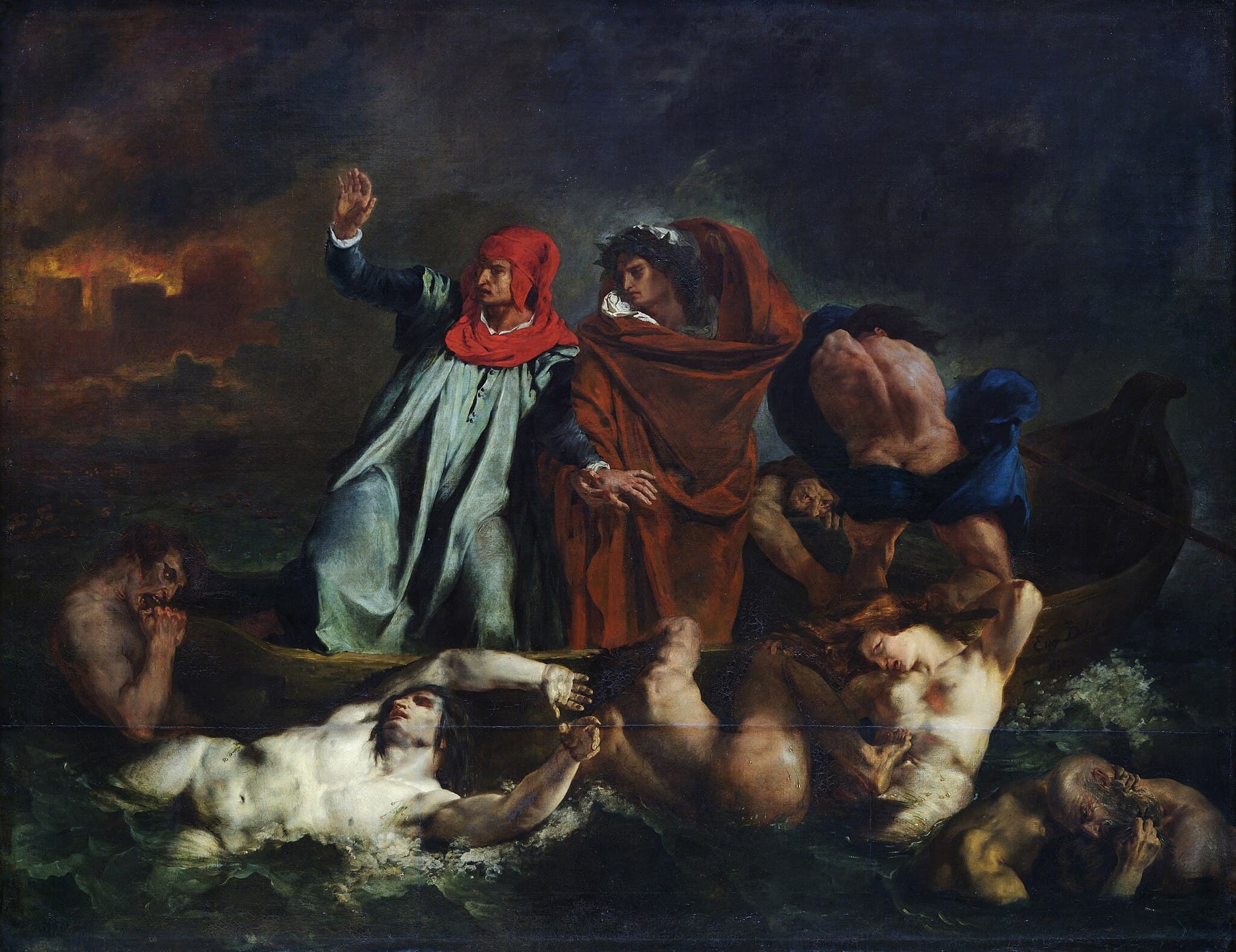
Dante and Virgil in Hell (The Barque of Dante)
Eugene Delacroix, 1822 • Oil on canvas
View more by Eugene Delacroix →Valuation Analysis
Valuation overview: This valuation expresses a hypothetical, contingency‑based estimate that assumes Eugène Delacroix’s canonical 1822 canvas La Barque de Dante (Dante et Virgile, Louvre inv. 3820) were legally marketable, physically in museum‑grade condition, and offered in a high‑profile, competitively marketed sale or private treaty. Under that extraordinary, trophy‑level scenario I project a value range of US$100–150 million. This is not an expectation of a routine auction result; the work is state‑owned and effectively inalienable, making any actual sale highly unlikely and contingent on exceptional legal and political circumstances [1].
Basis for the range: The nine‑figure estimate is an extrapolation from three dynamics: the painting’s unparalleled place in Delacroix’s oeuvre and Romantic iconography; the extreme scarcity of museum‑quality Delacroix oils available to private buyers; and precedent cases where canonical, cross‑generational masterpieces have fetched extraordinary sums when multiple deep‑pocketed bidders or institutions compete. The highest public sale for a Delacroix oil (Tigre jouant avec une tortue, Christie’s 2018) realized c. US$9.9M and defines the artist‑specific auction ceiling to date, but it is not an analogue for an unquestioned Louvre‑held national icon, which commands a different tier of demand and scarcity [2].
How a nine‑figure price could materialize: For La Barque de Dante to reach US$100–150M, several conjunctures must occur: (a) the French state authorizes a sale or exceptional transfer; (b) a global marketing and solicitation process attracts competing bids from major international museums, sovereign collectors, or consortia of private collectors; and (c) the painting presents in pristine condition with exhaustive provenance and exhibition history. Legal inalienability and export controls create both a barrier to sale and a scarcity premium—if the gate is opened, a compressed, ultra‑competitive buyer pool can drive prices well above typical comparables.
Assumptions, caveats and confidence: This valuation is intentionally conditional. Under normal market mechanics and absent the extreme competitive conditions described above, a large, museum‑quality Delacroix of this importance would more plausibly sit in a mid‑to‑high multi‑million range (commonly estimated in prior professional assessments at roughly US$10–30M). The US$100–150M band represents a trophy‑market outcome: credible but exceptional. Practical valuation requires inspection, full provenance, and confirmation of legal transferability; without those, this figure should be treated as a scenario price rather than a deployable market reserve.
Recommended next steps: Verify accession and legal status with the Musée du Louvre and the French Ministry of Culture, obtain a museum‑quality condition and conservation report, and solicit confidential written estimates from the appraisal teams of major auction houses or specialist 19th‑century dealers. Those actions will materially improve precision and convert this conditional estimate into an actionable valuation opinion.
Key Valuation Factors
Art Historical Significance
High ImpactLa Barque de Dante (1822) is a canonical early masterpiece by Delacroix and a defining Salon success that helped establish his reputation as the leading French Romantic painter. The work is heavily cited in catalogues raisonnés, has sustained museum exhibition exposure and is frequently reproduced in art‑historical surveys; that pedigree confers both scholarly prestige and broad recognizability. In market terms, such canonical status elevates a work beyond routine comparables: buyers are not only acquiring an aesthetic object but a cultural emblem with public visibility, didactic use, and long‑term institutional desirability. That combination drives upward pricing power when a work of this level becomes, exceptionally, available to competitive purchasers.
Provenance & Legal Status
High ImpactThe canonical 1822 canvas has been in the French national collection since its Salon purchase and is recorded in Louvre holdings (inv. 3820). As a state‑held museum work it benefits from legal protections and inalienability under French patrimony rules, meaning sale or export would require extraordinary statutory procedures and approvals. This legal lock both suppresses supply (making market offerings vanishingly rare) and, if lifted in an exceptional case, concentrates demand into a very short, hot moment—an economic condition that can produce a steep scarcity premium. Provenance clarity and legal transferability are therefore decisive value multipliers.
Rarity & Market Scarcity
High ImpactUndisputed, museum‑quality Delacroix canvases appear extremely rarely on the international market; many of the artist’s finest works are institutional. The combination of rarity and high cultural standing gives available examples outsized pricing leverage. Historical auction evidence (the 2018 Christie’s Tiger sale at ≈US$9.9M) establishes a public floor for major Delacroix oils, but that sale involved a work which, while important, did not carry the same national‑icon status as a Louvre masterpiece. Scarcity therefore magnifies the effect of any strong competitive buyer interest, potentially moving realized prices several multiples above ordinary comparables.
Condition & Conservation
Medium ImpactCondition is a practical, high‑impact variable. A pristine, well‑conserved museum canvas with original paint layers, minimal restoration and a clear conservation record will sit at the top of any market band; conversely, significant restoration, lining or structural problems materially depress marketability and value. As a long‑held museum work, La Barque de Dante is likely to have institutional conservation records; positive documentation reduces buyer risk and supports premium pricing. A formal condition report is an essential input before any firm market posting or reserve is set.
Market Demand & Comparables
Medium ImpactDemand for major 19th‑century masterpieces is selective: institutions and top private collectors will compete for works that are both rare and foundational to an artist’s canon. Public auction comparables for Delacroix remain well below nine figures, with the top recorded sale in recent times at c. US$9.9M; however, cross‑category analogues (e.g., rare Old Master or Impressionist trophies) demonstrate that canonical works can achieve nine‑figure outcomes when buyer competition is intense and the market moment is exceptional. The projected US$100–150M range depends on such an extraordinary confluence of demand, rather than on routine comparable sales.
Sale History
Dante and Virgil in Hell (The Barque of Dante) has never been sold at public auction.
Eugene Delacroix's Market
Eugène Delacroix ranks among France’s principal 19th‑century Romantics; his major oils are museum staples and rarely offered on the open market. Institutional demand is persistent but supply is constrained, which depresses auction frequency and elevates values for genuinely museum‑quality canvases when they do appear. Public auction data show high variability: most traded works are drawings or small oils in the low‑to‑mid six figures, while the rare top‑tier oil has achieved multi‑million results (the modern public auction ceiling is roughly US$9.9M). For canonical works the market reward is high but opportunities are very infrequent.
Comparable Sales
Tigre jouant avec une tortue
Eugène Delacroix
Highest recorded public sale for a Delacroix oil; a large, museum-quality oil that establishes the modern auction ceiling for the artist and therefore a top-end reference for any museum-calibre Delacroix.
$9.9M
2018, Christie's New York (Rockefeller sale)
~$12.3M adjusted
Cheval arabe attaché à un piquet
Eugène Delacroix
Recent mid-market sale of a Delacroix oil at a major Paris saleroom; useful as a mid-range benchmark showing realizations for high-quality but non-trophy Delacroix oils.
$850K
2023, Bonhams, Paris
~$900K adjusted
Studies of Reclining Lions (rediscovered)
Eugène Delacroix
Rediscovery sale of a Delacroix animal study that realized a mid-six-figure price; illustrates market appetite and uplift for 'fresh to market' works and studio studies.
$533K
2025, Drouot, Paris
Current Market Trends
Since 2023 the high‑end global art market has been cautious; however, buyer appetite for verified, museum‑quality masterpieces remains when supply is limited. Rediscovered 19th‑century works have produced strong mid‑six‑figure results, while trophy‑grade, canonical canvases attract museums and deep‑pocketed collectors. Macro caution reduces frequency of nine‑figure sales, but scarcity plus exceptional competition can still produce outsized outcomes.
Sources
- Louvre collections entry — La Barque de Dante (Dante et Virgile), inv. 3820
- Christie’s auction report — Tigre jouant avec une tortue (Delacroix) — Rockefeller sale 2018
- Bonhams — Cheval arabe attaché à un piquet (Delacroix), Paris sale 2023
- French Code du patrimoine (legal framework on inalienability of museum collections)