Most Expensive Eugene Delacroix Paintings
Eugène Delacroix occupies a singular position in the art market: his canvases are coveted not merely for painterly bravura but for the narratives and historical gravity they embody, making them perennial prizes for museums and deep-pocketed collectors. At the very top sits Liberty Leading the People, whose cultural iconography and rarity elevate it to an estimated $500 million–$1.2 billion valuation, while monumental dramas such as Dante and Virgil in Hell and The Death of Sardanapalus command roughly $100–150 million apiece. Works like The Massacre at Chios ($20–100 million) and Women of Algiers ($20–50 million) underline how subject matter and provenance shape market standing, and more modestly sized or specialist pieces—The Entry of the Crusaders into Constantinople ($10–25 million), Greece on the Ruins of Missolonghi ($7.5–20 million), and animal studies such as Tiger Playing with a Tortoise ($7–14 million) and A Young Tiger Playing with its Mother ($5–12 million)—find eager audiences for their rarity and condition. Even The Execution of the Doge Marino Faliero, estimated $3–12 million, demonstrates how Romantic drama, exhibition history and scarcity together make Delacroix’s oeuvre persistently collectible.
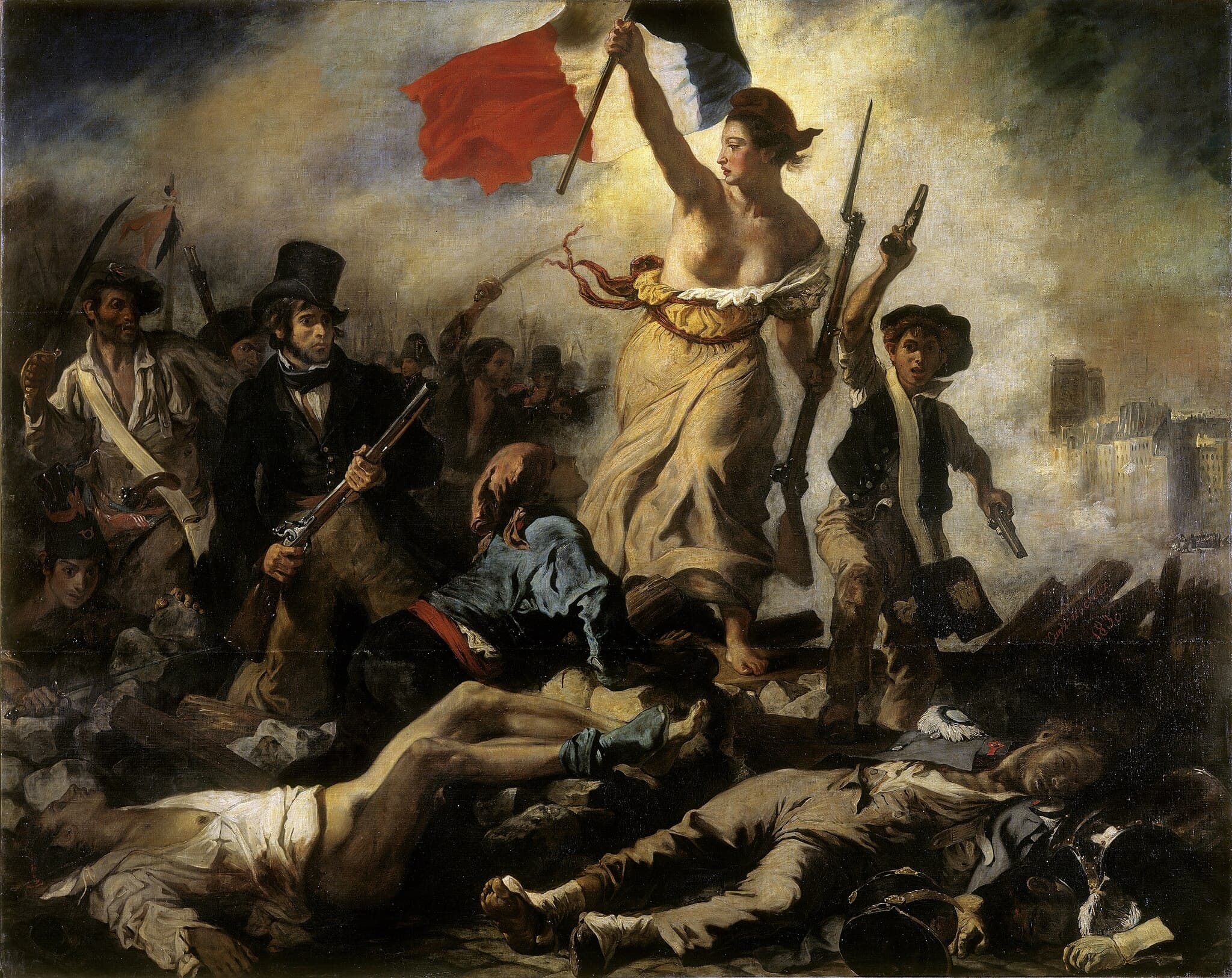
$500 million-$1.2 billion
As inalienable property of the French state and never offered, the $500M–$1.2B figure is a hypothetical insurance/indemnity estimate derived from top comparables and national‑icon status.
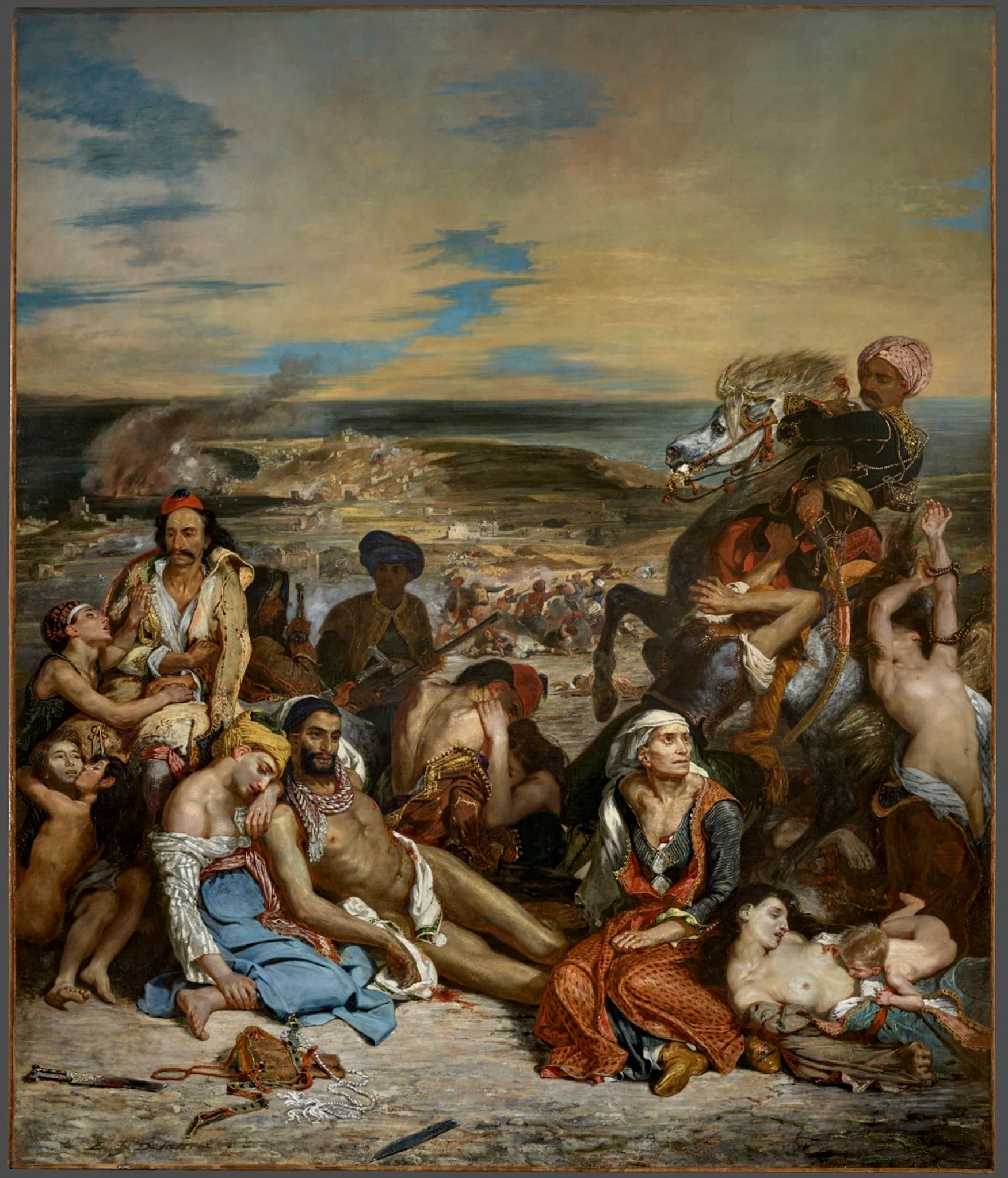
$300–500 million
Eugène Delacroix’s The Massacre at Chios is an inalienable Louvre masterpiece and one of the defining monuments of French Romanticism.
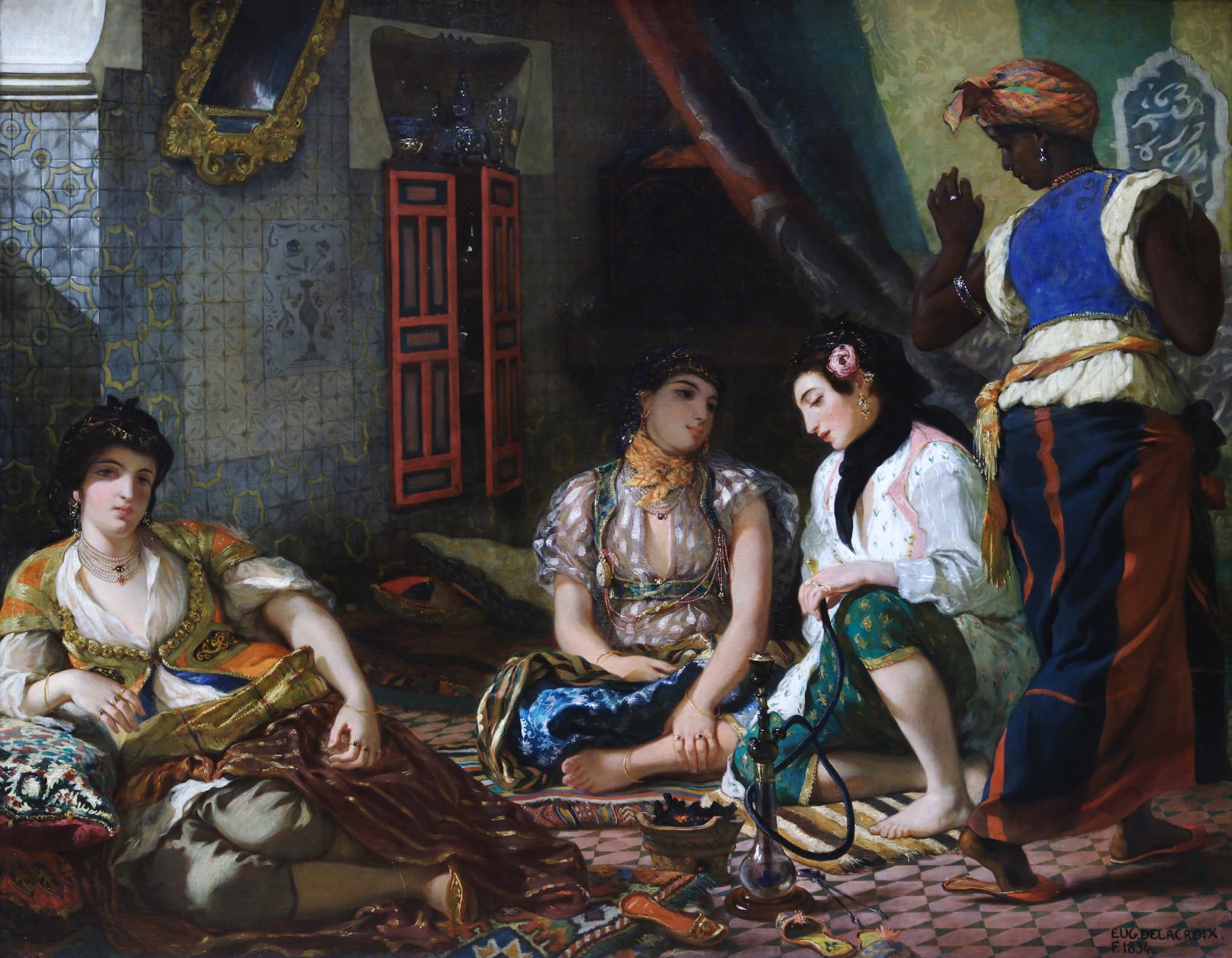
$200-300 million
The canonical 1834 Women of Algiers in their Apartment by Eugène Delacroix is an inalienable masterpiece in the Louvre; it has never been sold.
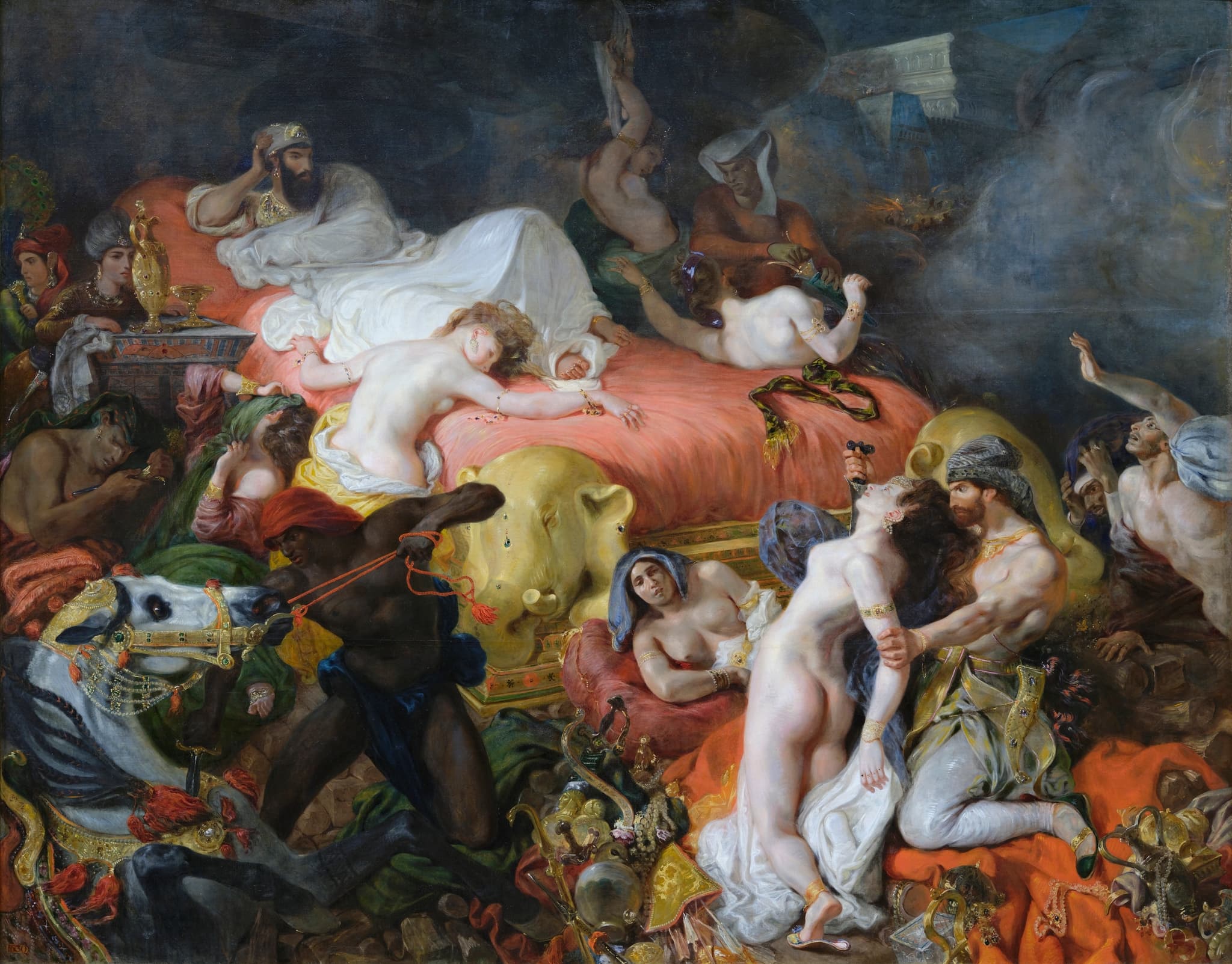
$150-250 million
Hypothetical open‑market valuation for the original 1827–28 Death of Sardanapalus (Louvre) is $150–250 million.
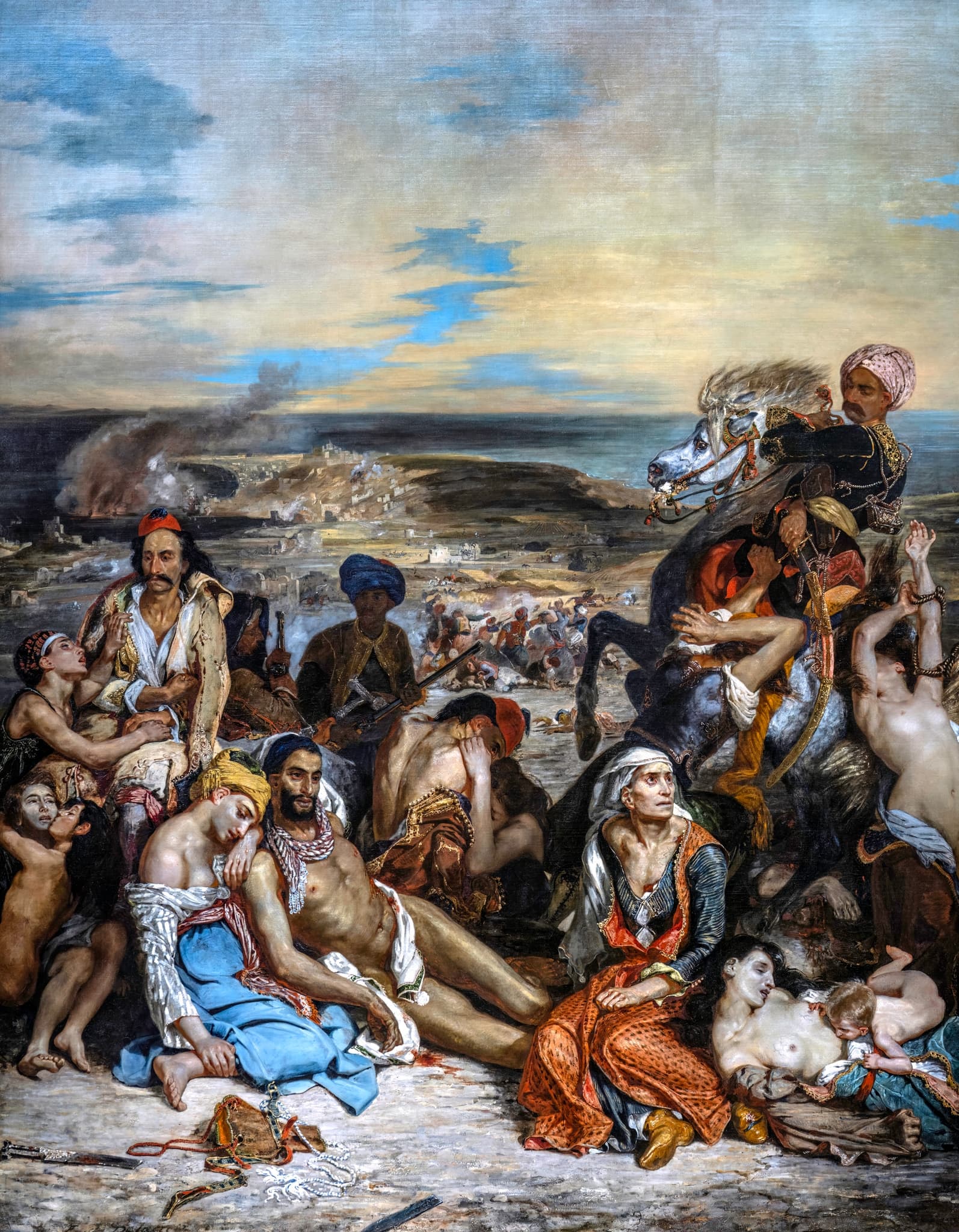
$180-240 million
Hypothetical valuation for Delacroix’s Scenes from the Massacre at Chios (Louvre; inalienable) is $180–240 million.
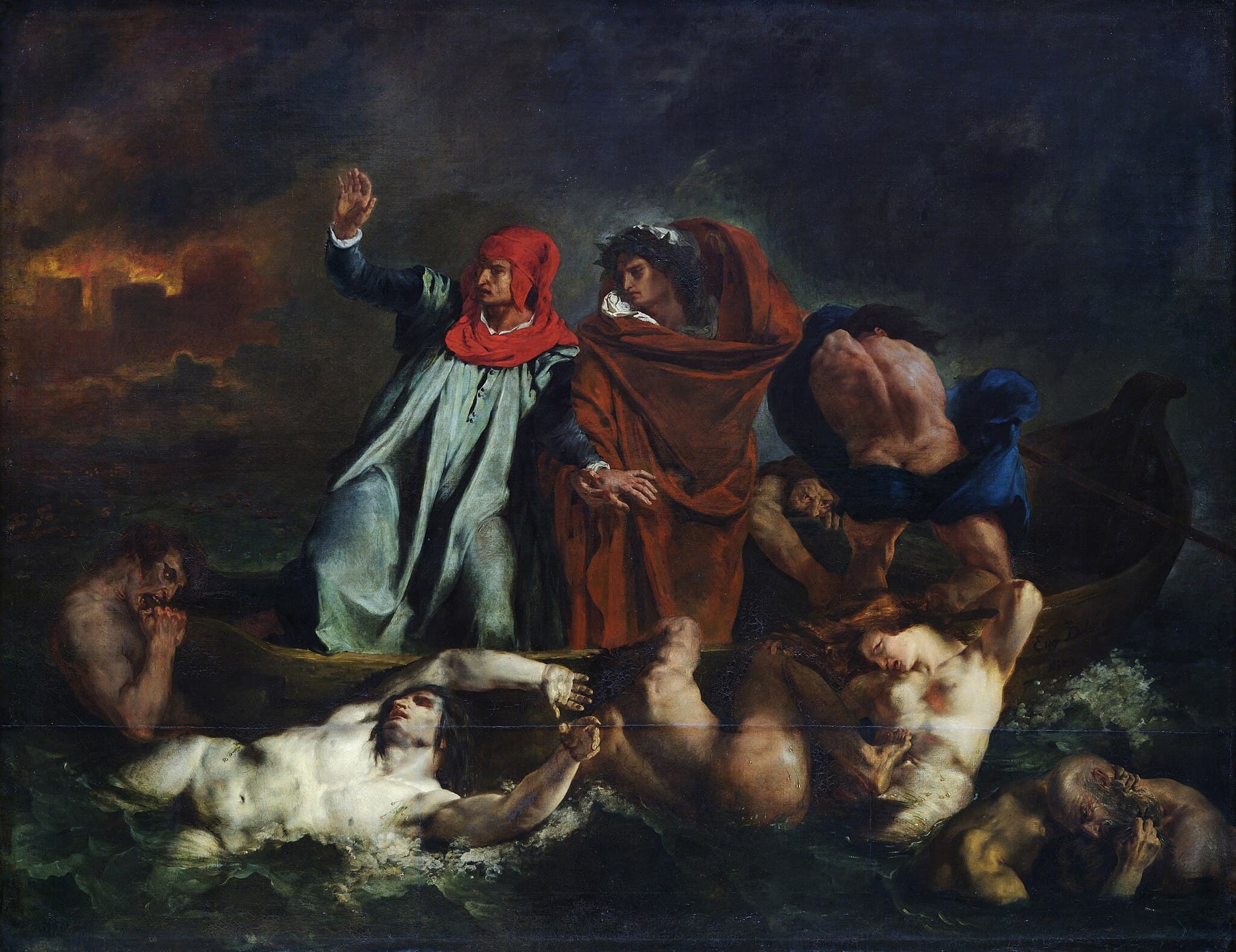
$100-150 million
If the canonical 1822 La Barque de Dante were legally marketable and pristine, specialists project a trophy‑level sale around US$100–150M; under ordinary conditions it would likely fetch mid‑multi‑millions.
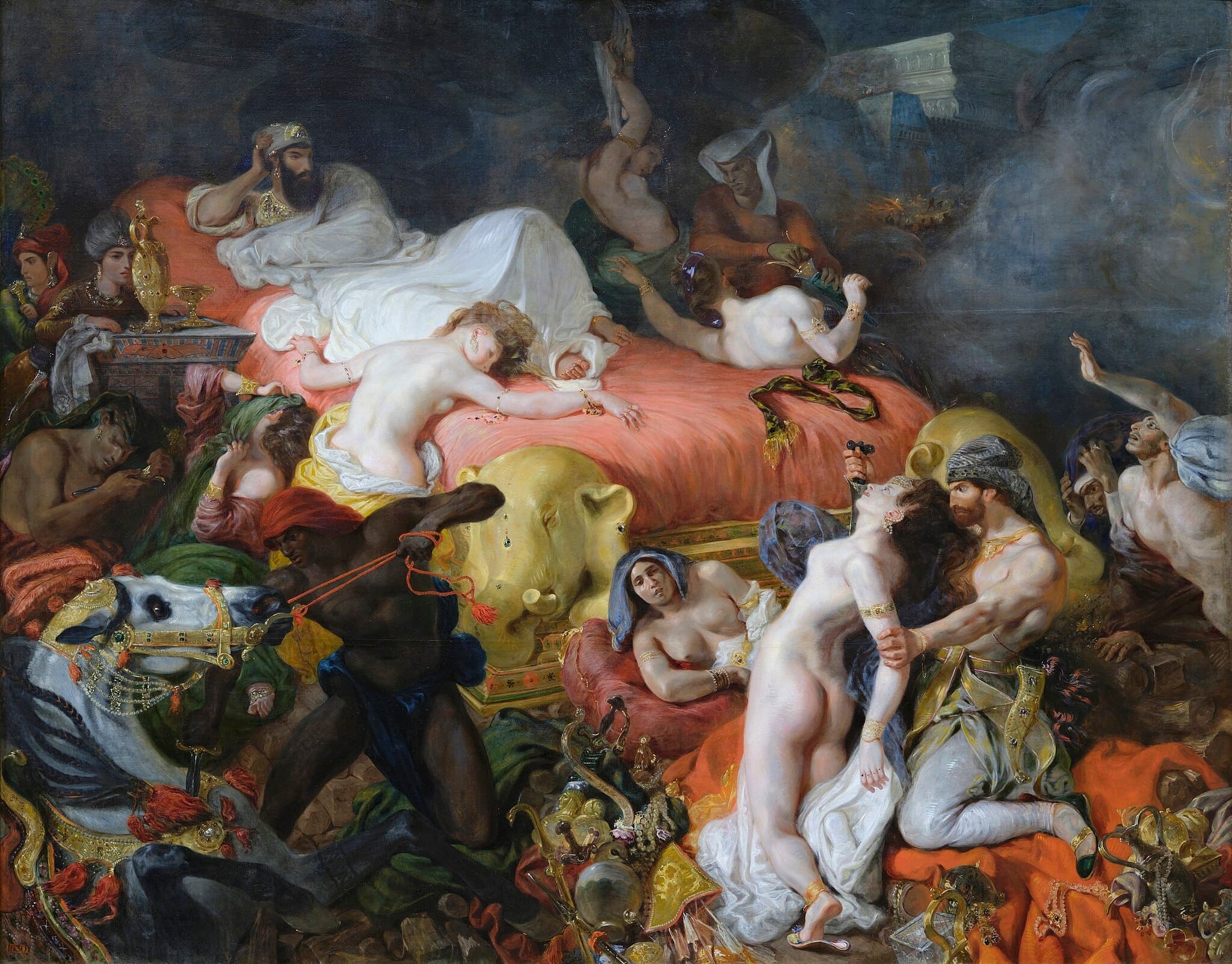
$100-150 million
Although effectively off‑market in the Louvre, a defensible hypothetical market estimate for The Death of Sardanapalus is US$100–150M, reflecting museum provenance, singular importance and a trophy premium.
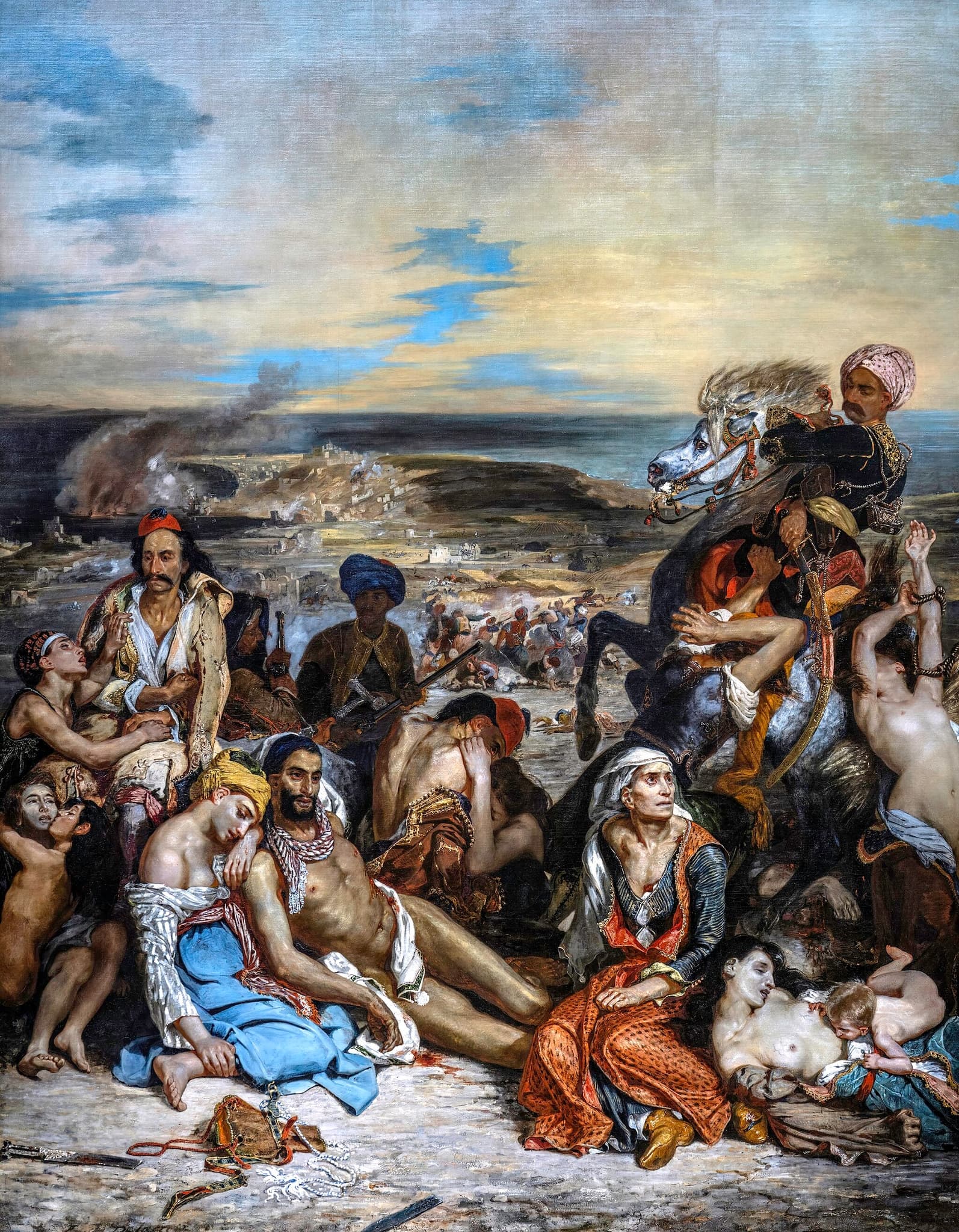
$20-100 million
A reasoned open‑market band for this museum‑held canonical Delacroix is US$20–100M, based on scarce public comparables, category re‑discovery events and the painting’s canonical importance, though sale is unlikely.
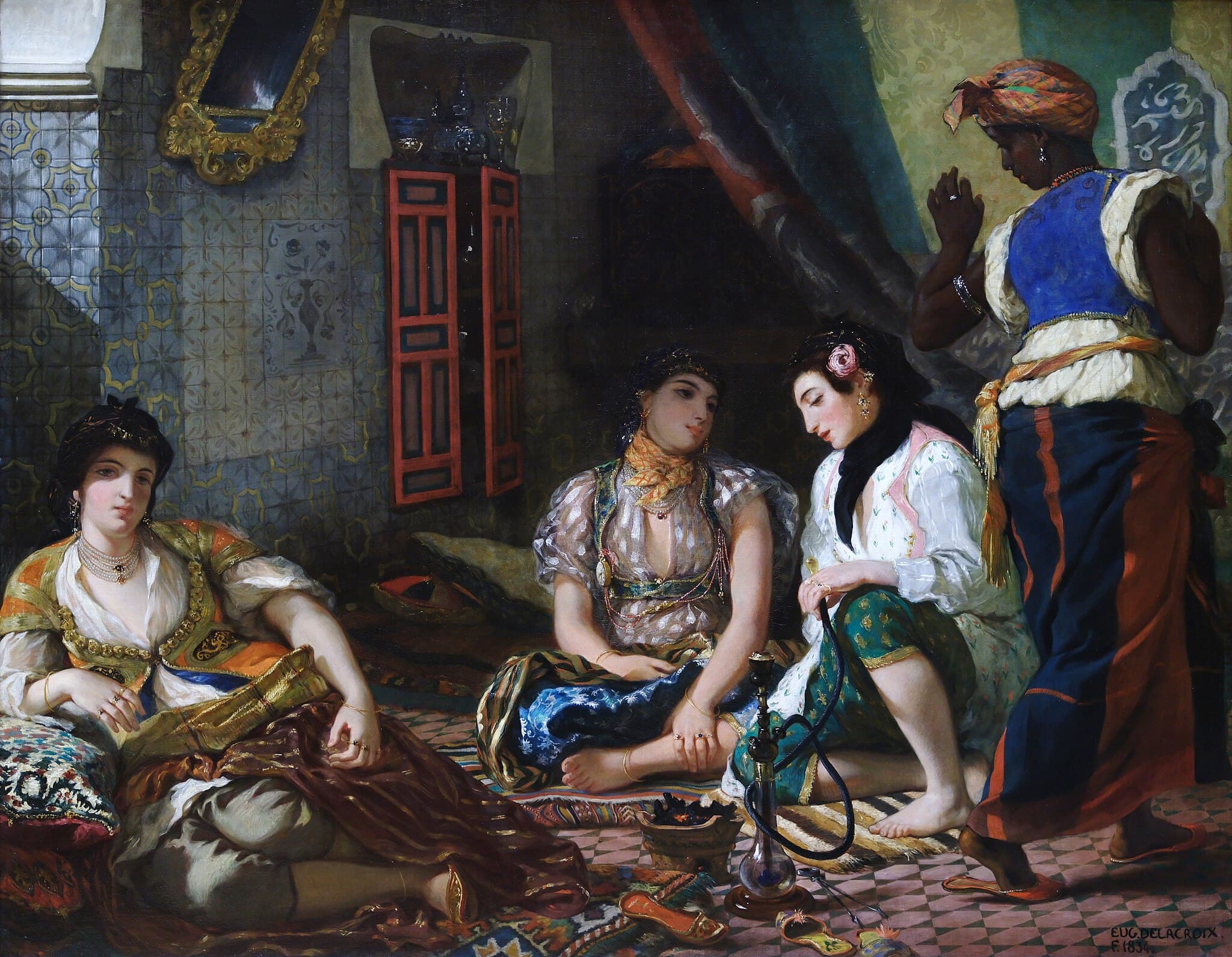
$20-50 million
If legitimately deaccessioned and freely offered, the museum‑held 1834 Women of Algiers would conservatively command US$20–50M, anchored to artist‑specific auction anchors and museum‑quality French‑master comparables.
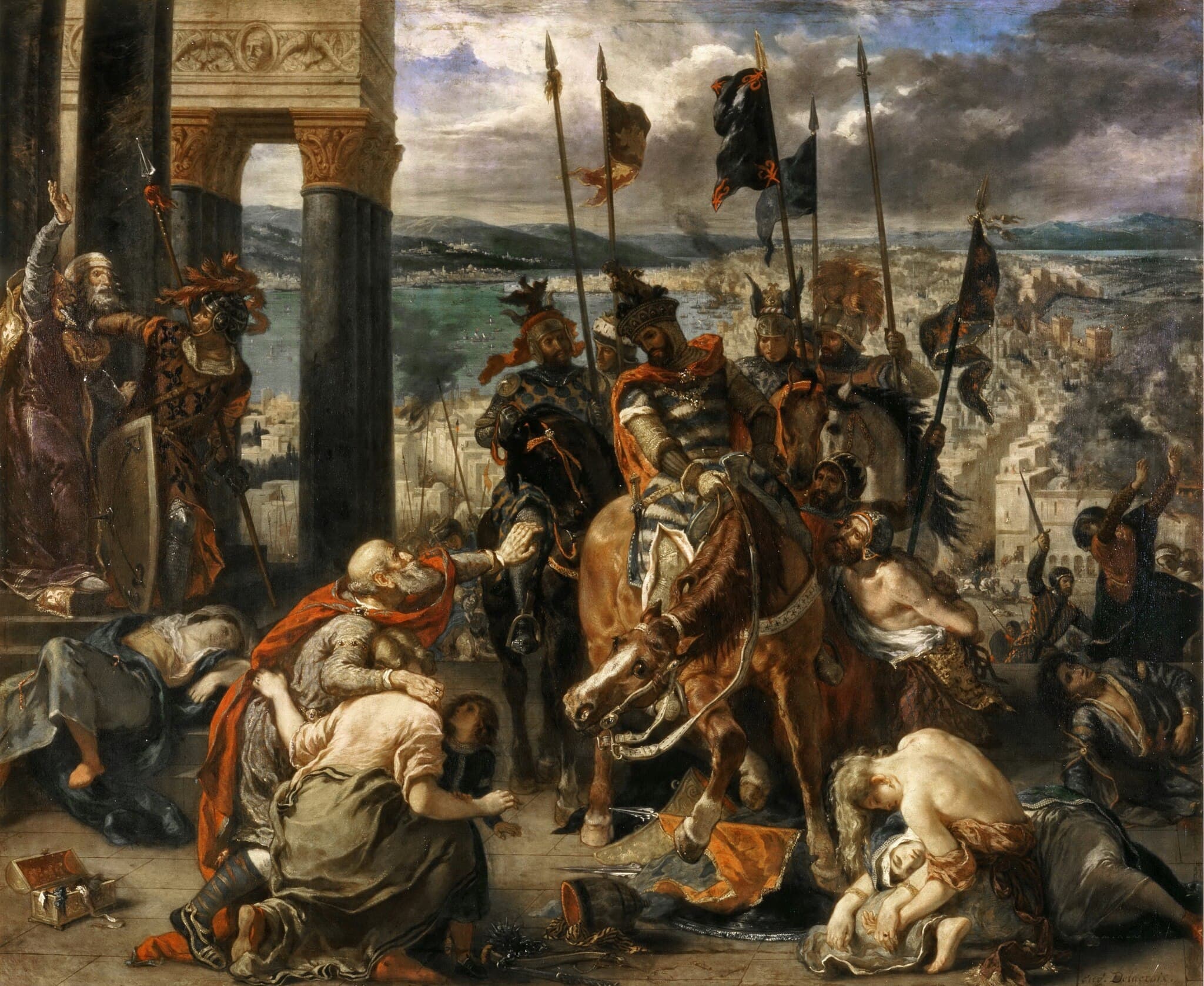
$10,000,000–$25,000,000
As a large, state‑commissioned Louvre canvas effectively off‑market, its hypothetical market value is estimated at US$10–25M, reflecting scale, provenance and the artist’s auction ceiling.
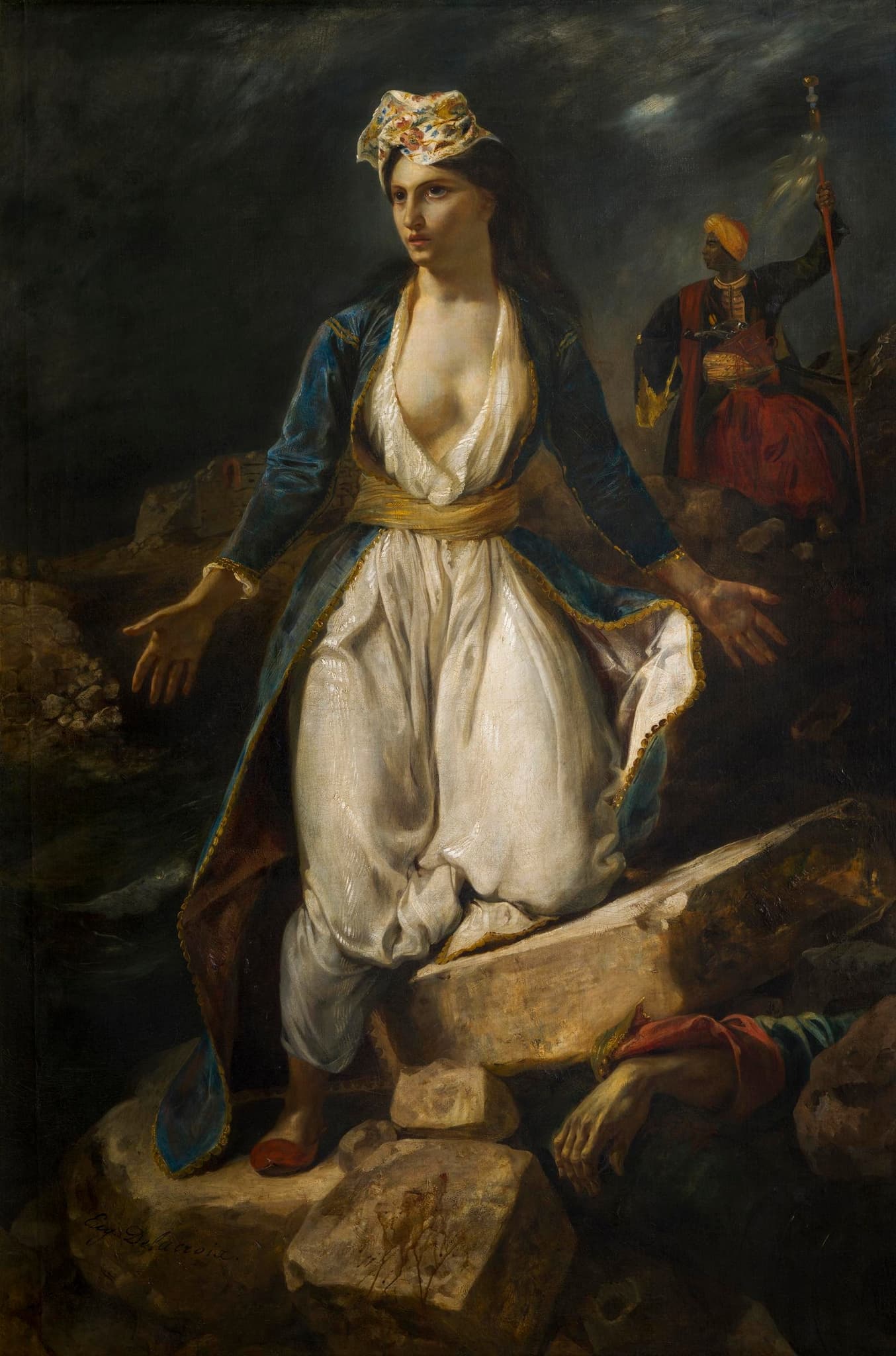
$7.5-20 million
If offered as a securely authenticated, well‑conditioned autograph canvas in a blue‑chip evening sale, La Grèce sur les ruines de Missolonghi would realistically range about US$7.5–20M, depending on condition and context.
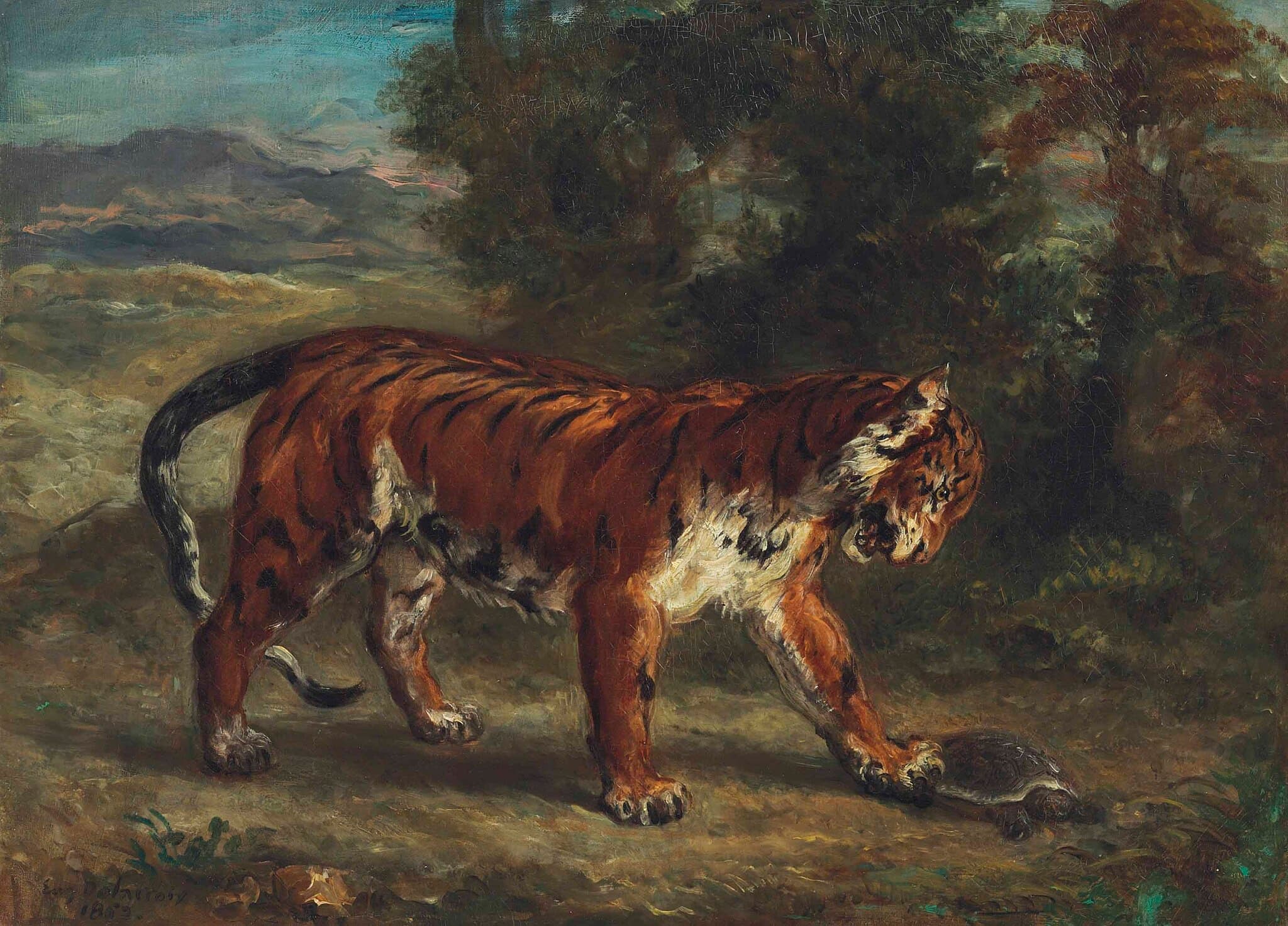
$7-14 million
Benchmarking the identical painting that sold at Christie’s New York for $9,875,000 on 8 May 2018, the fair market range today for the same object is approximately US$7–14M.
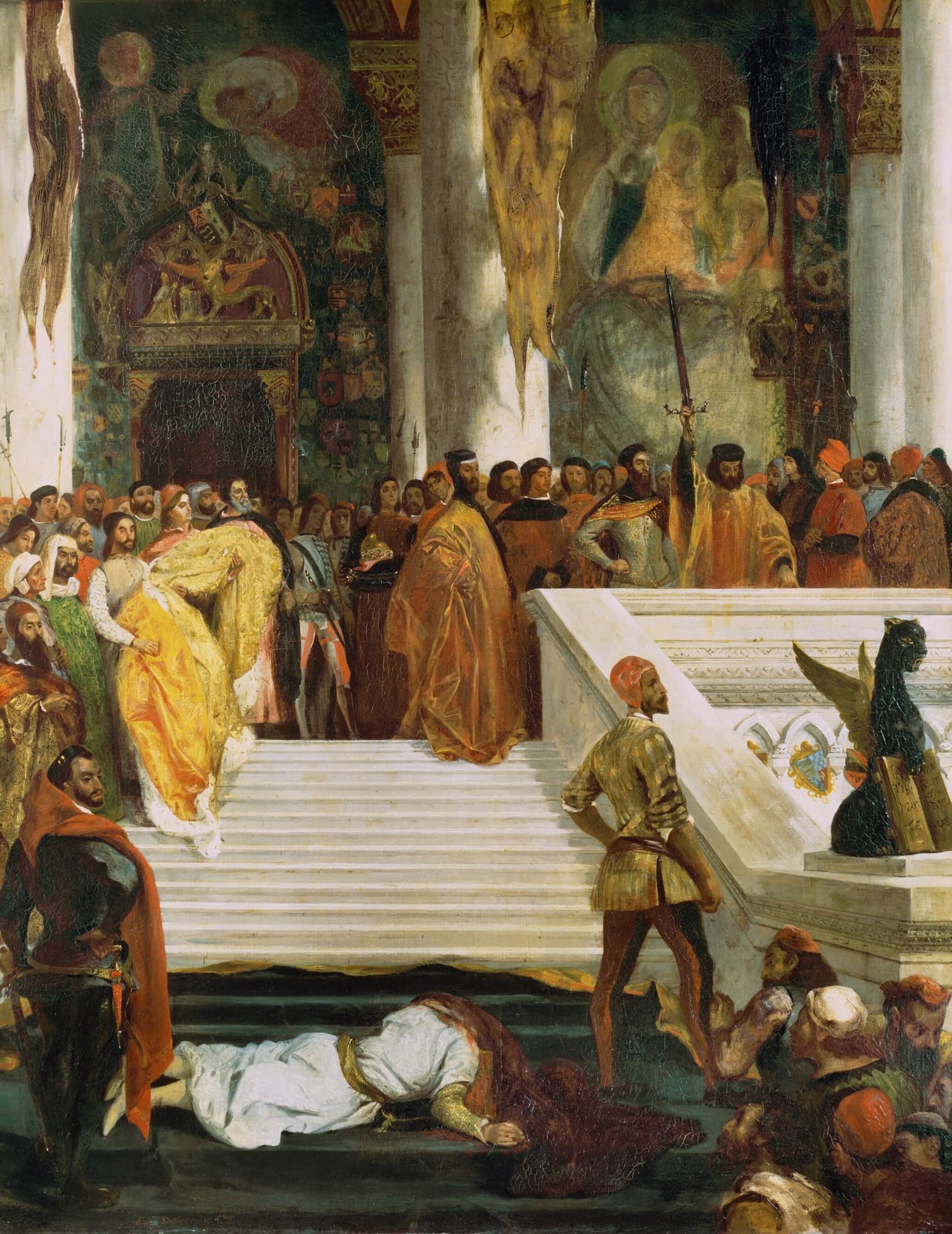
$3,000,000–$12,000,000
This autograph Wallace Collection history painting, museum‑quality and well documented, carries a reasoned hypothetical auction range of US$3–12M, contingent on condition, catalogue‑raisonné confirmation and sale strategy.
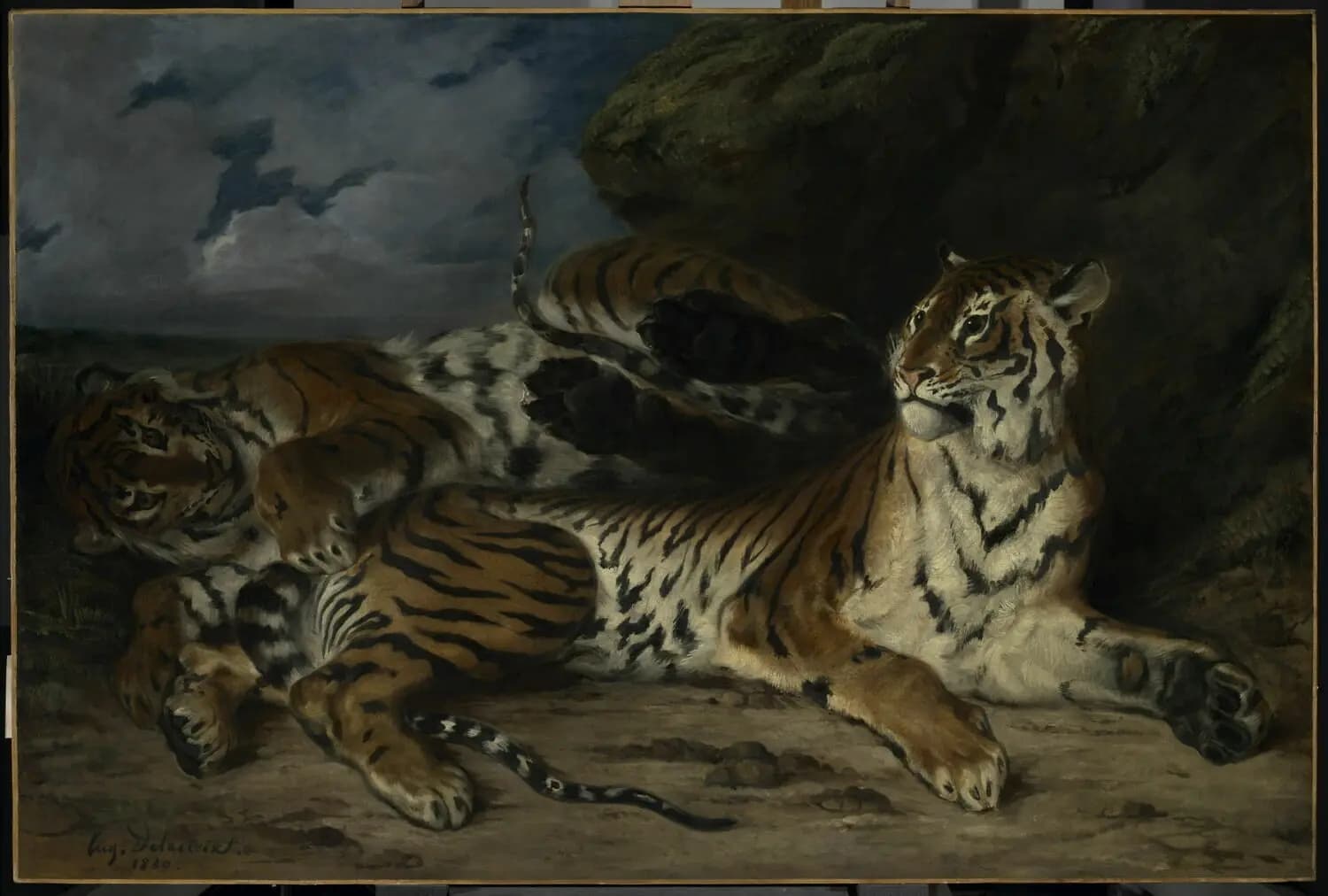
$5-12 million
As a Louvre accession (RF 1943) normally not marketable, A Young Tiger Playing with its Mother would hypothetically auction for about US$5–12M, based on Delacroix animal‑composition comparables.
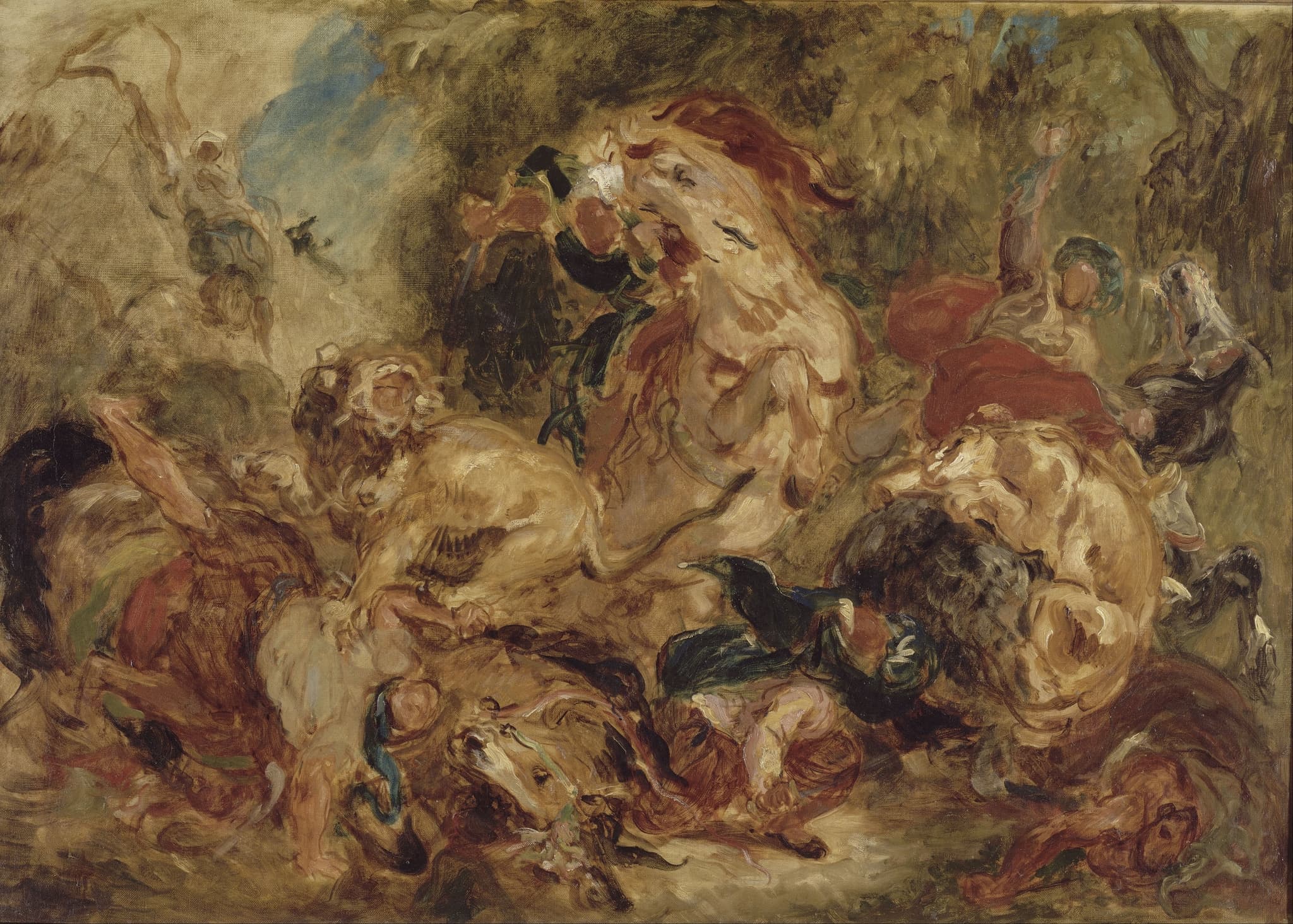
$4-10 million
Estimated $4–10 million for a mid-size, finished autograph oil from Delacroix’s Lion Hunt cycle, assuming strong provenance, good condition, and inclusion in the literature.
What Drives Value in Eugene Delacroix's Work
Canonical history‑paintings and national icons
Delacroix’s large Salon and history canvases function as author‑defining statements—works such as Liberty Leading the People, The Death of Sardanapalus and The Massacre at Chios carry a ‘category‑defining’ premium. Their role in French Romanticism and civic iconography makes them culturally irreplaceable, so when hypothetically marketable they command multiples above ordinary Delacroix oils. Liberty’s unique national symbolism alone is used to justify valuation well above ordinary blue‑chip comparables.
Museum custody and French patrimony (liquidity vs. prestige)
Many top Delacroixs sit in state collections (Louvre, MusBA Bordeaux, Wallace) and were acquired early by the French state (e.g., Dante and Virgil, Women of Algiers, Greece on the Ruins). Institutional ownership delivers impeccable provenance, exhibition history and scholarly value but creates legal inalienability and export friction. That combination elevates theoretical replacement/indemnity value while practically suppressing auction liquidity and transforming pricing into speculative, indemnity‑style assessments.
Scale, finish and conservation history
Delacroix’s market is highly sensitive to size and technical condition: monumental, fully resolved salon canvases (Liberty ~2.60×3.25 m; large Sardanapalus) are scarce and command trophy premiums, while small studies attract a broader private market. Recent conservation outcomes materially alter value—Louvre restorations (Liberty 2023–24; Entry of the Crusaders treatment 2025–26) improved color and legibility, reducing technical risk and supporting higher estimates for otherwise inalienable museum pieces.
Genre and provenance interaction: animal studies vs. museum histories
Delacroix’s subject matter creates distinct price tiers. Late exotic/animal works (Tiger Playing with a Tortoise) trade readily in the open market and can reach multi‑millions—especially with high‑profile provenance (Rockefeller sale, Christie’s 2018 ≈US$9.9M). By contrast, salon history and Orientalist masterpieces (Women of Algiers, Death of Sardanapalus) are institutionally prized but rarely sell; when they do, scarcity and competitive institutional demand can drive prices far above the animal‑study band.
Market Context
Eugène Delacroix’s auction market is defined by persistent institutional demand and an acute scarcity of museum‑quality oils—most major canvases remain in public collections—so price discovery is episodic. The artist’s auction record is $9.875 million (Christie’s, 2018; Tigre jouant avec une tortue, Rockefeller collection), while drawings and studies trade more frequently at five‑ to mid‑six‑figure levels and oil sketches in the mid‑millions. Since 2024–26 the historical market has shown selective strength—Paris emerging as a hub, robust sell‑throughs, and capital rotation toward rarity—supporting aggressive competition and state‑backed valuations for instantly recognizable masterpieces. Consequently, demand is steady and concentrated among museums, deep‑pocketed private collectors and specialist dealers, and estimates for canonical works must be extrapolated to the level of universally iconic, museum‑caliber comparables rather than routine 19th‑century lots.
Study prints from famous works by Eugene Delacroix
Curated print bundles pairing the full artwork with a close reading of one meaningful detail.
