How Much Is The Destruction of the Temple of Jerusalem (Distruzione del tempio di Gerusalemme) Worth?
Last updated: May 18, 2026
Quick Facts
- Methodology
- comparable analysis
La distruzione del tempio di Gerusalemme (Francesco Hayez, 1867) is a large, museum-held history painting (Gallerie dell’Accademia, Venice; donated by the artist). Because it is state property and not marketable in current practice, the following is a hypothetical market valuation assuming legal deaccession and clean title: $1.0M–$3.0M, placed by comparable-analysis against recent top Hayez auction results and the work’s museum-grade attributes.
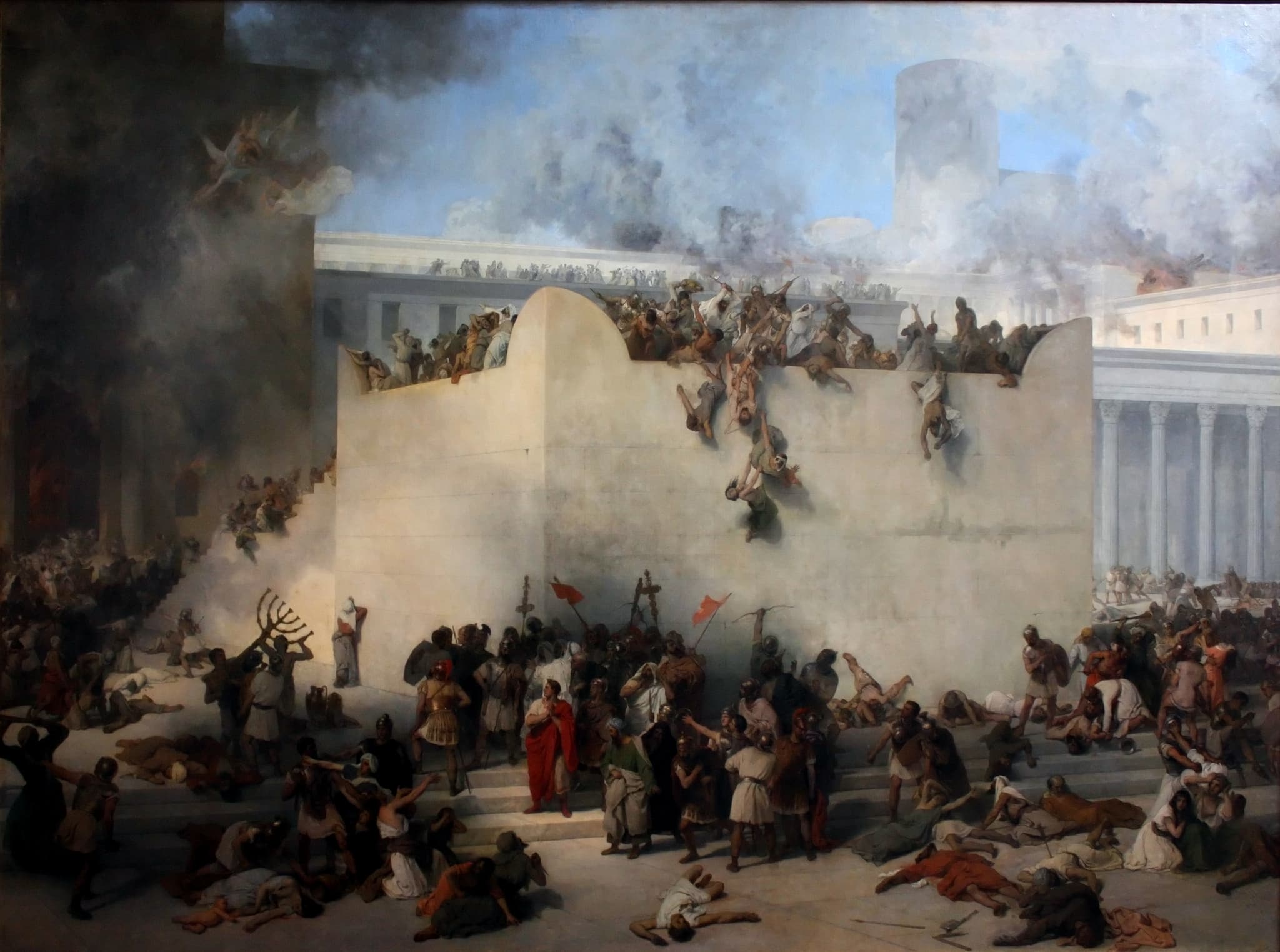
The Destruction of the Temple of Jerusalem (Distruzione del tempio di Gerusalemme)
Francesco Hayez, 1867 • Oil on canvas
View more by Francesco Hayez →Valuation Analysis
Valuation conclusion (hypothetical): La distruzione del tempio di Gerusalemme (Francesco Hayez, 1867), oil on canvas (183 × 282 cm; Accademia inv. 756), is recorded in the Gallerie dell’Accademia (Venice) as artist-donated state property and therefore has no modern auction record because it is museum-held [1]. For a legally permitted deaccession and open-market offering, a reasoned market band based on comparables and the painting’s intrinsic qualities is $1,000,000–$3,000,000.
How this estimate was reached: The approach is comparative: we matched the Accademia canvas to recent public sales of high-quality Hayez oils and large 19th‑century Italian history pictures and adjusted for scale, provenance and marketability. A key market benchmark is the large Hayez biblical painting that set a modern auction ceiling in December 2024 (Christie’s Bathsheba), which demonstrates buyer willingness in the high six to low seven figures for museum‑quality works [2]. Other instructive results (Il Bacio variants, Sotheby’s Rebecca, and a range of provincial outcomes) define the lower and mid tiers of the market, and show a wide dispersion depending on condition, provenance and sale venue.
Rationale supporting the band: The Accademia canvas scores strongly on scale (very large history painting), attribution, and provenance (donated by the artist 1868), and benefits from related preparatory drawings in institutional collections—factors that normally command a premium. These attributes justify positioning the work above typical mid‑market Hayez lots and into the upper‑middle to top tier of public comparables.
Practical constraints: The painting’s status as proprietà dello Stato limits realistic market access: Italian heritage law and museum deaccession protocols make export or sale improbable without ministerial approval. That restriction materially reduces liquidity and changes likely buyer composition (institutions or domestically‑focused collectors are the most probable purchasers), which can compress or skew realizations relative to freely circulating comparable works.
Recommended route if sale were pursued: obtain a current conservation report, high‑resolution photography, and a complete provenance/exhibition file; then consult specialists at a major international saleroom (Christie’s/Sotheby’s) or advance a direct, confidential approach to national institutions. If legally cleared for sale, market via a marquee Old Masters/19th‑century platform with pre‑sale scholarly outreach to maximize institutional interest. The $1M–$3M range reflects conservative placement against recent top Hayez results and the painting’s museum‑quality status; the lower bound assumes competitive sale but limited institutional bidding, while the upper bound presumes multiple strong institutional/private bidders for a fresh, pristine example.
Key Valuation Factors
Art Historical Significance
High ImpactThis is a late, large‑scale Hayez history picture (1867) donated by the artist to the Gallerie dell’Accademia in 1868, a fact that confers exceptional provenance and scholarly interest. While not as publicly iconic as Il Bacio, the painting’s dramatic biblical subject and the existence of a corpus of preparatory drawings elevate its importance within Hayez’s oeuvre. Museum ownership and related documentation increase attractiveness to institutional buyers and specialist collectors, strengthening its cultural capital and supporting a premium relative to lesser-documented market lots.
Rarity & Market Demand
High ImpactLarge, museum‑quality Hayez canvases rarely reach the open market; when they do, they attract dedicated institutional and specialist private buyers. Recent public comparables show a practical auction ceiling in the high six to low seven figures, while mid‑tier Hayez works trade for substantially less. The scarcity of comparable fresh material increases the probability of competitive bidding if the picture were legitimately offered; however, demand is selective and concentrated among museums and deep‑pocketed collectors interested in 19th‑century Italian history painting.
Condition & Conservation
Medium ImpactAs a museum property, the work is likely to have been conserved and maintained, which supports valuation. Nevertheless, an up‑to‑date condition report is essential: structural issues (relining, tears), extensive overpainting, or heavy restorations can substantially reduce market value. Minor varnish discoloration and standard retouching are common and have limited effect; major conservation interventions can reduce realizations materially (potentially 30–50% relative to an equivalent in pristine condition).
Provenance & Legal Constraints
High ImpactArtist donation to the Accademia in 1868 provides exemplary provenance and continuity of custody—positive for value. Conversely, state ownership triggers cultural‑heritage protections and export controls in Italy, making deaccession, sale and cross‑border transfer legally and bureaucratically complex. Those legal constraints sharply reduce the likelihood of a conventional market transaction and therefore limit practical liquidity; if sale is permitted, clear title and ministerial approvals will be required, and the pool of eligible international buyers may be restricted.
Sale Venue & Marketability
High ImpactIf legally available, the work’s top commercial outcome will depend on a major saleroom presentation with targeted marketing to institutions and Risorgimento/19th‑century specialists. A Christie’s or Sotheby’s Old Masters/19th‑century presentation with pre‑sale loans and catalogue publication would maximize competitive bidding. A private treaty to a museum is possible and may be the only realistic route in some legal scenarios; however, treaty sales can produce varying results depending on institutional budgets and cultural priorities.
Sale History
The Destruction of the Temple of Jerusalem (Distruzione del tempio di Gerusalemme) has never been sold at public auction.
Francesco Hayez's Market
Francesco Hayez (1791–1882) is a leading figure of 19th‑century Italian Romanticism; his best oils are museum staples and attract institutional interest. Public auction results over the last decade show wide dispersion: top, museum‑quality Hayez canvases have realized in the high six figures to low seven figures (benchmarks in recent years approach $1.8–$1.9M), while many secondary‑market lots trade for mid‑six to low‑five figures depending on quality, size and provenance. Institutional acquisitions and focused exhibitions have increased visibility and support price strength for the best works.
Comparable Sales
Il Bacio (variant)
Francesco Hayez
Same artist; iconic, autograph 'Kiss' variant (1867) that functions as the market benchmark for top‑tier Hayez oils — demonstrates the practical auction ceiling for highly desirable, museum‑quality Hayez pictures.
$1.9M
2016, Christie's, New York
~$2.5M adjusted
Bathsheba
Francesco Hayez
Same artist; large biblical/history subject sold in a major Christie’s Old Masters sale — established the recent public auction record for Hayez and therefore represents the current market ceiling (2024 result, inflation‑adjusted to 2025).
$1.9M
2024, Christie's, London (Old Masters sale)
~$1.9M adjusted
Rebecca at the Well
Francesco Hayez
Same artist; high‑quality figurative/biblical subject sold at Sotheby's NY — a strong mid‑market benchmark for well‑provenanced Hayez oils (shows realistic mid‑range outcomes for substantial works).
$740K
2020, Sotheby's, New York
~$916K adjusted
Hayez (unspecified lot)
Francesco Hayez
Same artist; small/secondary‑market provincial sale (Il Ponte) showing low‑end realised values for lesser‑quality or less desirable Hayez works — useful to define the lower bound of the market dispersion.
$68K
2021, Il Ponte (regional/secondary house), June 2021
~$80K adjusted
Current Market Trends
The Old Masters/19th‑century segment remains selective: exceptional, fresh‑to‑market works with strong provenance and exhibition history attract competitive bidding and institutional buyers, while routine lots face softer demand. A 2024 high‑value Hayez sale reinforced the existing auction ceiling near $1.8–$1.9M for top examples, underscoring continued appetite for rare, museum‑grade pictures despite cautious overall market conditions.