Most Expensive Francesco Hayez Paintings
Francesco Hayez occupies a distinctive place in 19th-century Italian painting, prized by collectors for his dramatic Romantic narratives, masterful brushwork and the emotional intensity that made canvases like The Kiss (Hayez) a museum and market superstar—estimated at $30–50 million—while several other major works trade in the mid six- to seven-figure range. His historical and biblical scenes, from The Destruction of the Temple of Jerusalem (Distruzione del tempio di Gerusalemme) and the 1867 version of The Kiss, each carrying estimates around $1,000,000–$3,000,000, to Bathsheba (Betsabea al bagno) at roughly $1.0–2.5 million, demonstrate why provenance, condition and rarity drive strong demand. Iconic narrative pieces such as The Refugees of Parga ($1,000,000–$2,500,000) and the white-dress 1861 commission of The Kiss ($1,000,000–$2,000,000) are particularly collectible, while works like The Last Moments of Doge Marin Faliero ($800,000–$2,000,000) and The Sicilian Vespers ($300,000–$1,900,000) show the market’s breadth down to pieces such as Pietro Rossi, which can appear from $10,000 up toward $1,500,000. This ranking surveys those peak prices and the qualities that keep Hayez a touchstone for Romantic-era connoisseurs.
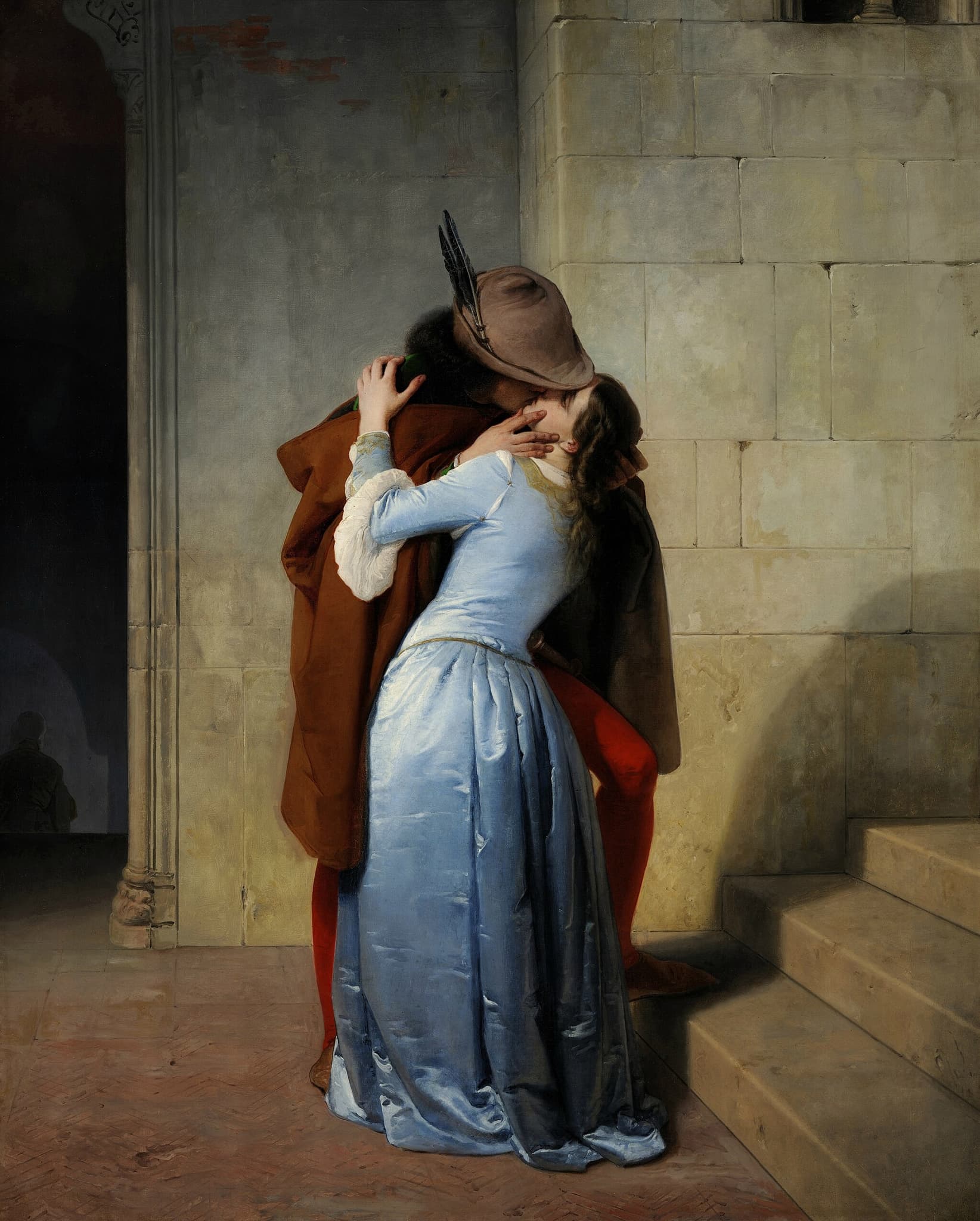
$30-50 million
Valued at $30–50M as a museum‑grade 1859 prime version and Italian Risorgimento icon, reflecting a substantial masterpiece premium despite Hayez’s limited international auction ceiling and export constraints.
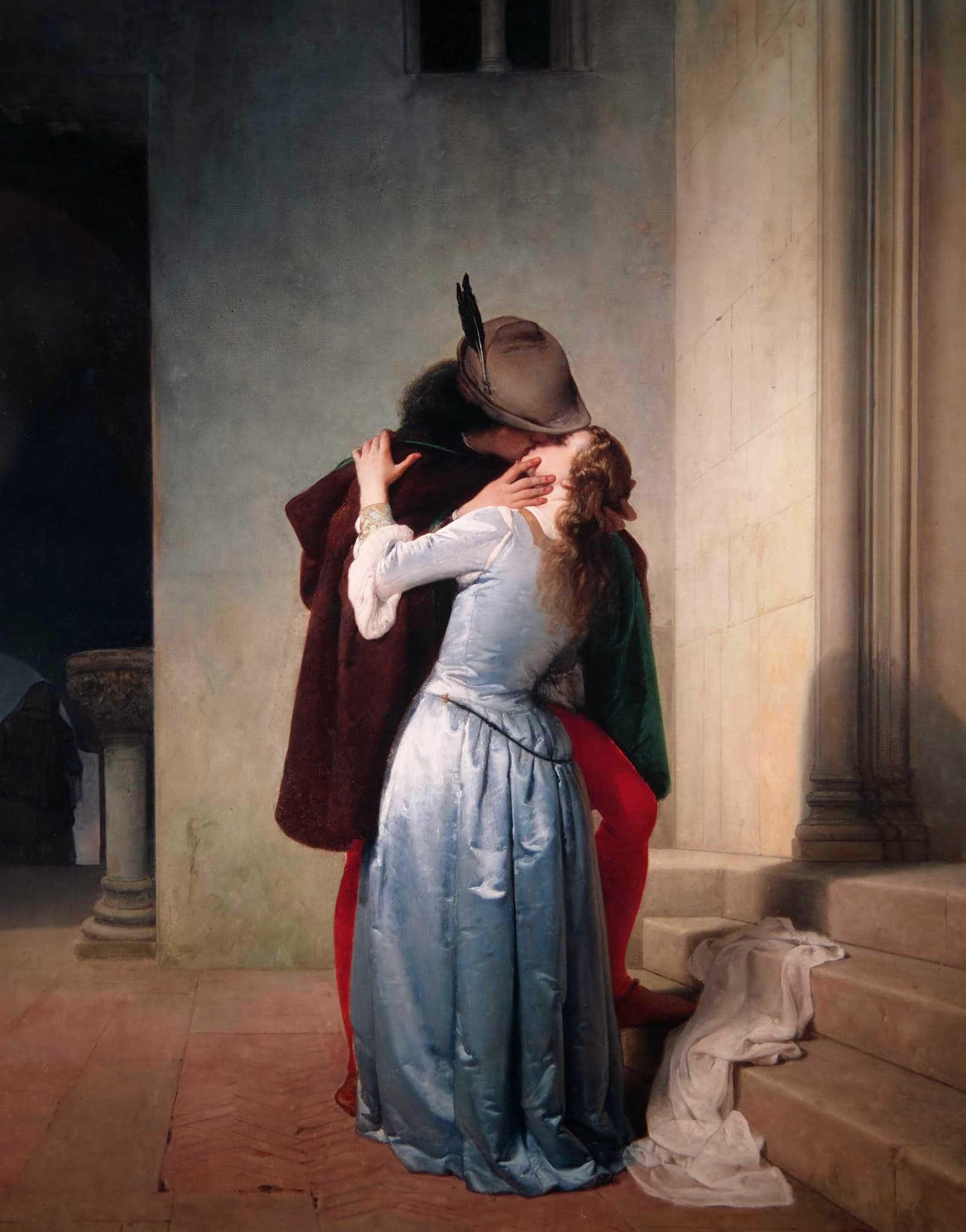
$1,000,000–3,000,000
Estimated $1–3M, anchored to Christie’s identical 1867 Il Bacio realization (US$1,865,000, 25 Apr 2016) and adjusted for attribution, condition and provenance.
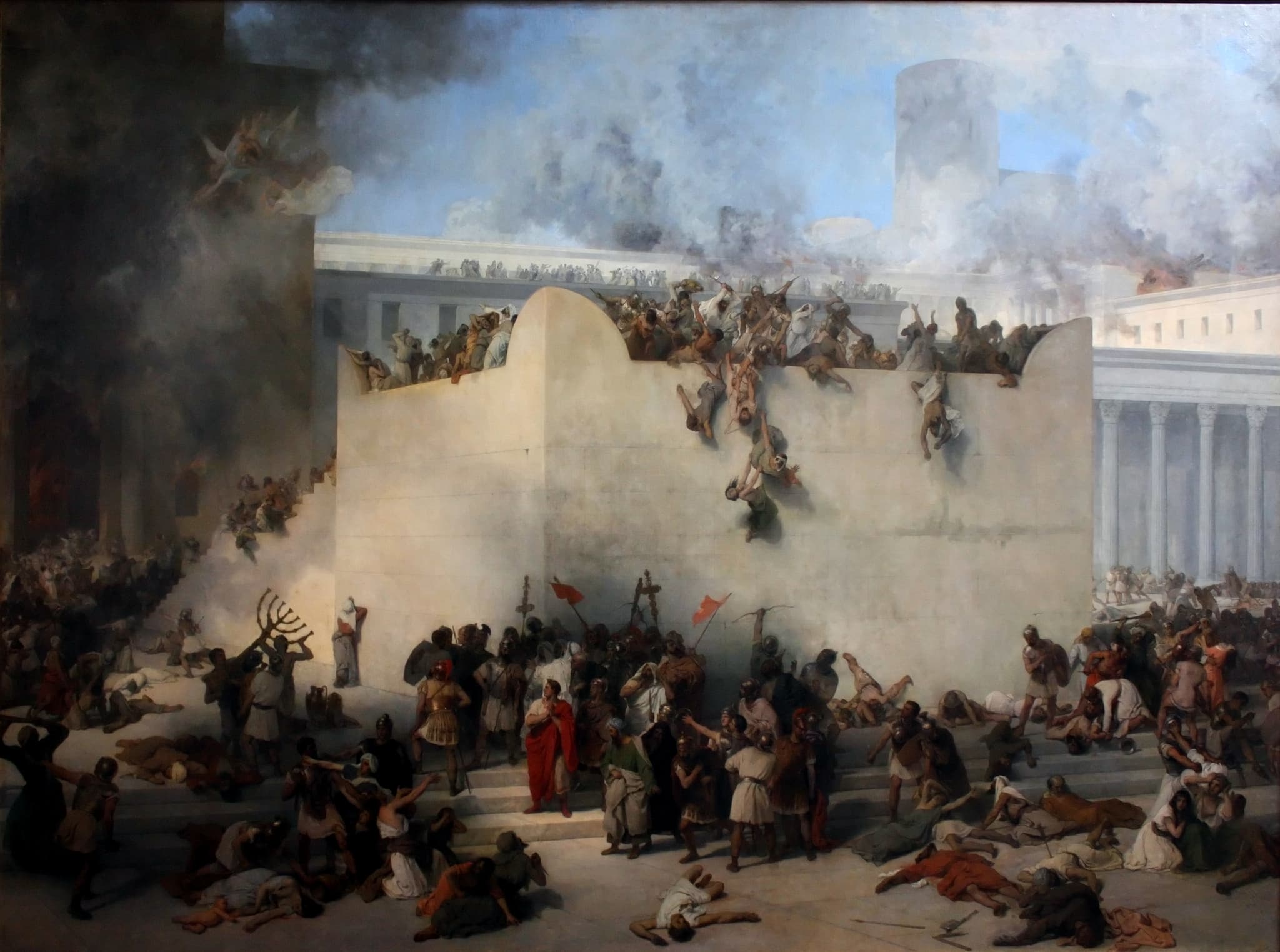
$1,000,000–$3,000,000
Hypothetically valued at $1–3M assuming legal deaccession and clean title, benchmarked to Hayez auction comparables and the painting’s museum‑grade scale and provenance.
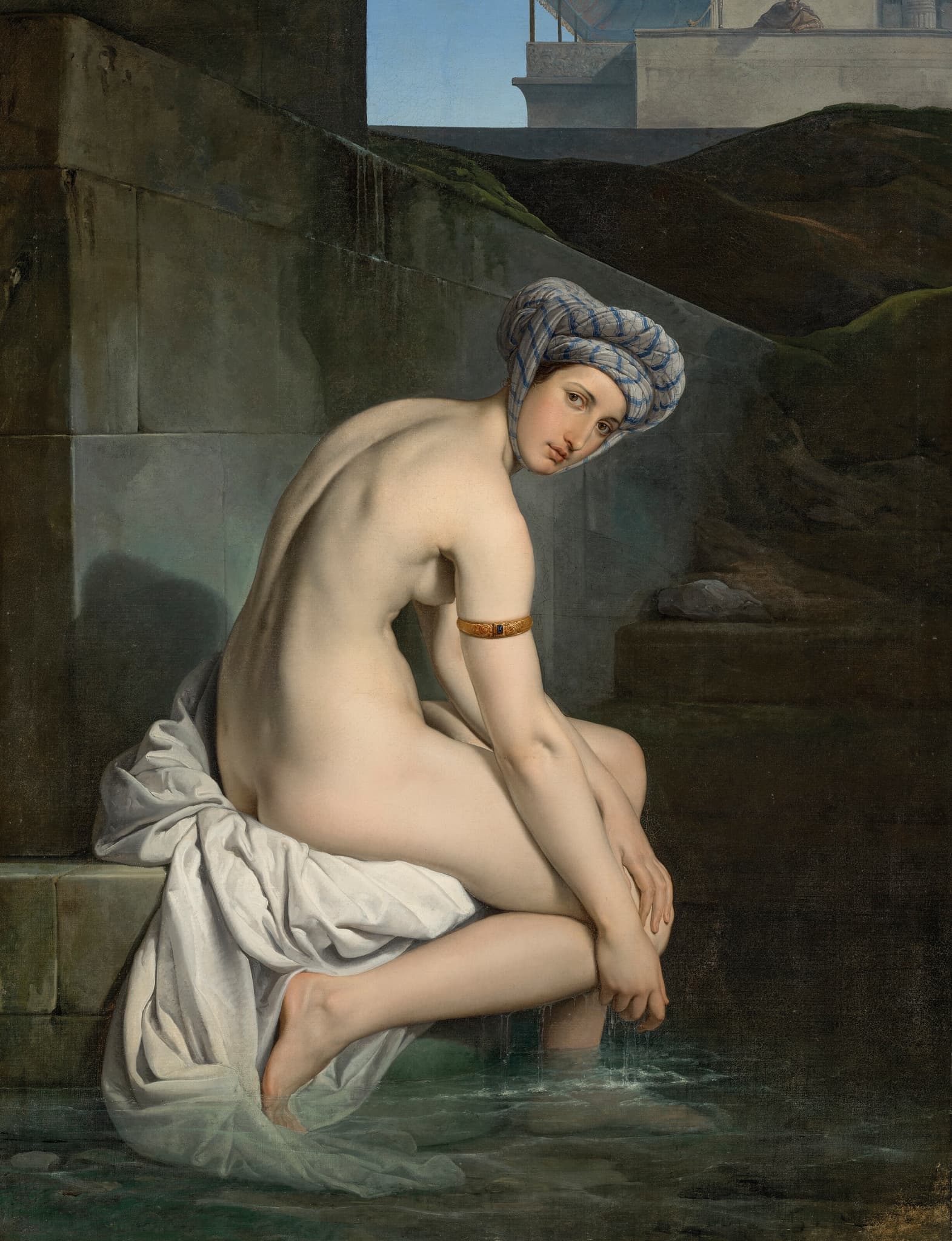
$1.0–2.5 million (USD)
Estimated $1.0–2.5M assuming an autograph Hayez anchored to Christie’s c.$1.893M Bathsheba (Dec 2024); if a workshop replica or compromised, value falls to five figures.
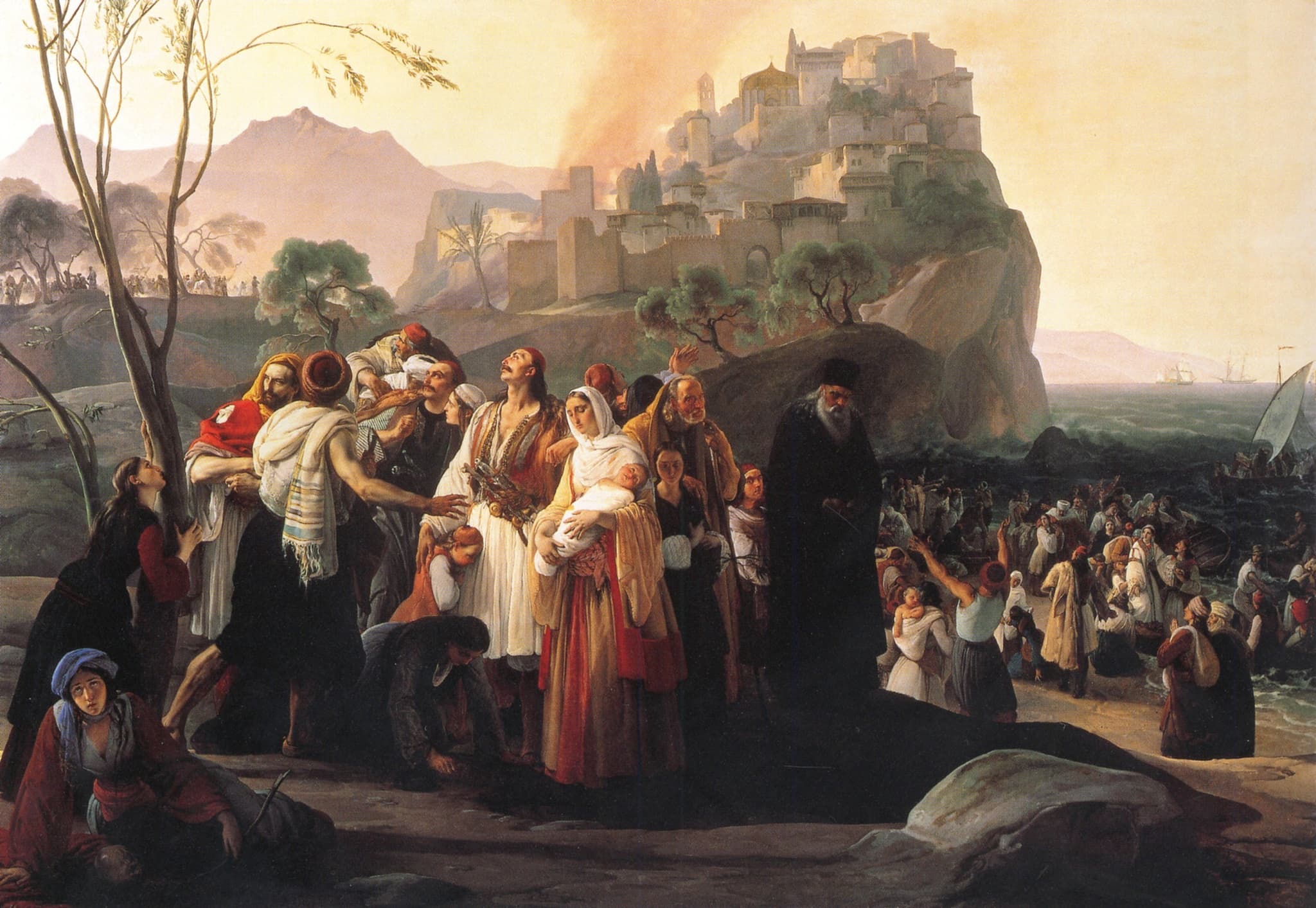
$1,000,000–$2,500,000
Hypothetical $1–2.5M market range for this large 1831 autograph Hayez, based on high‑quality auction comparables and adjustments for scale and institutional provenance.
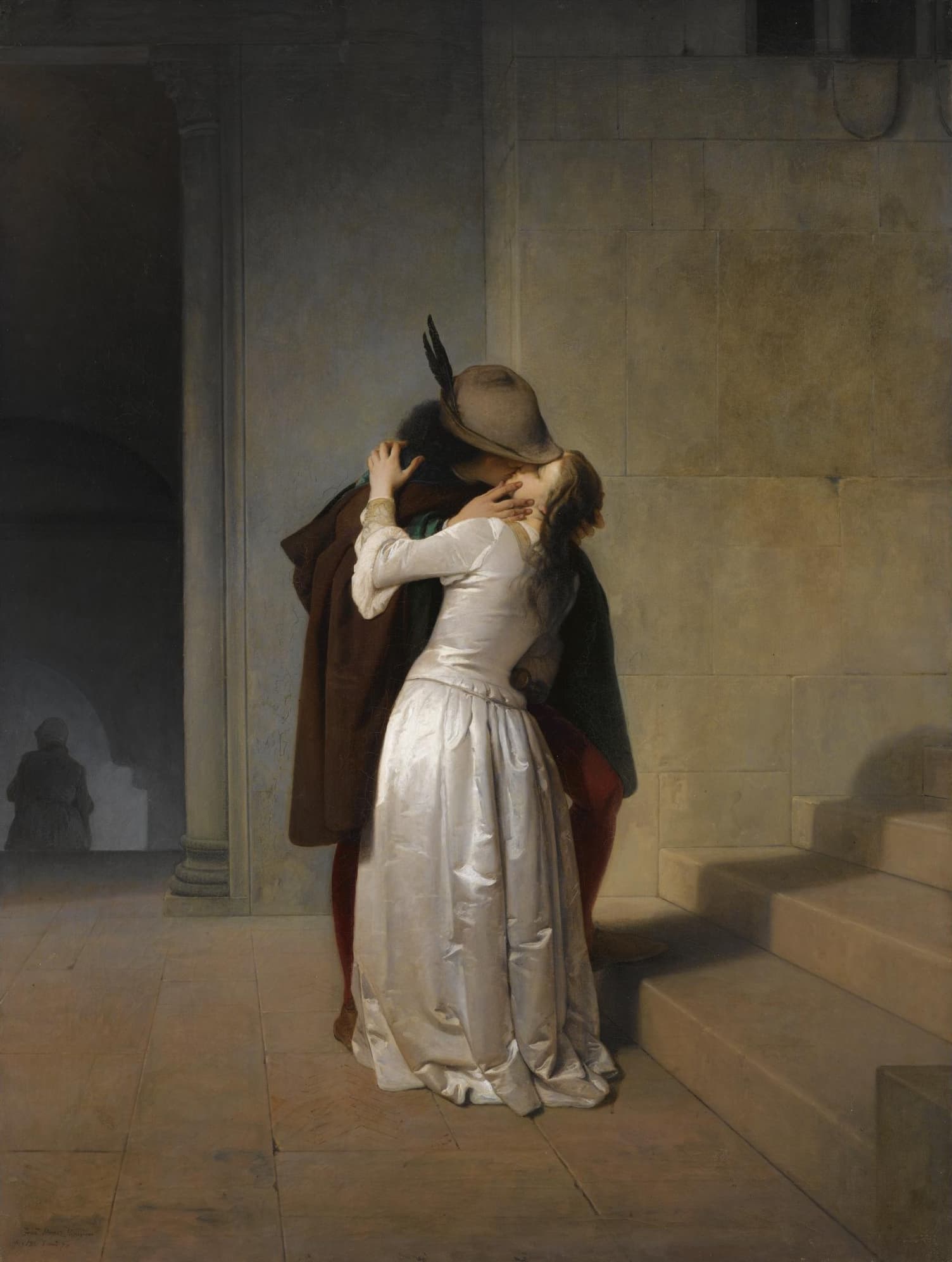
$1,000,000–$2,000,000
Estimated $1–2M if matching the 1861 Mylius commission sold at Sotheby’s in 2008 (~$1.17M), reconciled with stronger Christie’s Hayez results in 2016 and 2024.
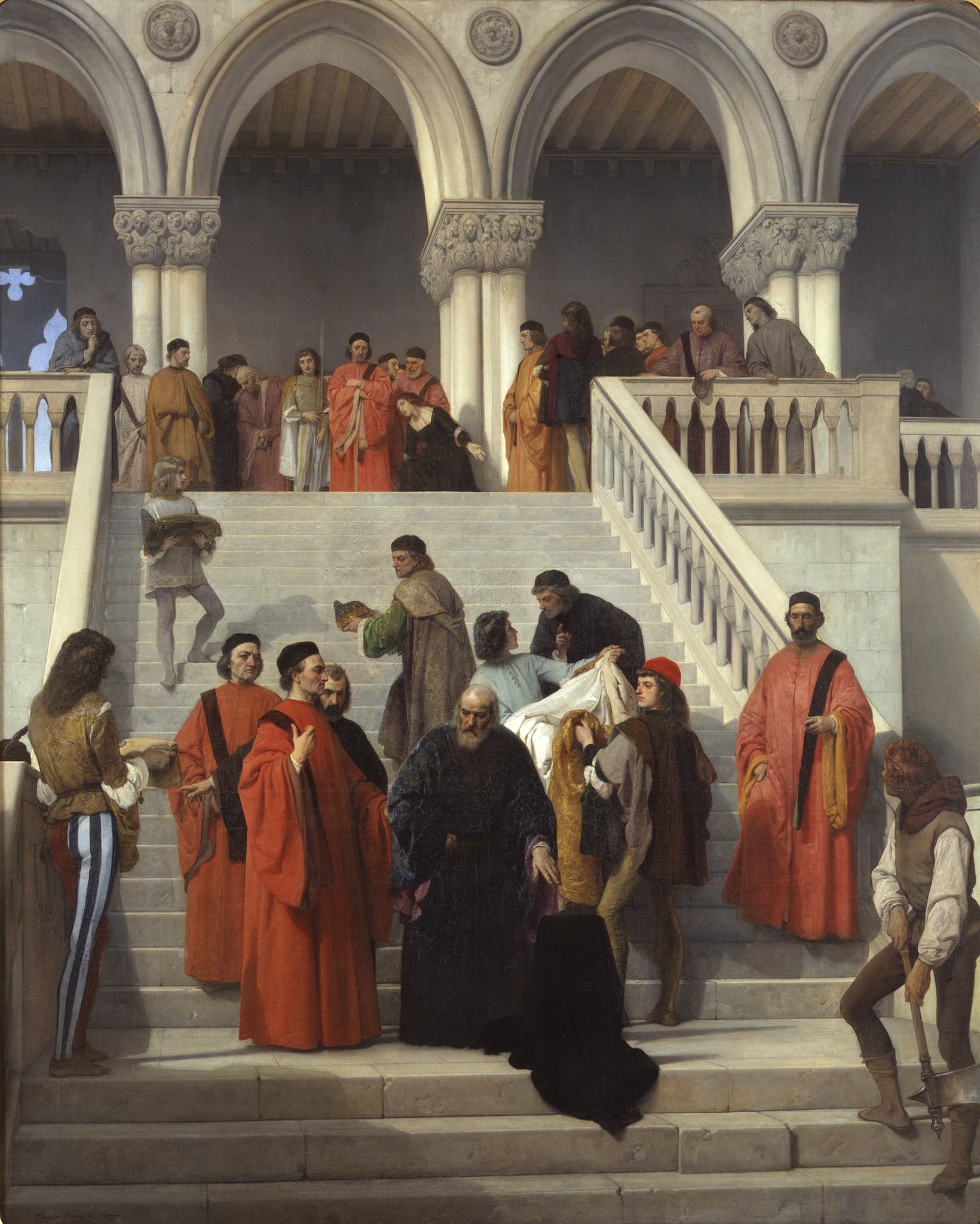
$800,000–$2,000,000
Hypothetical $800k–2M range for this large, museum‑quality 1867 history canvas, derived from top Hayez auction comparables and institutional provenance.
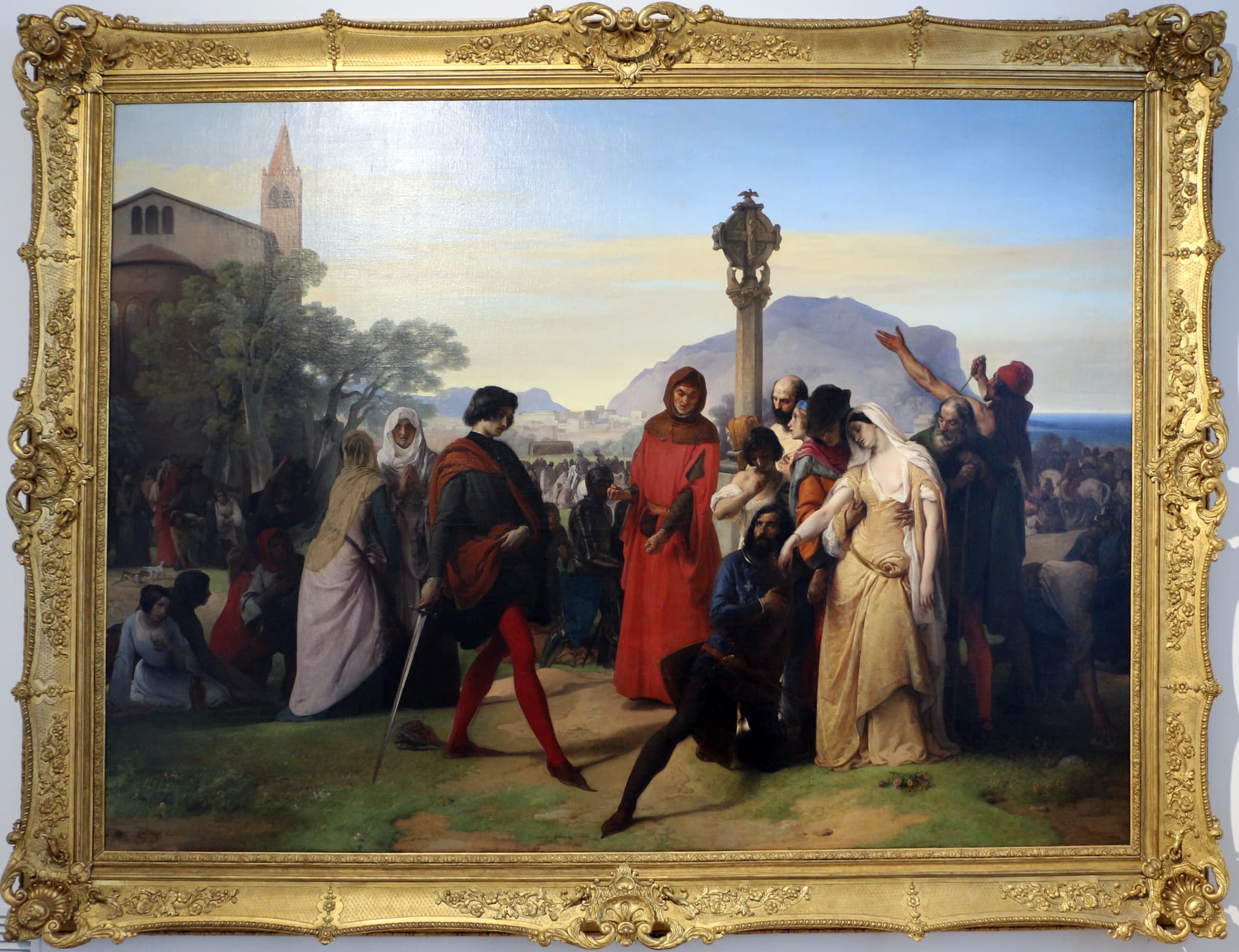
$300,000 - $1,900,000
Estimated $300k–1.9M for a marketable autograph I vespri siciliani, the wide bracket reflecting sensitivity to provenance, condition, size and whether already institutional.
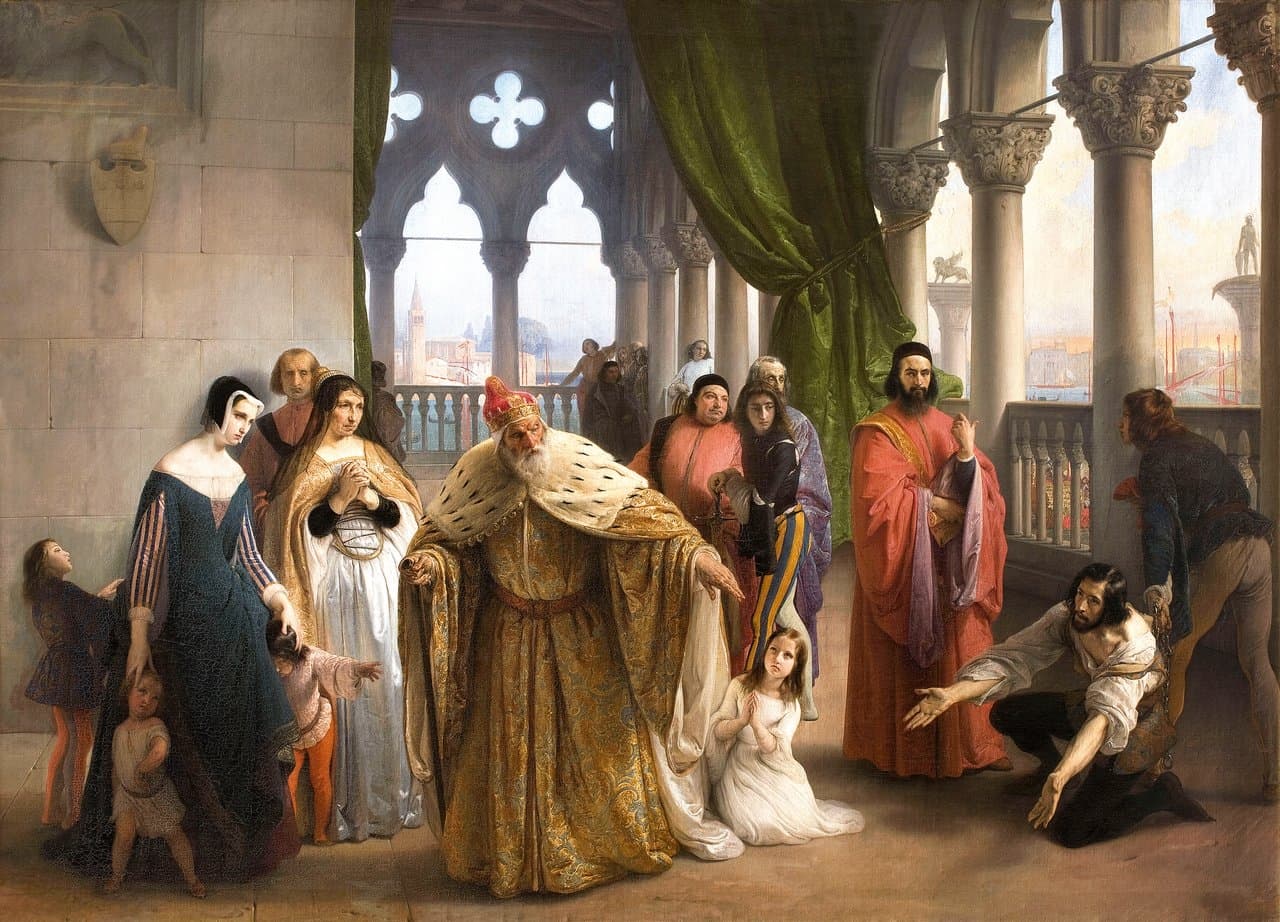
$250,000–$1,800,000
Commercial estimate $250k–1.8M for L'ultimo abboccamento di Jacopo Foscari, contingent on autograph status, dimensions, condition and provenance/exhibition history.
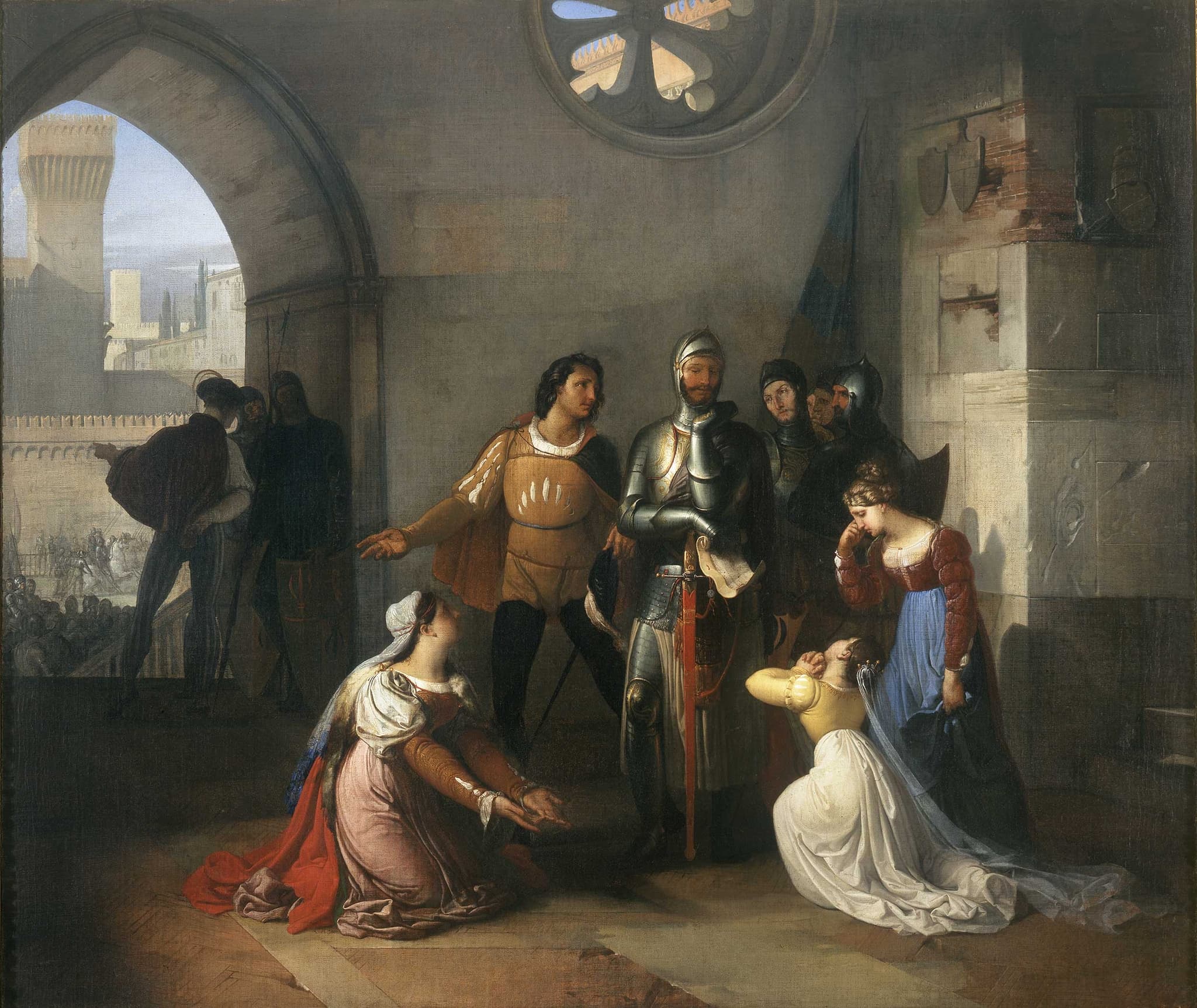
$10,000–$1,500,000
Broad $10k–1.5M range reflects absent public‑auction history, museum‑held autograph versions and heavy dependence on attribution, size, provenance and condition.
What Drives Value in Francesco Hayez's Work
Il Bacio’s Trophy Premium (Iconicity of a Single Motif)
Hayez’s Kiss (Il Bacio) functions as a national emblem in a way few of his compositions do: the 1859 Brera original anchors the motif’s cultural premium, while autograph variants (1867, 1861 Mylius) demonstrably outperform other Hayez subjects at auction. The 1867/2016 Christie’s sale (~$1.865M) and repeated market interest show that confirmed Il Bacio examples attract ‘trophy’ bids and press attention that multiply value relative to otherwise comparable Hayez canvases.
Autograph vs Workshop: a Binary Attribution Split
For Hayez the single most decisive commercial hinge is technical authorship. Confirmed autograph status (IRR/X‑ray/pigment concordance) converts an Il Bacio, Bathsheba or history canvas into seven‑figure contention; unresolved or workshop‑attributed examples fall to mid‑six or five‑figure markets. The 1861 Mylius and 1867 Il Bacio cases show how technical imaging and connoisseurship either unlock the Il Bacio premium or trigger steep attribution discounts for otherwise similar compositions.
Museum Provenance & National Heritage (Brera / Accademia / Tosio Martinengo)
Hayez paintings with long public institutional custody — e.g., the 1859 Kiss (Pinacoteca di Brera), the 1867 Destruction donated to Gallerie dell’Accademia, and I profughi di Parga (Tosio Martinengo) — carry exceptional scholarly authority and insurance/valuation uplift. That provenance elevates notional value and attracts institutional buyers, but Italian ‘bene culturale’ protections and deaccession complexity simultaneously constrain liquidity and shape sale strategy and achievable realisations.
Large‑Scale History Paintings & Risorgimento Subjects
Hayez’s monumental history canvases — The Refugees of Parga, The Last Moments of Doge Marin Faliero, I vespri siciliani, Pietro Rossi — are uniquely prized for their political iconography and museum suitability. Size, dramatic narrative and placement in Hayez’s Risorgimento cycle generate institutional demand and catalogue attention, yet logistics and a narrowly specialised buyer pool make outcomes volatile: when provenance and condition align, such canvases can outperform small works, otherwise they face limited liquidity.
Market Context
Francesco Hayez’s auction market is highly tiered and selective: record and benchmark sales—most notably Il Bacio (1867) at Christie’s New York for $1.865m (2016) and Bathsheba at Christie’s London for £1.492m (~$1.89m, 2024)—establish a public ceiling near $1.8–$1.9M for museum‑quality oils. Supply of prime canvases is scarce due to institutional holdings and key acquisitions, and recent exhibitions and rediscoveries (including showings at major Italian museums such as GAM Torino) have increased visibility and attracted institutional buyers. Demand is quality‑ and provenance‑driven: autograph Kisses, major history paintings and well‑provenanced works outperform portraits and studio pieces. Overall trajectory is selective but constructive—strong pricing for fresh, well‑documented top works amid softer breadth for mid‑market material.