How Much Is Portrait of Nan Worth?
Last updated: April 24, 2026
Quick Facts
- Methodology
- comparable analysis
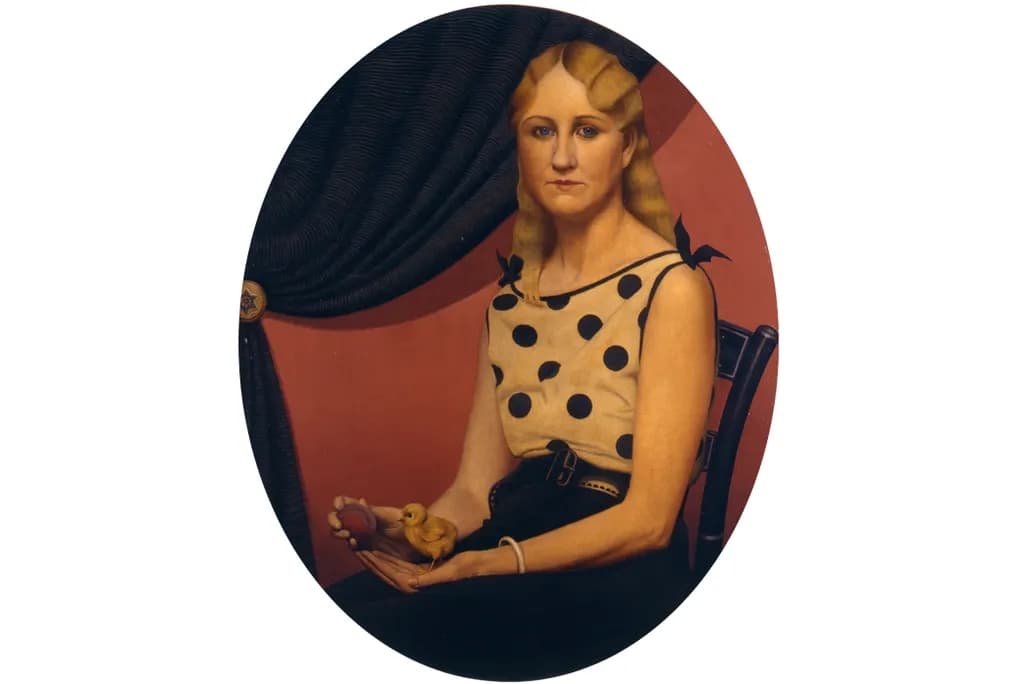
Based on Sotheby’s 2018 presale positioning, the scarcity of major Grant Wood oils, and recent auction comparables, Portrait of Nan (c.1931) is estimated at $1,250,000–$3,000,000 at auction today, assuming authentication, good condition, and documented provenance. Significant deviations in condition, catalogue‑raisonné status, or chain of title will materially move the final result.
Valuation Analysis
Valuation: Based on available public evidence and comparable market transactions, I estimate Grant Wood’s Portrait of Nan (c.1931, oil on board) would reasonably realize between $1,250,000 and $3,000,000 at a major auction today, assuming the work is fully authentic, in sound condition, and carries the provenance reported (retained by the artist; acquired by Senator William Benton in 1952; descended to Helen Boley). This range uses Sotheby’s 2018 presale estimate as the primary market anchor and recognizes the scarcity of comparable museum‑quality oils by Wood [1].
The painting’s last publicly recorded market event was its high‑profile consignment to Sotheby’s New York American Art sale in November 2018, where it received a presale estimate of $1.5–2.5M but the lot was withdrawn and no hammer price was recorded [1][2]. That professional presale valuation is the single strongest market anchor in the absence of a realized price; withdrawal removed public price discovery and means the work’s market value remains theoretical until a sale occurs [2].
Comparable evidence frames upside and downside. A top‑tier Grant Wood oil (Spring Plowing) set a public ceiling in 2005 at $6.96M, while important preparatory works and drawings have realized mid‑six to low‑seven figures (for example, a major study sold in 2014 and the 2026 sale of the Study for American Gothic) [3][4]. Those results demonstrate both collector appetite and the episodic, event‑driven nature of demand. Portrait of Nan sits between preparatory material and a museum masterpiece in market perception, supporting the $1.25–3.0M band as a realistic auction expectation for a well‑provenanced, good‑condition example.
Price sensitivity will be driven by catalogue‑raisonné confirmation and bibliography, in‑hand condition (board support, surface integrity, and conservation history), a complete chain of title and exhibition history, and the chosen sales route (auction vs private placement). If all are favorable and the work is presented to institutional and high‑net‑worth collectors, the painting could meet or exceed Sotheby’s earlier presale midpoint; conversely, unresolved condition or provenance issues could push realized value toward or below the conservative edge of the range. Technical and conservation reports frequently change bidding dynamics materially.
Recommendation: obtain a conservator’s condition report and high‑resolution recto/verso images, confirm catalogue‑raisonné entry with the Grant Wood project/Cedar Rapids holdings, and solicit formal pre‑sale valuations from a major American‑paintings specialist (Sotheby’s or Christie’s) who can advise on public versus private sale strategy. Until in‑hand verification is completed, treat the $1.25–3.0M range as an evidence‑based market estimate rather than an insured replacement value [1][2][3][4].
Key Valuation Factors
Art Historical Significance
Medium ImpactThis portrait features Nan Wood, a recurring personal subject in Grant Wood’s oeuvre, and dates to a productive period around 1931. While the painting has clear biographical and stylistic relevance—informing portrait practice and domestic iconography in Wood’s career—it is not widely cited as a canonical masterpiece on the level of American Gothic. Its art‑historical importance therefore sits at an intermediate level: valuable to specialists and regional collections but typically not commanding the same universal institutional demand as his signature works. If the painting is published in a catalogue‑raisonné or featured in major exhibitions, its scholarly weight and market value would rise.
Provenance & Exhibition History
High ImpactReported provenance—retained by the artist until 1942, acquired by Senator William Benton in 1952, and descended to Helen Boley—is a strong chain that materially supports market confidence. Provenance to notable collectors reduces attribution risk and increases institutional interest. Exhibition loans and catalogue illustrations would further elevate desirability and hammer potential. Conversely, gaps or unverified provenance create buyer hesitation and downward pressure. Given Sotheby’s 2018 willingness to catalogue the work, provenance currently functions as a high‑impact positive provided documentary evidence is produced and verified.
Condition & Technical State
High ImpactCondition is a decisive determinant for an oil on board from the early 1930s. Structural issues (unstable board, cracking, relining), overpainting, or heavy restoration materially depress value; a stable surface with minimal, documented conservation and favorable technical analysis (imaging, pigment study) enhances marketability. For Portrait of Nan, an in‑hand conservator’s report that confirms good structural stability and a well‑preserved paint layer is required to justify placement in the higher part of the valuation band. Because buyers of museum‑caliber works demand technical certainty, this factor carries high impact.
Rarity & Market Supply
High ImpactMuseum‑quality Grant Wood oils are scarce on the market—most top examples are institutional holdings—so supply for comparable works is limited. That scarcity produces a premium when authenticated, well‑provenanced oils appear for sale. Portraits of family members do surface but are infrequent, creating episodic demand and price volatility; properly marketed works can draw competition among regional museums and private collectors. Because Portrait of Nan appears to be one of relatively few substantial oils remaining in private hands and was significant enough to be consigned to Sotheby’s in 2018, rarity strongly supports the upper end of the valuation range.
Market Comparables & Auction Evidence
Medium ImpactAuction comparables provide both a ceiling and mid‑market anchors: Spring Plowing (Sotheby’s, 2005) establishes an upper bound (artist record), while high prices for major works on paper and preparatory studies show institutional appetite for important Wood material. Sotheby’s 2018 presale estimate for Portrait of Nan ($1.5–2.5M) is the most direct market anchor absent a hammer price. Because directly comparable, recent oil sales by Wood are limited, comparables are informative but not fully determinative without an actual realized sale; this factor therefore has medium impact.
Sale History
Grant Wood's Market
Grant Wood is a major 20th‑century American Regionalist whose public market is characterized by low volume and high scarcity at the top end. The auction record (Spring Plowing, $6.96M, 2005) demonstrates the ceiling for top‑tier oils, but most secondary‑market turnover is in prints, studies and smaller works that sell at far lower prices. Demand is concentrated among American‑art specialists, regional museums and collectors of Americana. Because few major oils come to market, provenance, condition and exhibition history disproportionately influence realized prices, producing episodic spikes rather than steady, broad‑based growth.
Comparable Sales
Spring Plowing
Grant Wood
Artist's auction record and a museum-quality oil — provides the ceiling for what a top-tier Grant Wood oil can achieve; useful upper-bound comparator for Portrait of Nan if proven equally important.
$7.0M
2005, Sotheby's, New York
~$11.2M adjusted
Study for Dinner for Threshers
Grant Wood
Major work on paper by Wood that realized a high price — indicates collector demand for important preparatory works and sets a realistic lower-bound/market-anchor relative to oils.
$1.6M
2014, Christie's, New York
~$2.1M adjusted
Study for American Gothic
Grant Wood
High-profile preparatory study sold in an Americana-themed sale — shows event-driven demand for iconic-related material; medium and scale make it less directly comparable to an oil portrait, but it demonstrates market interest.
$584K
2026, Christie's, New York
~$579K adjusted
Current Market Trends
The market for American Regionalism remains specialized and event‑driven: prints and studies trade regularly at modest levels, while museum‑quality oils surface infrequently and can produce outsized outcomes when tied to curated sales or institutional programming. Recent high‑visibility sales (including study material sold in thematic Americana auctions) show that context and marketing elevate results. Collectors remain discriminating and institutions cautious, preferring thoroughly documented works; sellers should time offerings to relevant thematic auctions or major scholarship to maximize visibility.
Sources
- Sotheby’s — The heartfelt story behind Grant Wood’s Portrait of his Sister (catalogue preview / presale notes)
- The Art Newspaper — Coverage of Sotheby’s Nov 2018 American Art sale (reporting withdrawal of Portrait of Nan)
- Sotheby’s / press archive — Spring Plowing sale (Sotheby’s, 30 Nov 2005), artist auction record reference
- Christie’s — Study for American Gothic lot and sale (Jan 23, 2026), recent high‑visibility comparable