Most Expensive Grant Wood Paintings
Grant Wood’s paintings occupy a distinctive place in the market: instantly recognizable cultural touchstones whose blend of meticulous technique, regionalist subject matter, and storied provenance make them highly collectible. At the summit sits American Gothic, whose iconic pair and architectural motif have been valued at an extraordinary $150–250 million, anchoring Wood’s market standing and driving interest in his other works. Collectors seeking major examples turn to canvases such as Spring Plowing, estimated at $7–12 million, while landscapes like Stone City, Iowa and The Midnight Ride of Paul Revere each trade in the $1–5 million and $1–4 million neighborhoods, respectively. Smaller yet significant genre scenes and portraits — from Dinner for the Threshers ($300,000–$3,000,000) and Parson Weems’ Fable ($750,000–$3,000,000) to Portrait of Nan ($1.25–3 million) — demonstrate how subject, rarity, and condition affect value. Even less costly works such as New Road ($400,000–$1.5 million), Young Corn ($100,000–$1.2 million) and Haying ($75,000–$250,000) remain sought after by institutions and private collectors who prize Wood’s crisp draftsmanship and enduring cultural resonance.
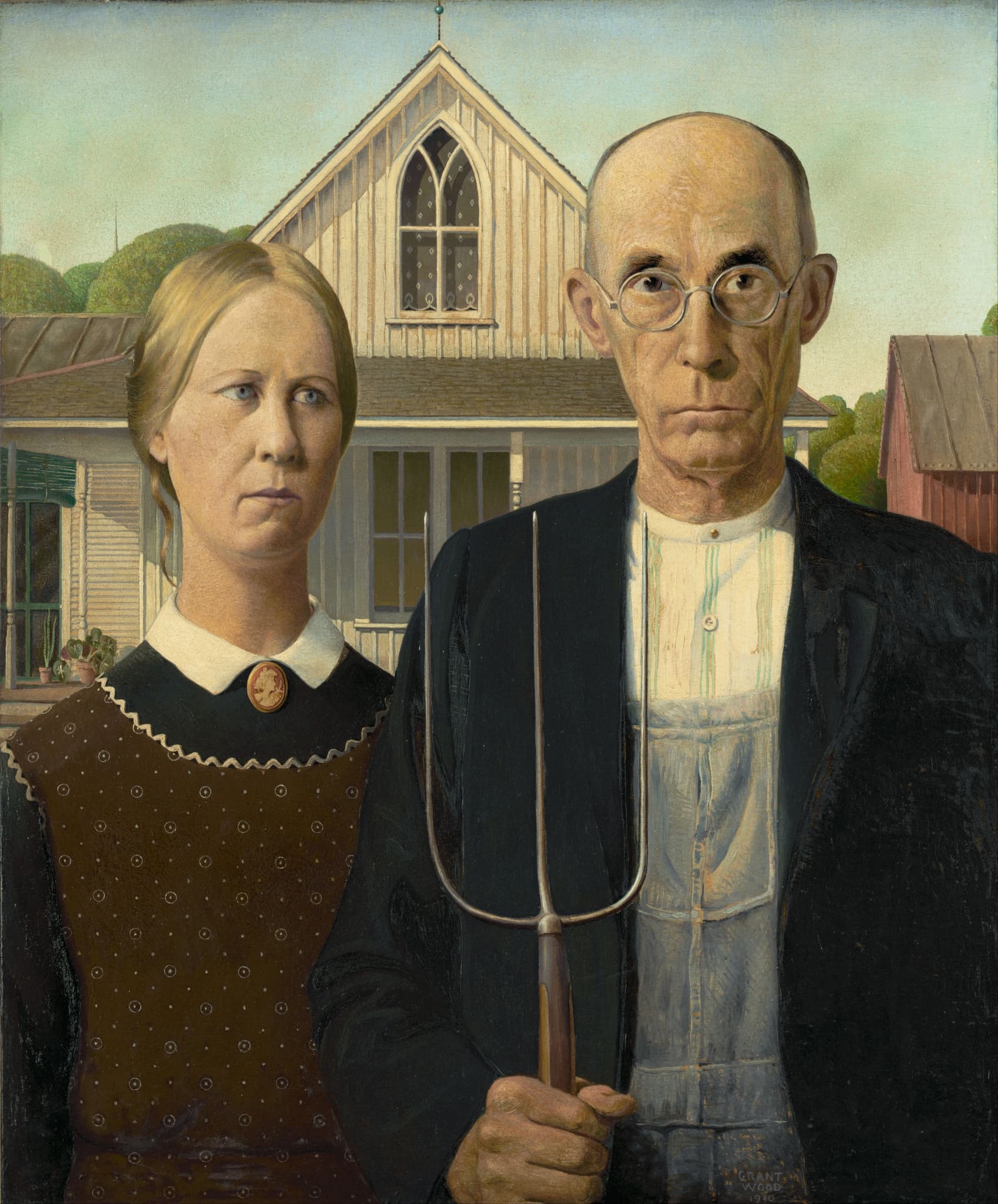
$150-250 million
As a once-in-a-generation museum icon and Grant Wood’s apex work, its cultural ubiquity drives trophy-market pricing and exceptional upside in guarantee-backed auctions.
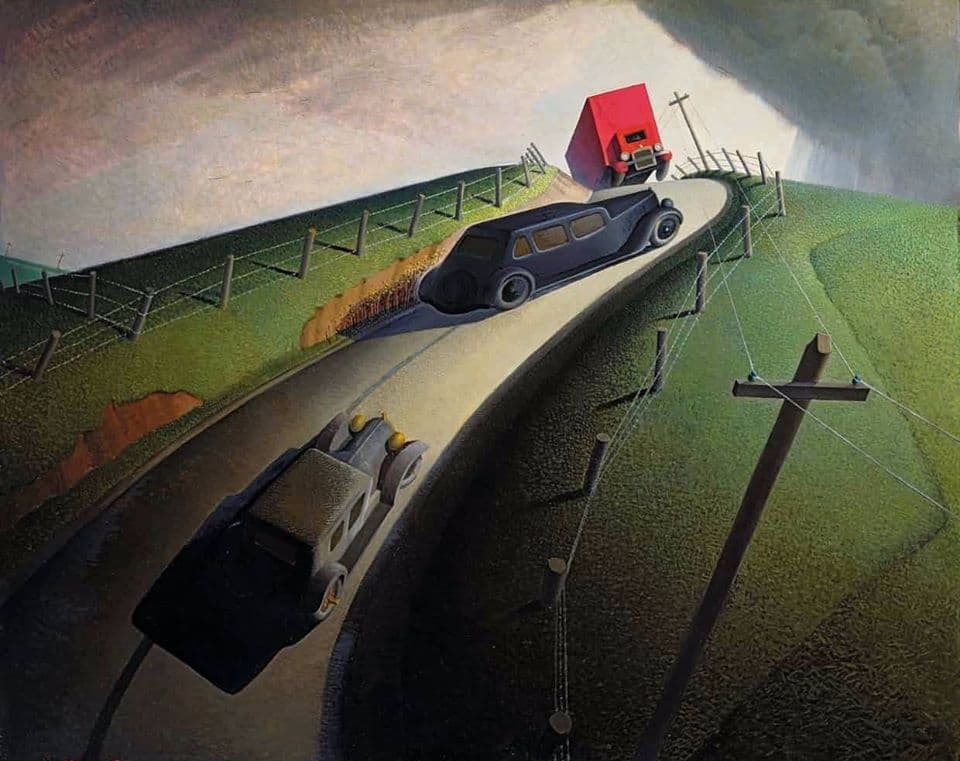
$22-35 million
Hypothetical open‑market value for Grant Wood’s Death on the Ridge Road is estimated at $22–35 million.
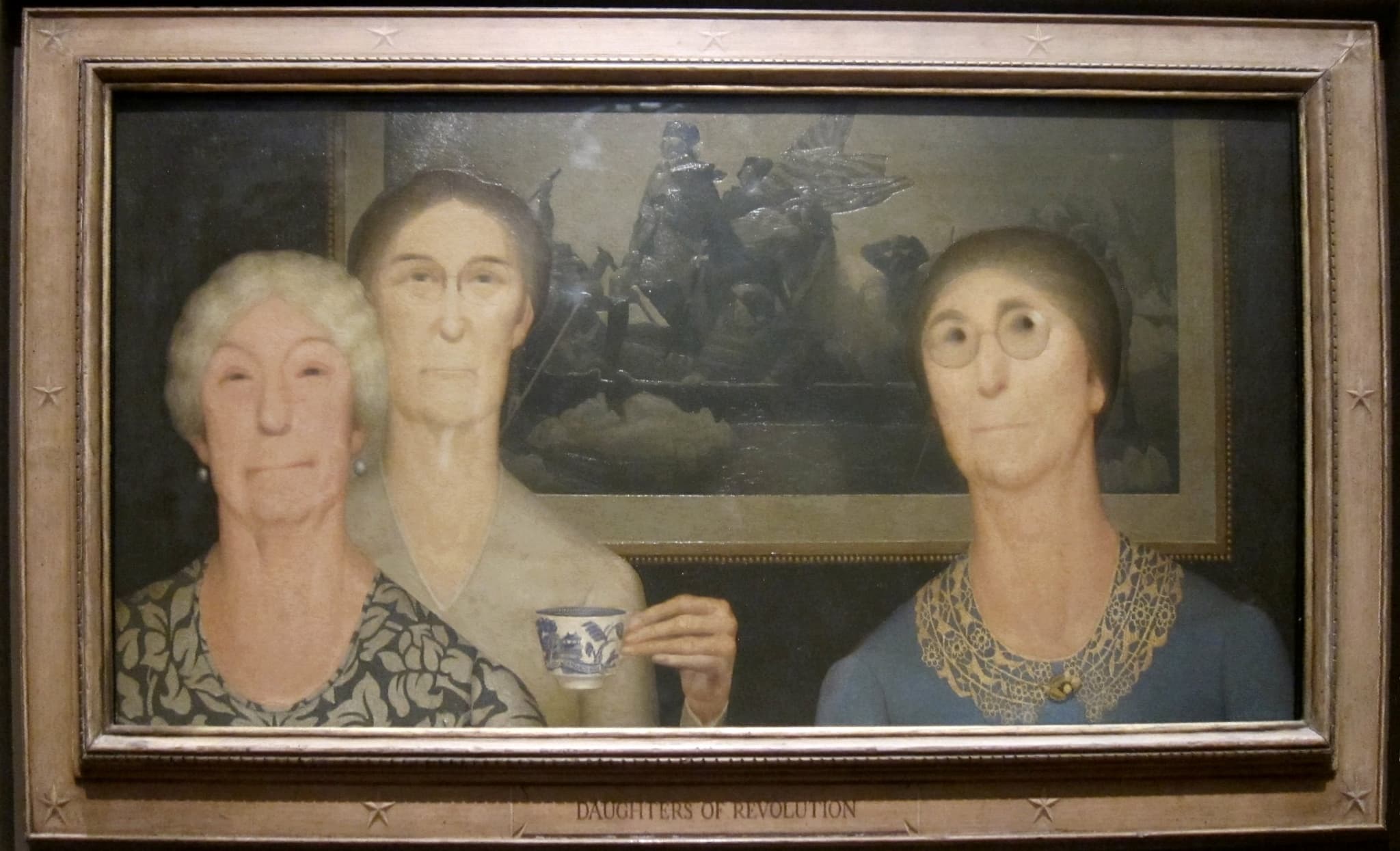
$12–25 million
Assuming the Cincinnati Art Museum’s autograph oil were deaccessioned and offered openly, fair market value is $12–25 million.
$7,000,000-$12,000,000
Anchored to its documented Sotheby’s sale in 2005, the work’s current range reflects nominal‑market repeatability plus an inflation-adjusted trophy premium for provenance and condition.
$1,000,000–$5,000,000
Although housed at the Joslyn, its museum-quality status and 1930 date would command seven-figure prices on comparables for scarce, historically significant Regionalist oils.
$1,000,000–$4,000,000
Accessioned at The Met and off‑market, its hypothetical valuation derives from major Grant Wood oil benchmarks and the premium associated with institutional provenance.
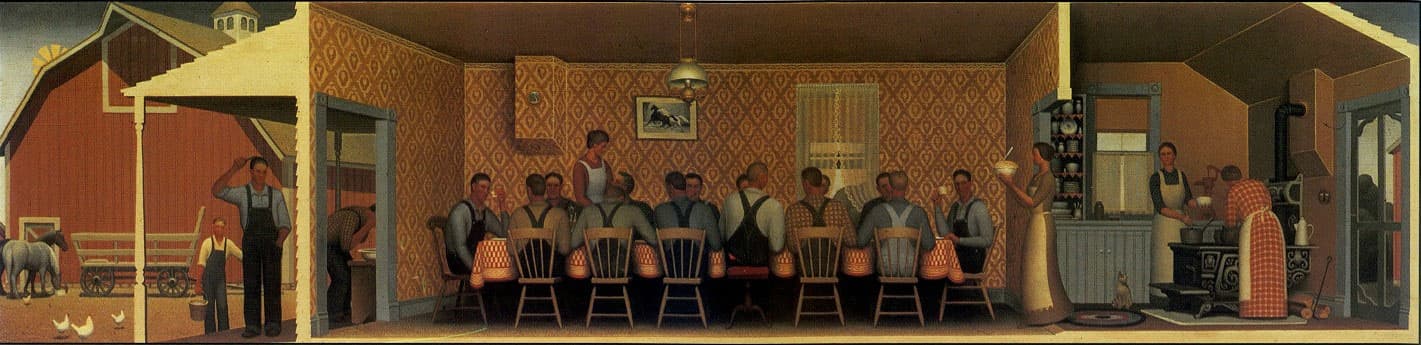
$300,000 - $3,000,000
As a de Young accession with no auction record, its hypothetical deaccession range is calibrated from a Christie’s study sale and historic Spring Plowing oil benchmarks.
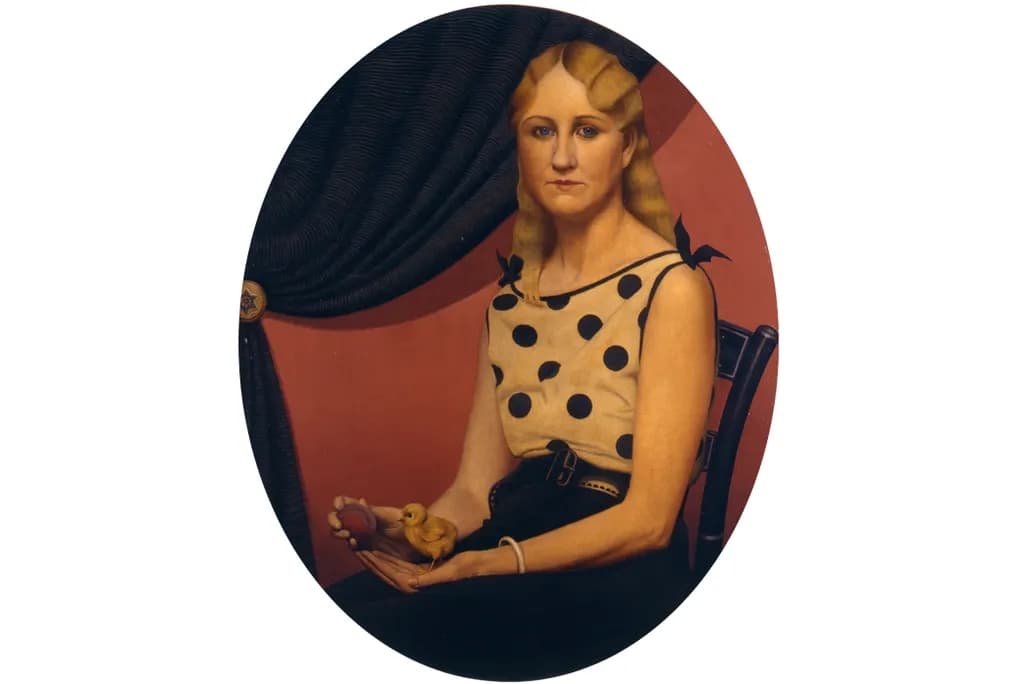
$1,250,000–$3,000,000
Sotheby’s 2018 positioning and the scarcity of major Grant Wood oils underpin its strong seven-figure auction estimate, contingent on authentication and catalogue-raisonné status.

$750,000-$3,000,000
Off‑market at the Amon Carter, its projected range rests on museum-quality status and comparables for similarly dated, well‑provenanced Grant Wood oils.

$400,000–$1,500,000
Though small and non‑iconic, its National Gallery of Art provenance and exhibition history materially elevate its auction estimate compared with similar-format works.
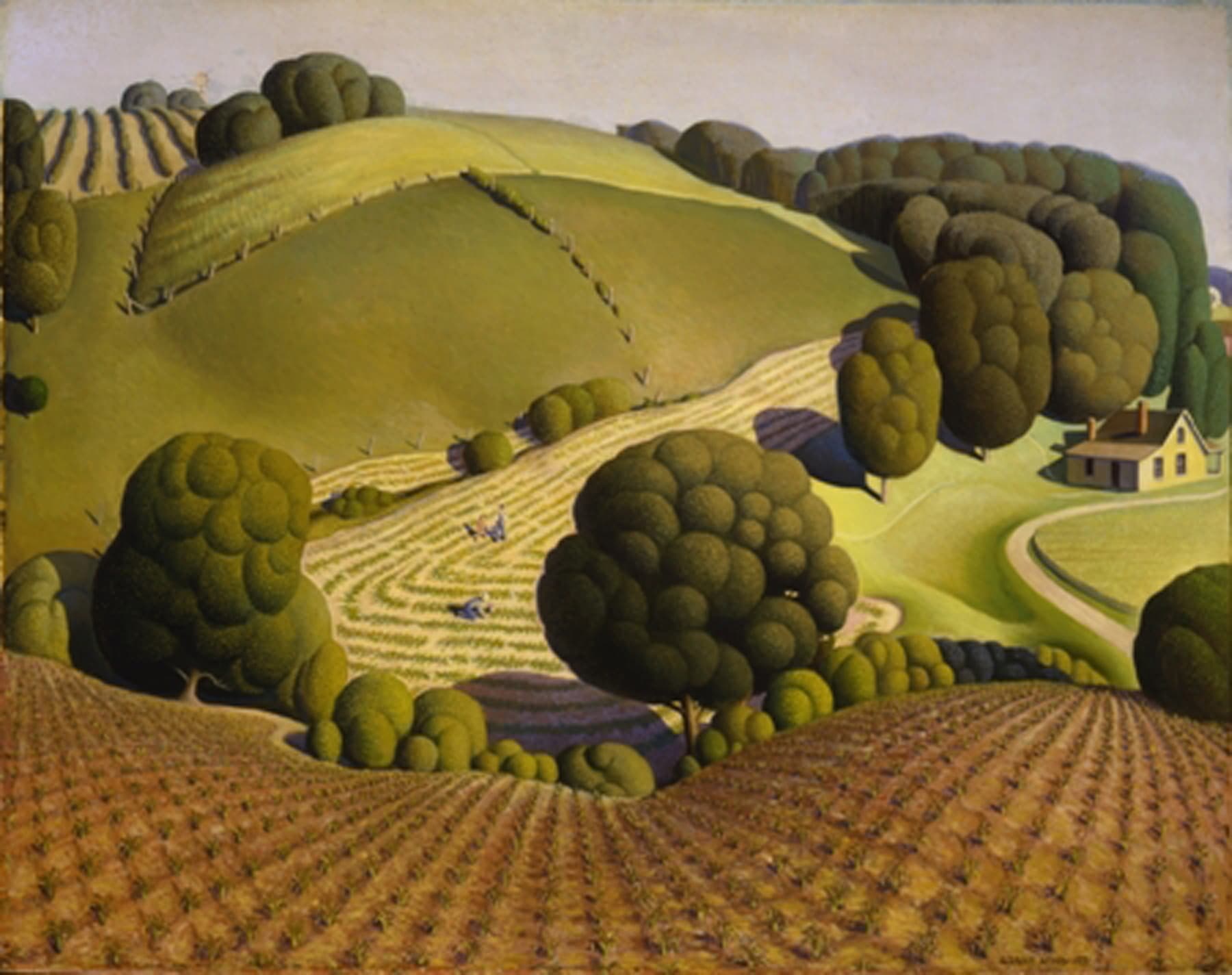
$100,000 - $1,200,000
Typical mid-size Grant Wood landscapes with standard provenance sell in the low six-figure band; results above $600k require outstanding provenance, condition, or exhibition history.

$75,000–$250,000
Catalogued as a sketch on paperboard by the National Gallery, its small scale and support materially suppress market value despite institutional demand for Grant Wood.
What Drives Value in Grant Wood's Work
Iconicity and Direct Links to American Gothic
Grant Wood’s market is highly bifurcated by one image: American Gothic. Its unparalleled cultural ubiquity creates a separate trophy tier — hypothetical market prices extrapolate well beyond normal Wood benchmarks. Works that reference, prefigure, or are compositionally/subject‑linked to that visual mythology (studies or related finished works such as the Study for Dinner for Threshers which sold strongly in 2014) inherit uplift. By contrast, competent but non‑connected compositions lack the same universal bidder pool.
Mature‑Period Dating (circa 1929–1931)
Paintings executed in Wood’s creative peak (roughly late 1920s–early 1930s) consistently attract premium interest: Stone City (1930), Young Corn (1931), The Midnight Ride of Paul Revere (1931) and Spring Plowing (published/sold 2005) are treated as canonical, museum‑worthy works. Collectors and institutions prize works from this narrow window as documentary of Regionalism’s high moment; earlier/later or sketch‑stage pieces typically trade materially lower.
Support/Technical Profile: Board, Masonite and Mounting Problems
Grant Wood’s frequent use of beaverboard, masonite and mounted canvases is a specific market constraint. Condition or conservation risk tied to these supports (edge loss, adhesion, varnish discoloration) materially alters value — Spring Plowing (oil on board), Young Corn (masonite) and New Road (canvas mounted on board) are all explicitly noted for support issues. Buyers pay premiums for stable, well‑documented surfaces; unstable board/mount histories depress bids by tens of percent.
Institutional Provenance vs. Market Liquidity
Museum ownership is a double‑edged, Grant‑Wood‑specific pattern: accessioned works (Midnight Ride at the Met, Stone City at Joslyn, New Road/Haying at the NGA, Dinner for the Threshers at de Young) carry authoritative provenance and publication/exhibition pedigree that elevate theoretical value and scholarly demand. At the same time, the concentration of top oils in institutions means few market comparables and rare, episodic sales (e.g., Spring Plowing 2005), producing volatility and limited immediate liquidity.
Market Context
Grant Wood’s auction market is thin and highly stratified: major museum‑quality oils are scarce in private hands and trade episodically but can command multi‑million prices (public record: Spring Plowing, Sotheby’s 2005, $6.96M), while lithographs and multiples supply most liquidity at dramatically lower levels. Recent activity—notably preparatory works offered in 2025–2026 and theme‑driven sales tied to America’s 250th—has produced episodic spikes in demand, particularly when provenance, exhibition history and sale presentation are strong. Institutions and top private collectors actively compete for trophy works (often with guarantees), supporting a resilient upper tier; iconic images such as American Gothic sit in a nine‑figure valuation band in institutional markets. Overall demand is concentrated, intense and durable for authenticated, museum‑ready oils, with prints sustaining regular secondary‑market turnover.