How Much Is Young Corn Worth?
Last updated: April 24, 2026
Quick Facts
- Methodology
- comparable analysis
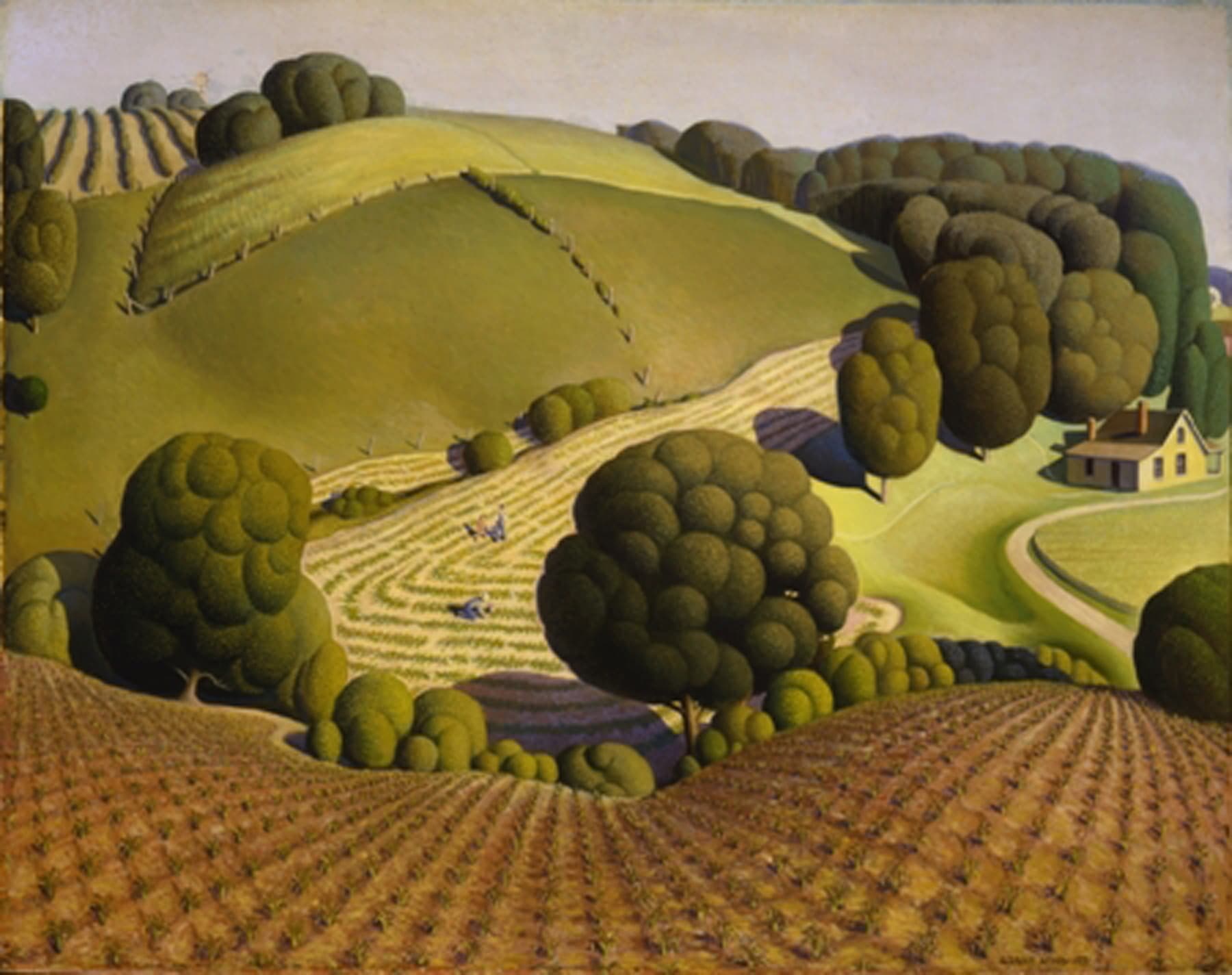
Based on public institutional ownership and auction comparables for Grant Wood, Young Corn (1931) would likely realise in the open market at approximately $100,000–$1,200,000. A typical, well-documented mid‑size landscape of this type most often sells in the $100,000–$450,000 band; results above $600,000 require exceptional provenance, condition, and exhibition or publication history.
Valuation Analysis
Conclusion and headline estimate: Young Corn (1931), an oil on masonite listed in the Cedar Rapids Community School District collection and on loan to the Cedar Rapids Museum of Art, has no public auction record and therefore establishes its market value by comparison to other Grant Wood works and the painting's documentation and condition [1]. Based on museum custody, medium and dimensions (approx. 23 3/4 x 29 3/4 in.), and the artist's tiered price history, a realistic open‑market range today is roughly $100,000 to $1,200,000, with a more probable realised band for an ordinary but authenticated example of $100,000–$450,000. Achieving outcomes above $600,000 generally requires outstanding provenance, published scholarship, or significant exhibition history.
Comparables and price drivers: The artist's auction high, Spring Plowing (Sotheby’s 2005), anchors the top end of Wood's market but is not directly comparable to a mid‑scale farm landscape because of its exceptional exhibition and provenance pedigree [2]. Important preparatory works and drawings have sold strongly, for example Study for Dinner for Threshers at Christie’s in 2014, which shows how historically pivotal works move into the mid‑to‑high six figures and beyond [3]. Sizable, well‑provenanced oils on masonite have also reached the high six figures, indicating that the support and subject do not preclude near seven‑figure performance when other value factors are in place [4].
Interpretation: These comparables create a broad but intelligible valuation band. Young Corn’s institutional custody supports authenticity and reduces attribution risk, which is a positive for marketability, but absence from major monographs or high‑profile exhibitions limits direct comparators. Condition, provenance backstory, and any bibliographic or exhibition citations are the single largest modifiers of where within the $100k–$1.2M band the work would sit. A pristine original surface, documented provenance, and catalogue raisonne or exhibition citations would push estimates toward the upper half of the range.
Next steps and practical guidance: To convert this range into a firm hammer/reserve estimate, assemble high‑resolution recto and verso images, closeups of the signature and labels, a conservator condition report, and any provenance or exhibition documentation. With that dossier, major auction houses or specialist dealers can provide a formal pre‑sale estimate and advise on sale route — auction or private treaty. If you want, provide images and provenance and I will produce a comparables memorandum tailored to auction house submission.
Key Valuation Factors
Art Historical Significance
Medium ImpactYoung Corn (1931) sits within Grant Wood's mature Regionalist period when agrarian themes and stylised landscape treatment were central to his output. While not identified among the handful of canonical masterpieces such as American Gothic, a dated 1931 landscape documents an important phase in his development and therefore carries demonstrable scholarly and collector interest. Art‑historical significance increases materially if the work illustrates a recurring motif, a documented technical innovation, or appears in monographs or exhibition catalogs. In the absence of such published or exhibitionary pedigree the painting is of moderate significance: desirable for collectors of Regionalism and institutions, but unlikely to command the premium reserved for singular, iconic works.
Provenance & Exhibition History
High ImpactProvenance is one of the most powerful determinants of price. Institutional custody — here the Cedar Rapids Community School District with the painting on loan to the Cedar Rapids Museum of Art — supports authenticity and curatorial care, which are positive for market value. However, documented early ownership, gallery invoices, and history of inclusion in major exhibitions or publications are the elements that drive top‑tier results. Absence of a continuous, documented provenance or gaps prior to mid‑20th century ownership materially depresses estimates. If Young Corn can be shown in exhibition records, catalogue raisonne entries, or early sales ledgers, its market position would strengthen significantly and likely move the painting toward the upper end of the estimate band.
Condition & Conservation
High ImpactCondition will materially affect where Young Corn falls within the estimated range. Oil on masonite can be stable but is prone to edge wear, abrasion, inpainting, varnish discolouration, and panel issues if historically modified. Buyers at the top end expect original, stable surfaces and transparent conservation histories. A professional condition report that documents paint loss, retouching, structural repairs, or original ground and varnish will allow auction houses to set realistic estimates and advise on restoration or cleaning. Excellent original condition can create a decisive premium; conversely, extensive restoration or structural instability will reduce buyer confidence and lower both estimate and achievable price.
Physical Characteristics (size, support, subject)
Medium ImpactAt approximately 23 3/4 x 29 3/4 inches Young Corn is a moderate, displayable scale attractive to private collectors and museums alike. Oil on masonite is an accepted and common support in Wood's oeuvre; when original and stable, masonite does not materially penalise value versus canvas. The agrarian landscape subject is central to Wood's market identity and appeals to collectors of American Regionalism. Larger, more iconic compositions typically command premiums, while intimate or sketch-like works usually sell in lower bands. Framing, presentation, and whether the work is a finished painting rather than a study further moderate demand and price expectations.
Market Liquidity & Comparable Sales
High ImpactGrant Wood's market is tiered but liquid among specialist American art buyers. The artist's auction record (Spring Plowing at Sotheby’s) demonstrates potential for multi‑million outcomes when provenance and exhibition history align [2]. Important preparatory works and drawings have sold in the mid‑to‑high six and low seven figures, showing that exceptional scholarship can uplift value [3]. Sizable, well‑provenanced oils on masonite have realised high six‑figure prices, indicating support for the upper mid‑market when other factors are present [4]. The majority of authenticated mid‑size landscapes, however, typically settle in the low hundreds of thousands absent extraordinary provenance, supporting the $100k–$450k realistic band.
Sale History
Young Corn has never been sold at public auction.
Grant Wood's Market
Grant Wood is a foundational figure of American Regionalism and holds a secure and active secondary market. His very best works are largely museum‑held and set the artist's high benchmark, while important studies and drawings have produced significant auction results. Most market activity occurs in the mid‑six‑figure range for well‑provenanced oils and in the low‑to‑mid six figures for notable drawings, with a smaller number of works achieving seven‑figure results. Collectors and institutions prioritize provenance, condition, and literature, which frequently separates mid range results from rare premium outcomes.
Comparable Sales
Spring Plowing
Grant Wood
Artist's auction record — large, finished oil with major provenance/exhibition history; sets the high-end benchmark for Wood's market and is a stronger, more important example than Young Corn.
$7.0M
2005, Sotheby's New York
~$11.2M adjusted
Study for Dinner for Threshers
Grant Wood
Large, historically important study by Wood realised at auction for $1.565M; demonstrates strong demand for important studies/preparatory works — more significant than a typical mid-size finished landscape like Young Corn.
$1.6M
2014, Christie's (Nov 2014)
~$2.1M adjusted
The American Golfer
Grant Wood
Sizable oil on masonite (similar support and genre to Young Corn) that sold near seven figures — a useful medium/format comparable showing what well-provenanced oils can fetch.
$886K
2014, Christie's (2014, reported in GBP)
~$1.2M adjusted
Study for American Gothic
Grant Wood
Recent sale of an important preparatory study (work on paper). Though a study rather than a finished landscape, it indicates continued collector demand and price support in the mid-six-figure band.
$584K
2026, Christie's New York (2026)
~$567K adjusted
Current Market Trends
Current market conditions for American Regionalism are stable to favorable. Demand remains steady among US institutions and private collectors while supply of museum‑quality Wood paintings is limited. Buyers continue to prize documented provenance and conservation clarity, which supports stronger pricing for well‑catalogued works. Economic volatility can compress mid‑tier prices, but top examples still attract competitive bidding when provenance and scholarship are present.
Sources
- Cedar Rapids Museum of Art — Permanent Collections (Grant Wood entry for Young Corn / accession notes)
- Sotheby's — Spring Plowing by Grant Wood (auction record, Nov 30, 2005)
- Christie's — Study for Dinner for Threshers (Grant Wood, Nov 2014 sale reference)
- Barnebys / aggregated realized prices for Grant Wood (example: The American Golfer and comparable oil on masonite results)