How Much Is The Last Judgment (Bruges) Worth?
Last updated: April 29, 2026
Quick Facts
- Methodology
- extrapolation
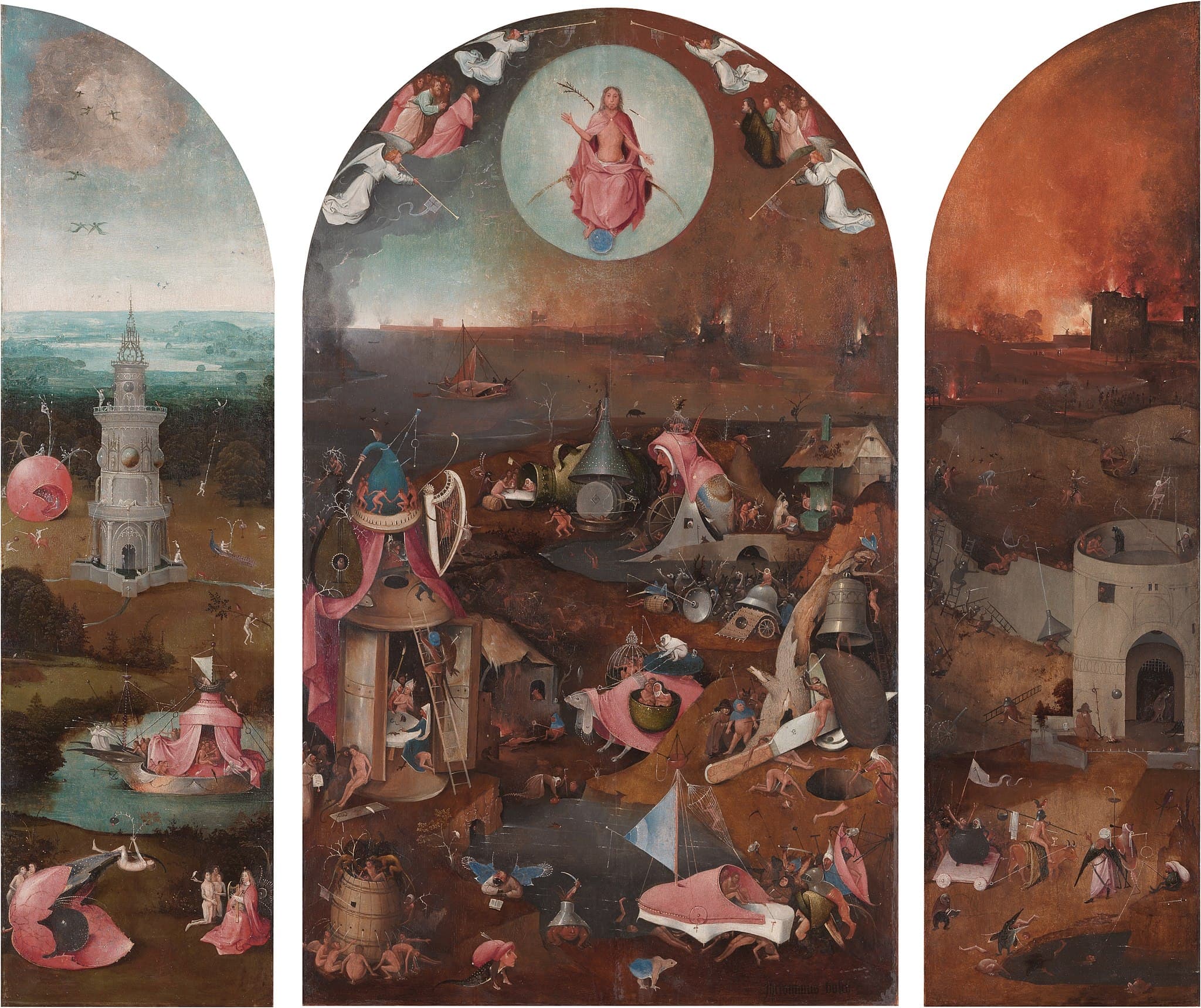
Assuming a secure autograph attribution, the Groeningemuseum Last Judgment (Bruges) is conservatively valued at USD 100–150 million. This range reflects the painting's canonical significance, BRCP technical endorsement, museum provenance, and the practical scarcity of market comparables for autograph Bosch triptychs [1][2].
Valuation Analysis
Valuation conclusion: On the assumption that The Last Judgment (Bruges) is a securely attributed autograph work by Hieronymus Bosch, supported by the Groeningemuseum provenance and the Bosch Research and Conservation Project's technical work, the conservative valuation range is USD 100–150 million [1][2]. This figure is intended as a market‑aware, institutionally informed estimate rather than a transaction guarantee.
Rationale: Few securely attributed Bosches have ever entered the modern market; the canon is dominated by museum holdings. That scarcity creates an earnings multiple for museum‑quality rediscoveries that is not visible in public auction records. Because the Bruges triptych has been the subject of BRCP study and conservation, its attribution and condition profile place it in the small group of Bosch works that could plausibly trade only in highly controlled private or institutional channels. The estimate therefore combines institutional replacement/value logic used for top Old Masters with conservative extrapolation from known private/institutional pricing dynamics [1][2].
Comparables and limits: Public auction evidence for Bosch‑type works is dominated by followers and workshop pieces that typically sell in the low six‑figures to low seven‑figures (examples include follower lots recorded by Christie’s and Dorotheum) and therefore provide a lower bound for market interest in Boschian material [3][4]. Those prices are not direct comparables for an accepted autograph Bosch triptych but do demonstrate the gulf between follower‑market liquidity and the near‑absence of market testing for genuine Bosches. Broader Old Masters market behavior, including high valuations for rare rediscoveries, helps justify the upward extrapolation used here [5].
Key assumptions and caveats: This valuation presumes unanimous or near‑unanimous scholarly acceptance of an autograph Bosch attribution; robust technical confirmation (dendrochronology, IR reflectography, pigment analysis); excellent structural condition after conservation; intact panels or complete triptych; and clear legal title with no insurmountable export restrictions. If the work is reclassified as workshop, follower, or heavily restored, market value would fall sharply into the low‑to‑mid millions or hundreds of thousands and this estimate would not apply.
Market route and buyer profile: A canonical Bosch would almost certainly transact by negotiated private sale or institutional acquisition rather than public auction. Potential buyers would be national museums, major collecting institutions, or a very small set of ultra‑high‑net‑worth collectors with museum‑scale interests. Competitive institutional interest or an acceptance‑in‑lieu arrangement could push realized consideration above the range in exceptional circumstances, while legal, political, or provenance complications could suppress achievable price.
Next steps to firm value: For a formal insured or sale valuation, assemble the complete BRCP technical dossier, dendrochronology and conservation reports, full provenance documentation, and obtain formal written appraisals from Old Master specialists at top auction houses or independent appraisers experienced with Early Netherlandish masters.
Key Valuation Factors
Art Historical Significance
High ImpactThe Last Judgment subject is central to late medieval devotional programs and, when attributable to Bosch, represents a paradigmatic example of his visionary iconography. An autograph Bosch triptych is therefore not only a high‑quality Old Master painting but a cornerstone work for scholarship, exhibitions and public collections. That status translates into elevated institutional demand: national museums and leading collections place intrinsic premiums on canonical works because they complete historical narratives and attract sustained public and scholarly attention. This cultural and curatorial premium pushes market value well above ordinary Old Master comparables and makes such works effectively 'museum‑priceless' in practice.
Attribution and Technical Evidence
High ImpactAttribution is the single most decisive variable. Technical confirmation via dendrochronology, infrared reflectography, underdrawing comparison and pigment analysis materially increases market value when results align with known Bosch practice. The Bosch Research and Conservation Project's treatment and published technical data materially strengthen an autograph claim and reduce commercial risk, making institutional buyers more willing to assign a very high replacement or purchase valuation. Conversely, unresolved or contested technical findings move a prospective sale from the top‑tier market into the follower/workshop pricing band, causing a precipitous decline in realized value.
Provenance and Exhibition History
High ImpactA clear, museum‑grade provenance and exhibition history significantly increase value by lowering title risk and enhancing the work's public pedigree. The Bruges triptych's trace into historical collections and its municipal acquisition for the Groeningemuseum (early 20th century), together with BRCP publication and inclusion in major exhibitions, supports institutional valuation metrics. Strong provenance encourages offers from public institutions and facilitates acceptance‑in‑lieu or state acquisition mechanisms; gaps or contested ownership, by contrast, can obstruct sale or trigger steep discounts.
Condition and Conservation
Medium ImpactCondition after treatment is a practical determinant of market readiness. Conservation that stabilizes paint and panel, documents interventions transparently, and preserves original surface significantly supports a high valuation. The BRCP conservation regimen improves market confidence by documenting interventions and structural integrity; nonetheless, any intrusive past restorations, large losses, or unstable panels will lower marketability and demand. Insurers, buyers and institutions price condition risk into valuations, sometimes substantially reducing insurable and sale estimates where original material is compromised.
Market Liquidity and Comparable Sales
Medium ImpactPublic auction records for Bosch‑attributed items are dominated by followers and workshop pieces selling in the low six‑ to low seven‑figure range, which sets a practical lower bound for market interest in Boschian imagery but is not representative of an autograph masterpiece. The near‑absence of genuine Bosch masterpieces from the public market means prices for autographs are extrapolated from institutional replacement logic, blockbuster Old Master rediscovery precedents, and private sales of comparably rare works. Liquidity is thin; transactions, where they occur, are negotiated privately and involve a small, specialised buyer pool.
Sale History
The Last Judgment (Bruges) has never been sold at public auction.
Hieronymus Bosch's Market
Hieronymus Bosch occupies an elevated and specialist position in the Old Masters market: securely attributed autograph works are extremely scarce, heavily curated by museums, and therefore rarely subject to public sale. When technical and provenance evidence supports an autograph attribution, demand is predominantly institutional, with private purchasers taking part only rarely. Market liquidity for followers and workshop pieces is active at the low six‑figure to low seven‑figure level, but this public auction activity does not reflect the value tier for genuinely autograph pieces. Scholarly projects such as the BRCP have tightened the corpus and shifted market perceptions in recent years.
Comparable Sales
The Temptation of Saint Anthony (as catalogued)
Follower of Hieronymus Bosch
High‑quality follower/workshop painting sold at a leading auction house; subject (Antony/temptation) and late‑15th/early‑16th Northern‑Renaissance devotional imagery are stylistically close to Bosch’s oeuvre—useful as an upper‑end market benchmark for non‑autograph Bosch‑style panels.
$903K
2013, Christie's, New York (Renaissance sale, 31 Jan 2013)
~$1.2M adjusted
Vision of Tondalus
Follower of Hieronymus Bosch
Large, high‑quality follower/workshop lot realized in 2025; visionary religious subject and Bosch‑like pictorial language make this one of the clearest recent indicators of market demand and top price for follower works.
$1.1M
2025, Kunsthaus Lempertz (Old Masters sale, 17 May 2025)
Saint Christopher Carrying the Christ Child (as catalogued)
Follower of Hieronymus Bosch
Representative mid‑market European sale of a Bosch‑style devotional panel; shows typical realized prices for well‑provenanced follower/workshop pictures outside the top houses.
$261K
2023, Dorotheum, Vienna (Old Masters sale, 25 Oct 2023)
~$274K adjusted
Christ in Limbus (catalogued/attributed variably as Bosch/ follower)
Attributed / follower of Hieronymus Bosch
Lower‑end auction result for a small Bosch‑attributed / follower work frequently cited in databases; useful as a conservative lower‑bound comparable for workshop or derivative panels.
$213K
2013, Koller, Zurich (Old Masters sale, 22 Mar 2013)
~$291K adjusted
Current Market Trends
The Old Masters segment remains niche and selective, with recent years showing concentrated interest in securely attributed or newly reattributed works. For Bosch specifically, scholarship and conservation projects have sharpened attributions and heightened attention, but the practical market remains driven by followers and workshop pieces. Institutional appetite and rarity continue to be primary price drivers, while export controls and cultural patrimony rules limit transactional volume.
Sources
- Groeningemuseum (Musea Brugge) — collection entry for The Last Judgment (Laatste Oordeel)
- Bosch Research and Conservation Project — catalogue raisonné and technical studies
- Christie’s press results — example follower sale (Renaissance sale, 31 Jan 2013)
- Dorotheum — follower of Bosch realized price (Old Masters sale, 25 Oct 2023)
- Art Basel & UBS — Global Art Market Report (Old Masters sector commentary)