How Much Is The Ship of Fools Worth?
Last updated: April 29, 2026
Quick Facts
- Methodology
- comparable analysis
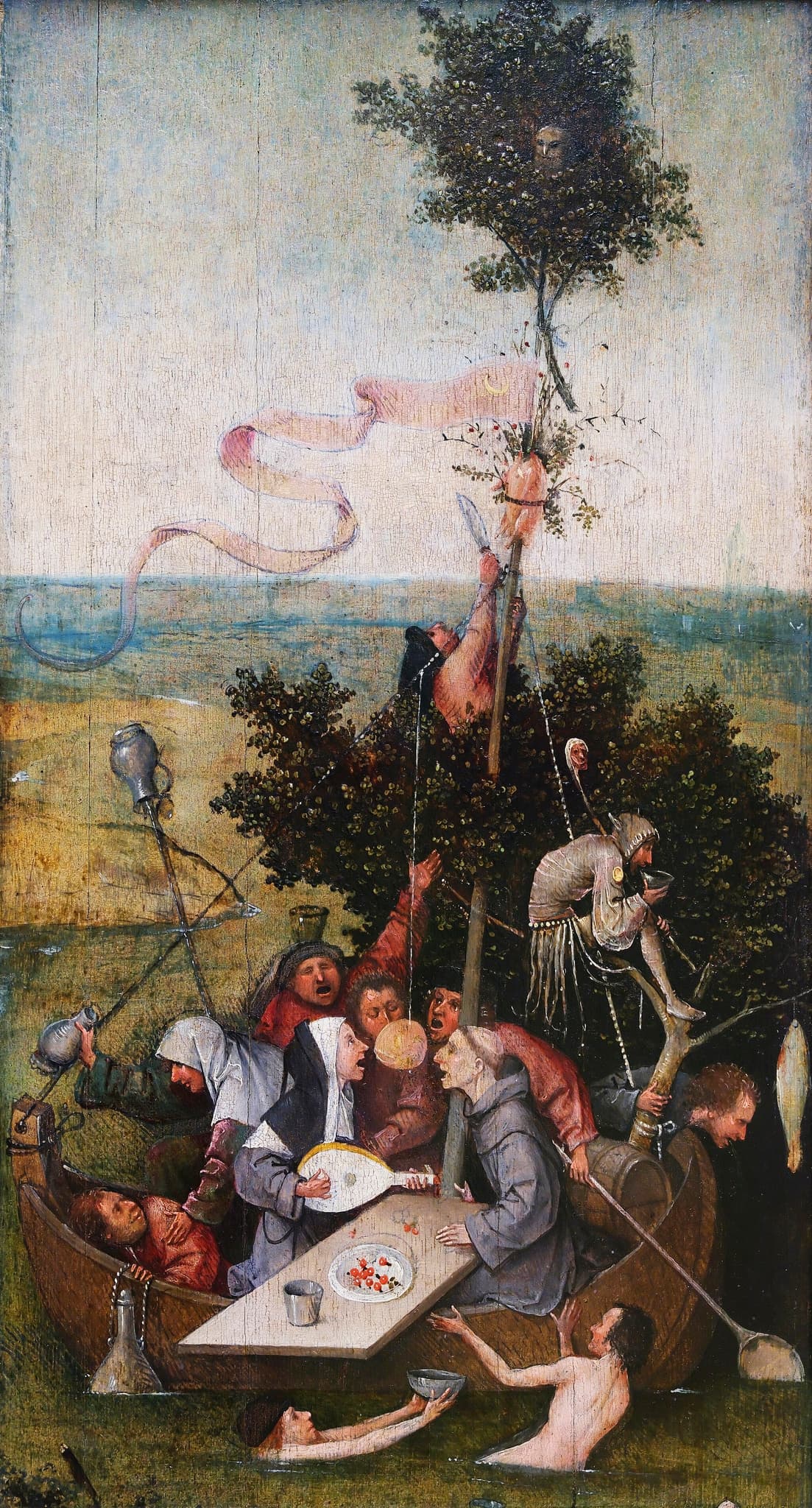
Assuming the Louvre‑held Ship of Fools is accepted as an autograph panel by Hieronymus Bosch, a realistic market range is $15–60 million. This estimate is driven by comparables for high‑quality Early Netherlandish rediscoveries, the extreme scarcity of Bosch autographs, and the premium placed on secure technical attribution and museum‑grade provenance.
Valuation Analysis
Final valuation range: $15–60 million. This figure assumes the panel is accepted by consensus as an autograph Hieronymus Bosch work in solid condition with clear, continuous provenance (the Louvre holding is documented and institutional) and is therefore pitched as a mid‑rank autograph Bosch rather than a top‑tier triptych masterpiece [1]. Because the Louvre’s Ship of Fools has not appeared on the open market in the modern era, the estimate is derived from an analysis of museum‑level rediscoveries in the Early Netherlandish market, recent Old Master auction results for ‘circle/follower’ Bosch items, and sector behavior for authenticated rediscoveries [2].
Comparables and market logic. The most relevant market analogue is museum competition for authenticated Netherlandish rediscoveries: for example, a fully documented Quentin Metsys panel sold at Christie’s in 2024 to the Getty for c. $13.5M — a reminder that institutions will pay low‑double‑digit millions for securely attributed, museum‑quality panels from this period [2]. By contrast, works catalogued as ‘Circle of / Follower of Bosch’ routinely realize in the low‑to‑mid six‑figure band at major houses. Because Hieronymus Bosch autograph paintings are extremely scarce and typically museum‑held, the top end of the range ($60M) reflects a scenario in which the Ship of Fools is accepted as autograph, in excellent condition, and attracts competitive institutional bidding; the low end ($15M) reflects a well‑supported autograph attribution but more limited institutional appetite or condition/provenance issues.
Key value drivers and risk. Attribution/technical authentication (dendrochronology, infrared reflectography, pigment analysis) and continuous provenance are decisive — positive results materially increase value, negative or ambiguous results depress it toward the workshop/follower band ($100k–$3M). Condition and restoration history also have large price impact. Market liquidity is limited: even authentic Bosch panels rarely reach the public market and would likely be acquired by museums or a small set of blue‑chip collectors, making prices sensitive to the presence of an institutional buyer and contemporaneous market appetite.
Practical implication. If you are assessing a specific physical object, the next steps that will materially refine this estimate are: (1) confirm current attribution consensus with BRCP/major Bosch scholars; (2) commission dendrochronology and IR reflectography plus pigment stratigraphy; (3) assemble full provenance and export/ownership documentation. With those elements in hand a more precise single‑figure estimate (and a defensible asking/reserve) can be produced. The present $15–60M bracket should be read as a conditional market window for an authenticated, museum‑grade Ship of Fools; all valuations collapse toward the low hundreds of thousands if the work is judged workshop/follower or heavily restored [1][2].
Key Valuation Factors
Art Historical Significance
High ImpactThe Ship of Fools motif is an important element of Bosch’s moralizing and satirical output and sits comfortably within his thematic corpus. While not as iconically market‑defining as The Garden of Earthly Delights, a securely attributed Ship of Fools contributes directly to scholarship and exhibitions and thus commands institutional interest. Museum placement and exhibition history increase prestige and buyer willingness to pay a premium. Because Bosch’s autograph corpus is extremely limited, any accepted autograph on this subject has outsized curatorial and public value relative to similarly scaled Early Netherlandish panels.
Attribution and Technical Authentication
High ImpactTechnical proof (dendrochronology aligning to Bosch’s active period, IR reflectography revealing Bosch‑like underdrawing methods, pigments consistent with late‑15th century Netherlandish practice) is the single most consequential factor for value. The BRCP reappraisal of Bosch works demonstrates how scientific evidence can upgrade or downgrade authorship, dramatically altering market value. A full technical dossier that supports Bosch authorship will move the painting into the high‑value tier; ambiguous or negative results will push it into the workshop/follower pricing band.
Provenance & Legal Clearances
High ImpactContinuous, well‑documented provenance — particularly long museum or reputable private collection history — materially increases marketability and price. The Louvre’s documented custodial history removes many legal and reputational barriers that depress value for works with wartime or otherwise problematic provenance. Conversely, gaps, undocumented transfers, or potential export restrictions introduce risk that deters institutions and reduces attainable prices. Provenance clarity is also essential for export permits and major museum acquisitions.
Condition & Conservation History
Medium ImpactOriginal paint survival, minimal overpainting, and a stable, well‑documented conservation history support higher valuations. Heavy restoration, significant paint loss, or intrusive nineteenth‑/twentieth‑century retouching reduces both aesthetic and scholarly value and constrains buyer interest. Condition interacts with attribution: a technically supported autograph in poor condition still commands a premium relative to a high‑condition follower, but restoration needs will be factored into buyer bids and insurance assessments.
Market Demand & Liquidity
High ImpactDemand for authenticated Bosch works is very strong among museums and top collectors, but liquidity is thin because so few authenticated Bosch panels ever come to market. Institutional competition can drive prices well above normal Old Master levels for authenticated rediscoveries, while works catalogued as ‘follower/circle’ trade in a much lower band. The presence or absence of a motivated institutional purchaser is therefore a primary determinant of final sale price.
Sale History
The Ship of Fools has never been sold at public auction.
Hieronymus Bosch's Market
Hieronymus Bosch occupies a unique place in the Old Master market: his autograph corpus is extremely small and concentrated in major museums, producing very high theoretical values for authenticated works but almost no routine market liquidity. The BRCP technical scholarship tightened the accepted corpus and made scientific authentication a prerequisite for premium pricing. As a result, Bosch‑attributed works that appear on the market typically fall into two tiers: authenticated autographs that attract institutional buyers and command multi‑million valuations, and workshop/follower pieces that sell at auction in the low‑to‑mid six‑figure range. Institutional demand remains the dominant price driver.
Comparable Sales
Madonna of the Cherries
Quentin Metsys
High‑quality Early Netherlandish rediscovery sold at auction to a major museum (Getty). Serves as an upper‑market analogue for what a fully authenticated, museum‑quality panel from this period can fetch at auction.
$13.5M
2024, Christie's London (Old Masters)
~$13.7M adjusted
Harrowing of Hell (catalogued 'Circle of Hieronymus Bosch')
Circle of Hieronymus Bosch
Directly comparable by attribution category ('Circle of' / 'Follower of' Bosch) and subject matter; representative of recent realized prices for non‑autograph Boschian panels in major Old Masters rooms.
$225K
2025, Christie's London (Old Masters sale)
Work catalogued under 'Hieronymus Bosch' (Koller Zürich; reported in auction aggregators)
Hieronymus Bosch (catalogue attribution in auction record)
MutualArt‑reported high‑water mark in the public‑auction database for lots catalogued as Bosch (~US$212k in 2013). Illustrates the upper bound of the public‑auction universe for items labelled Bosch (often prints, drawings or uncertain attributions).
$213K
2013, Koller, Zurich (auction)
~$270K adjusted
Current Market Trends
The Old Masters / Early Netherlandish market softened in 2024 and showed selective recovery in 2025; museum acquisitions and high‑quality rediscoveries (rather than speculative private buying) have been the strongest drivers of value. Scarcity of supply at the top end and a cautious collector base mean attribution and provenance quality are more important than short‑term market momentum. Institutional competition can produce outsized prices for authenticated rediscoveries, while uncertain attributions confine works to a much lower auction band.