How Much Is The Temptation of St. Anthony (panel, Nelson-Atkins) Worth?
Last updated: April 29, 2026
Quick Facts
- Methodology
- comparable analysis
Hypothetical market value for the Nelson‑Atkins 'The Temptation of St. Anthony' panel (accession 35‑22) is $10–50M USD, conditional on acceptance as an autograph Bosch. The range reflects a scarcity premium for a BRCP‑supported attribution tempered by the panel’s small, fragmentary nature and its museum ownership (effectively off‑market).
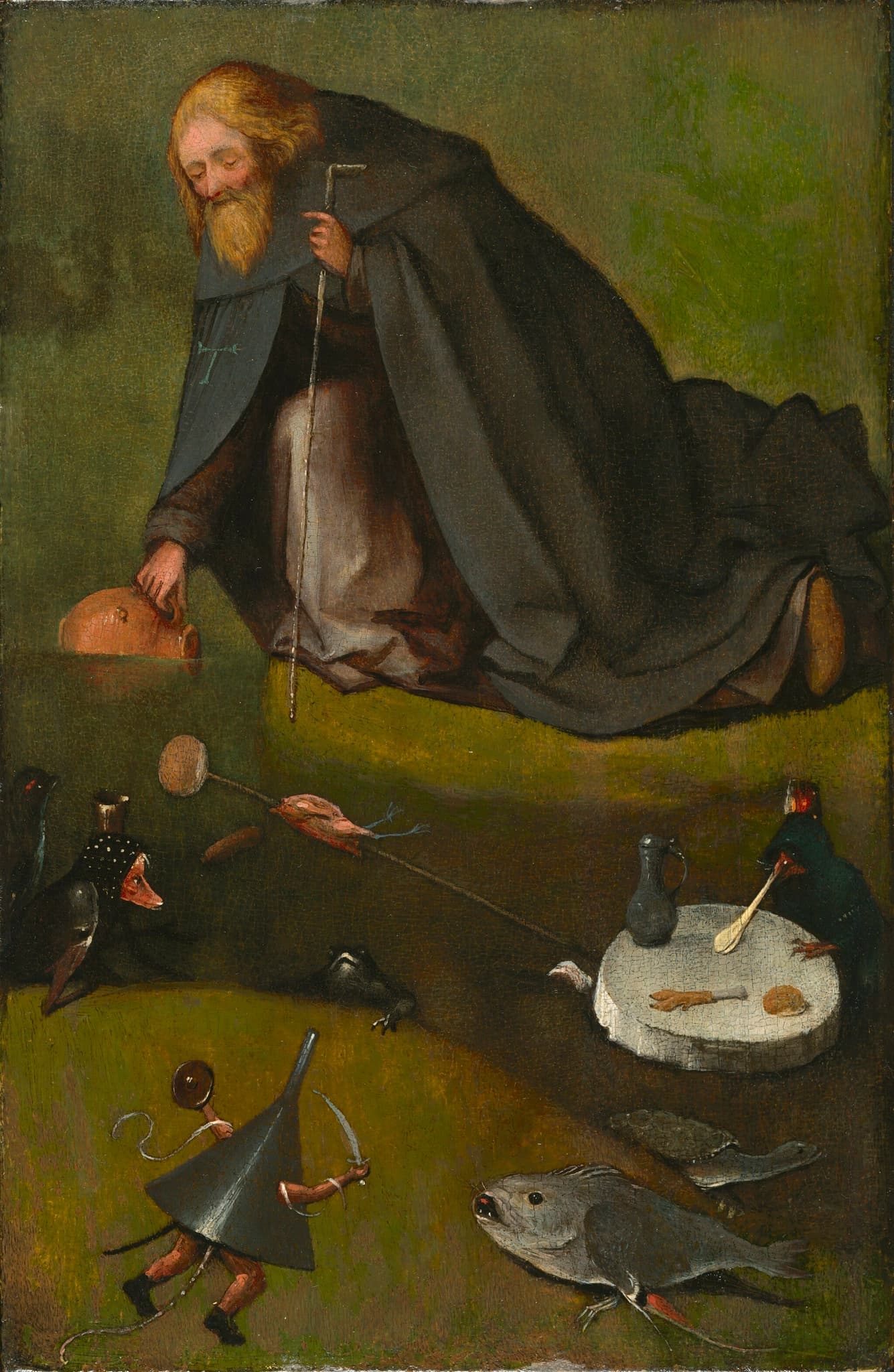
The Temptation of St. Anthony (panel, Nelson-Atkins)
Hieronymus Bosch, 1505 • Oil on wood
View more by Hieronymus Bosch →Valuation Analysis
Headline valuation: Based on available documentation and market context, a reasoned hypothetical market range for the Nelson‑Atkins Temptation of St. Anthony panel is $10–50 million (USD). This assumes the work is accepted widely as an autograph Bosch with the technical support reported by the Bosch Research and Conservation Project (BRCP); if the attribution were downgraded to workshop/follower the value would fall sharply [1][2].
The Nelson‑Atkins panel is a small oak devotional fragment (c. 38.6 × 25.1 cm) in the museum’s collection (acquired 1935, accession 35‑22) and was the subject of BRCP technical study and re‑attribution in 2016. The BRCP work (infrared reflectography, dendrochronology, pigment and layer analysis) materially strengthens an autograph ascription, but the picture’s fragmentary status limits both its iconographic centrality and its competitive appeal compared with intact, canonical Bosch triptychs [2].
Market logic driving the bracket: the lower bound ($10M) reflects the realistic ceiling for small, devotional autograph panels when compared to the very limited market for Bosch originals and the demonstrated market for high‑quality workshop/follower material (most of which trades in the mid‑five to low‑seven‑figure bands). The upper bound ($50M) reflects the scarcity premium for an accepted autograph Bosch: undisputed autograph works by Bosch are exceptionally rare in private hands and draw significant institutional and private interest when available. In short, scarcity can push an autograph panel into the multi‑million range, but fragment scale and devotional nature suppress headline pricing compared with major Bosch masterpieces [3].
Practical constraints and caveats: the panel is museum‑owned with donor/acquisition provenance tied to the William Rockhill Nelson Trust; deaccession or sale would be legally and reputationally sensitive, making a commercial transaction unlikely without exceptional circumstances [1]. Condition and conservation history (historical overpaint, subsequent restoration) will materially affect buyer confidence; the BRCP technical dossiers are essential to any formal valuation. Scholarly debate can persist for years; market pricing should be revisited if attribution consensus changes.
Recommended next steps to refine the band: obtain full BRCP and Nelson‑Atkins conservation reports (IRR plates, dendrochronology lab reports, pigment analyses), secure a provenance audit, and consult senior Old Masters specialists at the major houses for market appetite and reserve guidance. With those documents a formal, sale‑ready appraisal could narrow the range and, if presented without substantive debate, could push the estimate toward the upper half of the band.
Key Valuation Factors
Art Historical Significance
High ImpactThe panel’s re‑attribution to Hieronymus Bosch by the BRCP increases its art‑historical importance: Bosch’s securely attributed corpus is small and institutionally concentrated, so any accepted autograph addition strengthens scholarship and collector interest. The subject (Temptation of St. Anthony) figures repeatedly in Bosch’s oeuvre, giving the panel comparative value for iconographic study. However, the work is a fragment (probably a wing), which reduces its canonical weight relative to an intact triptych. In market terms, high scholarly significance translates to a premium, but fragmentary status prevents the highest possible valuations that intact, central Bosch panels would command.
Attribution & Technical Evidence
High ImpactTechnical confirmation (infrared reflectography showing underdrawing, dendrochronology consistent with Bosch’s period, pigment/layer analysis) is decisive for value. The BRCP’s analyses underpin the panel’s current ascription and materially elevate buyer confidence; such reports are normally prerequisites for high‑end institutional or private acquisition. If further independent technical work corroborates BRCP findings and demonstrates minimal later intervention, the painting’s market floor moves upward. Conversely, any unresolved technical doubts would rapidly reduce the value toward workshop/follower levels.
Provenance & Legal/Ownership Status
High ImpactThe Nelson‑Atkins ownership (accession 35‑22, William Rockhill Nelson Trust, acquired 1935) provides institutional provenance but simultaneously limits marketability: works held under trust or gift terms are often protected against sale, and deaccessioning major Old Masters is rare and institutionally fraught. Clear, continuous provenance increases market value and buyer confidence, but museum ownership acts as an availability constraint that effectively removes the work from normal market circulation, which should be reflected in any practical valuation.
Condition & Completeness
Medium ImpactThe panel is small and fragmentary; condition history includes historical overpaint with later conservation interventions—factors that affect both aesthetics and structural soundness. Conservation that reveals original brushwork and secure joinings is value‑enhancing, but missing wings/sections and any structural compromise reduce appeal and realizable price. Collectors pay premiums for completeness and excellent condition; for fragments, price relies more heavily on attribution certainty and rarity than pristine state alone.
Sale History
The Temptation of St. Anthony (panel, Nelson-Atkins) has never been sold at public auction.
Hieronymus Bosch's Market
Hieronymus Bosch occupies a rarefied position in the Old Masters market: his securely attributed corpus is small, canonical examples are museum‑held, and autograph panels rarely, if ever, appear in public sales. Scholarly projects (notably the BRCP and the 2016 catalogue raisonné) have tightened attribution standards and increased technical documentation expectations. As a result, an accepted autograph Bosch commands a strong scarcity premium, but liquidity is extremely limited. Market activity around Bosch primarily involves workshop/follower works, drawings and prints—these provide comparables but not direct benchmarks for autograph panels.
Comparable Sales
Salvator Mundi
Leonardo da Vinci
Upper-bound benchmark: rare, undisputed autograph Old Master sold at auction — illustrates market ceiling for a singular, museum-quality attribution (not Bosch-specific).
$450.3M
2017, Christie's New York
~$592.0M adjusted
Temptation of St. Anthony (follower/workshop, Dorotheum catalogue lot)
Follower of Hieronymus Bosch
Direct subject/style match (Temptation of St. Anthony) and labelled as 'Follower' — shows market for non-autograph Boschian panels in the mid-five-figure band. (Sale price above is an estimate based on public catalogue/estimate; verify with hammer result.)
$82K
2024, Dorotheum (catalogue listing / regional Old Masters sale; estimate/public listing used)
~$85K adjusted
Temptation of St. Anthony (follower/workshop, regional/online sale example)
Follower of Hieronymus Bosch
Representative of many small regional auction realizations for 'after/Bosch' works — mid-five-figures result consistent with follower/workshop market for small devotional panels.
$55K
2019, Regional/online auction (publicized realized result / aggregator report)
~$70K adjusted
Current Market Trends
The Old Masters market is selective with pockets of strong demand for top‑quality, well‑provenanced works; overall volume is lower than contemporary sectors. Since Bosch originals are almost always museum‑held, the market for autograph Bosch panels is effectively supply‑constrained. Workshop and follower material trade more frequently in mid‑five to low‑seven‑figure ranges, while exceptional, undisputed Old Master masterpieces can attract multi‑million to record prices when they surface.
Sources
- Nelson‑Atkins Museum of Art — "Newly Attributed Bosch Painting Goes on View" (collection/press materials, accession 35-22)
- Codart / Bosch Research & Conservation Project reporting on the Nelson‑Atkins re‑attribution and BRCP technical work (2016)
- Market context and comparables (examples of follower/workshop sale results and Old Masters market reports)