How Much Is The Temptation of St. Anthony (Triptych, Lisbon) Worth?
Last updated: April 29, 2026
Quick Facts
- Methodology
- comparable analysis
Hypothetical market valuation for Hieronymus Bosch’s Triptych of the Temptation of St. Anthony (Museu Nacional de Arte Antiga, Lisbon) is approximately USD 100–300 million. This is a theoretical estimate based on scarcity of autograph Bosch triptychs and top‑end Old Master sale precedents; confidence is low because the work is museum‑held and constrained by patrimony law.
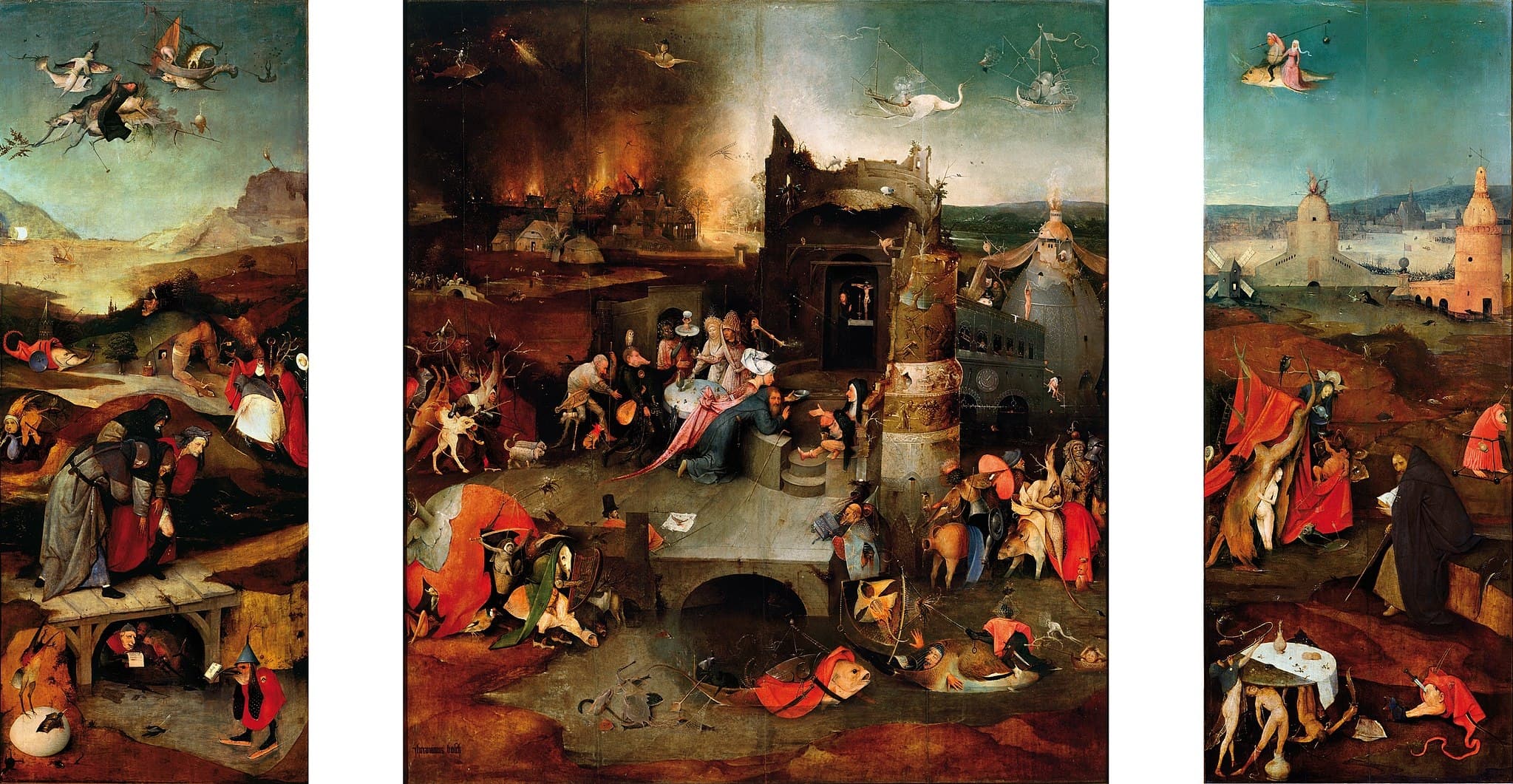
The Temptation of St. Anthony (Triptych, Lisbon)
Hieronymus Bosch, 1505 • Oil on wood
View more by Hieronymus Bosch →Valuation Analysis
Valuation conclusion: Based on a comparable‑analysis approach, I place a hypothetical market value for the Triptych of the Temptation of St. Anthony (Museu Nacional de Arte Antiga, Lisbon) at approximately USD 100–300 million. This reflects the painting’s status as a major museum‑quality Bosch, the absence of modern open‑market sales for securely attributed Bosch triptychs, and the premium that global competition for unique Old Master masterpieces can produce [1].
Because no undisputed Bosch triptych has entered the public auction arena in the modern era, valuation must be anchored to two observable regimes: (a) the high‑end blockbusters that define the market ceiling for unique, securely attributed Renaissance/Old Master masterpieces (for example the 2017 Leonardo sale and large institutional acquisitions), and (b) realized prices for Bosch‑school and follower panels that represent the liquid public market floor. The Leonardo and major institutional purchases show the scale of demand when a work is salable at the highest level; recent high‑quality follower realizations (e.g., a notable Lempertz sale in 2025) illustrate the very large valuation gulf between ‘follower/workshop’ and ‘autograph, museum‑quality’ categories [2][3].
Attribution, provenance and condition are decisive. The Lisbon triptych benefits from strong provenance (royal/palace contexts and long museum custody), which supports a high valuation multiple versus anonymous pieces. Conversely, any unresolved technical questions, structural instability of panels, or evidence of heavy overpainting/restoration would materially lower a realizable price. A full scientific dossier (dendrochronology, infrared reflectography, pigment analysis) and an up‑to‑date condition report are prerequisites to move confidently toward the upper end of the band.
Legal and practical constraints are the dominant real‑world limit on value. The triptych is part of Portugal’s national collection and subject to cultural‑heritage law and institutional protections; deaccession and export would face stringent legal, political and administrative barriers, making a market sale highly unlikely and the estimate primarily theoretical rather than actionable [4]. Even if a sale were legally possible, the publicity and political implications of divesting a national masterpiece would likely reduce the pool of potential buyers and complicate negotiation dynamics.
Final note: The USD 100–300 million band captures a defensible floor (reflecting legal impediments, condition contingencies, and lack of transaction history) and a plausible ceiling (reflecting extreme scarcity, institutional demand, and precedent for extraordinary Old Master realizations). Given the museum custody and patrimonial protections, treat this as a hypothetical market valuation that requires provenance confirmation, a technical dossier, and a clear legal pathway before it could be translated into an executable reserve.
Key Valuation Factors
Art Historical Significance
High ImpactThe Lisbon Triptych is a major work within Hieronymus Bosch’s oeuvre and a principal late treatment of the St. Anthony theme. Its compositional complexity, iconographic richness, and frequent citation in Bosch scholarship make it a work of exceptional cultural importance. Museum‑quality recognition and exhibition history amplify perceived value because institutions, curators and scholars view such works as irreplaceable benchmarks of the artist’s output. This significance translates into a willingness among the deepest‑pocketed buyers—museums, foundations and a small number of private collectors—to pay premiums for secure attributions and museum provenance, lifting a hypothetical market valuation well above the prices achieved by follower or workshop panels.
Rarity / Market Scarcity
High ImpactAutograph paintings by Hieronymus Bosch that could be credibly offered on the open market are functionally nonexistent: the canonical corpus is overwhelmingly museum‑held. Scarcity is therefore the single strongest upward pressure on value. When unique, securely attributed Old Masters do come to market, competition among institutions and ultra‑high‑net‑worth collectors can generate extraordinary outcomes. The absence of recent autograph Bosch comparables forces valuation to rely on analogies with top Old Master successes, producing a valuation premium that reflects both the work’s uniqueness and the intense, but infrequent, appetite for trophy pieces.
Provenance & Ownership Status
High ImpactThe triptych’s documented presence in royal/palace collections and long museum custody provide very strong provenance that reduces attribution risk and supports a high market valuation in theory. Clear, century‑long institutional ownership enhances credibility for prospective institutional buyers and signals curatorial endorsement. Paradoxically, this same provenance—national museum ownership—greatly reduces commercial liquidity because state stewardship typically precludes sale. Thus provenance increases theoretical value (by reducing risk) while simultaneously decreasing practicable marketability unless an exceptional legal pathway were available.
Condition & Conservation
Medium ImpactTechnical condition is a primary value driver for any Old Master work. A panel triptych’s structural stability, integrity of original paint layers, and history of restorations or overpainting will materially affect price realization. If modern conservation has stabilized the panels and scientific testing corroborates an original Bosch hand, the work would command the upper end of the band; conversely, significant conservation interventions, losses, or uncertain technical findings would reduce competitiveness among top buyers and could depress value toward follower‑level realizations. A current conservation report and technical dossier are therefore essential.
Legal / Export Restrictions & Cultural Patrimony
High ImpactPortuguese cultural‑heritage legislation and museum practice create substantial barriers to deaccessioning and exportation of national treasures. Legal protections, classification procedures and state option rights make a market sale unlikely and politically sensitive. Where national works have been sold historically, it has typically required extraordinary legislative or government action. These restrictions mean that, while theoretical market value can be estimated, the practical realizable value is heavily constrained: buyers cannot assume unfettered transferability, and any prospective purchaser would face elevated legal and reputational risk.
Sale History
The Temptation of St. Anthony (Triptych, Lisbon) has never been sold at public auction.
Hieronymus Bosch's Market
Hieronymus Bosch occupies a high cultural and scholarly tier among Early Netherlandish painters, but his market behaves atypically: nearly all canonical autograph works are retained by major museums, so public auction records reflect followers and workshop pieces rather than undisputed masterpieces. As a consequence, valuation for authentic Bosch works depends more on scarcity and institutional demand than on an observed price series; securely attributed masterpieces would be treated as blockbuster Old Master offerings and could command sums in the upper tens to low hundreds of millions under competitive conditions. The Bosch Research & Conservation Project and ongoing scholarship further shape market perception and attribution confidence.
Comparable Sales
Salvator Mundi
Leonardo da Vinci
Top‑market Old Masters sale that anchors the extreme upper bound for what a globally significant, securely‑attributed Renaissance masterpiece can realize in the open market.
$450.3M
2017, Christie's New York (Evening Sale)
~$562.9M adjusted
Portraits of Maerten Soolmans and Oopjen Coppit (pair)
Rembrandt van Rijn
Museum‑level purchase of major Northern European masterworks; a direct institutional‑demand comparator showing how top Old Masters can be valued when institutions intervene.
$179.2M
2016, Joint acquisition by the Rijksmuseum and the Louvre (institutional purchase / private sale)
~$233.0M adjusted
The Vision of Tondalus (Follower of Hieronymus Bosch)
Follower of Hieronymus Bosch
Directly Bosch‑related (follower) panel sold in 2025 at a major European house — a practical, recent market comparable for Bosch‑style panels (follower/workshop level).
$1.0M
2025, Kunsthaus Lempertz (Old Masters Sale)
The Harrowing of Hell (Circle of Bosch)
Circle of Hieronymus Bosch
Recent auction result for a small Bosch‑circle panel at a major house — illustrates mid‑six‑figure demand for well‑presented circle/workshop lots.
$225K
2025, Christie's, London (Old Masters Sale)
Christ in Limbo
Attributed to Hieronymus Bosch (attribution contested)
Historically the highest realized auction in some public databases for lots catalogued as 'Bosch' (often contested/attributed) — useful as a lower‑end market anchor for attributed Bosch material.
$213K
2013, Koller, Zurich (auction)
~$266K adjusted
Bosch‑style follower panel (reported Schultz sale)
Follower / Studio of Bosch (attribution variable)
Illustrative mid‑six‑figure sale of a high‑quality follower/workshop piece — shows the practical ceiling for non‑autograph Bosch‑style panels in the public market.
$415K
2016, Regional auction (reported by Antiques & The Arts Weekly)
~$540K adjusted
Current Market Trends
The Old Masters market is selective and institutionally led: museums, specialist collectors and the occasional ultra‑wealthy private buyer determine demand at the top end. Recent seasons show steady interest in well‑provenanced, exhibition‑quality panels, while follower/workshop items trade at mid‑five to low‑seven figure levels. Scholarly attention and conservation projects can lift interest, but legal/political constraints and attribution uncertainty remain the principal limits on converting cultural significance into realized price.
Sources
- Museu Nacional de Arte Antiga — Triptych: Temptations of St. Anthony (collection entry)
- Christie's — coverage of major Old Master blockbuster sales (e.g., Salvator Mundi, 2017) and market context
- Kunsthaus Lempertz — press / sale report (follower of Bosch, The Vision of Tondalus, 2025)
- Decreto‑Lei n.º 97/2007 — Portuguese cultural heritage law (inventory / export / protection framework)