How Much Is Beauty in the Snow Worth?
Last updated: May 1, 2026
Quick Facts
- Last Sale
- $4.0M (2025, Tozai New Art (Tokyo))
- Methodology
- comparable analysis
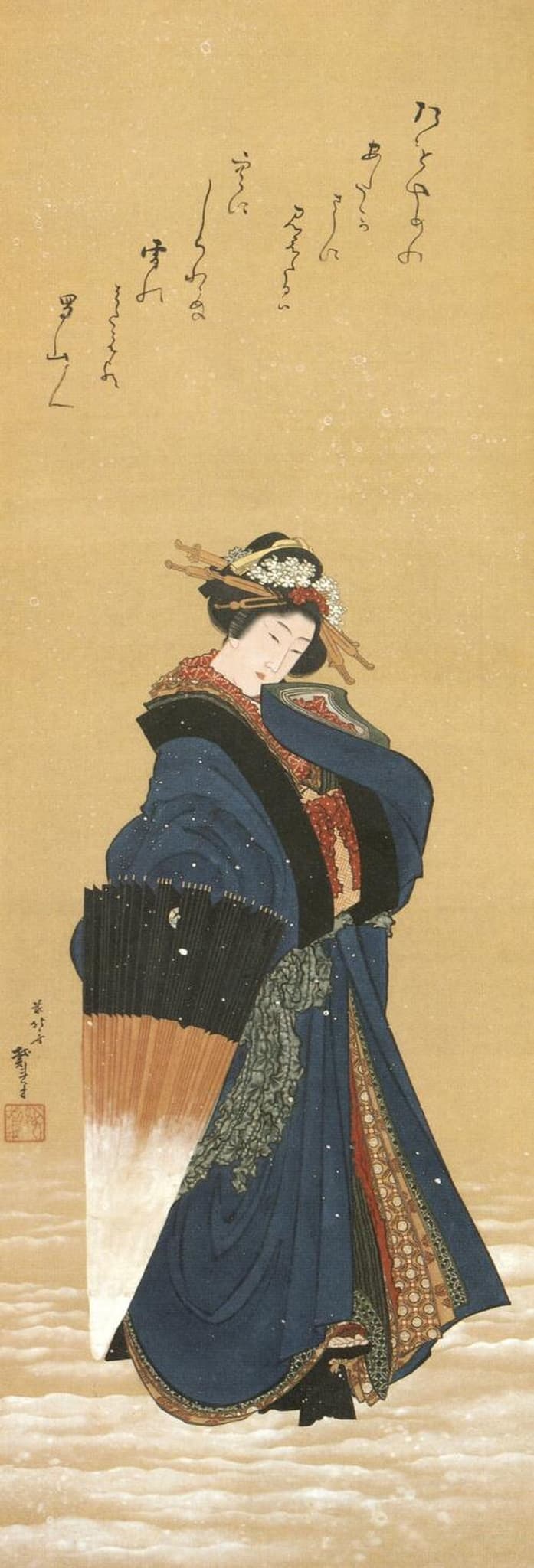
Assuming the work is an authenticated, hand-painted Hokusai hanging scroll in good original condition with museum-grade provenance, I value 'Beauty in the Snow' at approximately USD $3.0–4.5 million. This range is anchored to a direct recent sale of a like-titled Hokusai painting (Tozai New Art, 8 Nov 2025, reported ¥621,000,000 / ≈US$4.03M) [1]. If attribution or provenance cannot be substantiated, value falls to the low five-figure / mid six-figure bands.
Valuation Analysis
Valuation conclusion: Assuming this object is an authenticated, hand-painted Hokusai hanging scroll (silk, nikuhitsuga) in good original condition with museum-grade provenance, my valuation range is USD $3.0–4.5 million. This opinion is anchored to a direct, recent public sale of a 'Beauty in the Snow' attributed to Hokusai that realized ¥621,000,000 (reported including premium), approximately US$4.03M, at Tozai New Art on 8 Nov 2025 [1].
Basis of estimate: The Tozai sale functions as a primary market anchor because it is the same title, described as a silk hanging painting attributed to Hokusai, with exhibition history and an Important Art Object designation; those attributes materially elevated competitive bidding [1]. Catalog details — silk technique, reported dimensions and Bunka–Bunsei era dating — make the lot highly comparable when assessing medium and period-specific demand. Secondary comparables from major houses, notably high‑grade impressions and the complete Thirty‑Six Views set sold at Christie’s, demonstrate institutional willingness to pay multi‑million sums for top Hokusai material and reinforce a multi‑million valuation for unique, well‑documented paintings [2].
Upward and downward adjustments: I set the band at $3.0–4.5M to reflect reasonable variability around the Tozai result. The upper end (~$4.5M) applies where the painting matches the Tozai lot’s provenance, has intact original silk and mounting, clear scholarly attribution and publication. The lower end (~$3.0M) applies to authenticated works lacking high‑profile exhibition history or with minor but noticeable condition issues. Major downward adjustments occur for heavy restoration, large losses or non‑original pigments (discounts of 30–60% are typical); conversely, documented museum provenance and cataloguing can add premiums of 25–50%. Venue and buyer composition (domestic Japanese bidders vs international institutions) also materially affect realized prices.
Key drivers & recommended next steps: Authentication (signature/seal, catalogue raisonné citation, specialist consensus), provenance (museum/exhibition history, collector seals), and condition (original silk, minimal restoration) are decisive. Obtain high‑resolution images (full, seal/signature, backing labels), a formal conservation condition report from a qualified conservator, and a specialist pre‑sale opinion from the Asian art departments at major houses (Christie’s, Sotheby’s, Bonhams) or a recognized Hokusai scholar. If promising, commission targeted technical testing (pigment microscopy, fibre analysis, IR reflectography). Decide on route to market — major international auction maximizes exposure; private sale or sale to institutions can be appropriate for sensitive/culturally significant works. Note: the Tozai-reported figure included buyer’s premium; the hammer price was not published and should be considered when benchmarking [1].
Final note: This valuation is a market estimate, not a formal appraisal, and assumes the painting corresponds materially to the Tozai example and recent market behaviour. Provide images and provenance documentation for a tightened appraisal and alternate bands in case of attribution uncertainty or condition variation.
Key Valuation Factors
Art Historical Significance
High ImpactKatsushika Hokusai is a pivotal late‑Edo artist whose prints are globally iconic; original hand‑painted works (nikuhitsuga) are comparatively rare. A well‑documented 'Beauty in the Snow' that carries period inscriptions, Hokusai/Shokusanjin seals or a Bunka–Bunsei dating moves the work from decorative bijin‑ga to an object of scholarly and museum interest. That elevated art‑historical status draws institutional bidders and private collectors prepared to pay premiums for rarity and direct association with Hokusai’s hand. In short, art‑historical significance converts directly to market premium for authenticated and published examples.
Authentication & Provenance
High ImpactAuthentication and documented provenance are the single largest determinants of monetary value. A clear Hokusai signature/seal, recognised collector seals, catalogue raisonné citation or prior museum exhibition materially reduce buyer uncertainty and expand the buyer pool. The Tozai 2025 lot succeeded largely because of exhibition history and an Important Art Object designation, demonstrating how provenance converts to price [1]. Absent reliable provenance, the market discounts heavily because contemporary workshop copies and later reproductions are common; technical testing plus specialist connoisseurship is therefore essential.
Condition & Conservation
High ImpactCondition on silk hanging scrolls is decisive. Original, unrestored silk with intact pigments and original mounting/roller ends commands top prices. Issues such as heavy staining, worming, losses, invasive retouching or incompatible remounting introduce conservator cost and buyer risk; auction discounts for serious defects commonly range 30–60% versus pristine comparables. A formal conservation assessment and documentation of prior interventions are therefore required to substantiate any high‑end valuation.
Market Demand & Comparables
High ImpactDemand for Hokusai is concentrated among institutions and well‑funded private collectors; unique, well‑provenanced paintings attract the strongest interest. The Tozai sale (¥621M / ≈US$4.03M) provides a direct recent comparable for a well-documented 'Beauty in the Snow' and establishes a market ceiling for such works [1]. High‑grade prints and complete sets sold at major houses (e.g., Christie’s) further demonstrate that multi‑million bids are achievable for top material [2]. Comparables must be contextualised for venue, buyer composition, and condition.
Sale History
Tozai New Art (Tokyo)
Hokusai's Market
Katsushika Hokusai is among the most recognizable and commercially valuable Edo‑period artists. His prints—especially The Great Wave and Thirty‑Six Views—are globally sought after; early impressions and complete sets have achieved multi‑million results. Hand‑painted works by Hokusai are much rarer than prints and, when authenticated and well‑provenanced, can command institutional‑level sums as the Tozai 2025 sale demonstrates. The collector base blends museums, high‑net‑worth private buyers and Japanese corporate collectors; condition, provenance and scholarly attribution drive tiered pricing.
Comparable Sales
Beauty in the Snow (雪中美人図) — Tozai New Art, Lot 149
Katsushika Hokusai
Exact same work/title — silk hanging/panel painting by Hokusai with museum exhibition provenance and an Important Art Object designation; the primary anchor for valuation.
$4.0M
2025, Tozai New Art (Tokyo)
Thirty-Six Views of Mount Fuji (complete set)
Katsushika Hokusai
Complete high-grade set of Hokusai prints sold at a major house — important benchmark for demand and pricing at the top end of Hokusai material (prints), useful for context though different medium than a painting.
$3.6M
2024, Christie's New York
~$3.7M adjusted
The Great Wave off Kanagawa (early/rare impression)
Katsushika Hokusai
Record early impression of Hokusai's most famous print — indicates institutional/collector willingness to pay multi-million dollars for museum-quality Hokusai works; relevant as market context for top-tier Hokusai material.
$2.8M
2023, Christie's New York
~$3.0M adjusted
Fukagawa in Snow (handscroll)
Kitagawa Utamaro
Museum-quality ukiyo-e handscroll by a top Edo-period master (Utamaro) sold as a blockbuster — while by a different artist, it demonstrates demand and price ceiling for unique/highly significant Edo paintings/handscrolls.
$7.1M
2025, Sotheby's Hong Kong (Okada Museum dispersal)
Current Market Trends
Current market dynamics show selective strength at the high end for museum‑quality ukiyo‑e and nikuhitsuga, even as the broader auction market cools. Institutional interest, Japanese domestic buyers and major exhibitions have supported top‑end prices. Attribution certainty and condition remain decisive—verified works outperform while ambiguous attributions sell at steep discounts. Sellers should time sales with curated Asian art auctions or specialist exhibitions to maximise buyer attention.