Most Expensive Hokusai Paintings
Katsushika Hokusai occupies a unique market standing between canonical Western Old Masters and the vibrant world of Japanese ukiyo-e, where rarity of impressions, state, provenance and subject matter drive prices as much as artistry. At the top end, delicate masterpieces like Beauty in the Snow can command $3.0–4.5 million, while complete sets such as Thirty-six Views of Mount Fuji have sold in the $1.2–4.0 million range, testament to their cultural cachet and technical innovation. Iconic single sheets—most famously The Great Wave off Kanagawa—still fetch $700,000–$1,000,000 for prime impressions, whereas rarer storm studies like Rainstorm Beneath the Summit show the market’s volatility, ranging from $25,000 to $913,500 depending on impression and condition. Series such as A Tour of the Waterfalls of the Provinces ($150,000–$600,000 complete) and luminous prints like Fine Wind, Clear Morning ($300,000–$600,000) are prized for composition and color. Even provocative or lesser-seen works—The Dream of the Fisherman’s Wife ($500–$300,000), Kajikazawa ($3,000–$75,000), The Waterfall at Ono ($5,000–$75,000) and Ejiri ($10,000–$35,000)—demonstrate how subject, survival and scarcity shape Hokusai’s collectible market.
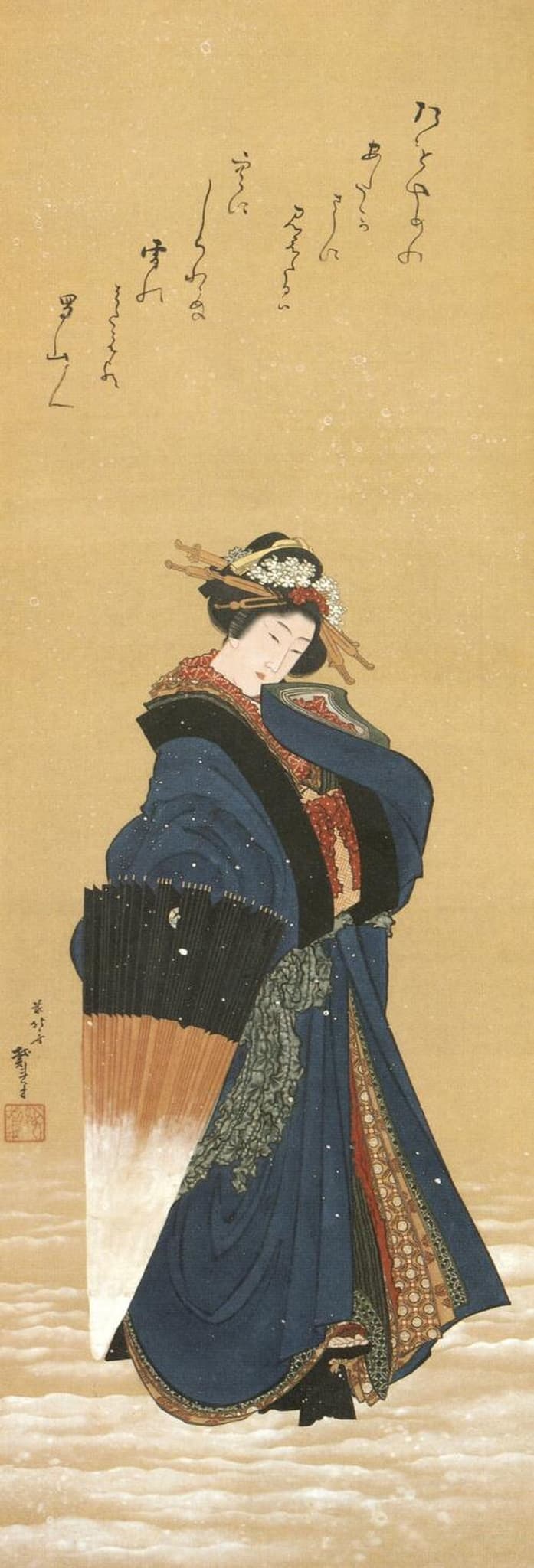
$3.0–4.5 million
Anchored to a Nov 8, 2025 Tozai New Art sale reported at ¥621,000,000 (≈US$4.03M), an authenticated museum‑provenance Hokusai scroll is valued at roughly US$3.0–4.5M.
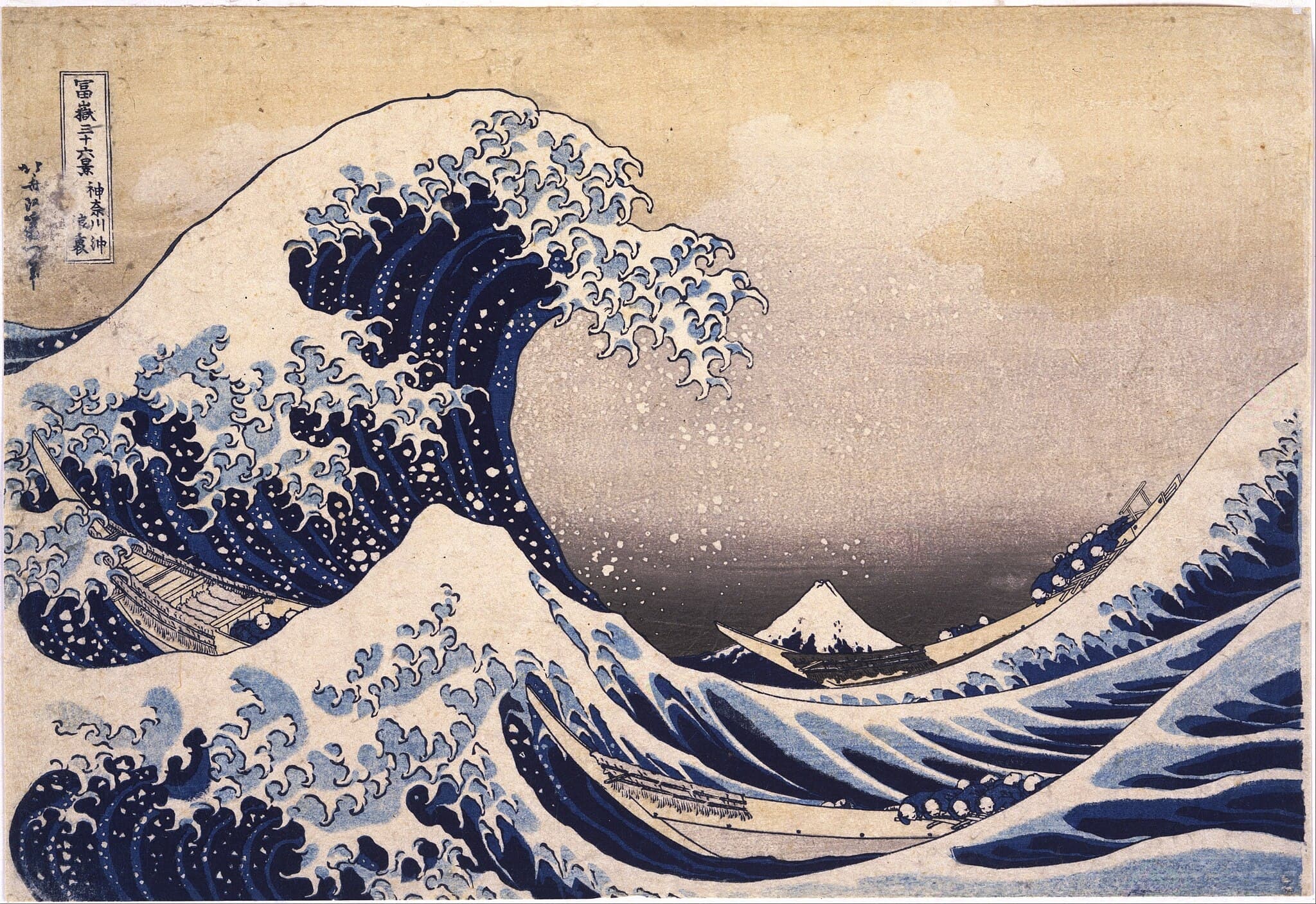
$1.2–4.0 million
A complete 36‑view set is market‑valued at US$1.2–4.0M, with uniformly early Prussian‑blue impressions and strong provenance pushing near or above the upper band.
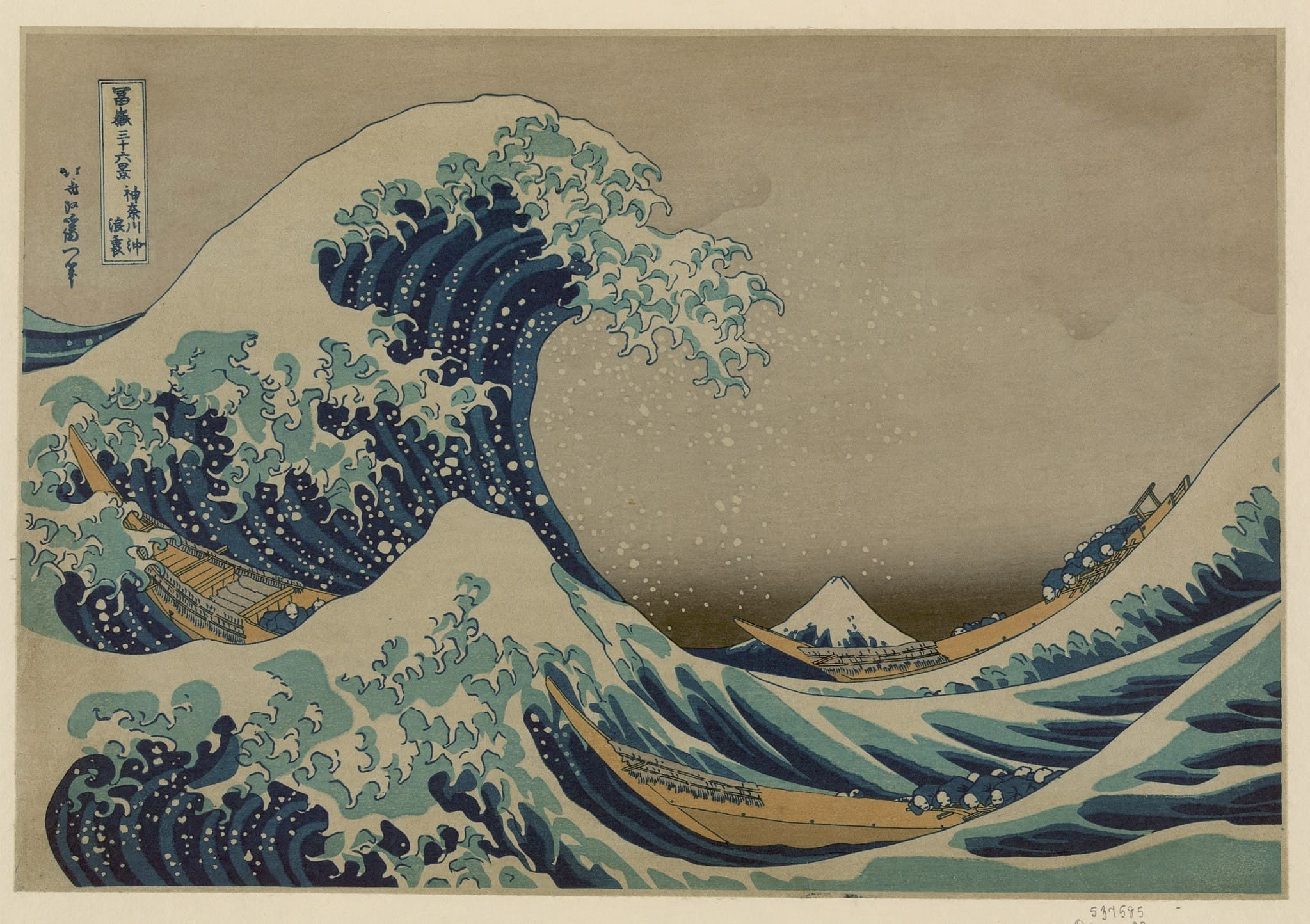
$700,000–$1,000,000
Authentic Edo‑period impressions of The Great Wave generally trade for US$700,000–1,000,000, while exceptional early Prussian‑blue examples with wide margins have fetched US$2.7–3.0M.
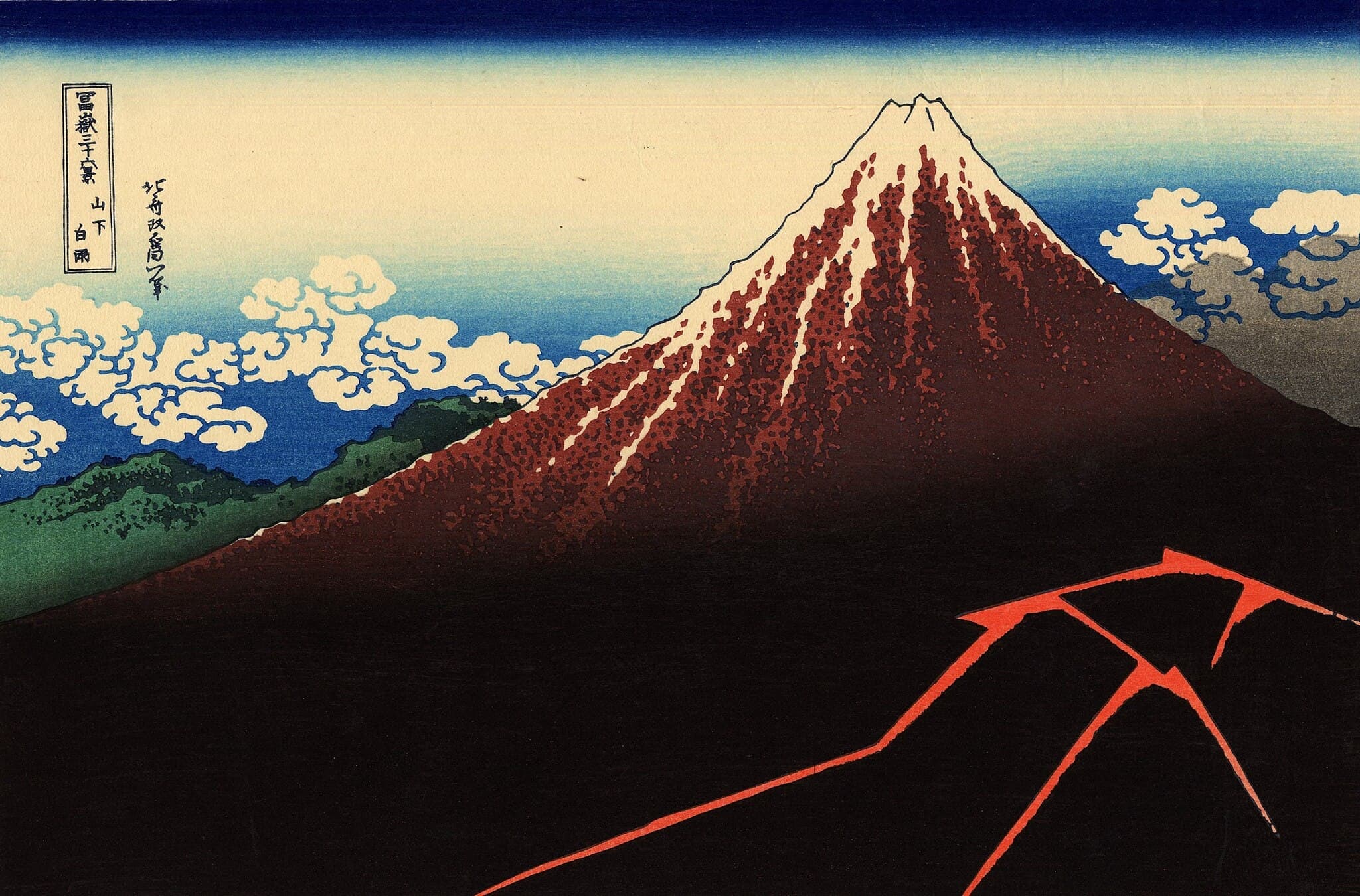
$25,000–$913,500
Single‑sheet Sanka hakuu impressions range from about US$25,000 for trimmed or later reprints to as high as US$913,500 for museum‑quality early impressions.
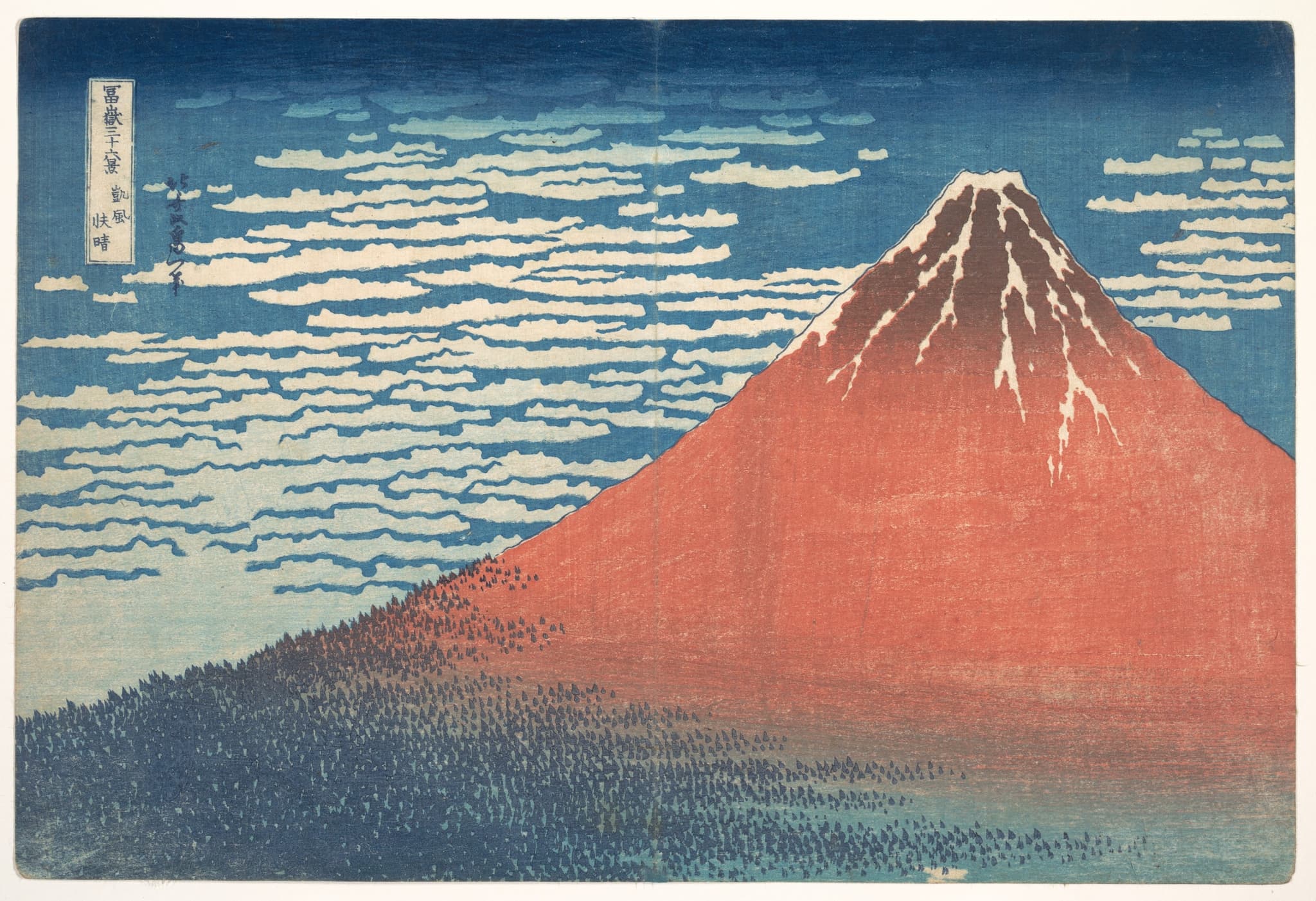
$300,000–$650,000
For an authentic Edo-period impression of Hokusai’s Fine Wind, Clear Weather (Red Fuji) in good-to-very-good color and condition, the current market supports $300,000–$650,000.
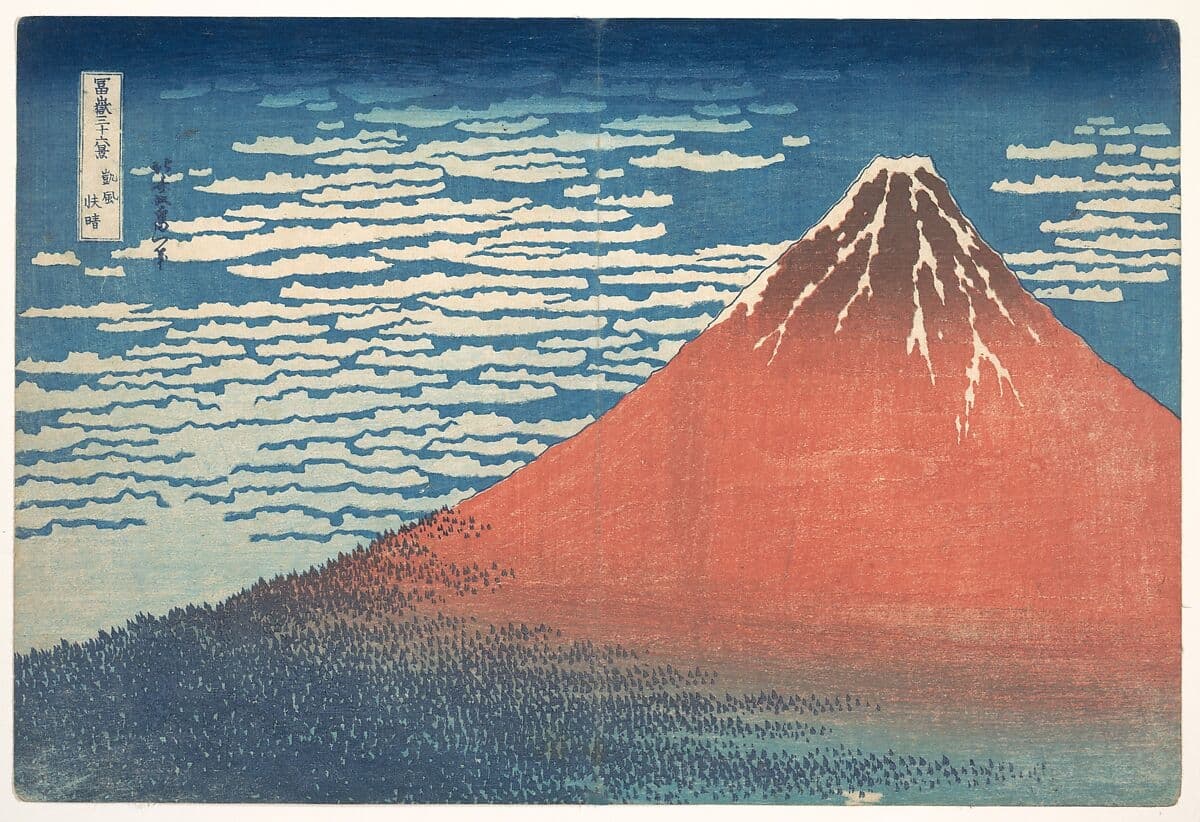
$300,000–$600,000
An early c.1830–31 Nishiki‑e first impression of Fine Wind, Clear Morning ('Red Fuji') in excellent condition is estimated at US$300,000–600,000 based on Christie’s comparables.
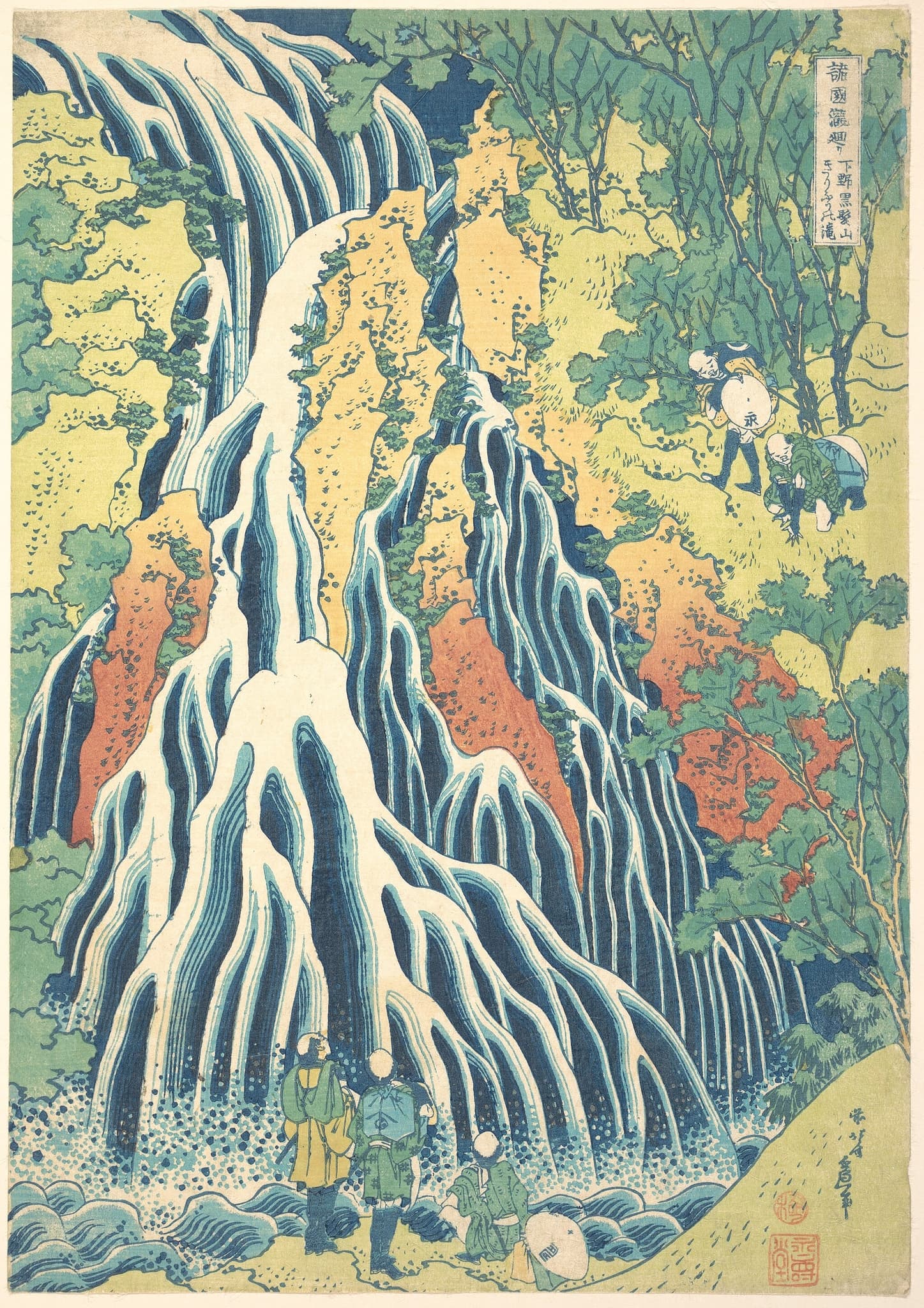
$150,000 - $600,000
Complete eight‑print A Tour of the Waterfalls sets are estimated at US$150,000–600,000, anchored by a recent Bonhams complete‑set sale of US$508,500.
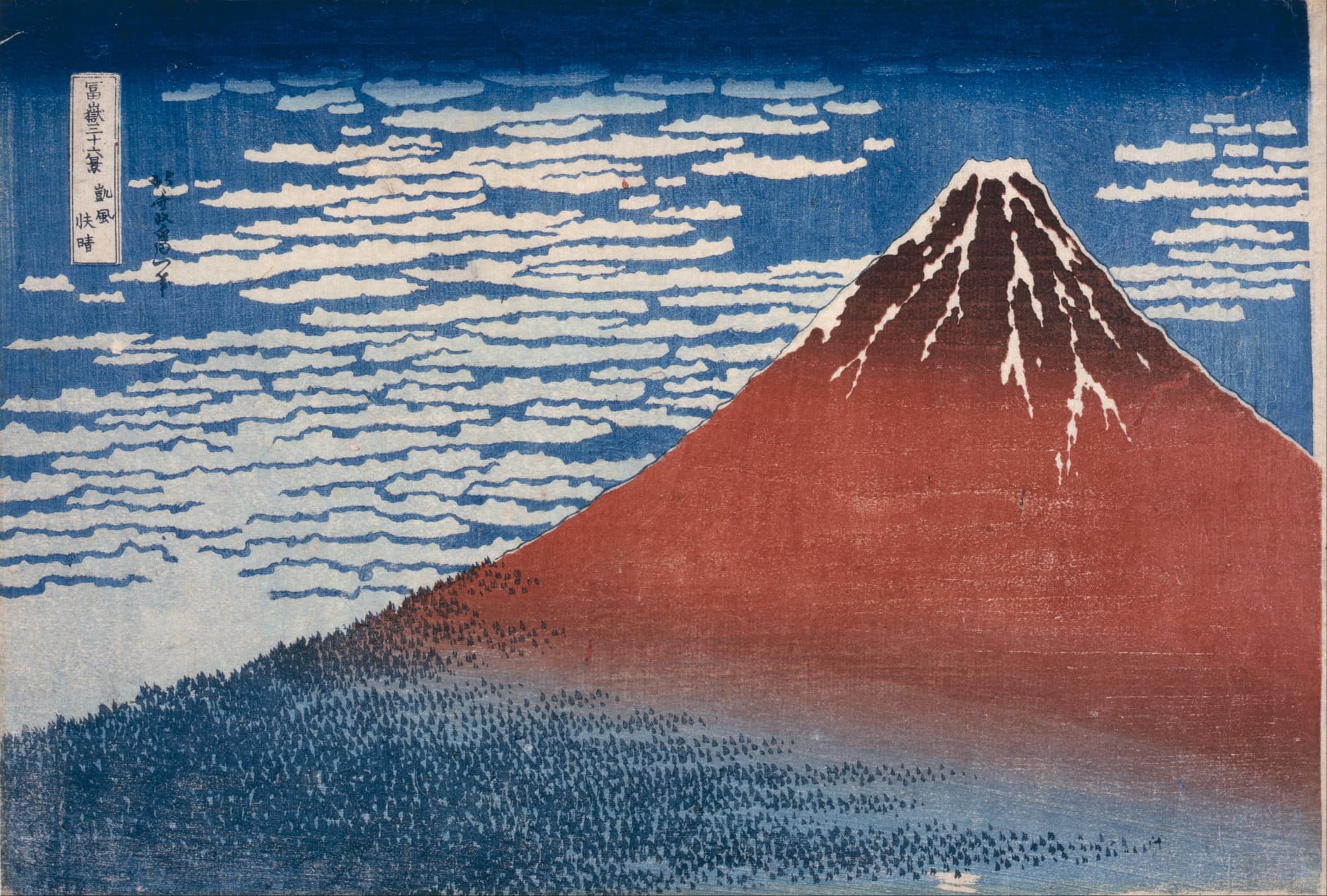
$300,000–600,000
For a well-preserved lifetime impression of Hokusai’s Fine Wind, Clear Morning (Red Fuji) with good color and margins, current fair auction value is approximately $300,000–600,000.
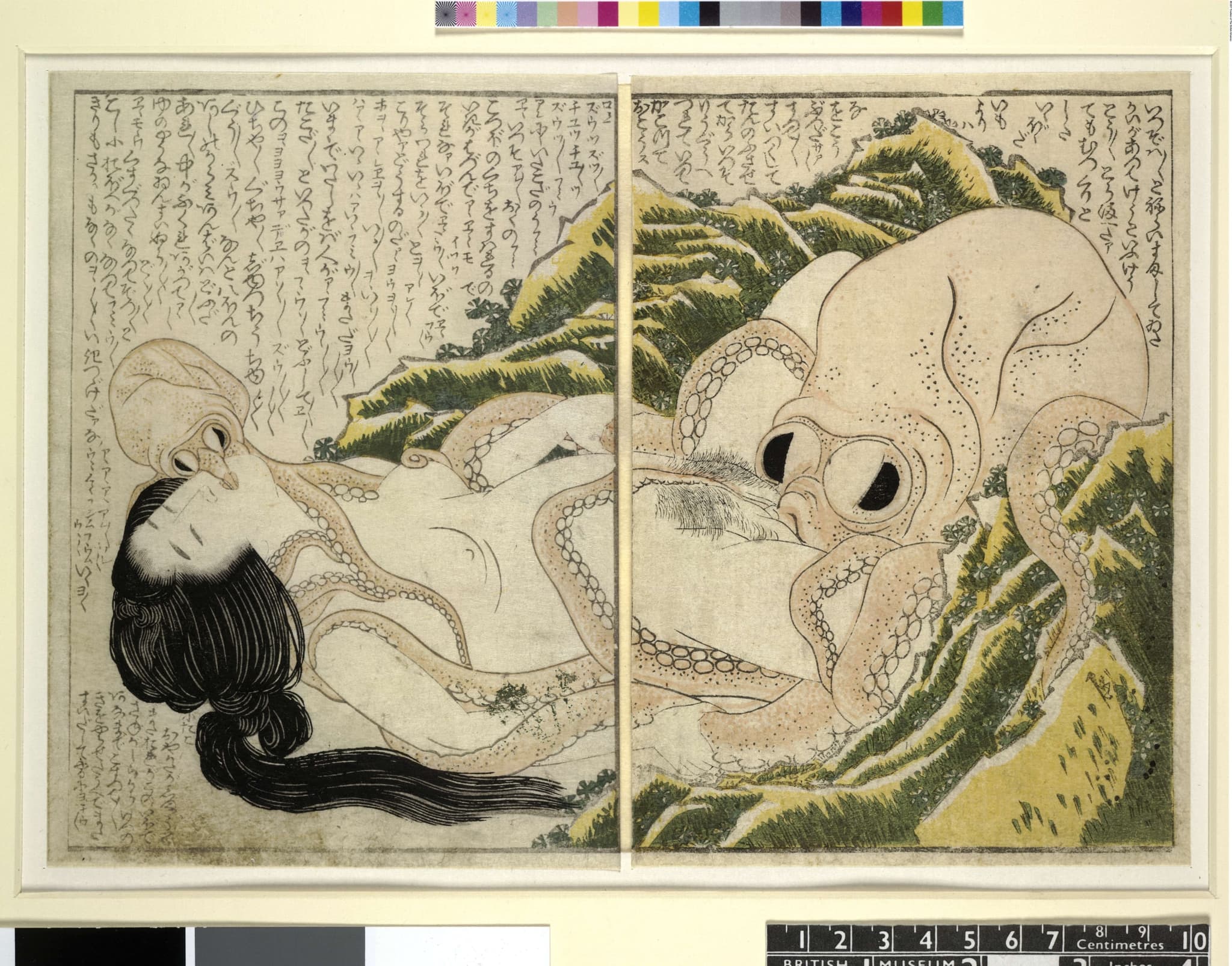
$500–$300,000
The Dream of the Fisherman's Wife valuations span roughly US$500–300,000, with documented 1814 museum‑quality impressions attaining the top of that range.
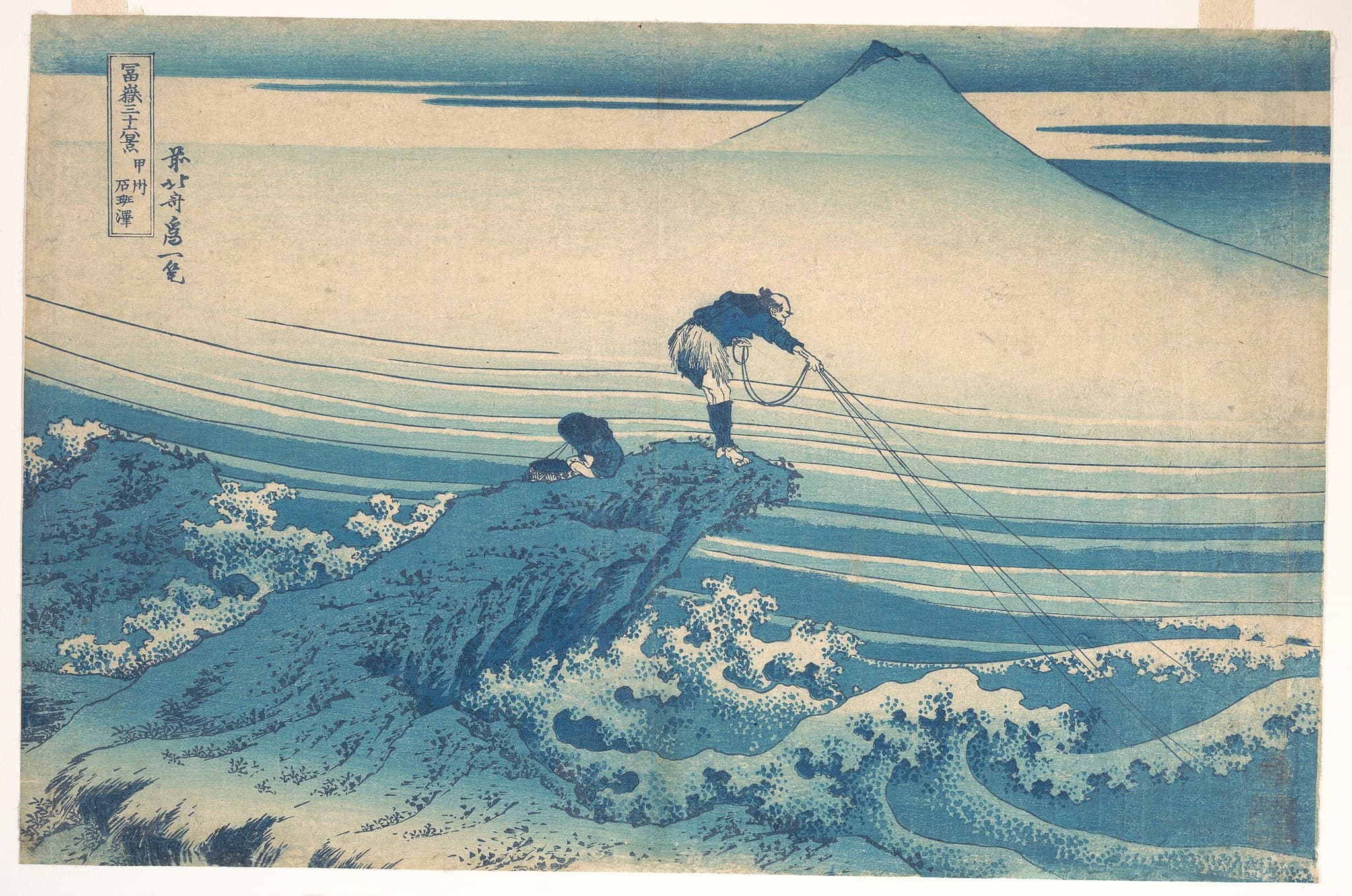
$3,000-$75,000
Kajikazawa original Edo‑period impressions are typically worth about US$3,000–75,000, with final price hinging on impression/state, margins, seals and provenance.
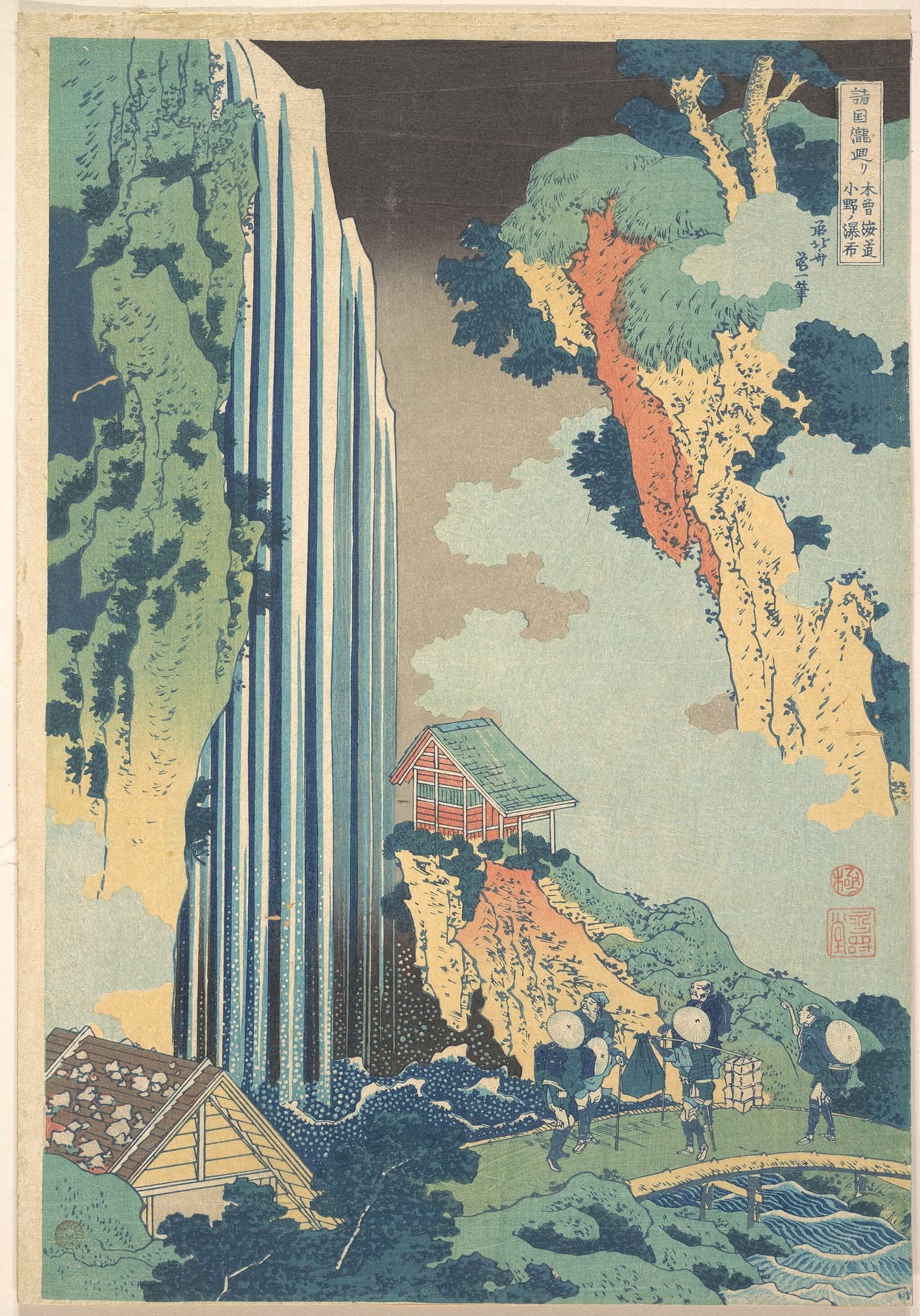
$5,000–75,000
The Waterfall at Ono normally trades for US$5,000–75,000, although early mica‑decorated, untrimmed museum‑quality impressions can reach the low six‑figure range.
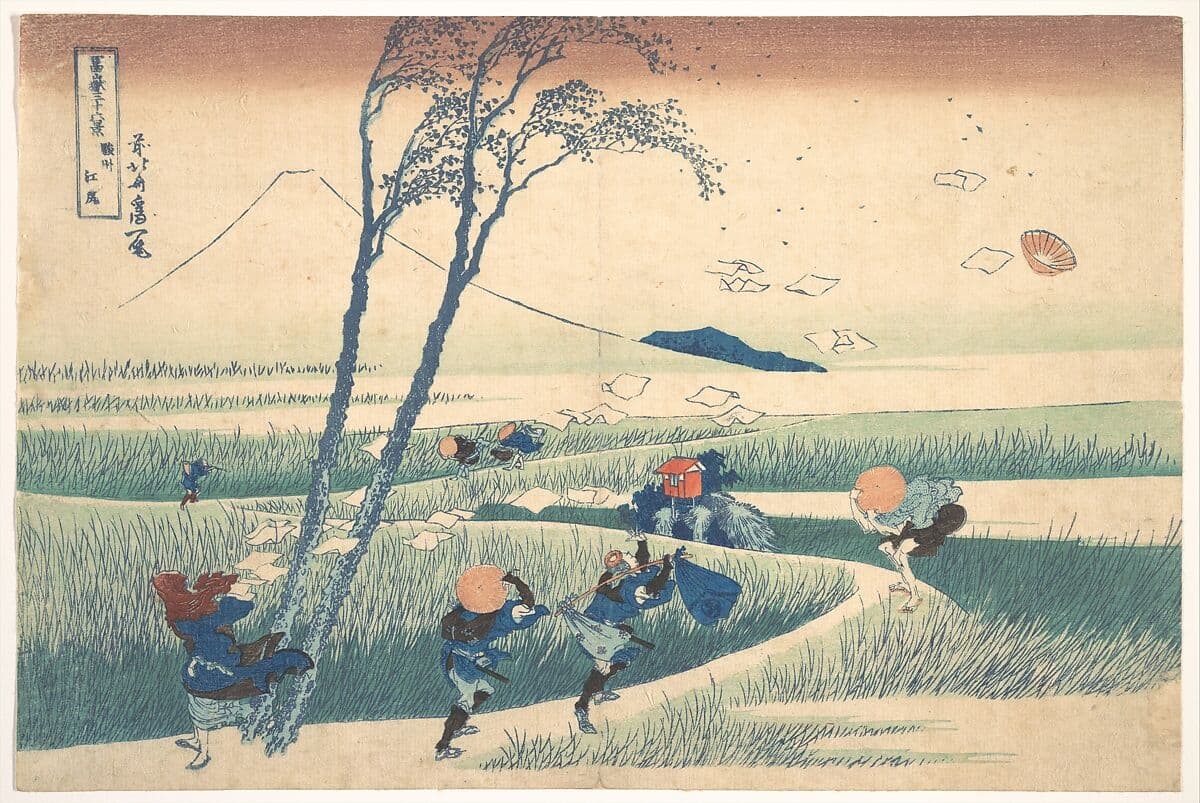
$10,000–$35,000
Ejiri original impressions are estimated at US$10,000–35,000, with pristine early impressions and strong provenance able to sell materially higher.
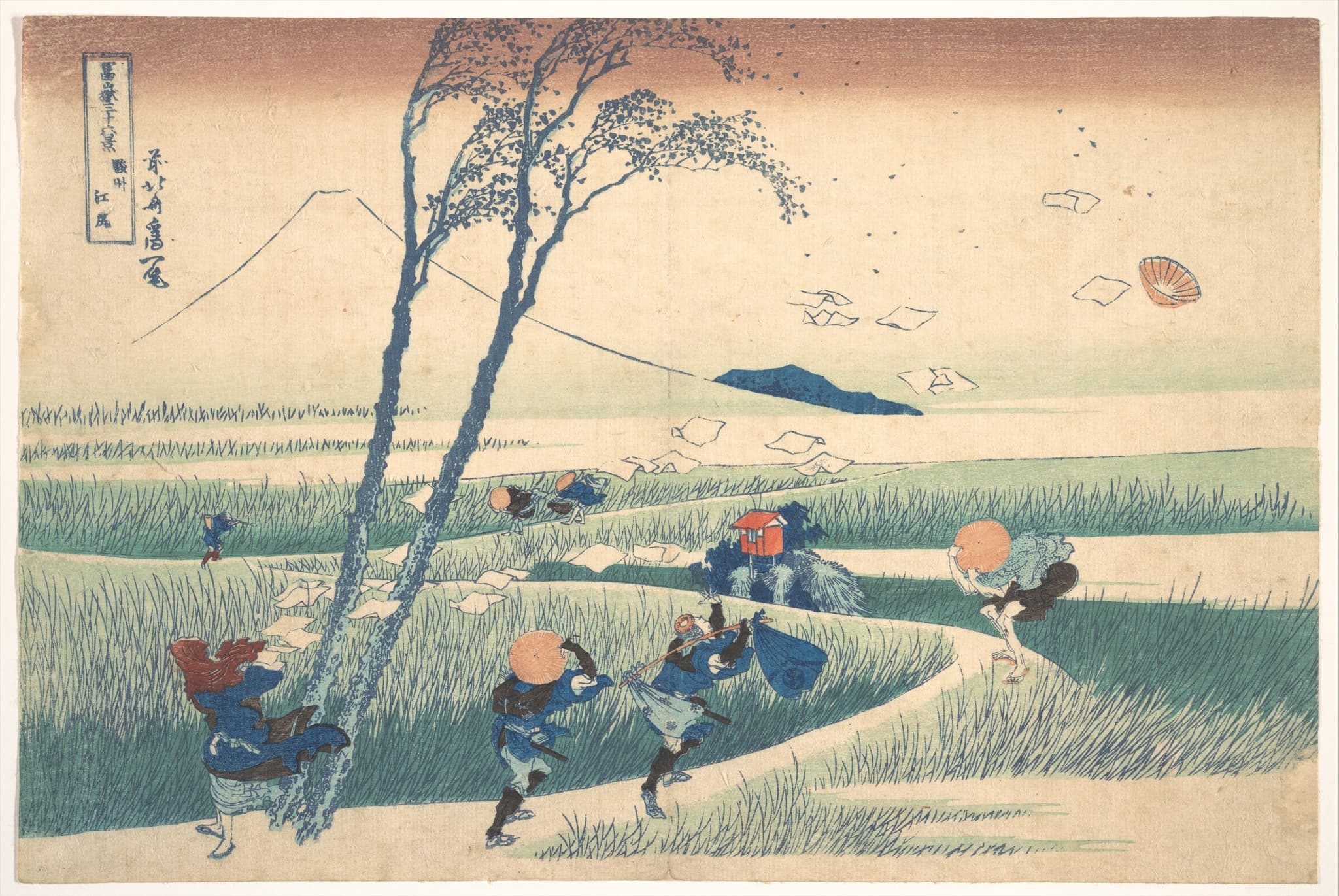
$18,000–30,000
Based on recent public sales and current market sentiment, a typical Edo‑period impression of Hokusai’s Ejiri in Suruga Province (Sudden Gust of Wind) is estimated at $18,000–30,000 at auction.
What Drives Value in Hokusai's Work
Impression State & Printing Effects (aizuri, Prussian blue, bokashi, kirazuri)
For Hokusai the technical printing state is paramount: true early impressions with saturated Prussian blue or finely executed bokashi routinely outperform later wear‑softened reprints. The Great Wave’s market spread (mid‑tier $0.7–$0.9m vs early masterpieces at $2.7–$3.0m) exemplifies this. Likewise, Red Fuji’s beni‑red saturation, Rainstorm Beneath the Summit’s c.1830s first‑state clarity, and Waterfall at Ono’s mica/kirazuri effects all materially drive bids and institutional interest.
Unique Hand‑painted Works, Signatures & Period Seals (nikuhitsuga, Hokusai/Shokusanjin seals)
Hokusai’s handful of hand‑painted paintings (nikuhitsuga) and clearly dated/sealed works occupy a different market tier. A well‑documented Beauty in the Snow bearing Hokusai/Shokusanjin seals or Bunka–Bunsei dating shifts the piece from decorative bijin‑ga to museum‑quality trophy, attracting institutional buyers and premium prices (as seen in high‑profile Tozai/Important Art Object sales). Rarity of the artist’s hand and period inscriptions therefore creates outsized premiums versus standard prints.
Series Membership, Completeness & Uniformity (Thirty‑six Views, Waterfalls)
Hokusai’s serial projects behave as bundled value systems: a complete, uniform Thirty‑six Views set or an intact eight‑sheet A Tour of the Waterfalls with matched impression state commands far more than scattered singles. Collectors and museums pay premiums for completeness and consistent impression/condition across plates; missing or mixed‑state sets suffer disproportionate discounts. Thus completeness plus uniform early states is a direct, artist‑specific multiplier on realised value.
Subject‑Type & Buyer Pool Segmentation (canonical landscapes vs shunga)
Hokusai’s subject matter creates distinct markets: canonical landscapes (The Great Wave, Red Fuji, Kajikazawa) draw broad institutional demand and deep buyer pools, supporting higher ceilings. By contrast, shunga like The Dream of the Fisherman’s Wife, while culturally iconic, sells within a specialist collector circuit—smaller but committed—so even superb impressions trade differently. Early, well‑provenanced shunga can outperform expectations, but genre dictates typical buyer composition and price dynamics.
Market Context
Katsushika Hokusai’s auction market remains robust and highly segmented: museum‑quality early impressions and rare complete sets command top prices—most notably a complete Thirty‑Six Views of Mount Fuji that set the artist’s auction record at $3,559,000—and exceptional Great Wave early states have realized around $2.7–2.8 million. Since 2023 the high end has been buoyant, supported by institutional buyers, high‑net‑worth collectors and Japanese corporate patrons, with strong Asian participation in New York and Hong Kong sales. Condition, state, provenance and attribution are decisive—verified, richly inked impressions and authenticated nikuhitsuga or hand‑painted works (as underscored in recent Tozai 2025 sales) outperform, while ambiguous or later impressions trade at steep discounts. Major exhibitions and single‑collection dispersals continue to drive episodic price spikes.
Study prints from famous works by Hokusai
Curated print bundles pairing the full artwork with a close reading of one meaningful detail.
