How Much Is Ejiri in Suruga Province (Ejiri) Worth?
Last updated: May 1, 2026
Quick Facts
- Methodology
- comparable analysis
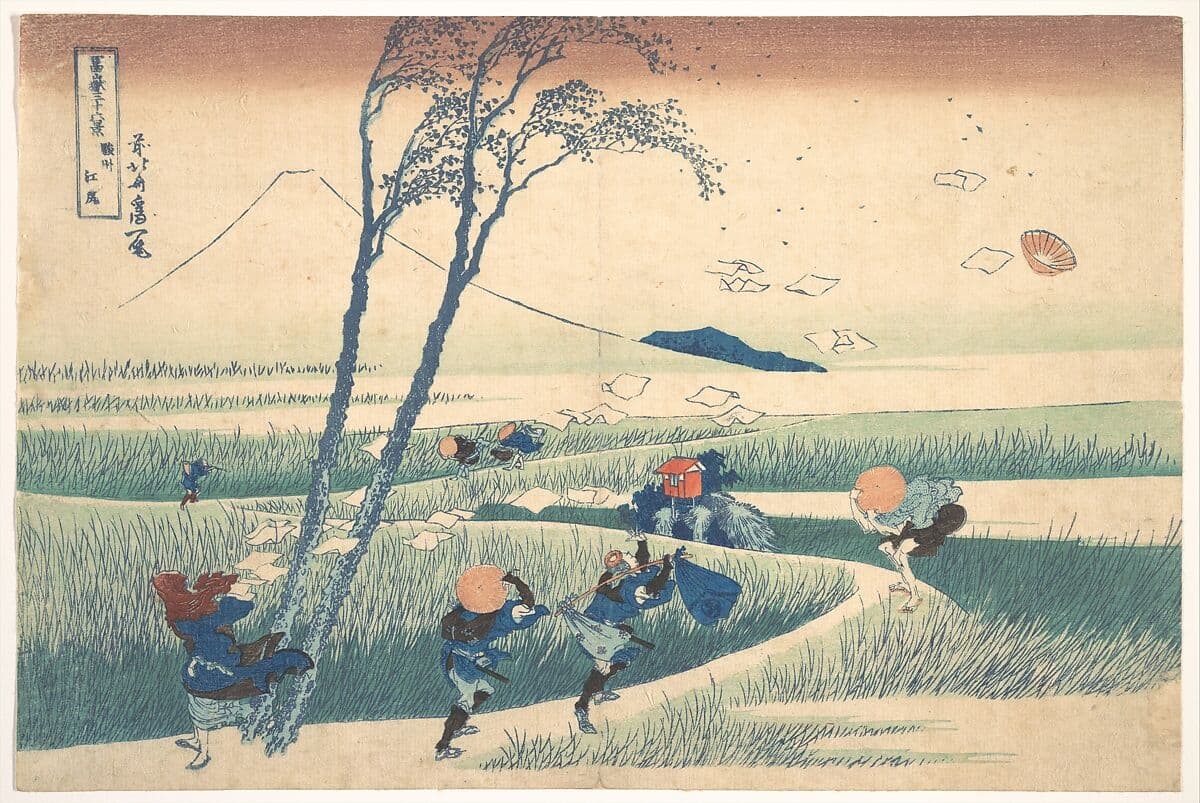
Based on recent auction comparables and institutional holdings, a typical Edo‑period original impression of Hokusai's Ejiri in Suruga Province in good collectible condition is estimated at $10,000–$35,000. Exceptional first/early impressions with pristine pigments, full margins and strong provenance can sell materially higher; later reprints or damaged examples will be far lower.
Valuation Analysis
Valuation conclusion. This estimate synthesizes direct auction comparables, museum holdings and market context to produce a practical market band for Hokusai’s Ejiri in Suruga Province. For a market‑ready original Edo‑period impression in good collectible condition, the recommended range is $10,000–$35,000. Exceptional first‑state impressions with original pigments, full margins and distinguished provenance may reach materially higher levels; conversely, later reprints or heavily restored examples will sell for only low hundreds to a few thousand dollars.
The principal comparables underpinning this range are recent auction appearances and institutional examples. A Sotheby’s London lot (15 May 2020) that bundled Ejiri with another Hokusai print sold for £20,000 (≈US$24,200) [1]. Christie’s has offered single Ejiri impressions in online sales with reported realized figures near US$17,500 (Sep 2021) and US$25,200 (Sep 2022) via auction aggregators; these cluster in the mid‑four‑figure to low‑five‑figure band for single impressions [2]. Museum holdings (British Museum, Metropolitan Museum) confirm the plate’s collecting importance and provide condition/state comparators for valuation [3].
Comparative reasoning: the observed realized figures support a practical market band around $10k–$35k for good original impressions. The lower bound accounts for later impressions, trimmed sheets or modest condition; the upper bound applies to untrimmed, bright early impressions with intact seals and minimal restoration. While top Hokusai trophies (e.g., rare early impressions of The Great Wave or pristine complete sets) have sold at multi‑hundred‑thousand to multi‑million dollar levels and therefore set a high ceiling, that ceiling is not determinative for a typical Ejiri impression and should only influence valuation where museum‑quality evidence exists [4].
Key value drivers are printing state (first/early vs later), color and pigment originality, margin width, presence of publisher/censor seals, and conservation history. Any backing, heavy repairs, trimmed margins or staining materially reduce market value; conversely, untrimmed sheets with crisp impressions and original bokashi command premiums. For a confident, saleable estimate I recommend obtaining high‑resolution front/verso photography and a short conservator’s condition report and then consulting a specialist at a major auction house to refine a reserve or asking price.
Confidence in the $10k–$35k band is moderate‑high for a typical original impression given the available comparables and institutional examples. Move to the low six‑figure zone only with unequivocal evidence that the specific impression is an early, museum‑quality state with strong provenance and exhibition/publishing history.
Key Valuation Factors
Art Historical Significance
High ImpactEjiri is a plate within Hokusai's influential Mount Fuji project (Thirty‑six Views). While it lacks the instantaneous recognition of The Great Wave or Red Fuji, Ejiri is a stable and respected component of the series and is regularly sought by collectors completing sets or assembling representative groupings. The series' central role in Hokusai's legacy ensures baseline demand for well‑conditioned originals. That cultural and scholarly importance supports steady market interest and underpins comparables drawn from both auction and museum holdings. The result is a reliable but not superstar demand profile: Ejiri benefits from series relevance rather than being a headline single image.
Condition & Printing State
High ImpactCondition and printing state are the dominant economic drivers. First or early impressions show crisper carving, more precise registration, richer pigments and subtle bokashi gradations; these technical attributes often double or triple value relative to later restrikes. Full, untrimmed margins and absence of heavy backing or restoration are prized by collectors and significantly increase sale realizations. Conversely, trimmed margins, tears, backing paper, heavy restoration, or pronounced foxing reduce competitive bidding and can collapse value to the low‑thousands or lower. A conservator's assessment and documentation of original pigments/seals are therefore essential to place an impression within the appropriate value tier.
Provenance & Exhibition History
Medium ImpactProvenance and exhibition or publication history are effective modifiers. An Ejiri impression with museum provenance, documented loans, or inclusion in important catalogues frequently realizes a premium because it reduces buyer uncertainty and enhances institutional interest. Well‑documented ownership chains and appearance in scholarly literature can justify placement at the upper end of the estimated band. By contrast, anonymous or undocumented examples command lower buyer confidence, particularly at auction. Provenance matters most when differentiating a high‑end, potentially museum‑quality impression from a routine market example.
Market Comparables & Auction Evidence
High ImpactRecent auction comparables are the most direct evidence for this valuation. Reported realizations for Ejiri single prints cluster in the mid‑four to low‑five‑figure range, and a Sotheby’s bundled two‑print lot sold for roughly US$24,200 [1][2]. These results form the backbone of the $10k–$35k band after accounting for lot ambiguity, condition variances and whether reported figures include buyer's premium. Because Ejiri is offered relatively regularly, comparables are available but must be scrutinized for state, margin and restoration differences when applying them to a specific impression.
Rarity & Survivorship of Early Impressions
Medium ImpactTrue early, untrimmed impressions in pristine condition are scarcer than later restrikes, but Ejiri is not unique in having multiple surviving examples in institutions and dealer inventories. Availability of later restrikes and reproductions in the market keeps ordinary prices moderate, while authentic museum‑quality early states are the scarce category that command premiums. The relative frequency of non‑early impressions means supply for typical collectors is steady; therefore only genuinely exceptional states will push prices substantially above the typical band.
Sale History
Sotheby's London (Fine Japanese Art, Lot 33)
Christie's (Japanese & Korean Art online sale; reported via aggregator)
Christie's (Japanese & Korean Art; reported via aggregator)
Hokusai's Market
Katsushika Hokusai is among the most collectible and influential Japanese artists globally. Demand for his work is robust and bifurcated: a trophy tier for museum‑quality early impressions and rare sets that can reach mid‑six or seven figures, and a broader collector tier where well‑conditioned, non‑trophy impressions trade steadily in the low‑to‑mid five‑figure or lower bands. High‑profile sales and institutional acquisitions have raised Hokusai’s market profile, but realized prices remain tightly linked to printing state, margins and provenance. For plates like Ejiri, strong but selective collector interest yields steady market performance rather than headline prices.
Comparable Sales
Two prints: Ejiri in Suruga Province (Sunshū) and Hodogaya on the Tōkaidō
Katsushika Hokusai
Direct: lot includes Ejiri and was sold at a major house; most concrete public result verifiable in the research. Note this was a two-print lot, so individual allocation to Ejiri is not explicit.
$24K
2020, Sotheby's London (Fine Japanese Art, online sale)
~$29K adjusted
Ejiri in Suruga Province (Sunshū Ejiri)
Katsushika Hokusai
Direct: same print reported sold at Christie’s — a clear single‑print comparable (reported by auction aggregator; verify official house record for hammer vs total).
$18K
2021, Christie's (Japanese & Korean Art online sale; reported result via aggregator)
~$20K adjusted
Ejiri in Suruga Province (Sunshū Ejiri)
Katsushika Hokusai
Direct: same print with a higher reported realised price, indicating condition/state/provenance can drive Ejiri into the mid five‑figure band.
$25K
2022, Christie's (Japanese & Korean Art; reported result via aggregator)
~$27K adjusted
The Great Wave off Kanagawa (rare early impression)
Katsushika Hokusai
Same artist and series (Thirty‑six Views). Not the same plate but establishes the top‑end market ceiling for museum‑quality early impressions — useful as an upper bound when evaluating exceptional Ejiri impressions.
$2.8M
2023, Public auction (reported by ArtNet, March 2023)
~$2.9M adjusted
Fugaku sanjūrokkei (Thirty‑six Views of Mount Fuji) — complete set
Katsushika Hokusai
Same series (complete set) sold at a major house — indicates institutional demand for pristine/complete material and sets an upper bound for very high‑quality Ejiri examples within the series.
$3.6M
2024, Christie's New York
~$3.6M adjusted
Current Market Trends
The market for high‑quality late‑Edo prints has strengthened over the last decade, supported by exhibitions, institutional buying and high‑profile single‑owner sales. Market behavior is two‑tiered: exceptional, early prints and complete sets draw strong institutional and private bidding, while the larger volume of ordinary impressions remains highly condition‑sensitive. Geographic demand is broad (Asia and the West), and auction houses report active interest in well‑documented, high‑quality material.
Sources
- Sotheby's — Fine Japanese Art: Two prints (Ejiri and Hodogaya), Lot 33, 15 May 2020
- Christie's — Japanese & Korean Art online listings and sale pages for Sunshū Ejiri (catalogue entries / reported results)
- British Museum — Collection entry for Ejiri in Suruga Province (Sunshū Ejiri)
- Christie's press: Sale of the complete Thirty‑six Views of Mount Fuji (context for Hokusai top‑end market)