The Great Wave off Kanagawa
by Hokusai
Study print
Prefer the curated version?
View the study print we made for this artwork, pairing the full painting with a close reading of one meaningful detail.

Study Print Studio
Create a personal study print
Build a companion study sheet around the part of this painting that speaks to you most. Choose a detail, shape an interpretation, and walk away with something personal and display-worthy.
Fast Facts
- Year
- ca. 1830–32
- Medium
- Polychrome woodblock print (nishiki‑e); ink and color on paper with Prussian blue
- Dimensions
- c. 25 x 38 cm (oban yoko‑e; varies by impression)
- Location
- Multiple impressions worldwide; e.g., The Metropolitan Museum of Art, New York (JP2972)
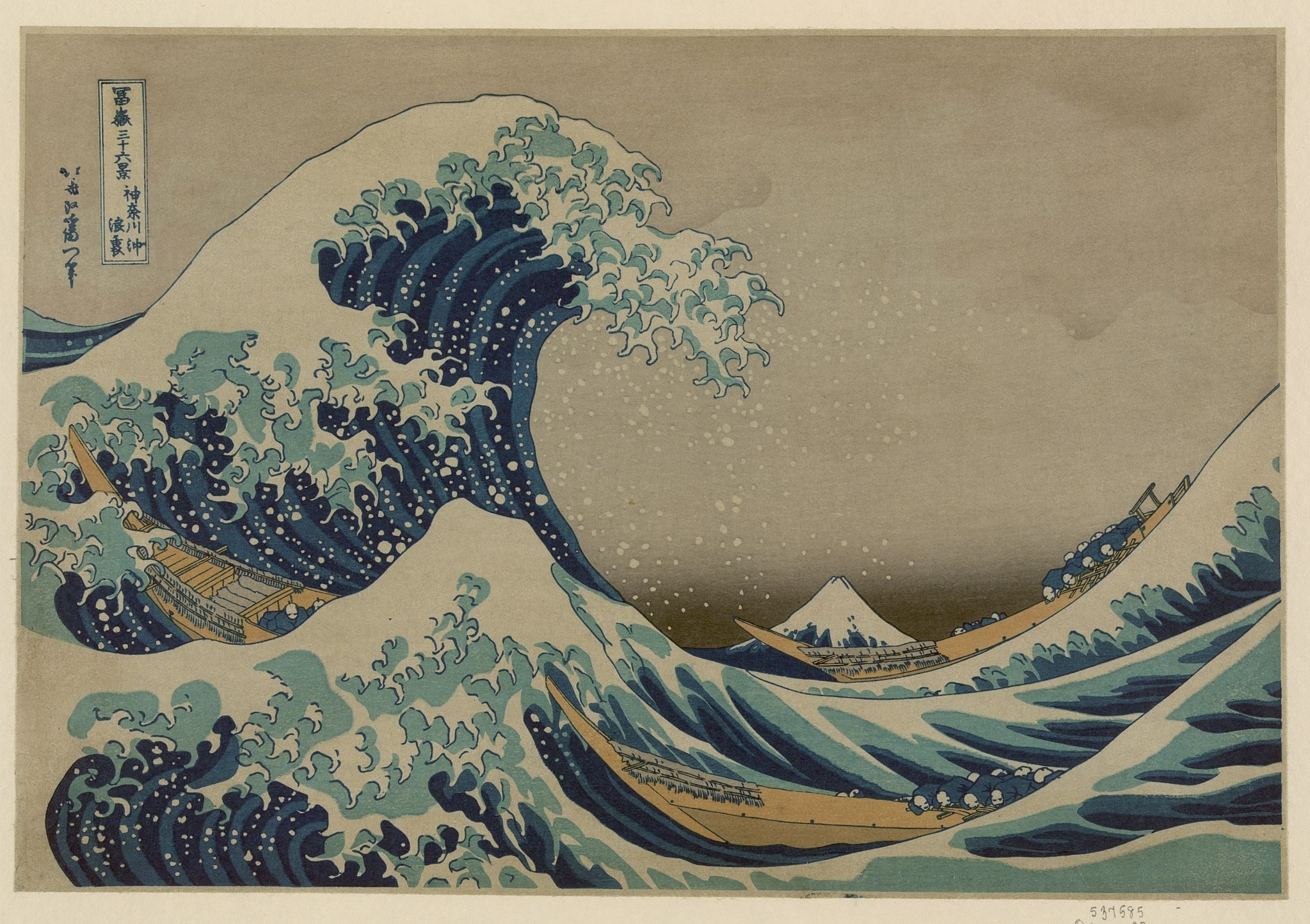
Click on any numbered symbol to learn more about its meaning
Meaning & Symbolism
Explore Deeper with AI
Ask questions about The Great Wave off Kanagawa
Popular questions:
Powered by AI • Get instant insights about this artwork
Interpretations
Technical-Material History
Source: The Metropolitan Museum of Art (Conservation/Technical Study)
Economic History of the Sea
Source: British Museum (Curatorial Commentary)
Cross-Cultural Optics and Maritime Sublime
Source: Timon Screech (Japan Review) with British Museum context
Icon Biography and Interpretive Mobility
Source: Christine M. E. Guth (Oxford/Hawai‘i Scholarship)
Ecology and Fluid Dynamics
Source: Proceedings (fluid-dynamics study) and British Museum
Explore Specific Elements
Dive deeper into individual scenes and details within The Great Wave off Kanagawa.
Mount Fuji in the Distance
In The Great Wave off Kanagawa, Hokusai tucks a tiny, snow-capped Mount Fuji into the hollow of the wave’s crest. This distant triangle is the still, sacred anchor of a series devoted to the mountain, a calm counterpoint to the sea’s violence and the fishermen’s peril.
The Wave's Claws
Hokusai’s “claws” — the finger‑like foam at the crest — turn the Great Wave into a living predator, curling over boats and even Mount Fuji. This sharpened silhouette fuses drama, myth, and cutting‑edge print craft, making the moment before impact both terrifying and mesmerizing.
The Fishing Boats
Hokusai’s three oshiokuri‑bune slice across the swells like tan needles stitching commerce through a storm. These fast fish‑carriers—crewed by crouching scullers—turn the Great Wave into a scene of urgent work, setting human resolve against the sea and Fuji’s calm distance.