Pilgrimage & devotion
Featured Artworks
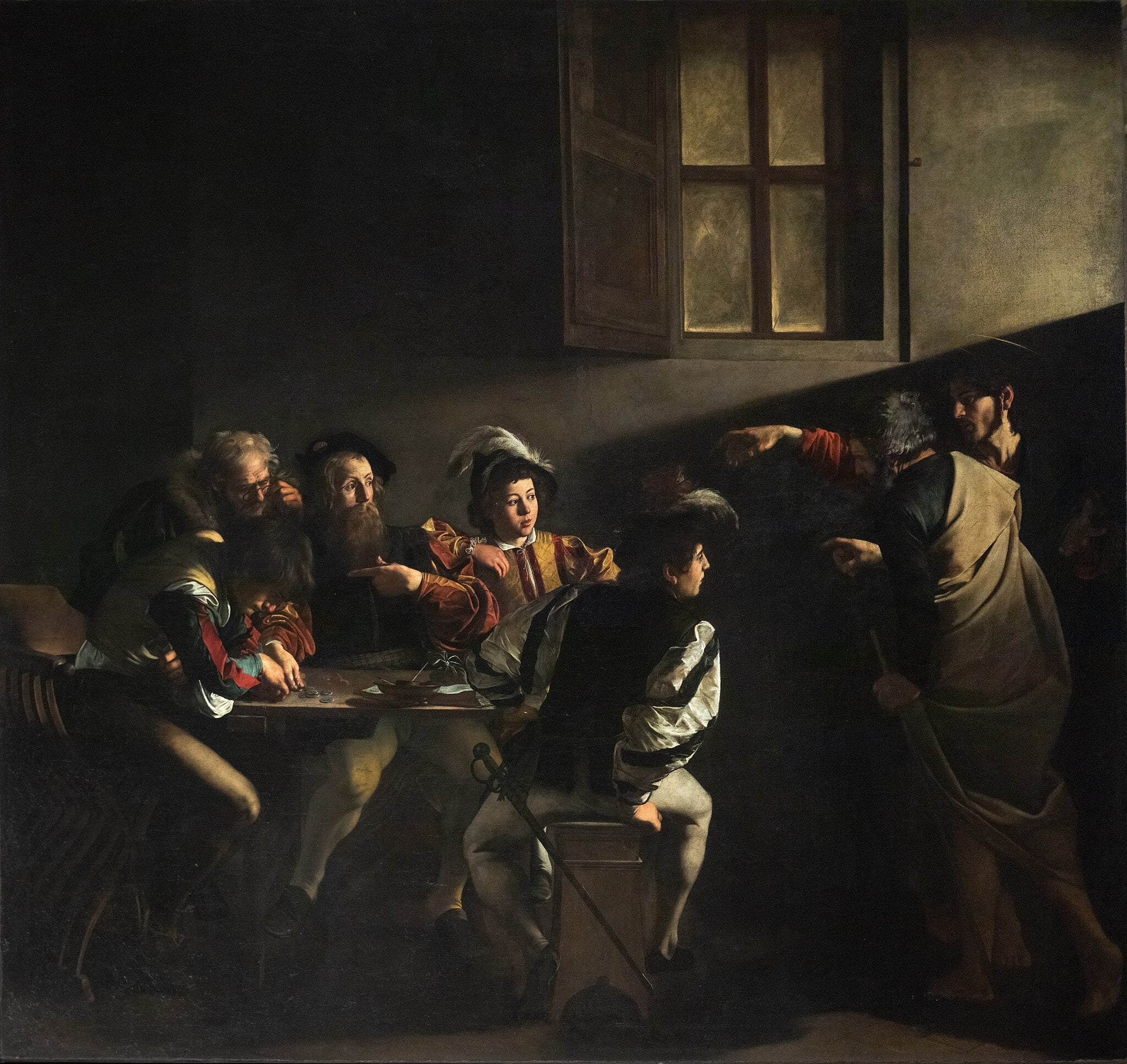
The Calling of Saint Matthew
Caravaggio (1599–1600)
Caravaggio’s The Calling of Saint Matthew stages the instant when <strong>divine grace</strong> pierces ordinary life. A diagonal <strong>beam of light</strong> and Christ’s <strong>Sistine‑echoing hand</strong> single out Matthew at a money table, suspending time between hesitation and assent <sup>[2]</sup><sup>[3]</sup>. The painting fuses Baroque <strong>tenebrism</strong> with contemporary dress to dramatize conversion as a public, present-tense event <sup>[1]</sup><sup>[2]</sup>.
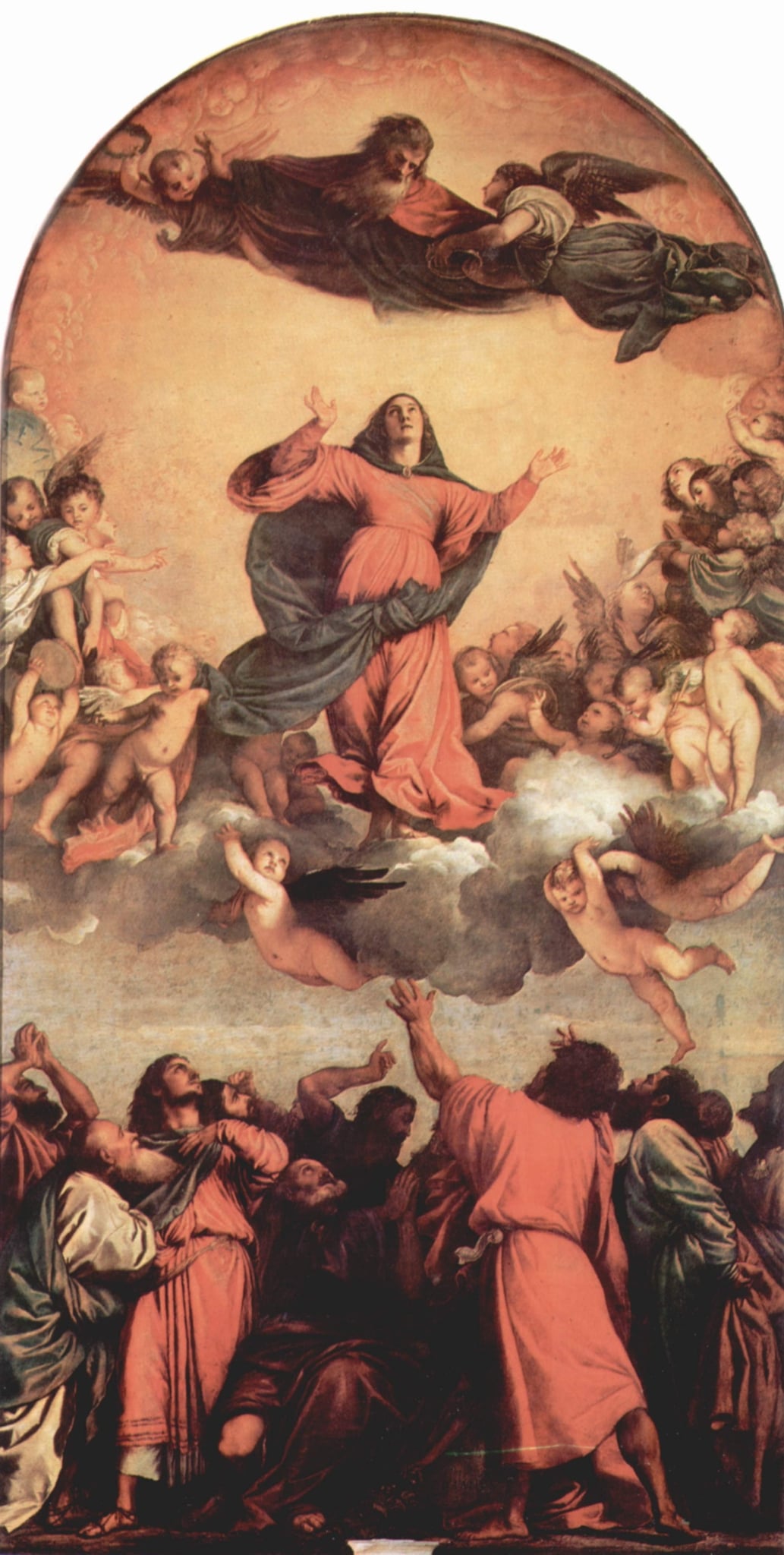
The Assumption of the Virgin
Titian (1516–1518)
Titian’s The Assumption of the Virgin stages a three-tier ascent—apostles below, Mary rising on clouds, and God the Father above—fused by radiant light and Venetian <strong>colorito</strong>. Mary’s red and blue drapery, open <strong>orant</strong> hands, and the vortex of putti visualize grace lifting humanity toward the divine. The painting’s scale and kinetic design turned a doctrinal mystery into a public, liturgical drama for Venice. <sup>[1]</sup><sup>[2]</sup>
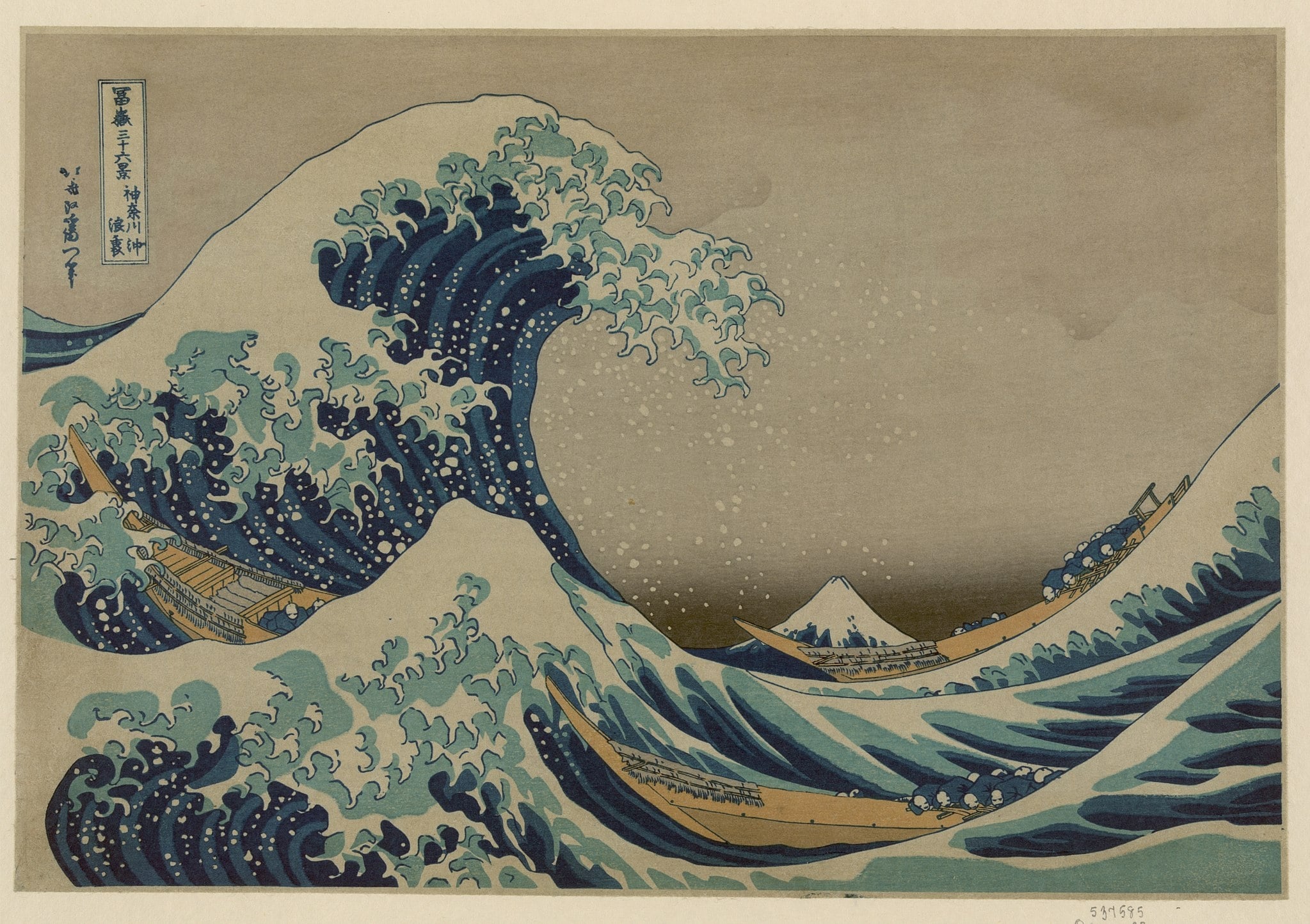
The Great Wave off Kanagawa
Hokusai (ca. 1830–32)
The Great Wave off Kanagawa distills a universal drama: fragile laboring boats face a <strong>towering breaker</strong> while <strong>Mount Fuji</strong> sits small yet immovable. Hokusai wields <strong>Prussian blue</strong> to sculpt depth and cold inevitability, fusing ukiyo‑e elegance with Western perspective to stage nature’s power against human resolve <sup>[1]</sup><sup>[3]</sup>.
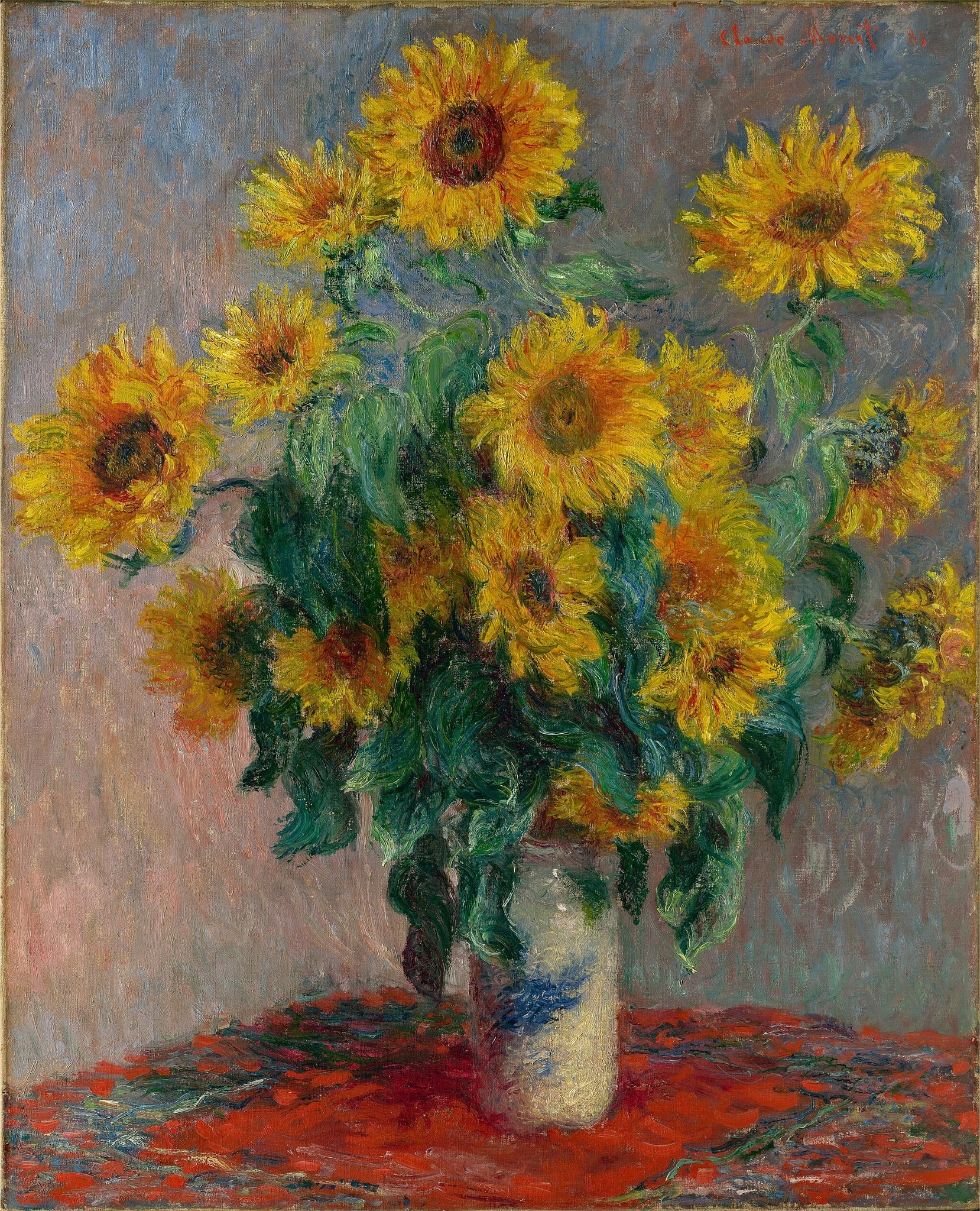
Bouquet of Sunflowers
Claude Monet (1881)
Claude Monet’s Bouquet of Sunflowers detonates with <strong>solar color</strong> and <strong>restless brushwork</strong>: yellow heads flare from a pale vase, thrust forward by a blazing red cloth against a cool, lilac‑gray wall. The painting converts a domestic bouquet into an arena where <strong>light, time, and touch</strong> supersede contour, staging blooms from vigor to fray in a single, pulsing image <sup>[1]</sup><sup>[2]</sup>.
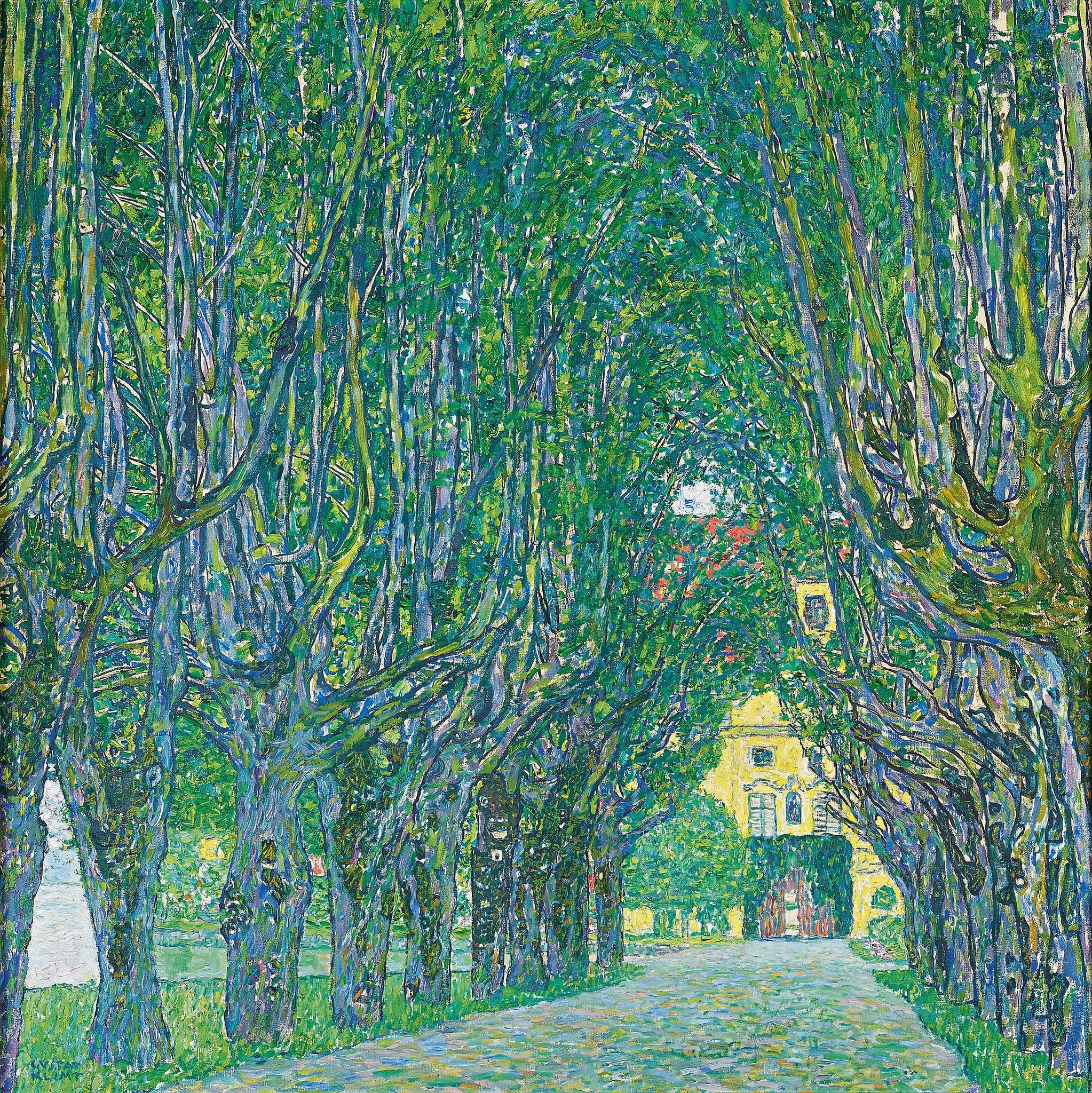
Avenue in Schloss Kammer Park
Gustav Klimt (1912)
Gustav Klimt’s Avenue in Schloss Kammer Park stages a ceremonial approach beneath a vaulted <strong>tunnel of linden trees</strong>, their pollarded limbs clasping to form a green nave. A cobbled axis pulls the eye toward a sunlit <strong>ocher façade and arched doorway</strong>, while Klimt’s tessellated strokes make foliage, bark, and shadow flicker between <strong>pattern and depth</strong> <sup>[1]</sup><sup>[5]</sup><sup>[6]</sup>.
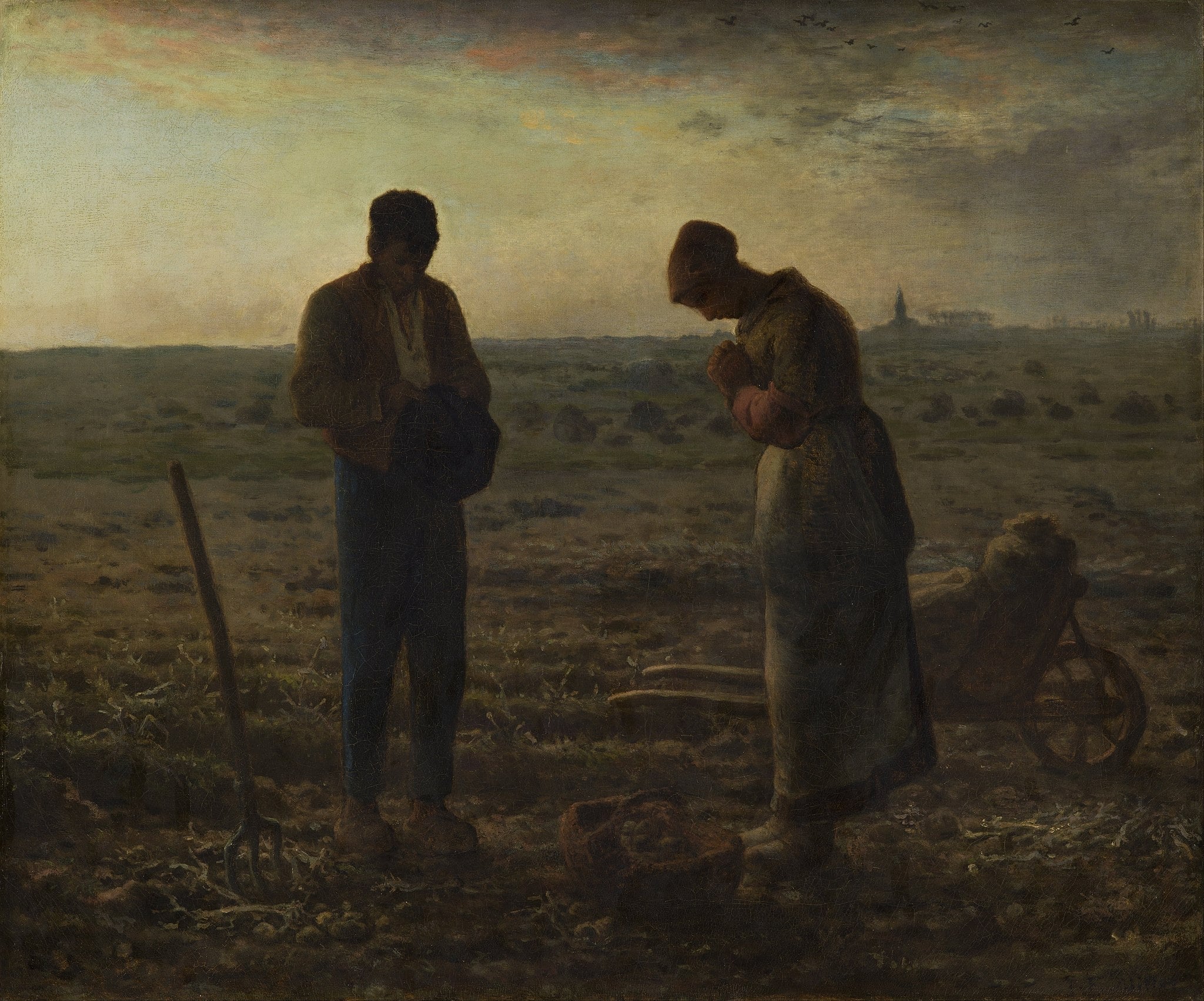
The Angelus
Jean-Francois Millet (1857–1859)
Jean-Francois Millet’s The Angelus (1857–1859) fuses <strong>devotion</strong> and <strong>labor</strong>: two peasants pause at dusk, heads bowed, as the Angelus bell sounds from a distant steeple. With a <strong>low horizon</strong>, earthen palette, and monumental silhouettes, the painting makes a brief pause in fieldwork feel timeless and sacred <sup>[1]</sup><sup>[2]</sup>.
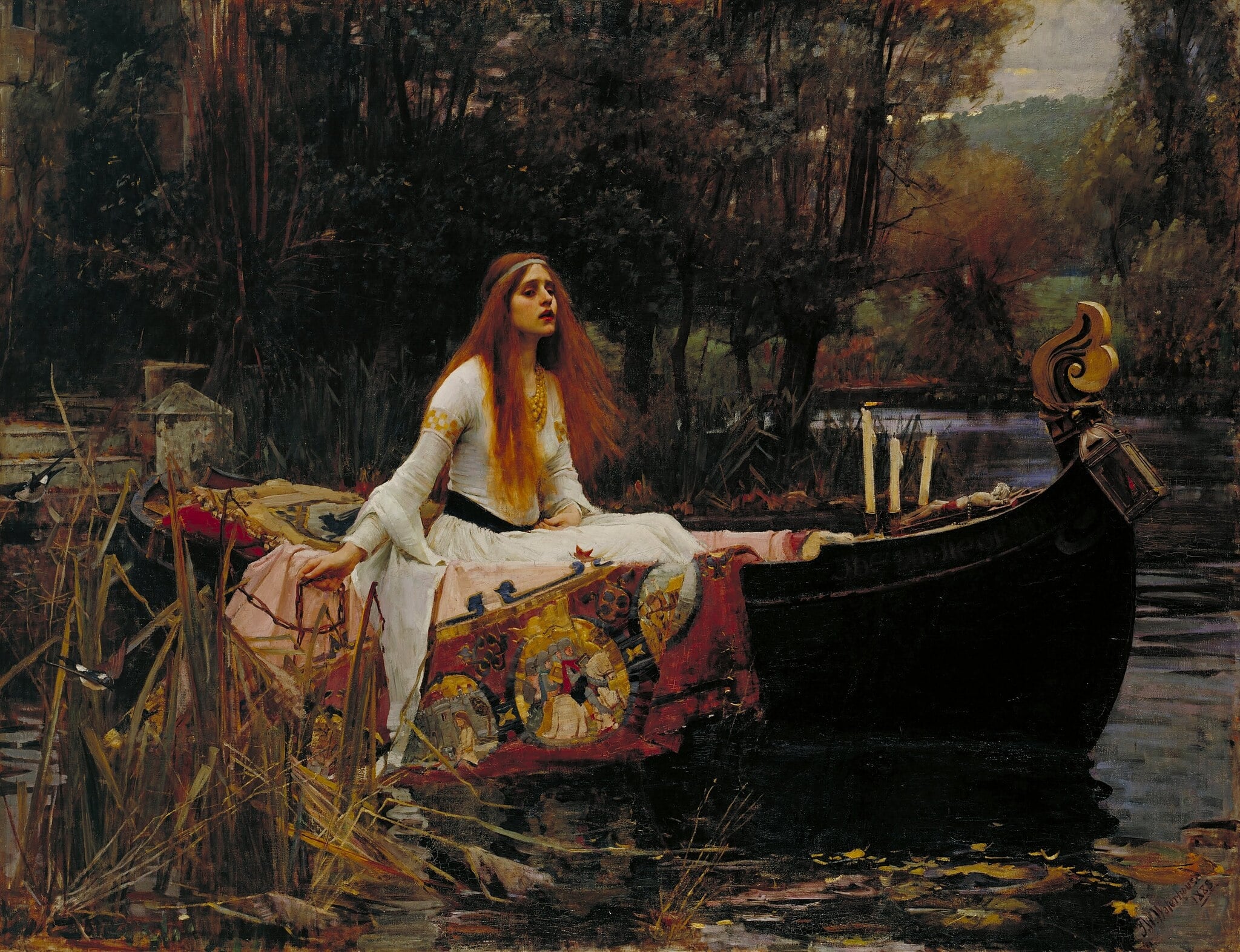
The Lady of Shallot
John William Waterhouse (1888)
John William Waterhouse’s The Lady of Shallot (1888) fixes on the instant the cursed heroine releases her chain and sets her black, coffinlike boat adrift. The extinguished candles, the small crucifix, and the tapestry trailing into the water stage a <strong>funerary voyage</strong> toward Camelot and a choice of <strong>experience over enclosure</strong> <sup>[1]</sup><sup>[2]</sup>.
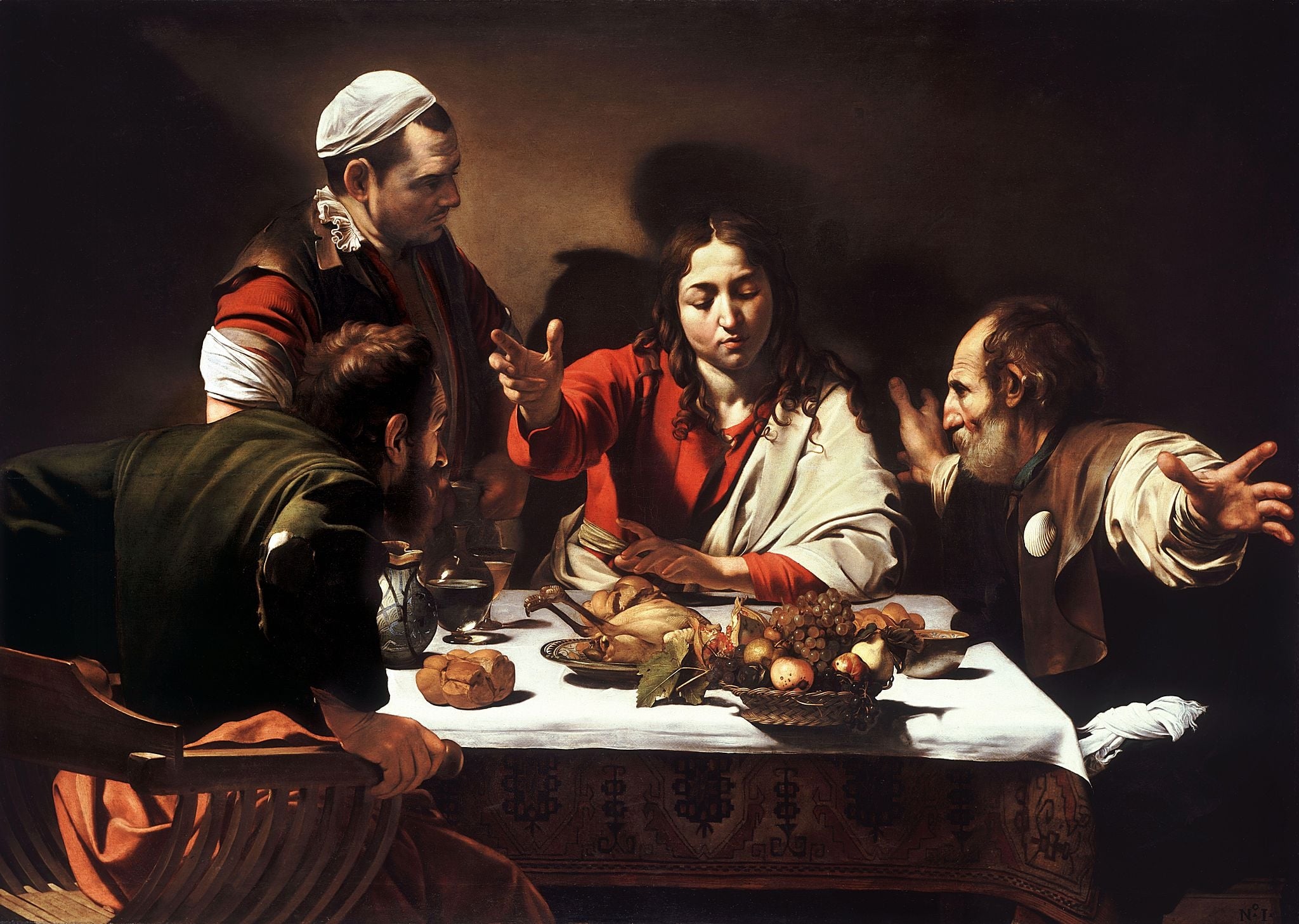
The Supper at Emmaus
Caravaggio (1601)
Caravaggio’s The Supper at Emmaus captures the split-second when two disciples recognize Christ in the <strong>breaking of bread</strong>. A raking light isolates Christ’s calm blessing while the disciples erupt—one surging forward with a torn sleeve, the other flinging his arms wide—so the shock of revelation reads as bodily fact. The teetering <strong>basket of fruit</strong> and Eucharistic table amplify themes of abundance and fragility <sup>[1]</sup><sup>[4]</sup>.

Sixty Last Suppers
Andy Warhol (1986)
Andy Warhol’s Sixty Last Suppers multiplies Leonardo’s scene into a vast grid, turning a singular sacred image into <strong>serial</strong> signage. From afar it reads as an architectural surface; up close, silkscreen <strong>variations</strong>—blurs, darker panels, dropped ink—reassert the human trace <sup>[1]</sup><sup>[2]</sup>.
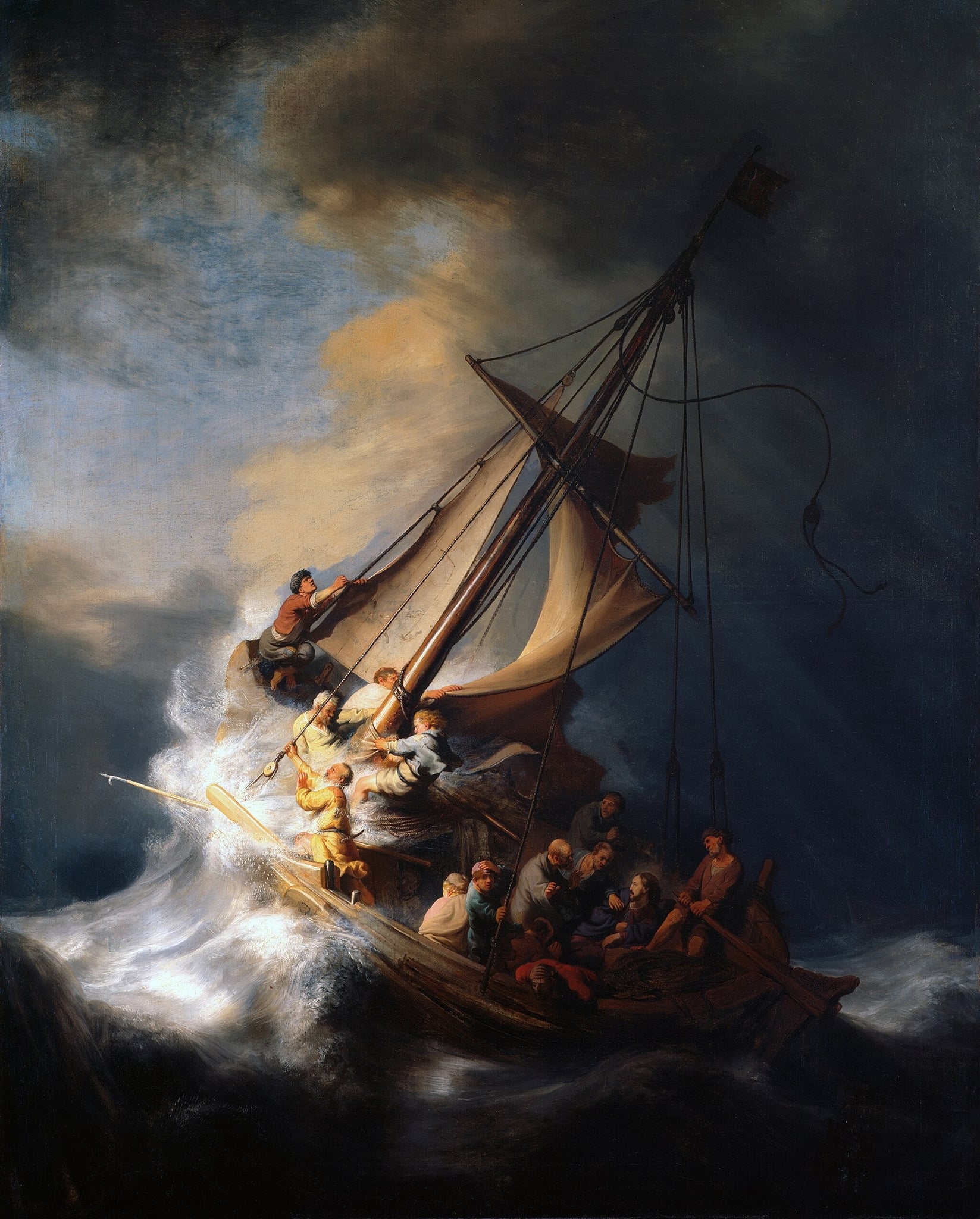
The Storm on the Sea of Galilee
Rembrandt van Rijn (1633)
Rembrandt van Rijn’s The Storm on the Sea of Galilee stages a clash of <strong>human panic</strong> and <strong>divine composure</strong> at the instant before the miracle. A torn mainsail whips across a steeply tilted boat as terrified disciples scramble, while a <strong>serenely lit Christ</strong> anchors a pocket of calm—an image of faith holding within chaos <sup>[1]</sup><sup>[3]</sup>. It is Rembrandt’s only painted seascape, intensifying its dramatic singularity in his oeuvre <sup>[2]</sup>.
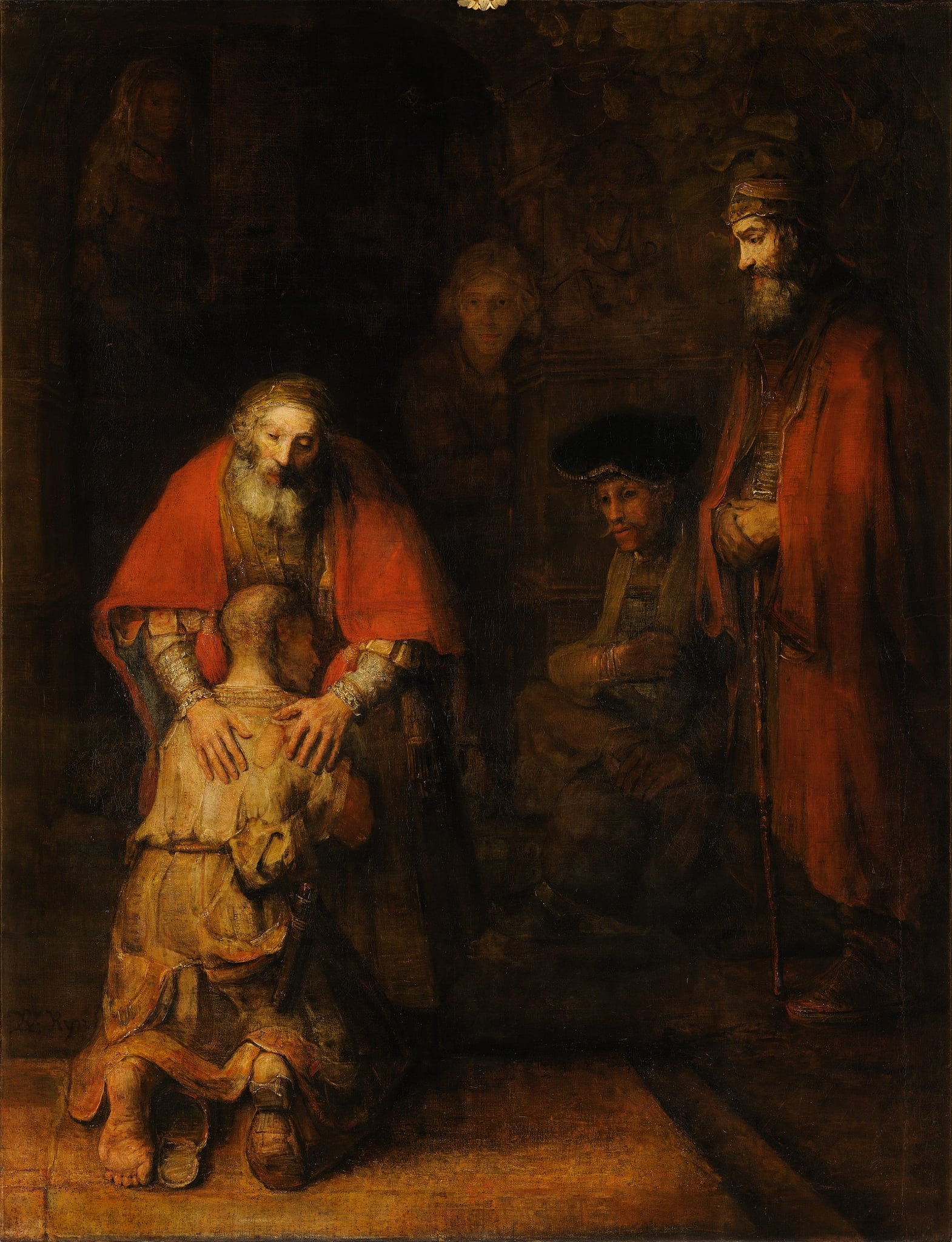
The Return of the Prodigal Son
Rembrandt van Rijn (c. 1661–1669 (probably completed by 1669))
Rembrandt van Rijn’s The Return of the Prodigal Son is a late-life meditation on <strong>mercy</strong>, <strong>homecoming</strong>, and <strong>restored dignity</strong>. In a hush of dusk-like light, a ragged son kneels into his father’s <strong>embrace</strong>, while an upright elder brother holds back in shadow. The image concentrates meaning in illuminated <strong>faces, hands, and feet</strong>, turning a parable into a timeless human reckoning. <sup>[1]</sup><sup>[2]</sup>
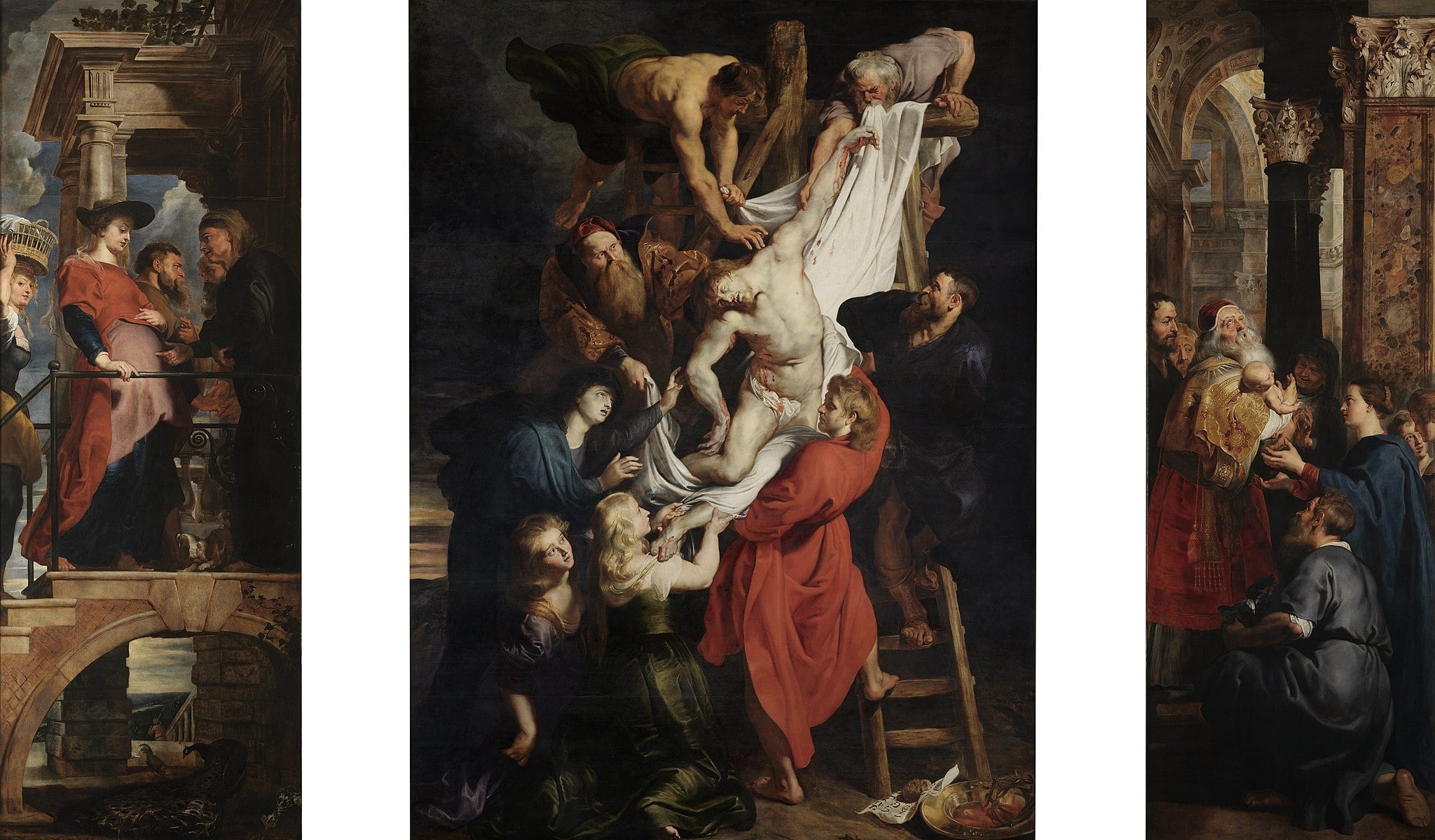
The Descent from the Cross
Peter Paul Rubens (1611–1614)
At night beneath a black sky, The Descent from the Cross stages a solemn transfer of Christ’s body along a luminous <strong>white shroud</strong> that cuts diagonally across the scene. The flanking wings—<strong>The Visitation</strong> and <strong>The Presentation in the Temple</strong>—frame the central tragedy with beginnings and revelation, turning the triptych into a single arc from Incarnation to Redemption. Rubens fuses <strong>Baroque chiaroscuro</strong> with tender, communal gestures to make grief a shared act of devotion.
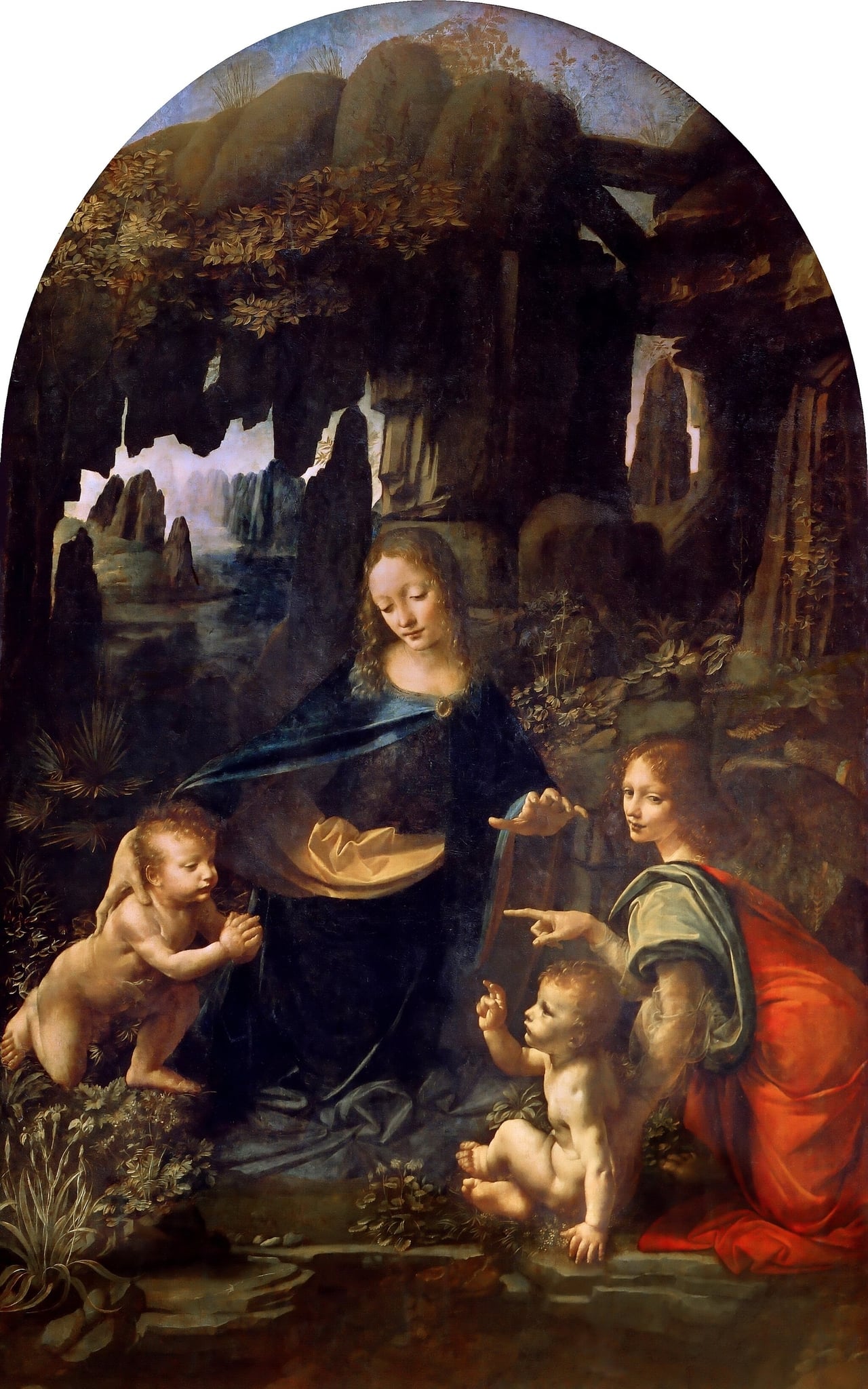
Virgin of the Rocks
Leonardo da Vinci (c. 1483–1494)
In Virgin of the Rocks, Leonardo da Vinci fuses sacred narrative with the natural world, staging the Holy Family and an angel inside a cavern where rock, water, and foliage form a living chapel. The angel’s pointing hand and outward gaze guide the viewer to the kneeling infant John as Mary shelters him and blesses the <strong>Christ Child</strong>, binding the group in a pyramidal, breath-like <strong>sfumato</strong>. By omitting overt markers like halos, Leonardo makes <strong>grace</strong> feel immanent within creation itself <sup>[1]</sup><sup>[2]</sup>.
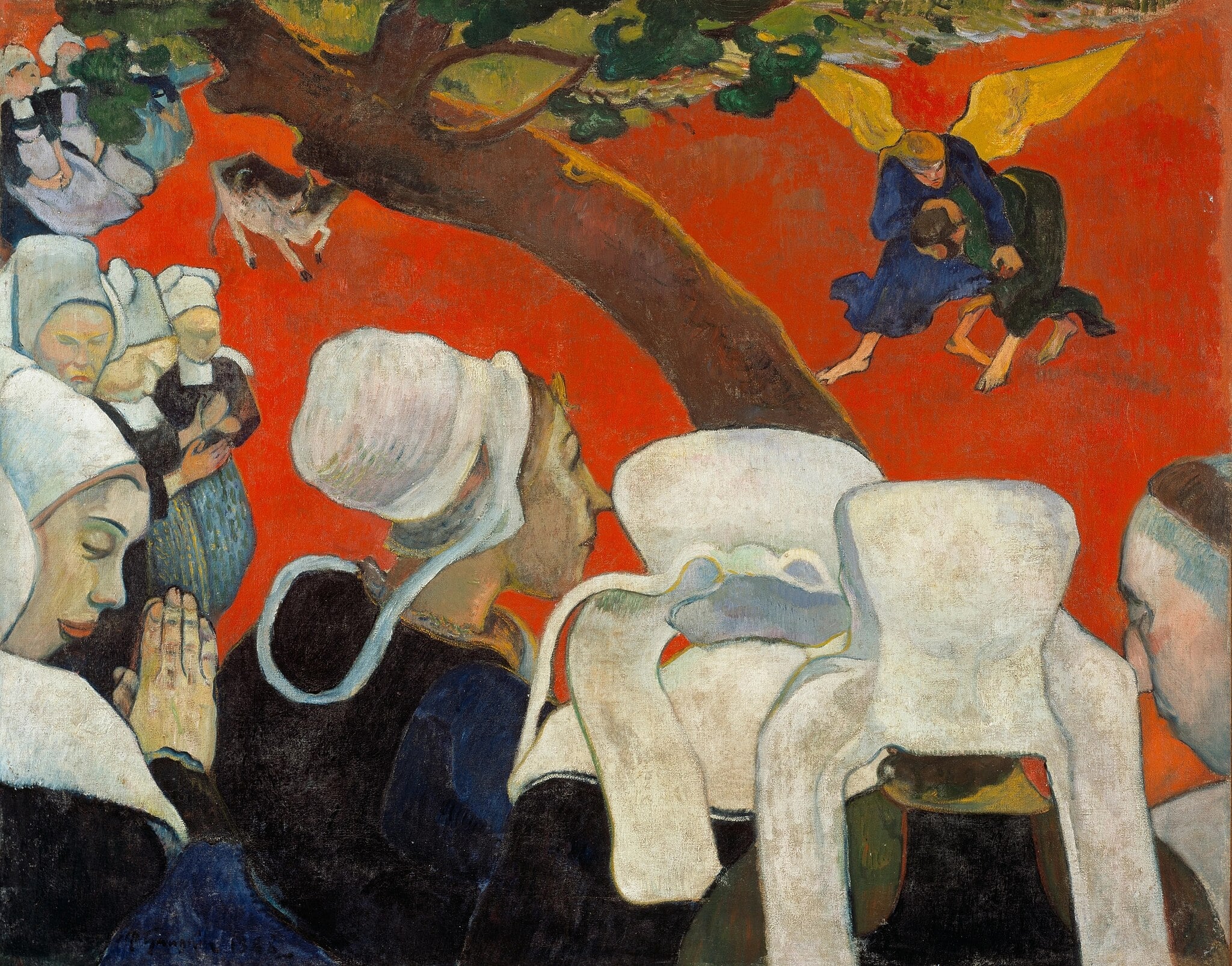
Vision After the Sermon
Paul Gauguin (1888)
Paul Gauguin’s Vision After the Sermon (1888) stages a divide between lived ritual and <strong>collective vision</strong>: Breton women pray in the foreground while, across a diagonal tree, Jacob wrestles an angel on a <strong>flat red field</strong>. With <strong>bold contours</strong> and <strong>non‑naturalistic color</strong>, Gauguin turns faith into pictorial form, making inner experience the painting’s true subject <sup>[1]</sup><sup>[2]</sup>.
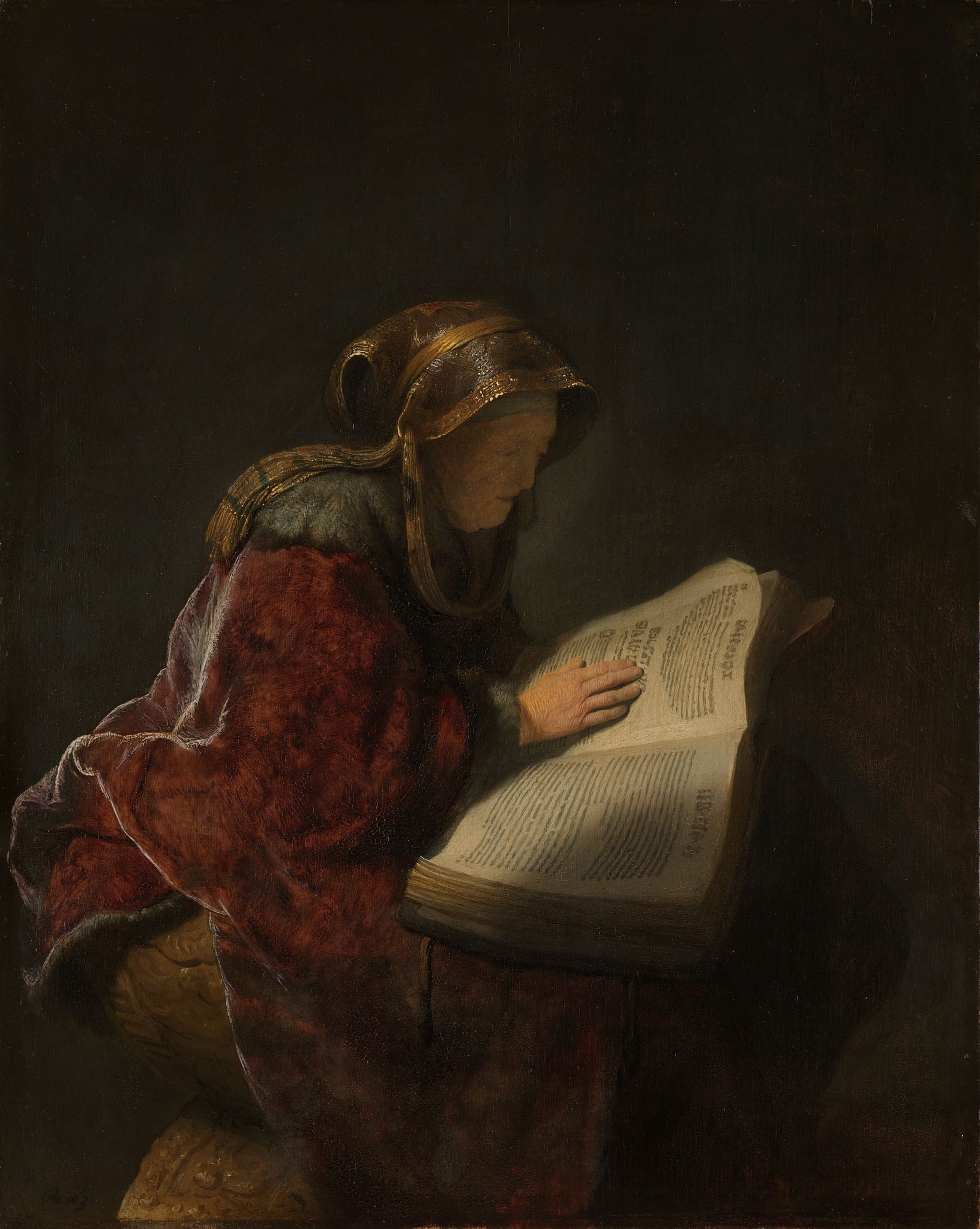
Old Woman Reading, Probably the Prophetess Anna
Rembrandt van Rijn (1631)
A solitary reader bends over a monumental book, its pages and her guiding finger catching the only concentrated light. Rembrandt van Rijn turns this quiet act into a scene of <strong>revelation</strong>, proposing the sitter as <strong>Anna the prophetess</strong>, whose lifelong devotion is embodied in the weight and glow of Scripture <sup>[1]</sup><sup>[4]</sup>.
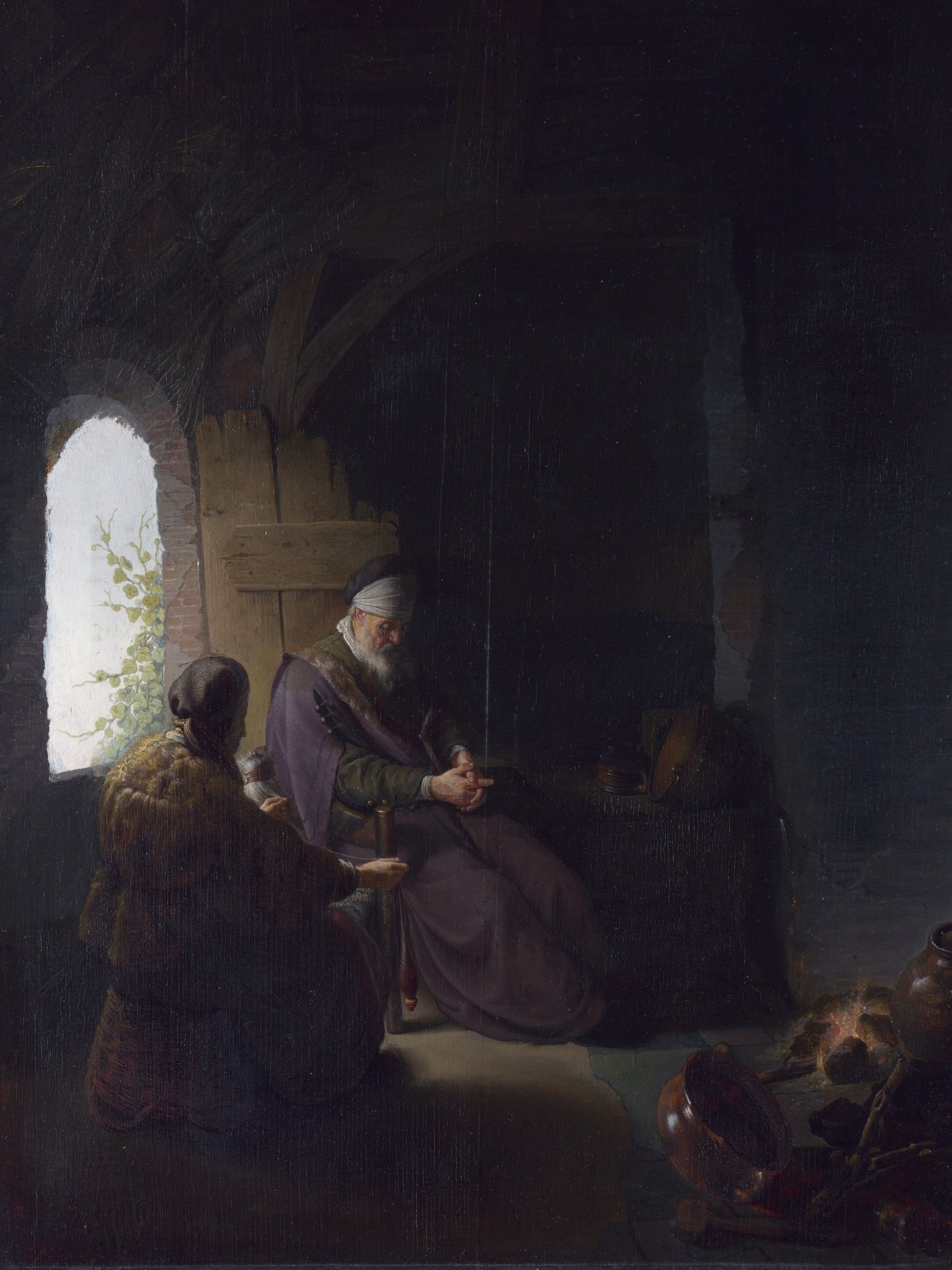
Anna and the Blind Tobit
Rembrandt van Rijn (about 1630)
In Rembrandt van Rijn’s Anna and the Blind Tobit, a cool beam from an unglazed window touches two aging figures while the room recedes into shadow. The painting compresses the Tobit story into a moment of <strong>patient endurance</strong>, where clasped hands, a staff, a smoldering hearth, and ivy at the window do the narrative work of <strong>faith under trial</strong> <sup>[1]</sup>.
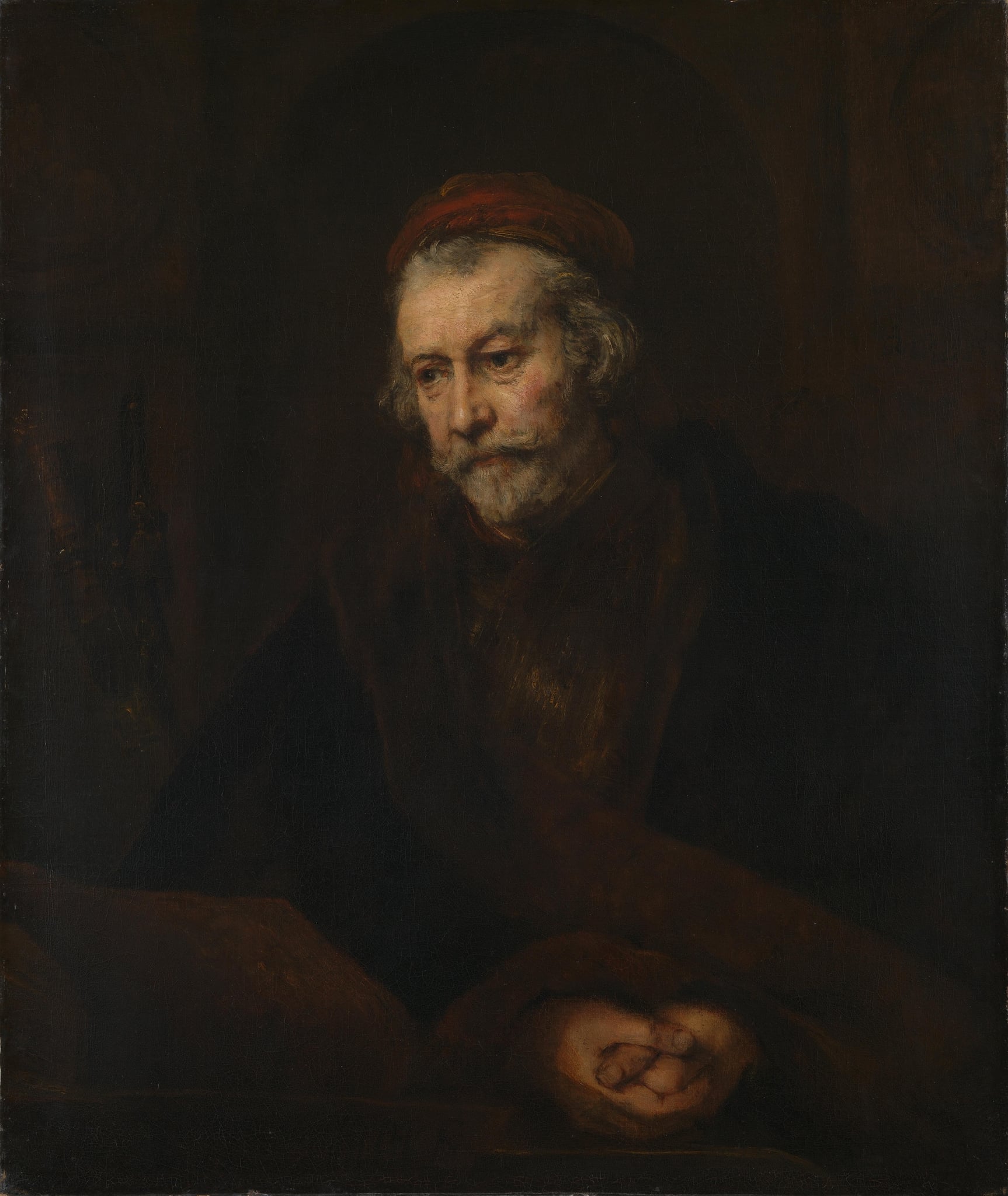
An Elderly Man as Saint Paul
Rembrandt van Rijn (1659 (probably))
Rembrandt’s An Elderly Man as Saint Paul stages a profound meditation on <strong>thought joined to faith</strong>, cupping light around a weathered face and folded hands that hover above a scholar’s book. A veiled <strong>sword</strong> and faint <strong>roundel of the Sacrifice of Isaac</strong> deepen the painting’s argument that conviction, text, and trial cohere in Pauline wisdom <sup>[1]</sup><sup>[2]</sup>.