How Much Is Rest by the Sea on a Moonlit Night Worth?
Last updated: April 22, 2026
Quick Facts
- Methodology
- comparable analysis
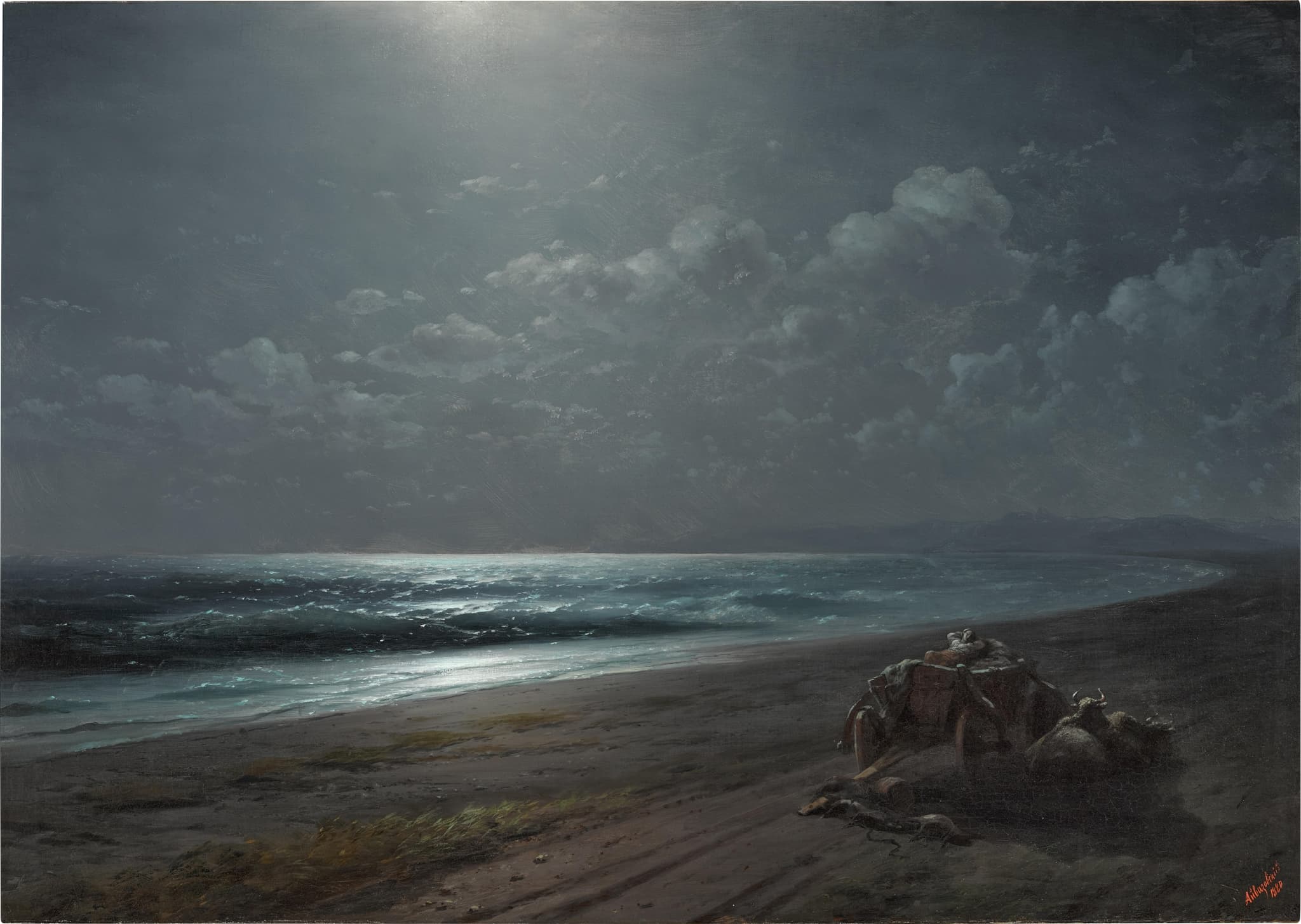
Preliminary market valuation for 'Rest by the Sea on a Moonlit Night' (attributed to Ivan Aivazovsky) is US$150,000–US$1,200,000. This range assumes an authentic mid‑to‑large autograph canvas in good condition; absence of images, dimensions, and provenance keeps the estimate intentionally wide.
Valuation Analysis
Valuation conclusion: Based on recent auction comparables and market activity for Aivazovsky moonlit seascapes, I place a preliminary market range for 'Rest by the Sea on a Moonlit Night' at US$150,000–US$1,200,000. This assessment is a comparable analysis using recent realized sales of similar subjects and sizes; without photos, dimensions, or confirmed provenance the range must remain broad and contingent on verification.
The low‑to‑mid part of the range is anchored by Western auction examples of typical moonlit seascapes by Aivazovsky. For example, Sotheby’s offered a Crimean moonlit view in May 2023 that realized about US$190,500, a useful market anchor for moderate, well‑catalogued canvases [1]. At the upper part of the estimate, a Russian‑market sale of a moonlit composition reported at 92,000,000 RUB (~US$995,000) in February 2024 demonstrates how provenance, presentation and venue can drive prices materially higher within a similar subject category [2].
Key value drivers pushing an attribution toward the low end include small size, repeated/compositional variant (non‑unique), uncertain signature/date, visible heavy restoration, or weak/absent provenance. Conversely, the high end requires a combination of: clear autograph attribution (signature and technical support), large or museum‑scale dimensions, clean condition or well‑documented conservation, and demonstrable provenance/exhibition or literature history that gives confidence to major buyers and institutions.
There are outliers above this band: truly exceptional, historically important or unique Aivazovsky canvases have realized several million dollars at major houses when provenance and scholarship are rock‑solid. However, because Aivazovsky produced many moonlit variations, most unprovenanced or undocumented works trade in the five‑figure to mid‑six‑figure range rather than the multimillion tier.
Recommended next steps to tighten and possibly raise the valuation: supply high‑resolution photos (front and verso), exact dimensions, signature closeups and any old labels; obtain a condition report and consider technical imaging (IRR/X‑ray/pigment analysis) and a provenance search in Cyrillic. With those materials an auction house specialist or academic Aivazovsky expert can produce a formal attribution and a refined sale strategy (London/New York for international competition, or Moscow/regionally if provenance is Russia‑centric).
Key Valuation Factors
Art Historical Significance
Medium ImpactAivazovsky is a central figure in 19th‑century marine painting and his moonlit seascapes are a recurring and celebrated motif. However, he produced many variants of similar compositions; the art historical premium attaches when a work can be tied to a documented exhibition, dated phase of his career, or a unique compositional innovation. A painting that can be linked to an important commission, early dated work, or to a specific historical event or sketchbook will carry high historical significance and a substantial market uplift. Absent such ties, most moonlit scenes are considered attractive but not singular, which moderates value.
Provenance and Documentation
High ImpactProvenance is a primary determinant of value for Aivazovsky. Clean, documented ownership back to reputable 19th/20th century collectors, museum loans, or exhibition and literature citations materially increase buyer confidence and price. Conversely, gaps, ambiguous post‑war/Crimea provenance, or potential legal claims introduce risk that discounts value, suppresses international bidding, and can restrict venue options. Documentation that ties the work to catalogues raisonnés, museum registers, or published exhibition histories often multiplies market value compared with similar unattributed examples.
Condition and Conservation
High ImpactCondition is critical: stable original paint, minimal intrusive overpaint, and sympathetic conservation preserve market value. Heavy relining, extensive restoration, loss of original varnish layers, or repainting of key areas can halve expected prices or worse. Technical analysis (X‑ray/IRR/pigment) that demonstrates period materials and an original ground supports authenticity and often raises buyer confidence. A current, detailed condition report is therefore essential to move from a preliminary range to an auction estimate and to determine appropriate reserve/estimate bands.
Size, Composition and Rarity
Medium ImpactLarge, dramatic marine panoramas or compositions with complex figural/architectural elements usually command premiums over small cabinet works. Aivazovsky’s most valuable canvases tend to be museum‑scale or compositionally rare pieces. If the painting is a common small‑format moonlight variant, expect prices toward the lower part of the range; if it is an unusually large, early or compositionally singular moonlit scene, the work will command a higher multiple, particularly if combined with strong provenance and condition.
Market and Sale Venue
Medium ImpactThe sale venue and market geography significantly affect achievable prices. Major international houses in London, New York, or Geneva generally produce higher, more competitive bidding for well‑provenanced Aivazovskys, while regional houses can realize strong results for works with local provenance or buyers. Geopolitical and provenance issues (notably works with Crimea/Ukraine histories) can limit cross‑border bids and shift realizations toward regional markets, sometimes at a discount. An informed placement strategy is therefore crucial.
Sale History
Rest by the Sea on a Moonlit Night has never been sold at public auction.
Ivan Aivazovsky's Market
Ivan Aivazovsky remains one of the most collectible 19th‑century Russian painters, with institutional holdings and active collector demand, especially in Russia and among marine painting specialists. The market is bifurcated: a broad base of accessible works trade in the five‑figure to mid‑six‑figure band, while rare, museum‑quality canvases can reach multi‑million dollar results when provenance and scholarship are strong. Recent headline sales have re‑rated the top end, but most lots are priced and sold according to condition, provenance and compositional rarity.
Comparable Sales
A Moonlit Night on the Crimean Coast
Ivan Aivazovsky
Direct subject match (moonlit seascape), same artist and similar period/size (catalogue lists 48.5 × 70 cm) — useful mid‑tier market anchor for moonlight compositions.
$191K
2023, Sotheby's (May 25, 2023)
~$202K adjusted
Moonlit Night (1878)
Ivan Aivazovsky
Direct moonlit seascape by Aivazovsky that realized near seven‑figures in the Russian market; shows the regional ceiling for well‑presented moonlight works (sale had provenance controversy).
$995K
2024, Moscow Auction House / Auction Holding (Feb 18, 2024)
~$1.0M adjusted
Off the Southern Coast (1893)
Ivan Aivazovsky
High‑quality late‑19th‑century seascape by Aivazovsky sold in London for a strong mid‑six‑figure price — comparable for quality/market demand outside Russia.
$652K
2024, MacDougall (Apr 10, 2024)
~$671K adjusted
The Survivors
Ivan Aivazovsky
Recent artist auction record (museum‑quality, large composition) — establishes the top‑end market ceiling for Aivazovsky at auction.
$5.5M
2025, Sotheby's London (Nov 2025)
View of Constantinople and the Bosphorus
Ivan Aivazovsky
Previously reported high‑value historical sale of a major Aivazovsky seascape — useful as a historical high‑end benchmark, adjusted here to 2025 dollars.
$5.2M
2012, Sotheby's (2012)
~$6.5M adjusted
Current Market Trends
Recent seasons have shown strong demand at the high end for well‑provenanced Aivazovskys, while the broader market remains tiered and sensitive to provenance risk, especially works linked to Crimea/Ukraine. Venue selection and rigorous due diligence are increasingly important, and technical authentication plus clear documentation now materially influence buyer confidence and realized prices.