Most Expensive Ivan Aivazovsky Paintings
Ivan Aivazovsky’s luminous seascapes occupy a singular place in the market: at once academic masterpieces and perennial favorites among collectors, museums, and high-end galleries. His market standing is anchored by rarities like The Ninth Wave, which commands an extraordinary $40–60 million and sets the benchmark for 19th-century marine painting, while other signature works regularly fetch multimillion-dollar sums. Dramatic naval scenes such as Brig "Mercury" Attacked by Two Turkish Ships (about $6.5–10 million) and The Survivors ($5–6 million) demonstrate the robust demand for Aivazovsky’s narrative vigor and technical virtuosity. Views and coastal panoramas—View of Constantinople and the Bosphorus ($3–7 million), Shipwreck off the Black Sea Coast ($3–5.5 million), and The Bay of Naples ($3–5.5 million)—are prized for their atmospheric handling of light and historical resonance. Even more modestly estimated works like The Black Sea ($1.25–4.5 million) and The Storm ($2.5–4.5 million) retain strong liquidity thanks to Aivazovsky’s unmistakable brushwork and universal appeal. Collectibility rests on provenance, condition, and the artist’s rare ability to render the sea as both spectacle and metaphor.
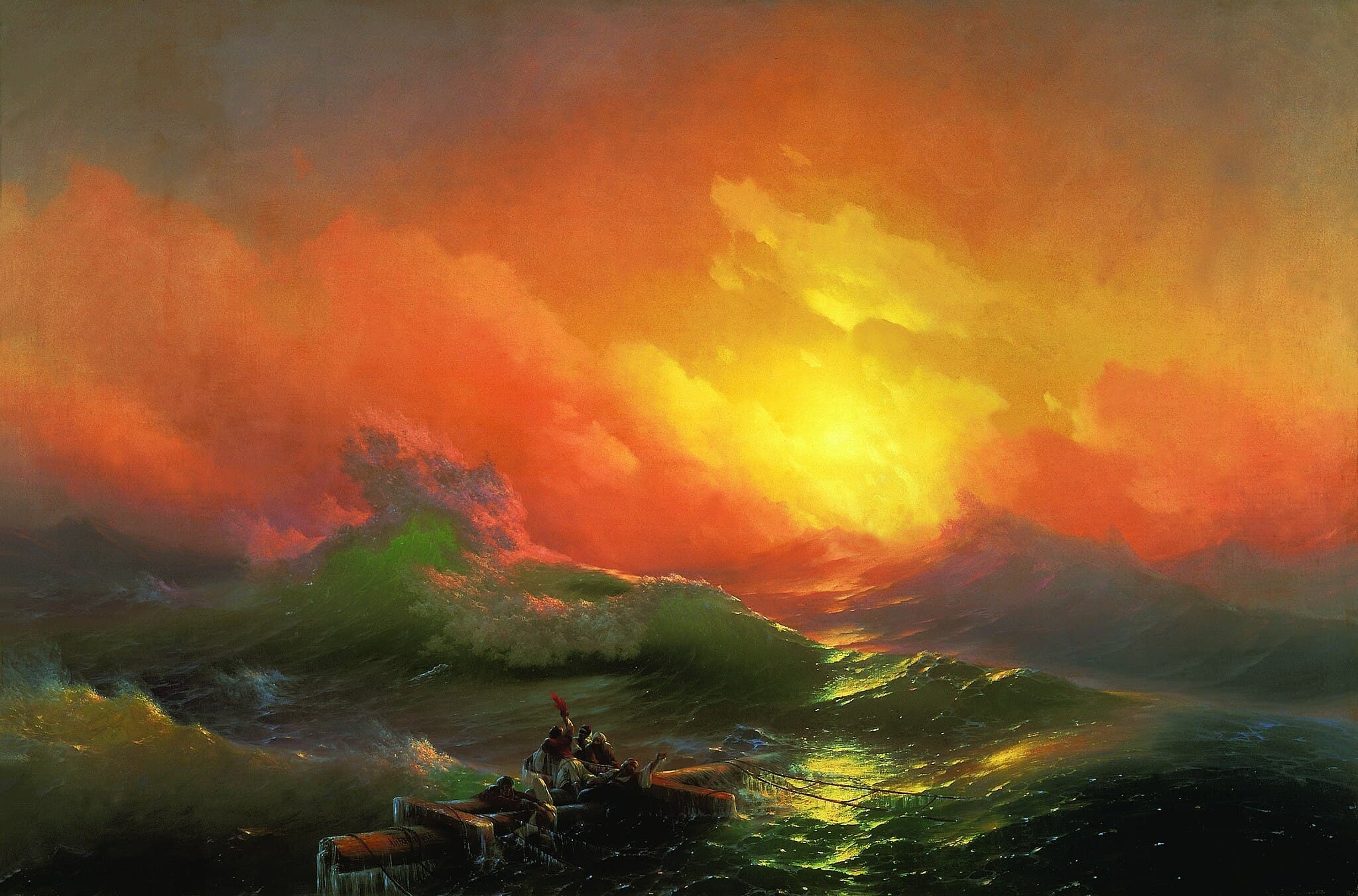
$40-60 million
Housed in the State Russian Museum and never publicly sold, Aivazovsky’s canonical The Ninth Wave underpins the $40–60M open-market estimate for its unmatched art-historical stature.
$6.5-10 million
An autograph 1892 museum-scale Brig “Mercury” — extrapolated above Aivazovsky’s $5.5M auction record and trophy benchmarks — justifies the $6.5–10M market estimate.
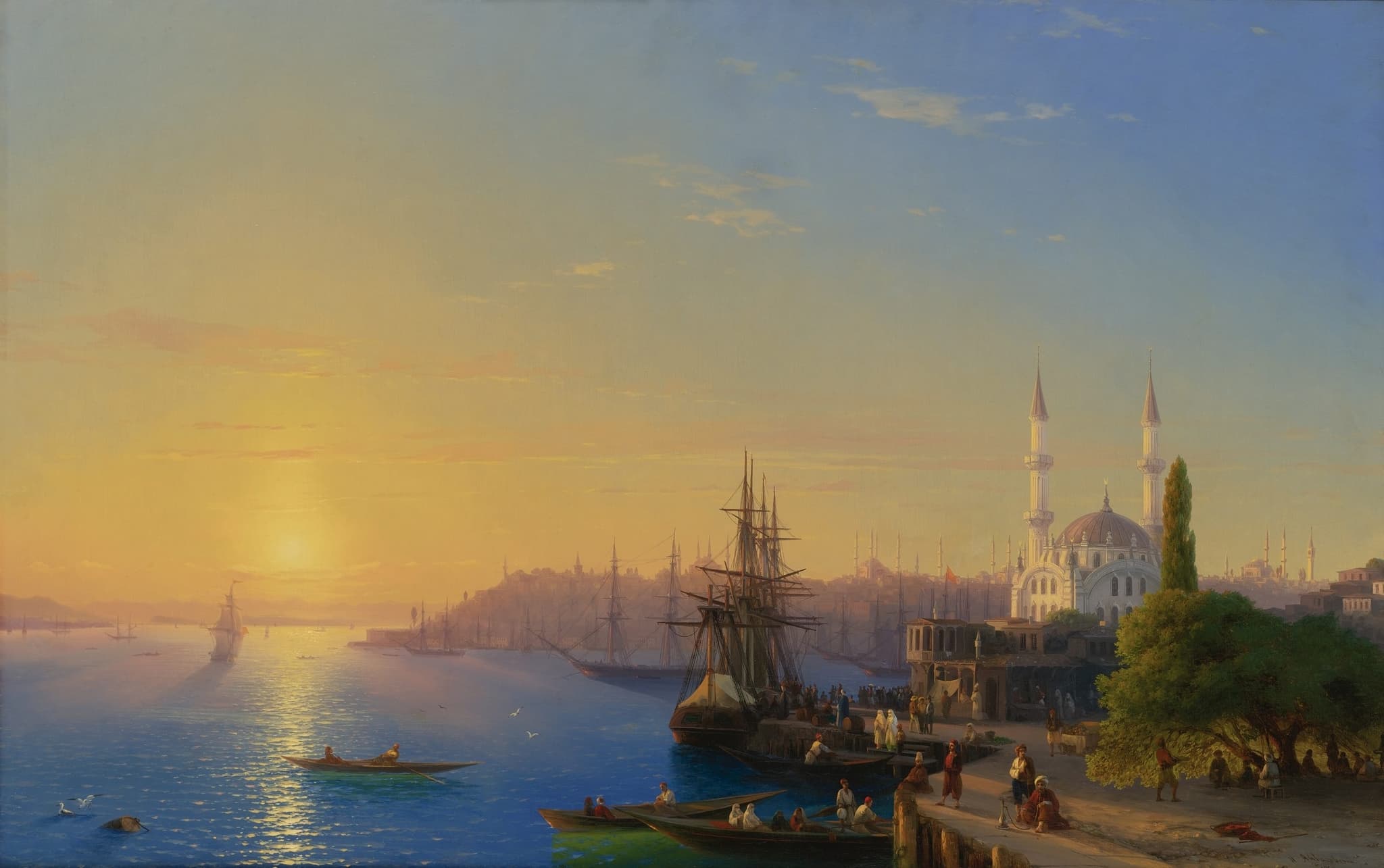
$3-7 million
If identical to the signed 1856 canvas sold at Sotheby’s London on 24 April 2012 for GBP3,233,250 (~USD5.22M), comparable Constantinople/Bosphorus works merit the $3–7M range.
$2,500,000–$6,000,000
Anchored to Christie’s London 2007 realisation of $5.34M for the same-sized 1873 American Shipping off the Rock of Gibraltar, the current estimate is $2.5–6.0M.

$5,000,000-$6,000,000
If identical to the documented 1878 monumental canvas sold at Sotheby’s London on 25 Nov 2025, The Survivors’ market value is approximately $5.0–6.0M.
$3.0-5.5 million
If identical to the catalogue-listed 1878 Bay of Naples (CS‑1878‑009) sold at Sotheby’s 2020, the painting’s market range is about $3.0–5.5M depending on venue and condition.
$3.0-5.5 million
Based on the identical canvas sold at Sotheby’s London in 2020 (≈$3.11M) and later trophy movements, Shipwreck off the Black Sea Coast is estimated at $3.0–5.5M.
$3,000,000–$5,500,000
A confirmed autograph, large 1846 Battle of Navarino in excellent museum condition is estimated at $3.0–5.5M, but institutional ownership and unclear saleability hinge on provenance/export constraints.
$1.25-4.5 million
Valued as a hypothetical deaccession, the Tretyakov’s 1881 The Black Sea is placed at $1.25–4.5M, reflecting institutional provenance and comparable large Aivazovsky results.
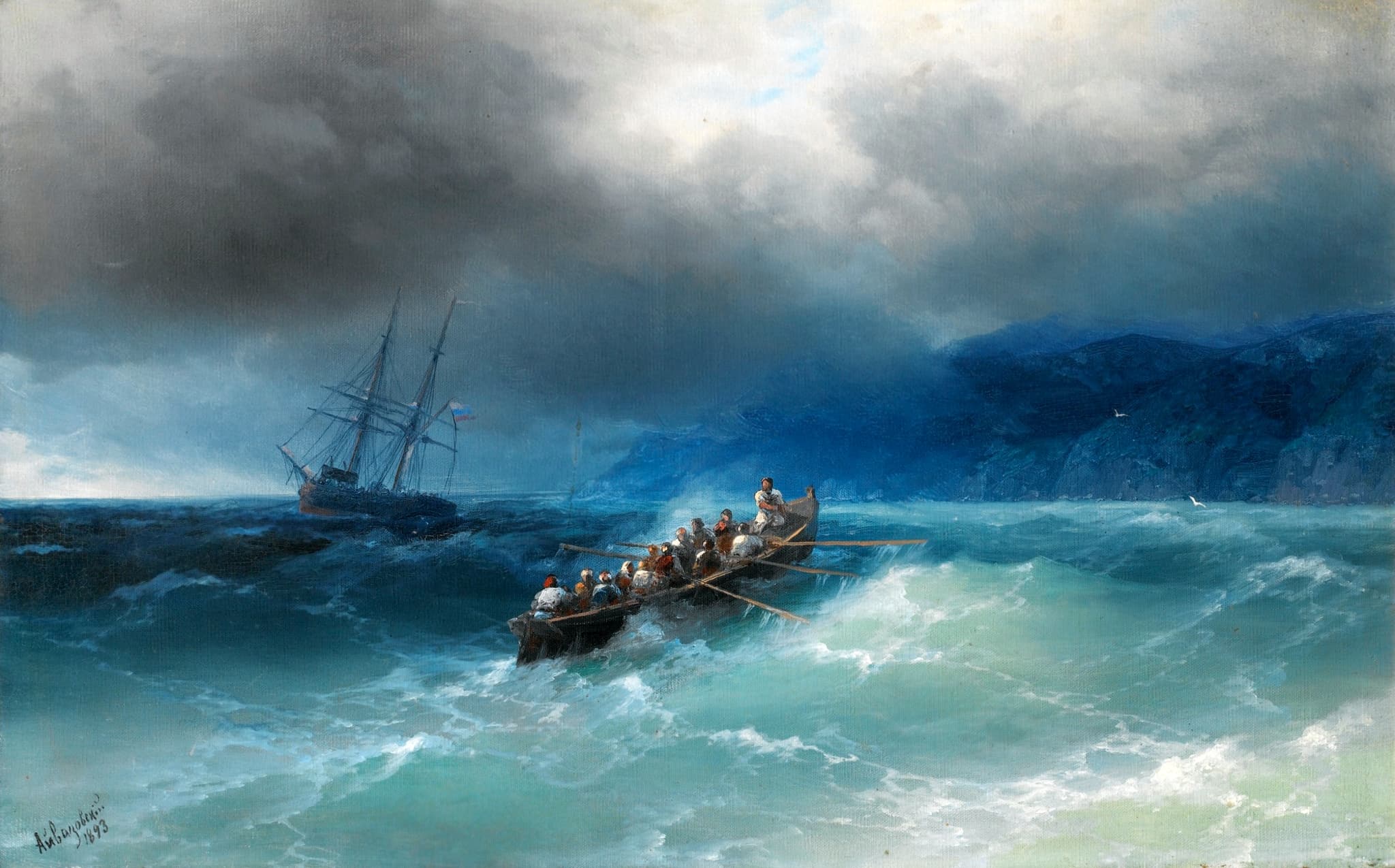
$2.5-4.5 million
If offered in a marquee London evening sale, the National Gallery of Armenia’s 1850 The Storm (Seascape) is appraised at $2.5–4.5M, with upside if the larger size is confirmed.

$1.8-4.0 million
Using Christie’s 30 Nov 2004 realisation of $2,125,597 as anchor, St. Isaac’s on a Frosty Day is estimated today at $1.8–4.0M, subject to identicality and condition.

$900,000 - $3,200,000
Anchored to Christie’s London 2013 realisation of $1,267,650 for Promenade at Sunset (1869), the current auction range is estimated at $900K–3.2M depending on condition and venue.
$1.20-1.70M
Anchored to the identical lot’s Sotheby’s London 2 July 2025 realisation (£1,064,800 ≈ $1.45M), Ship at Anchor in Calm Waters is valued at $1.2–1.7M.
$20,000–$1,500,000
The $20K–1.5M spread for Dawn at Sea reflects distinctions between small workshop copies and large, signed, museum‑quality canvases; images, dimensions and provenance are decisive.
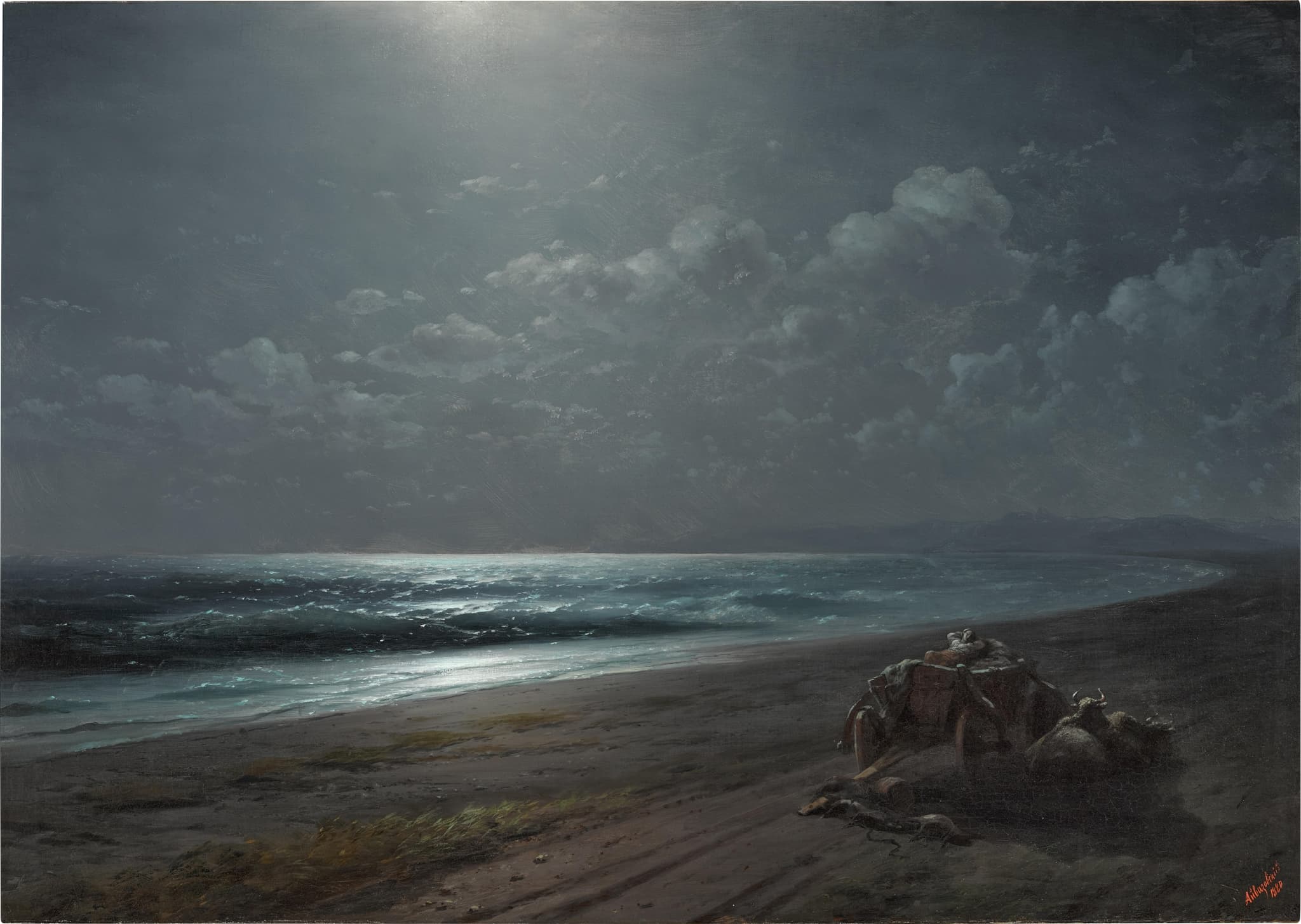
$150,000–$1,200,000
As an attributed work, Rest by the Sea on a Moonlit Night is preliminarily valued at $150K–1.2M, contingent on authentication, dimensions, condition and provenance.
What Drives Value in Ivan Aivazovsky's Work
Prime‑period storm/shipwreck masterpieces
Aivazovsky’s highest prices cluster around heroic, narrative shipwrecks executed in his prime (c. 1840s–1870s). Canvases such as The Ninth Wave (1850), The Storm (c.1850) and The Survivors (1878) embody the artist’s peak handling of light, sea spray and human drama. These singular, museum‑worthy compositions function as ‘name’ works and routinely far outstrip routine marines in bidder enthusiasm, producing outlier multiples versus otherwise comparable Aivazovsky pictures.
Monumental scale and theatrical technique
Very large, salon‑scale canvases are a repeating Aivazovsky price pattern: The Ninth Wave (221×332 cm), Brig “Mercury” (212×339 cm) and other panoramic works reveal glazing, layered atmospherics and impasto that read dramatically in sale rooms. Buyers pay premiums for works that display his technical bravura at scale; large format both amplifies visual impact and reduces comparable supply, concentrating competition among trophy collectors and institutions.
Patriotic/historical subjects and regional iconography
Narratives tied to national history or famous ports materially alter demand: the Brig “Mercury” (naval heroism) and Battle of Navarino command extra interest from Russian and regional institutional collectors, while View of Constantinople/Bosphorus and Bay of Naples attract Turkey, Levant and European buyers. Reproduction, taught iconography and cultural resonance make these themes disproportionately desirable within Aivazovsky’s oeuvre compared with generic coastal views.
Authorial attribution, provenance & museum links (studio‑variant risk)
Aivazovsky ran a productive studio and produced many variants; clear autograph attribution, catalogue‑raisonné inclusion and museum provenance (Tretyakov, Feodosia entries, or Sotheby’s/Christie’s literature citations) are decisive. Secure chains of ownership and technical confirmation convert a canvas from a routine workshop example into an evening‑sale trophy. Conversely, workshop copies, Crimea‑linked provenance or gaps in documentation sharply shrink the buyer pool and depress realizations.
Market Context
Ivan Aivazovsky (1817–1900) remains the pre‑eminent 19th‑century marine painter with a deep, tiered auction market: modest studio works trade in five figures, solid signed canvases sit in the high five–to–six‑figure band, and museum‑scale, well‑provenanced seascapes command multi‑million results — capped by a c. $5.53m Sotheby’s London record in 2025. Demand is sustained across Russia, Ukraine, the Caucasus/Armenian diaspora, Türkiye and the Middle East, and resurfaces among European and US buyers for top examples; leading institutions and collectors drive trophy competition. Since 2022 compliance and geopolitical constraints have reshaped sale channels, prompting major houses to fold Russian pictures into broader Old Master/19th‑century sales, preserving top‑end liquidity. Condition, provenance and venue remain decisive; trajectory: resilient and selective, with premiums for exhibition‑quality works.