How Much Is Arrangement in Flesh Colour and Pink: Portrait of Mrs. Frances Leyland Worth?
Last updated: May 1, 2026
Quick Facts
- Methodology
- comparable analysis
This is a hypothetical market valuation for James A. M. Whistler’s "Arrangement in Flesh Colour and Pink: Portrait of Mrs. Frances Leyland" if offered with clear title and in excellent, museum‑grade condition. Given institutional (Frick) provenance, Leyland association, and comparable auction evidence for museum‑quality Whistler oils, the planning range is $2,000,000–$8,000,000 USD, contingent on confirmed autograph status, condition and sale venue.
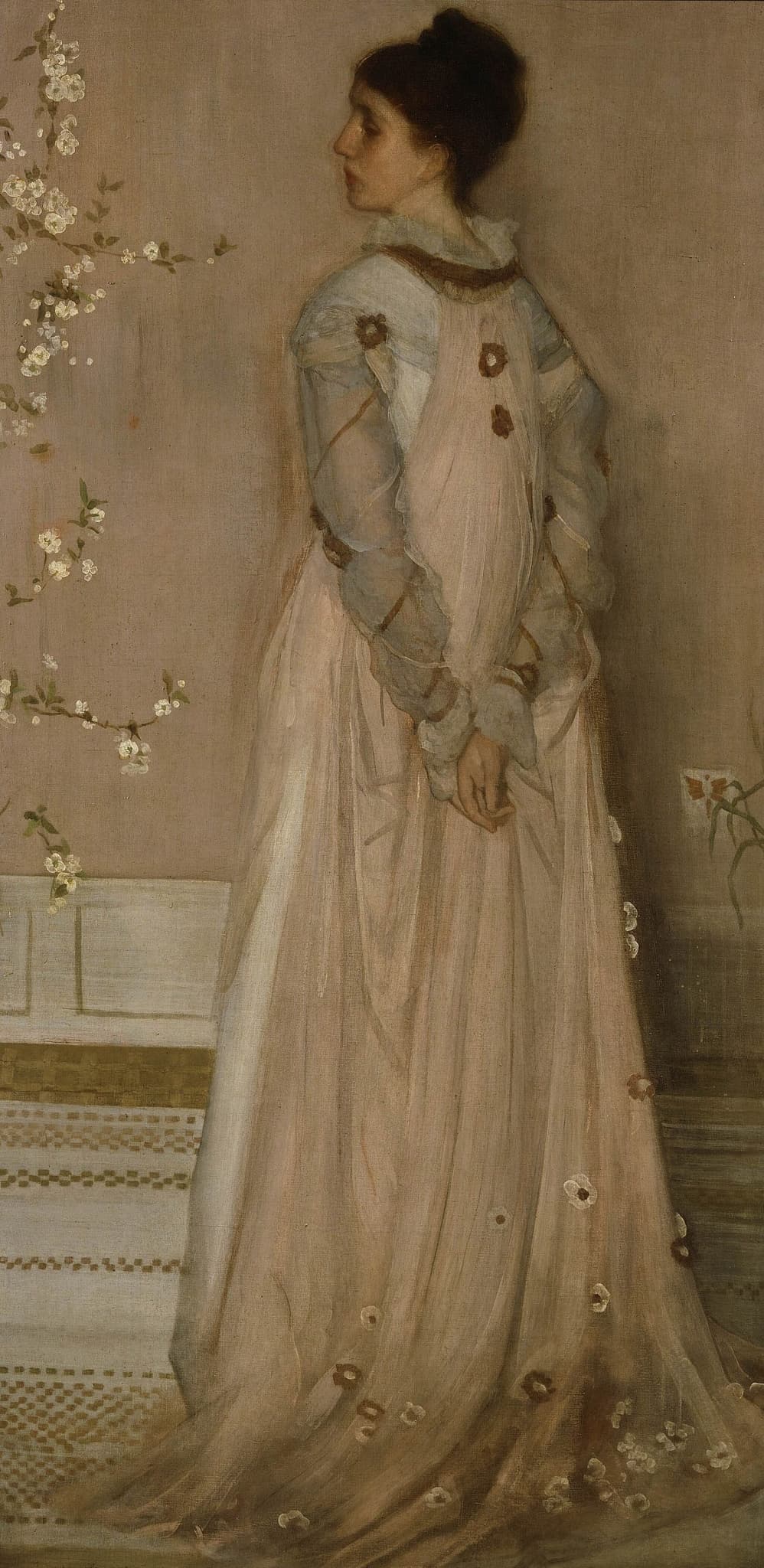
Arrangement in Flesh Colour and Pink: Portrait of Mrs. Frances Leyland
James Abbott McNeill Whistler, 1883 • Oil on canvas
View more by James Abbott McNeill Whistler →Valuation Analysis
Context and headline valuation. This valuation assumes a hypothetical market offering of James Abbott McNeill Whistler’s "Arrangement in Flesh Colour and Pink: Portrait of Mrs. Frances Leyland" with clear title and in excellent, museum‑grade condition. The work is held in The Frick Collection and therefore has not been price‑tested in the modern auction market; institutional ownership and the Leyland association increase scholarly interest and create a scarcity premium for any potential sale [1]. Based on comparable auction outcomes for autograph Whistler oils and this painting’s strong provenance, my planning range is $2,000,000–$8,000,000 USD.
Provenance and attribution. The portrait was commissioned by Frederick R. Leyland in the 1870s and Whistler’s correspondence documents the commission/payment; it later passed through the Leyland family and was acquired by Henry Clay Frick from dealer Alice Buell Creelman around 1916, entering the Frick Collection (accession noted in Whistler catalogues) [2]. This continuous provenance materially reduces title and attribution risk—an important positive for marketability—while simultaneously meaning there is no recent public sale record to anchor a realized price.
Comparables and pricing logic. Whistler auction results are heterogeneous: small and medium oils and studies commonly trade in the mid‑six‑figure band, whereas museum‑quality, autograph portraits and rare large oils have reached multi‑million-dollar results when offered at premier houses. Examples include historic major‑house sales and recent mid‑market portrait results that demonstrate both upside and volatility [3][4]. Given this painting’s likely scale, full‑length portrait format, and Leyland/Frick provenance, it would be expected to sit above routine small oil results and within the low‑to‑upper seven‑figure band if offered under competitive sale conditions. Final price will hinge on sale venue, catalogue scholarship, pre‑sale marketing and buyer appetite at time of sale.
Buyer pool, risks and adjustments. Potential buyers include major museums, high‑net‑worth private collectors of nineteenth‑century Anglo‑American art, and dealers buying for clients. Institutional buyers sometimes secure works via donation or negotiated purchase rather than open auction, so an auction offering may attract private buyers and dealer intermediaries. Key downside risks that would materially lower realization include undisclosed condition issues, significant restoration, unresolved attribution, export restrictions, or weak pre‑sale scholarship; mitigating these through a full condition report, technical study and authoritative catalogue entries will improve outcomes.
Conclusion and next steps. On balance and conditional on confirmed autograph attribution, excellent conservation state, and clear title, the prudent planning band is $2,000,000–$8,000,000 USD. Because the work is museum‑held and untested at auction, this estimate retains uncertainty at both ends. To refine the valuation: obtain high‑resolution images and a detailed conservation report, verify the catalogue‑raisonné entry and published references, and consult leading Whistler specialists and major‑house nineteenth‑century departments to determine optimal sale timing and venue.
Key Valuation Factors
Art Historical Significance
High ImpactThis portrait sits within Whistler’s Leyland commission cycle and relates directly to the circle of works associated with the Peacock Room and Leyland patronage. While not as universally iconic as "Arrangement in Grey and Black" (Whistler’s Mother), a full‑length, well‑executed portrait of Mrs. Leyland has high art‑historical interest because it documents Whistler’s principal patron relationships and aesthetic concerns of the period. High scholarly significance increases institutional interest and collector desirability and therefore supports a premium relative to routine Whistler studio studies or prints. Inclusion in key exhibitions or scholarship would further elevate its market standing and justify movement toward the top of the estimated band.
Provenance & Ownership
High ImpactThe painting’s provenance—commissioned by Frederick R. Leyland, documented in Whistler’s papers, and later acquired by Henry Clay Frick—constitutes one of the stronger possible ownership histories for a nineteenth‑century Anglo‑American work. Continuous, well‑documented provenance materially reduces title risk, reassures buyers about attribution, and carries institutional cachet that typically supports higher realizations. Museum ownership enhances scholarly visibility but removes a modern market test, introducing valuation uncertainty; nevertheless, Frick provenance is a clear positive and a major driver behind the estimated range.
Condition & Conservation
Medium ImpactCondition is a primary technical determinant of value. A painting in original, stable condition with minimal later retouching and a clear conservation record will command top bids. Conversely, structural issues (lining, severe craquelure), heavy restoration, or undocumented overpaint can deter buyers and compel discounts. For a museum‑owned work, obtaining a detailed conservation report and, where possible, technical imaging (X‑radiography, IR reflectography, pigment analysis) is essential before marketing. Condition uncertainty can shift a lot from the high end toward the low end of the proposed market band.
Market Comparables & Rarity
High ImpactComparable auction results for Whistler vary: small works and prints trade more frequently at modest prices, while museum‑quality oils and important portraits are rare in the market and, when they appear, can achieve strong seven‑figure results. The rarity of large, Leyland‑related, autograph portraits amplifies demand from a comparatively small pool of motivated buyers, supporting the upper segment of the range. Sale venue and marketing (evening sale at a top house vs. regional sale) will materially affect realized price; premium houses with rigorous scholarship typically secure higher final results.
Exhibition & Publication History
Medium ImpactExhibition loans and catalogue publication substantively increase market value by validating attribution and widening the buyer audience. Works that have been published in authoritative catalogue‑raisonné entries or included in major museum exhibitions attract institutional buyers and confident private collectors. For this painting, published entries and any history of display or inclusion in Frick publications will improve buyer confidence and support better realizations. Lack of exhibition or publication history can be offset by pre‑sale scholarship and high‑quality catalogue material prepared by the selling house.
Sale History
James Abbott McNeill Whistler's Market
James Abbott McNeill Whistler is a blue‑chip nineteenth‑century artist whose top oils and portraits command strong institutional interest and can achieve multi‑million‑dollar results when offered. The market is characterized by scarcity of major paintings in private hands, episodic demand, and a distinct separation between highly sought‑after large oils and frequently traded works on paper. Provenance, condition, and exhibition history are decisive in price differentiation. Prints and works on paper provide a more liquid entry point; museum holdings (Freer, Tate, Frick) sustain scholarly credibility and buyer appetite for major examples.
Comparable Sales
Harmony in Grey, Chelsea in Ice
James Abbott McNeill Whistler
Large, museum-quality Whistler oil sold at a major house; useful high-end benchmark for autograph Whistler paintings.
$2.9M
2000, Christie's (May 25, 2000)
~$5.5M adjusted
Whistler Smoking (self-portrait)
James Abbott McNeill Whistler
Small oil by Whistler sold recently at a major house; indicates mid-six to low-seven-figure demand for quality oils.
$1.2M
2021, Christie's New York (20th Century Evening Sale, 11 Nov 2021)
~$1.5M adjusted
Portrait of Lucas Alexander Ionides
James Abbott McNeill Whistler
Portrait sold at Bonhams with solid provenance; a recent portrait comp at a regional/UK house, showing demand but lower realization vs. major-house museum-quality lots.
$544K
2024, Bonhams (London, 25 Sep 2024)
~$565K adjusted
Howth Head, Near Dublin
James Abbott McNeill Whistler
Smaller landscape oil sold at Christie's New York; useful to show lower-end results for small/medium Whistler oils.
$239K
2023, Christie's (New York, 19 Jan 2023)
~$259K adjusted
Current Market Trends
Current market conditions for nineteenth‑century British and Anglo‑American painting show episodic strength when museum‑quality works surface but overall thinner liquidity than the contemporary market. Recent years have seen selective outperformance for well‑provenanced Whistler oils, while smaller works and prints remain the more predictable segment. Timing, venue, and scholarly support are decisive: a top‑house sale accompanied by strong catalogue scholarship and institutional interest will materially improve realization prospects.
Sources
- The Frick Collection — press/release and object reference (Symphony/Arrangement in Flesh Colour and Pink: Portrait of Mrs Frances Leyland)
- Whistler Paintings (catalogue raisonné / Whistler Painting Project) — catalogue entry and provenance notes
- Bonhams — press release (Portrait of Lucas Alexander Ionides: Whistler sale example)
- Christie's — artist and lot records (historic major‑house Whistler sale examples)