How Much Is Arrangement in Grey and Black, No. 2: Portrait of Thomas Carlyle Worth?
Last updated: May 1, 2026
Quick Facts
- Last Sale
- $5K (1891, City of Glasgow (Kelvingrove Art Gallery & Museum) - purchase)
- Methodology
- comparable analysis
If legitimately offered on the open market (i.e., deaccessioned and in saleable condition), James McNeill Whistler’s Arrangement in Grey and Black, No. 2: Portrait of Thomas Carlyle is best estimated at USD 2,000,000–6,000,000. This range reflects the painting’s large scale, prominent sitter and museum provenance, tempered by its museum ownership (deaccession/legal constraints) and the lack of close modern auction comparables.
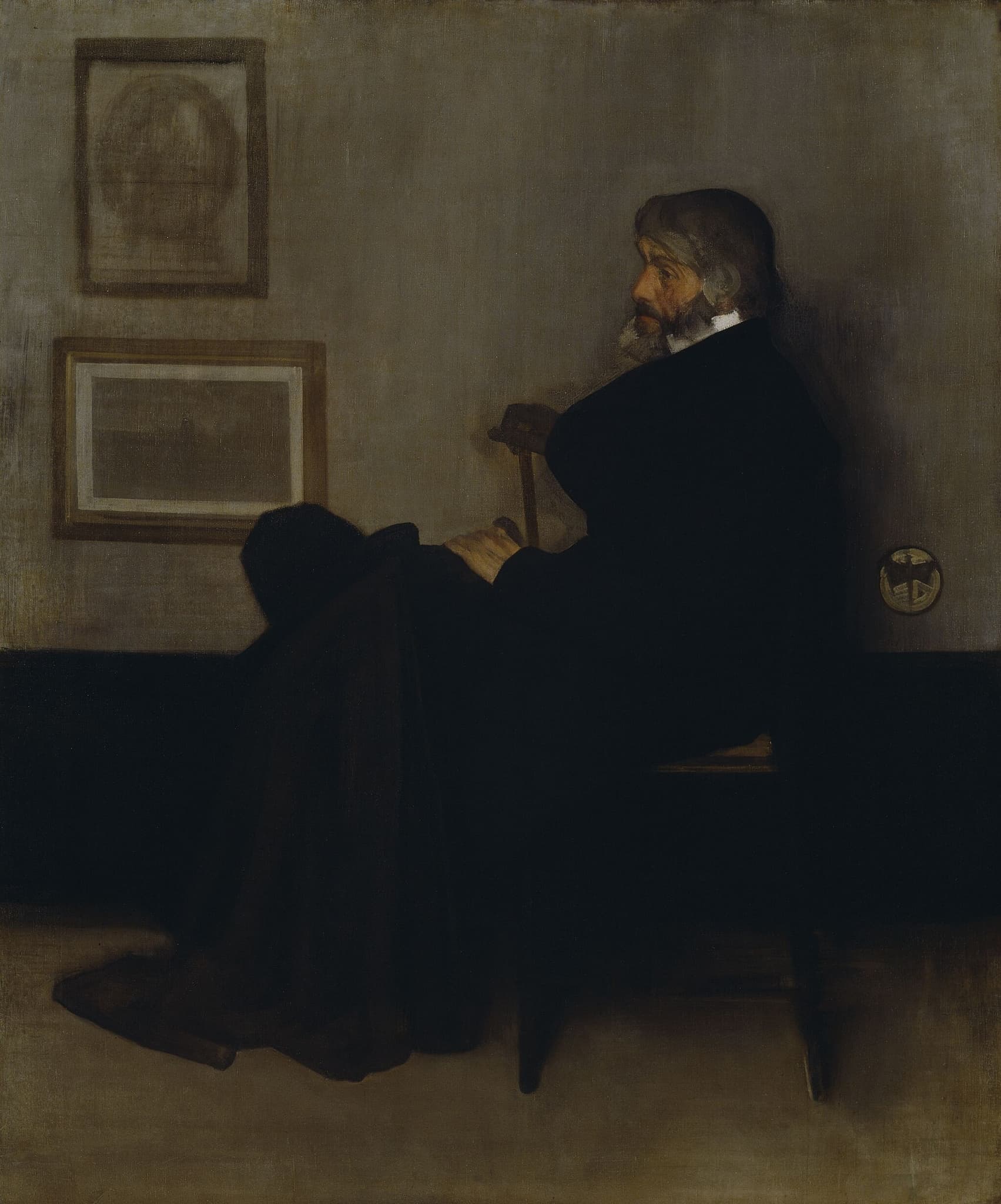
Arrangement in Grey and Black, No. 2: Portrait of Thomas Carlyle
James Abbott McNeill Whistler • Oil on canvas
View more by James Abbott McNeill Whistler →Valuation Analysis
Valuation conclusion: Based on comparative market evidence, institutional provenance and known exhibition history, I estimate a realistic market range of USD 2,000,000–6,000,000 for Arrangement in Grey and Black, No. 2 (assuming clean title, marketable legal status and sound physical condition) [1]. The picture is in the public collection of Glasgow (Kelvingrove) following a City of Glasgow purchase in 1891; it has not appeared in modern auction markets since that acquisition [1].
Method and comparables: This valuation uses a comparable-analysis approach: recent Whistler oil results (notably a high-quality small panel that realised c. USD 1.2M at Christie’s in 2021) set a demonstrated willingness to pay for rare, attractive Whistler oils, while mid‑tier portrait results (Bonhams, 2024) and regional sales for works on paper define the lower and middle market bands [2][3]. Because the Carlyle portrait is a full‑scale, museum‑quality commissioned oil (approx. 171 × 143.5 cm), it should command a premium above most small panels and watercolours; however, very few directly comparable large Whistler portraits have traded in recent decades, so extrapolation from available comparables requires conservatism [2][3].
Drivers up and down: Upward drivers include the sitter’s historical importance (Thomas Carlyle), the painting’s large format and strong museum provenance/exhibition history, and renewed scholarly/institutional attention to Whistler which tends to lift demand for exhibition‑quality works. Downside risks are: (a) unknown current conservation condition (large canvases can require costly treatment), (b) legal/ethical constraints around deaccessioning from a public collection (which can limit buyer pools), and (c) limited modern sale precedent for directly comparable works, which increases price uncertainty. If the painting required major conservation or faced clear restrictions on sale, values could fall below the lower bound given here.
Market context and likely outcome: In ordinary market conditions a clean, saleable Carlyle portrait of this scale and importance would be expected to draw institutional and strong private interest and to trade in the low‑to‑mid millions — hence the central band USD 2–6M. Exceptional competitive bidding (rare) or a situational growth in scholarly attention tied to a major exhibition could push the price above this band toward the stated conservative upside (~USD 8M), but that outcome is unlikely without an extraordinary bidding scenario. Conversely, sale attempts constrained by museum deaccession rules or by evident conservation problems could reduce realisable value substantially below the stated band.
Recommended next steps before any formal sale/offer: (1) obtain a full condition and technical report (conservation costs materially affect market value); (2) confirm legal/ownership status and any deaccession constraints with Glasgow Museums; (3) obtain expert consensus on attribution/quality from Whistler specialists and catalog‑raisiné references; (4) run a market test with a major house (Christie’s/Sotheby’s/Bonhams) to gauge institutional interest and to set a public estimate/reserve aligned to the target band. These steps would materially narrow the uncertainty behind the range given here [1][2].
Key Valuation Factors
Art Historical Significance
High ImpactArrangement in Grey and Black, No. 2 is a significant Whistler portrait by virtue of its sitter (the prominent Victorian writer Thomas Carlyle), its date (early 1870s) and its scale. While not as iconic as "Arrangement in Grey and Black No. 1" (Whistler's Mother), the picture sits high in Whistler’s portrait oeuvre: it is a commissioned, full‑scale oil with demonstrable exhibition and scholarly interest. That combination of an important sitter and a major artist elevates collector and institutional appetite relative to routine works on paper or smaller panels, supporting a multi‑million dollar valuation when saleable and in good condition.
Provenance & Exhibition History
High ImpactThe work's continuous public provenance — purchased by the City of Glasgow in 1891 and held by Kelvingrove — is a strong value enhancer because it reduces questions about attribution and ownership chain. Museum ownership implies a recorded accession history and likely inclusion in catalogues and exhibitions, which both increases scholarly value and reduces transaction risk for buyers. The downside is that museum ownership also typically complicates marketability (deaccession rules and public scrutiny), which can limit the pool of buyers and affect sale mechanics and price realization.
Condition & Conservation Risk
High ImpactLarge 19th‑century oil canvases are materially sensitive to condition: varnish discoloration, relining, tear or overpaint can each materially reduce market value and increase transaction friction. Because the painting remains in a museum, detailed conservation records may exist, but absent a current technical/condition report an appraiser must discount for uncertainty. Costly conservation needs or irreversible damage would materially depress the value; conversely, documented, stable condition and recent conservation raise confidence and can support the upper part of the estimated band.
Market Comparables & Demand
Medium ImpactRecent realized prices for Whistler oils range from strong mid‑five‑figures for works on paper to low/mid six‑figures and into the low millions for rare, high‑quality oils. Notable examples: a small Whistler panel (Smoking) achieved c. USD 1.2M at Christie’s (2021) and an oil portrait sold at Bonhams (2024) for c. £406,800, illustrating both upside potential and mid‑market anchors. Demand is concentrated at the top end and bolstered by institutional interest around major retrospectives; scarcity of large museum‑quality Whistler portraits makes the Carlyle painting comparatively valuable, but the absence of many directly comparable auction sales increases valuation dispersion.
Sale History
City of Glasgow / Kelvingrove Art Gallery & Museum
Grosvenor Gallery (London) — asking/price record
James Abbott McNeill Whistler's Market
James Abbott McNeill Whistler occupies a respected position in the 19th‑century market: his best oils and important portraits are collectible by institutions and high‑net‑worth individuals, while his etchings, pastels and works on paper provide a more accessible entry point for collectors. Recent auction activity shows selective strength for museum‑quality oils and continued liquidity for works on paper, but no broad market surge; the top recent painting results have been in the low millions for standout lots. Institutional exhibitions and scholarship (notably major retrospectives) tend to stimulate demand for high‑quality Whistler oils.
Comparable Sales
Smoking
James Abbott McNeill Whistler
Highest recent realized price for a Whistler painting (small oil on panel). While smaller and a different subject (figure/self‑portrait vs full‑scale commissioned portrait), it sets a top‑end marker for collector willingness to pay for rare, high‑quality Whistler oils.
$1.2M
2021, Christie's, New York
~$1.4M adjusted
Portrait of Lucas Alexander Ionides
James Abbott McNeill Whistler
Oil portrait by Whistler sold at a major UK house in 2024; closely comparable in genre (portrait) and useful as a recent market anchor for portrait demand, though likely smaller/less historically significant than the Carlyle portrait.
$533K
2024, Bonhams, London
~$548K adjusted
Howth Head, Near Dublin
James Abbott McNeill Whistler
Mid‑range Whistler oil on panel sold in 2023; although a landscape rather than a portrait, it illustrates the middle tier of recent painting realizations for Whistler oils and helps define the lower bound of the oil market.
$239K
2023, Christie's (American/19th‑century sale), New York
~$255K adjusted
Seascape in Greys and Silver (watercolour)
James Abbott McNeill Whistler
Regional sale result for a Whistler work on paper; indicates liquidity and price expectations at the lower end of the market and helps contextualize why oils (especially large, museum‑quality oils) trade at a premium.
$82K
2024, Merrill Auctioneers, Oct 25 2024
~$84K adjusted
Current Market Trends
The market for Whistler is presently selective: top‑tier, well‑provenanced oils attract competitive bidding while mid‑market lots remain price‑sensitive. Upcoming institutional programming and scholarly attention (e.g., large retrospectives) could lift demand for exhibition‑quality works in the short‑to‑medium term. Currency and macroeconomic factors continue to influence cross‑border buying power and auction dynamics.
Sources
- University of Glasgow — The Paintings of James McNeill Whistler: Catalogue entry for Arrangement in Grey and Black No. 2 (Portrait of Thomas Carlyle)
- Christie's — sale reporting for Whistler 'Smoking' (New York, 11 Nov 2021) — reported price realised
- Bonhams — press release / lot summary for Portrait of Lucas Alexander Ionides (25 Sep 2024)
- Glasgow Museums / Kelvingrove — collection and exhibition notes referencing the Carlyle portrait