How Much Is Harmony in Grey and Green: Miss Cicely Alexander Worth?
Last updated: May 1, 2026
Quick Facts
- Methodology
- comparable analysis
Tate Britain’s Harmony in Grey and Green: Miss Cicely Alexander (Acc. N04622) is a museum‑held, well‑documented Whistler oil. If lawfully and ethically offered on the open market in stable conditions, a reasoned auction estimate is $500,000–$3,000,000 USD; confidence is moderate pending a condition report and specialist review.
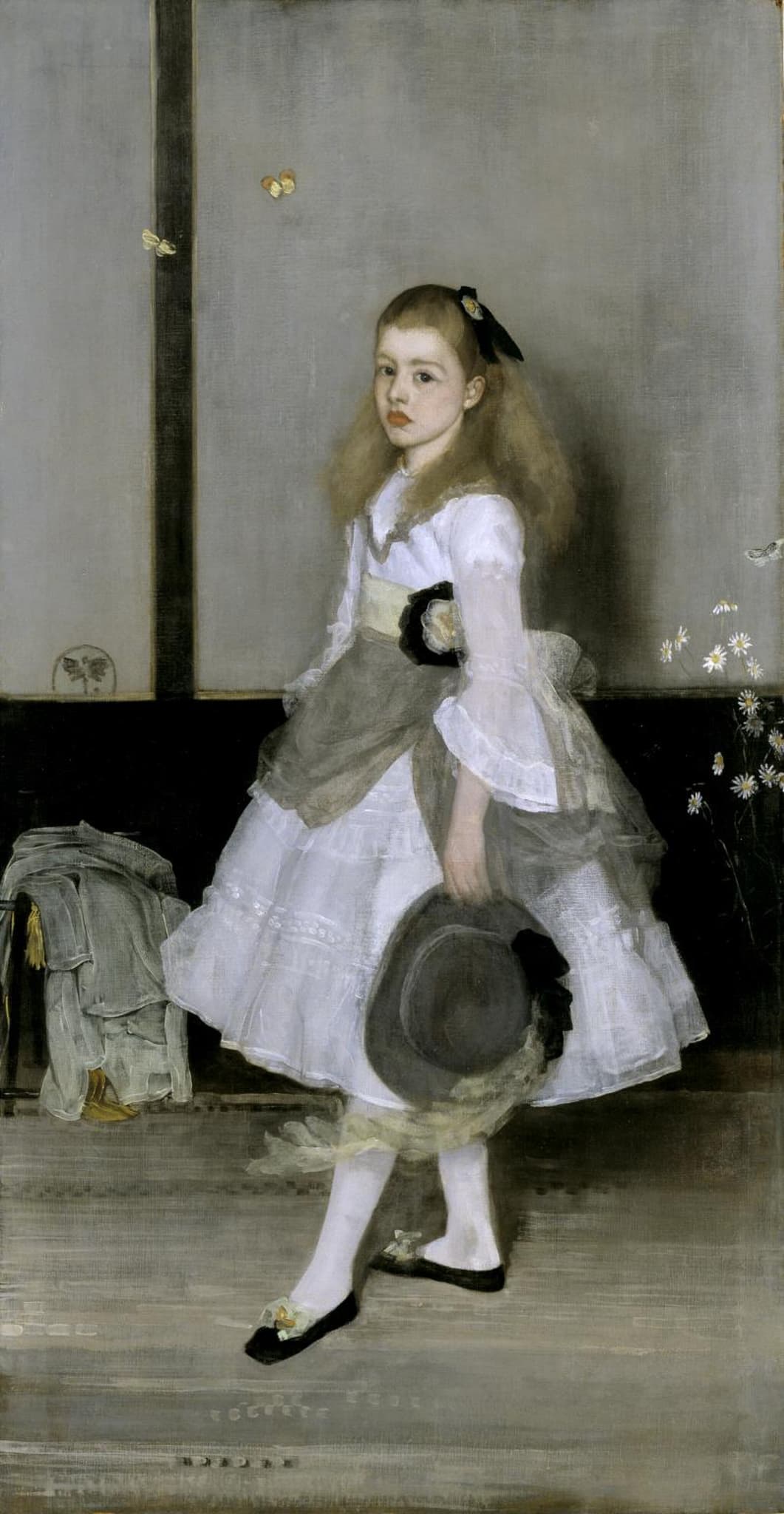
Harmony in Grey and Green: Miss Cicely Alexander
James Abbott McNeill Whistler • Oil on canvas
View more by James Abbott McNeill Whistler →Valuation Analysis
Identification & provenance: "Harmony in Grey and Green: Miss Cicely Alexander" (c.1872–74) is an oil portrait by James Abbott McNeill Whistler in the Tate Britain collection (Acc. N04622), bequeathed by W. C. Alexander in 1932. The painting is catalogued in the University of Glasgow Whistler Paintings Project and is cited in standard Whistler literature. As a museum‑held work it has not been market‑tested in the modern auction record, so there is no direct recent hammer to use as a primary anchor [1][2].
Methodology: This valuation uses comparable analysis: it synthesises documented auction results for Whistler oils and portraits, adjusted for size, condition, provenance, institutional ownership and market timing. Pertinent comparables include high‑end Whistler oil sales that set a practical ceiling and more recent portrait results at major and mid‑tier houses. Representative reference points include late‑20th/early‑21st century high results for Whistler oils and more recent portrait realizations (examples commonly cited in market reports and sale summaries) that demonstrate the artist's dispersion of outcomes [3][4].
Estimate & rationale: If lawfully deaccessioned and offered on the open market in stable conditions, a realistic auction range for this painting is $500,000–$3,000,000 USD. The lower bound reflects realized outcomes for modest, non‑trophy Whistler oils and possible conservational discounts; the upper bound reflects the ceiling for scarce, museum‑quality Whistler oils that attract institutional bidders and competitive private buyers. Tate provenance and catalogue‑raisonné documentation increase buyer confidence and support the higher end of the band, but museum ownership simultaneously reduces liquidity and introduces deaccession‑related legal and ethical complexities that add valuation uncertainty.
Confidence & next steps: Confidence in this range is moderate. The primary uncertainties are condition (conservation history and any restoration), the absence of a recent sale record for this specific canvas, and the institutional/legal context of any potential sale. To refine the opinion to high confidence I recommend obtaining (1) a current, dated condition/conservation report and high‑resolution imagery (raking light, UV, IR if available); (2) confirmation of catalogue‑raisonné and full exhibition/publication citations; and (3) written pre‑sale estimates and marketing strategy input from 19th‑century specialists at major houses (Christie’s/Sotheby’s/Bonhams). With those inputs the range can be narrowed and an optimized sale channel recommended.
Key Valuation Factors
Art Historical Significance
High ImpactJames McNeill Whistler is a central figure in late 19th‑century tonalist and Aesthetic practice; works carrying his 'Harmony' titling and refined portraiture technique have demonstrable scholarly interest. This portrait of Cicely Alexander sits within Whistler's intimate portrait corpus and illustrates his tonal harmonies and compositional restraint. While not a universally iconic masterpiece (for example, it does not have the same public recognition as 'Whistler’s Mother' or major Nocturnes), its presence in Tate and inclusion in catalogues raise its cultural and academic profile. That art‑historical cachet supports collector and institutional demand and exerts a high positive influence on market value.
Provenance & Exhibition History
High ImpactProvenance is a primary value driver: the painting passed from the Alexander family to Tate Britain by bequest in 1932, providing a continuous and reputable ownership chain that materially reduces attribution risk. Museum provenance and catalogue raisonné documentation improve buyer confidence and can elevate prices relative to comparable works with incomplete histories. However, institutional ownership also removes the work from the active market, meaning a hypothetical sale would be an uncommon deaccession event subject to legal and policy constraints. The clarity of provenance is therefore highly positive for value if offering conditions are favorable, but also contributes to market illiquidity.
Condition & Conservation
High ImpactCondition is decisive for the realisable price of any Whistler oil. A stable varnish, minimal inpainting, and no major structural interventions support the upper end of the estimate; conversely, canvas or panel damage, extensive relining, historic overcleaning, or heavy restoration will materially depress results. Because the work is museum‑held it is likely to have an institutional conservation record, but a current, detailed condition report (with high‑resolution photography and any technical imaging) is essential to remove the largest source of valuation uncertainty. For this reason condition carries high impact on the final price.
Market Comparables & Recent Sales
Medium ImpactComparable auction results set the quantitative bounds for this estimate. High‑end Whistler oils have historically achieved multi‑hundred‑thousand to low‑seven‑figure results when they appear, while recent portrait sales at major and mid‑tier houses have produced outcomes in the high five‑figure to mid‑six‑figure range. Key comparables (museum‑quality oils and recent portrait realizations) justify a market band that spans several multiples depending on condition, size, and buyer interest. Because this piece has not been market‑tested, comparables are informative but require conservative adjustment for liquidity and sale context.
Market Liquidity & Legal/Museum Status
Medium ImpactTate ownership meaningfully constrains liquidity: deaccessioning is rare and governed by institutional policy, which can limit buyer pools and affect pricing dynamics. If offered, a targeted private sale to foundations or museums could preserve scholarly associations but might reduce competitive bidding; a public auction could attract a broader buyer base but requires a marketing narrative linking the work to scholarship and exhibition contexts. The specialist nature of the buyer pool for Whistler oils increases outcome volatility, so this factor exerts a medium impact on valuation.
Sale History
James Abbott McNeill Whistler's Market
James Abbott McNeill Whistler is regarded as a blue‑chip 19th‑century artist whose best works attract institutional interest and well‑funded private collectors. The market is segmented: canonical oils and rare portraits can reach mid‑to‑high six figures and occasionally exceed the million‑dollar mark when provenance and condition align, while the more numerous prints and works on paper trade at substantially lower levels and are the most liquid segment. Auction activity for Whistler is intermittent, and individual sale outcomes depend heavily on presentation, provenance, and exhibition support—factors that sustain collector confidence for authenticated works.
Comparable Sales
Harmony in Grey, Chelsea in Ice
James Abbott McNeill Whistler
High‑quality Whistler oil often cited as the modern auction ceiling for the artist; same medium and late‑19th‑century period—useful ceiling comparable.
$2.9M
2000, Christie's New York
~$5.4M adjusted
Whistler Smoking
James Abbott McNeill Whistler
Recent high‑profile Whistler portrait/oil fetching low seven figures — shows current buyer demand for important figure works by Whistler.
$1.2M
2021, Christie's New York
~$1.4M adjusted
Portrait of Lucas Alexander Ionides
James Abbott McNeill Whistler
Like‑for‑like subject type (portrait) with family/collector provenance sold in a major mid‑tier sale; a realistic mid‑market comparable for Whistler portraits.
$542K
2024, Bonhams London
~$554K adjusted
Howth Head, Near Dublin
James Abbott McNeill Whistler
Smaller/less iconic Whistler oil illustrating the lower end of the market for non‑trophy works; useful to set a conservative floor.
$239K
2023, Christie's New York
~$253K adjusted
Current Market Trends
Current market conditions show a cooling at the very top of the auction market since 2022, with stronger transactional activity beneath mid‑price thresholds. For Whistler specifically, demand remains selective: museum‑quality oils can perform strongly when well marketed or tied to exhibitions, while prints and smaller works remain the most liquid. The planned 2026 Tate/Van Gogh Museum retrospective is likely to increase visibility and could lift demand and prices for well‑documented Whistler works in the 12–24 months surrounding the exhibition.
Sources
- Whistler Paintings Project — Harmony in Grey and Green: Miss Cicely Alexander (University of Glasgow)
- Tate — Harmony in Grey and Green: Miss Cicely Alexander (Accession N04622)
- Christie's — James McNeill Whistler artist and auction records
- Bonhams — 25 Sep 2024 sale (Portrait of Lucas Alexander Ionides and sale results)