How Much Is Harmony in Pink and Grey: Portrait of Lady Meux Worth?
Last updated: May 1, 2026
Quick Facts
- Methodology
- comparable analysis
Harmony in Pink and Grey: Portrait of Lady Meux (Whistler, ca.1881–82) is museum‑held (The Frick Collection) and has no modern public sale. If offered on the open market, a reasoned estimate based on recent Whistler comparables, size, autograph status and strong provenance is USD $500,000–$3,000,000. The lower bound assumes atypical market conditions or condition/attribution doubts; the upper bound reflects a well‑documented, museum‑quality sale to a private or institutional buyer.
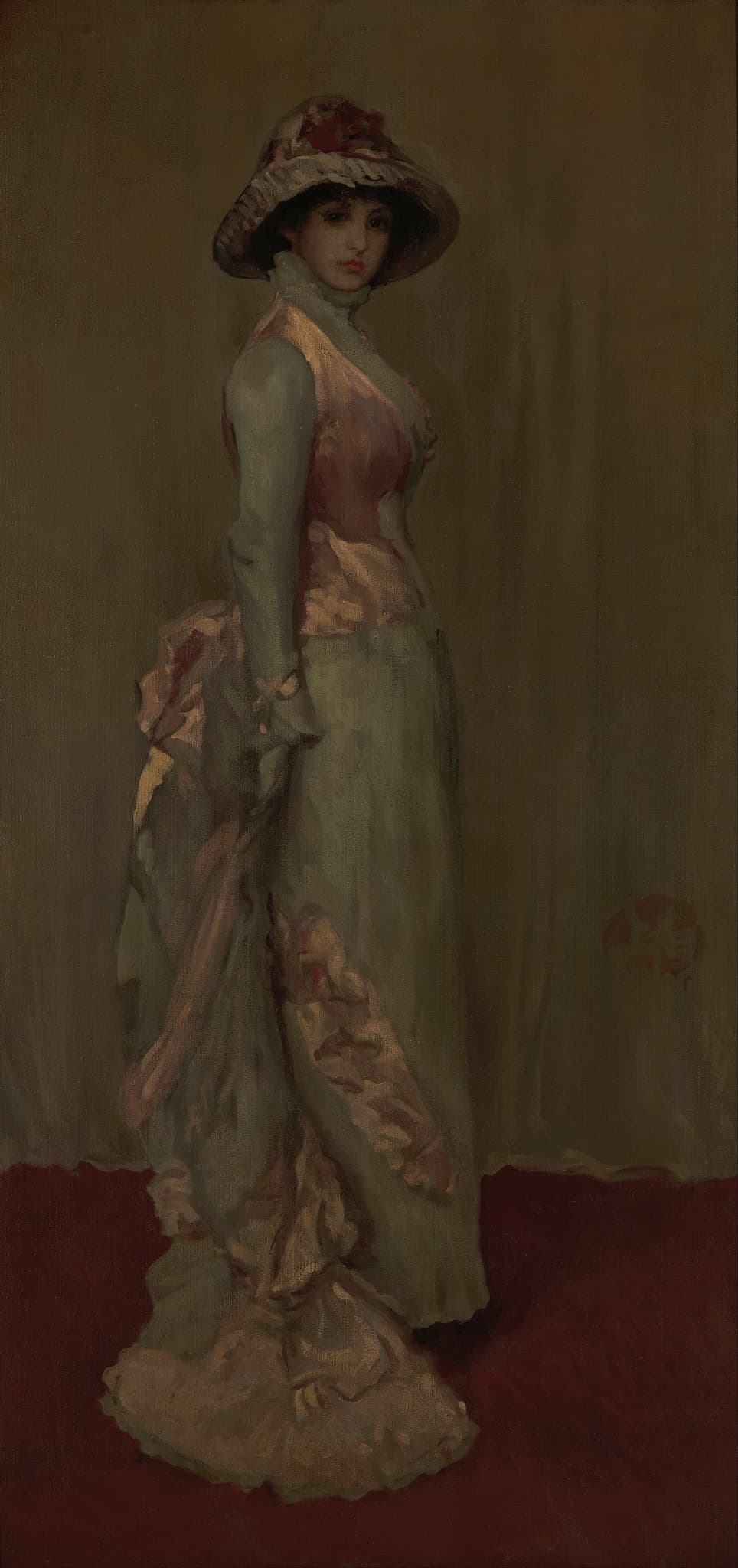
Harmony in Pink and Grey: Portrait of Lady Meux
James Abbott McNeill Whistler • Oil on canvas
View more by James Abbott McNeill Whistler →Valuation Analysis
Scope and headline estimate: This valuation addresses the hypothetical market value of James A. M. Whistler's Harmony in Pink and Grey: Portrait of Lady Meux, a work catalogued YMSM 229 and held in The Frick Collection (accession 1918.1.132). Because the painting is museum‑owned and has not appeared in modern public auction, there is no sale price to anchor a market value; consequently the estimate below relies on comparable auction results for autograph Whistler oils, the painting's documented provenance and exhibition history, and the broader Whistler market [1][2].
Estimate and rationale: Estimated market band (hypothetical sale): USD $500,000–$3,000,000. The band is informed by recent public outcomes for Whistler oils (notably a Christie's painting that realized c. $1.2M in 2021 and strong portrait performance at Bonhams in 2024), adjusted for this work's scale, autograph status and Frick provenance [3][4]. The lower figure reflects a conservative scenario (limited buyer competition, potential conservation issues or heavy buyer preference for prints/other subjects); the upper figure represents a well‑executed private or institutional sale where size, condition, catalogue‑raisonné acceptance and exhibition history stimulate competitive bidding.
Key value drivers and risk factors: Primary positive drivers are the secure attribution (accepted in standard catalogues), large scale and prominent provenance (commissioned by Sir Henry Meux; acquired by Henry Clay Frick; long museum ownership) which reduce attribution/provenance risk and generally attract higher bids. Liquidity risk and price discovery are material negatives: museum‑held canonical works rarely appear and when they do can sit outside normal auction behavior. Condition and any historic restoration remain decisive modifiers — a clean institutional conservation record would support the upper half of the band; structural or overpaint issues would push value downward.
Market context and conclusion: Whistler's market is two‑tiered: widely available prints/works on paper trade actively at accessible levels, whereas autograph oils appear infrequently and exhibit wide dispersion in results. Recent comparables show mid‑six‑figure realisations with isolated low‑single‑million outcomes; therefore the $500k–$3M range is a defensible commercial band for this large, well‑provenanced portrait if it were offered today. For a legally robust fair market or insurance valuation, commission a formal, written appraisal from an auction‑house specialist and obtain the museum's condition/conservation report; those steps will materially narrow the range and produce a transaction‑grade figure.
Key Valuation Factors
Art Historical Significance
High ImpactThis work sits within Whistler’s late portrait practice and his ‘Harmony/Arrangement’ idiom, linking portraiture to the aesthetic concerns that define much of his reputation. Lady Meux as a sitter is a documented Victorian personality and the canvas has been discussed in Whistler scholarship and exhibition material, increasing its cultural capital. Because it is a large, autograph oil accepted in catalogues raisonnés, the painting carries intrinsic art‑historical weight that reliably enhances market desirability among institutions and specialist private collectors. That significance supports a premium relative to undistinguished or studio‑attributed works.
Provenance & Ownership
High ImpactProvenance is exceptionally strong: commissioned by the Meux family, later acquired by industrial collector Henry Clay Frick and subsequently bequeathed to The Frick Collection. Continuous early ownership and inclusion in a major bequest materially reduce title and attribution risk and are repeatedly cited by buyers and auctioneers as value positives. The flip side is that long museum ownership removes recent market evidence, increasing uncertainty about realized price levels if the work were to come to market.
Condition & Conservation
Medium ImpactNo public, detailed conservation report is available in the marketplace; the painting’s institutional care at the Frick suggests routine preventive conservation. Condition remains a primary market modifier: original surface, stable ground/canvas and minimal restoration support the higher end of the estimate, while structural issues, inpainting or heavy restoration would reduce desirability and price materially. A current, formal condition report is required for transaction‑grade valuation.
Exhibition & Publication History
High ImpactThe work’s inclusion in museum displays, catalogues and the Whistler paintings database amplifies collector confidence and scholarly visibility. Proven exhibition history (Frick exhibitions and citations in catalogues raisonnés) increases the pool of institutional and well‑informed private buyers, often leading to stronger bidding when such works appear. Published scholarship also reduces attribution controversy and supports institutional acquisition interest.
Market Comparables & Liquidity
Medium ImpactComparable public sales in recent years demonstrate mid‑six‑figure outcomes and occasional low‑single‑million prices for autograph Whistler oils. However, top examples are rare at auction and market liquidity is limited compared with major Impressionist/Modern artists. The scarcity of direct, like‑for‑like public comparables produces a wider estimate band; buyer appetite for a Frick‑provenance portrait would be strong among specialized collectors but the transaction would likely be negotiated in private channels rather than a broad competitive auction.
Sale History
Private sale to Henry Clay Frick
James Abbott McNeill Whistler's Market
James Abbott McNeill Whistler occupies a stable, specialist position in the market: prints and works on paper provide the most consistent liquidity, while autograph oils trade infrequently and show wide price dispersion. Recent public evidence shows mid‑six‑figure realizations are common for quality oils, with isolated low‑single‑million outcomes when provenance, size and condition align. Institutional demand and scholarly attention support upside for museum‑quality works, but the absence of many head‑line, repeatable painting sales keeps Whistler’s blue‑chip painting market selective rather than broadly escalating.
Comparable Sales
Whistler Smoking (oil on panel, c.1856–60)
James Abbott McNeill Whistler
Recent high public auction result for an autograph Whistler oil; demonstrates buyer appetite for Whistler paintings and sets a modern high-water mark for single-canvas works, though this is a smaller early oil compared with the large, late portrait Lady Meux.
$1.2M
2021, Christie's New York
~$1.3M adjusted
Portrait of Lucas Alexander Ionides (1859/60)
James Abbott McNeill Whistler
19th-century Whistler portrait sold above estimate at a major London house; subject and genre (portrait) are directly comparable, but it is earlier, likely smaller and without the same museum provenance as the Frick Lady Meux.
$542K
2024, Bonhams New Bond Street (London)
~$558K adjusted
Howth Head, Near Dublin (oil on panel)
James Abbott McNeill Whistler
Mid-range public sale for a Whistler oil (landscape) showing mid-six-figure realizations for works of good quality but lesser scale/importance than premier portraits; useful for gauging the broader market depth for Whistler oils.
$239K
2023, Christie's New York
~$254K adjusted
Whistler watercolor seascape (watercolor)
James Abbott McNeill Whistler
Representative recent sale for a Whistler work on paper; shows liquidity and typical price levels for watercolors/works on paper, which form the bulk of market turnover but are not directly comparable to a large oil portrait in scale or significance.
$82K
2024, Merrill Auctioneers & Appraisers
~$84K adjusted
Current Market Trends
The late‑19th‑century/Whistler segment is presently selective: institutional exhibitions and scholarship (recent museum programming) have raised visibility, but overall auction activity remains cautious. Prints and works on paper continue to be the primary transactional engine; significant oils appear rarely and can outperform when provenance and condition are exceptional. Market sentiment is best described as steady with episodic spikes tied to museum sales or major private transactions.
Sources
- Whistler Paintings (University of Glasgow) — YMSM 229 catalogue entry
- The Frick Collection / Google Arts & Culture entry for Harmony in Pink and Grey: Portrait of Lady Meux
- Christie's — Lot: Whistler Smoking (painting sale 11 Nov 2021)
- Bonhams press release — Portrait of Lucas Alexander Ionides (sale 25 Sep 2024)