How Much Is Nocturne: Blue and Gold – Old Battersea Bridge Worth?
Last updated: May 1, 2026
Quick Facts
- Methodology
- comparable analysis
Hypothetical market valuation for James A. M. Whistler’s Nocturne: Blue and Gold — Old Battersea Bridge is US$1,000,000–12,000,000. The work is museum‑held (Tate Britain, accession N01959) and has no public sale record; an autograph, museum‑quality example with strong provenance and exhibition/literature history would most likely sit in the mid‑to‑high seven‑figure band ($3–12M), while workshop variants or pieces in poor condition can fall below $1M.
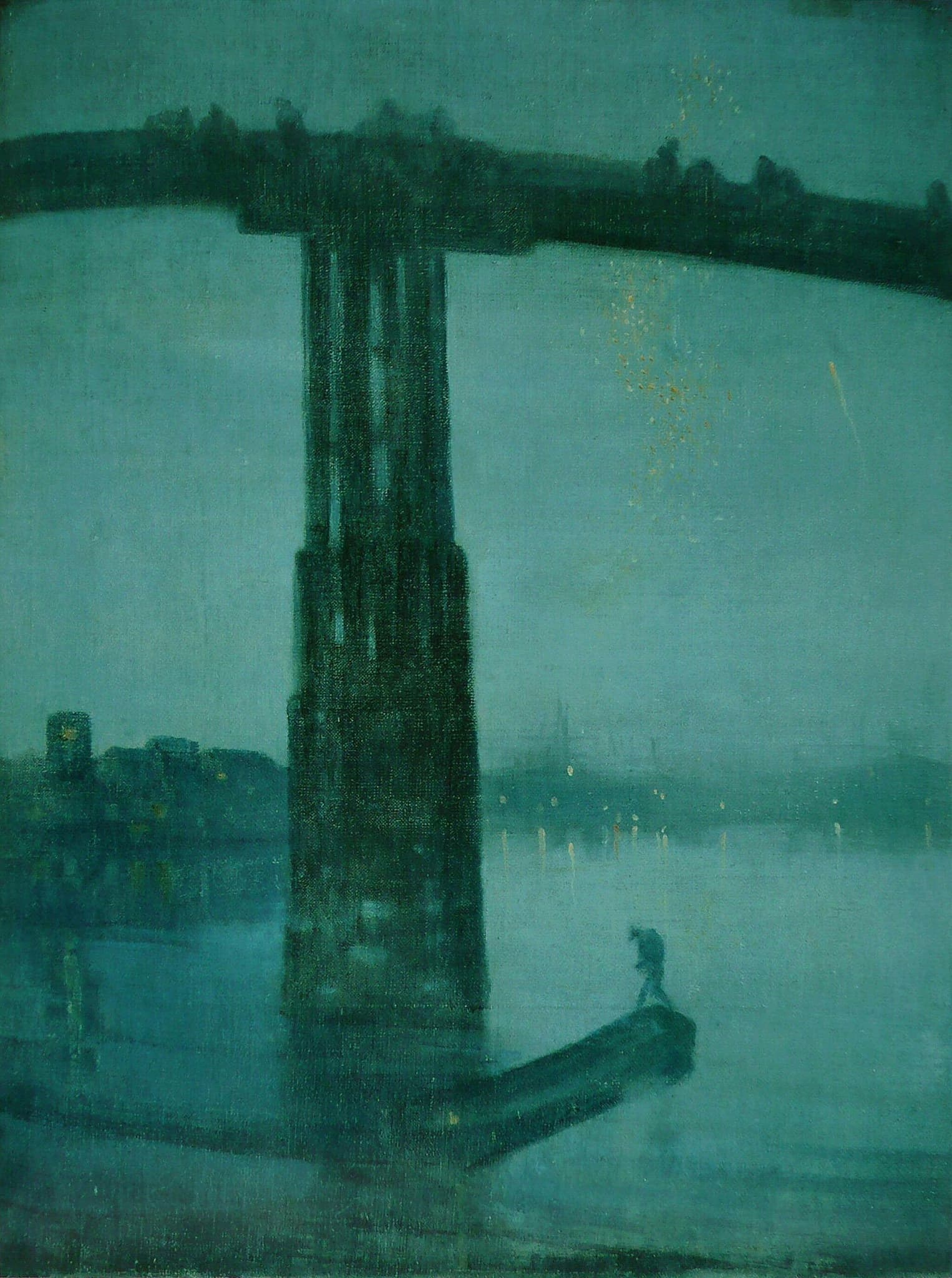
Nocturne: Blue and Gold – Old Battersea Bridge
James Abbott McNeill Whistler • Oil on canvas
View more by James Abbott McNeill Whistler →Valuation Analysis
Final valuation range: US$1,000,000–12,000,000 (hypothetical market value if the work were available). The Tate Britain holds Nocturne: Blue and Gold — Old Battersea Bridge (accession N01959; presented 1905), so there is no public auction record for THIS canvas and any market estimate is necessarily hypothetical and contingent on provenance, condition and attribution [1].
The lower end of the range reflects the documented market floor for secondary Whistler oils and studio variants; the upper end reflects the private‑sale / trophy potential for a verified autograph Nocturne with museum quality and catalogue raisonné/exhibition history. Public auction comparables help frame this: the best publicly reported Whistler oil results historically sit in the low millions (Christie’s high‑water benchmark and a series of recent mid‑six‑figure results), which provides a sensible ceiling and reference point for a museum‑quality nocturne [2].
Why the band is wide: Whistler produced multiple Battersea Bridge/Nocturne variants, and the market treats autograph oils, studio variants and later copies very differently. Attribution and technical confirmation (X‑ray, infrared reflectography, pigment analysis) often move a lot from one pricing tier to another. Provenance and an exhibition/literature trail materially increase buyer confidence and can elevate a private‑sale valuation substantially above public auction ceilings; conversely, uncertain attribution or compromised condition will depress value sharply.
Practical interpretation: If this were a confirmed autograph Nocturne in good condition, well documented in the raisonné and with exhibition history, expect a likely private‑sale or high‑profile auction valuation in the mid‑to‑high seven figures (commonly $3–12M depending on buyer competition and moment). If it is an accepted autograph but smaller/less distinguished, public auction results in the $1M–3M band are plausible. Studio variants, copies or heavily restored examples can sell for under $1M and sometimes in the low six figures or below.
Next steps to tighten value: confirm attribution through technical analysis and the University of Glasgow Whistler catalogue, obtain a full condition report, compile complete provenance/exhibition/literature citations, and consult specialist 19th‑century dealers or Whistler curators at Tate/Freer or auction house specialists for a formal written valuation. Institutional programming (large Tate/Van Gogh retrospectives) will also affect near‑term demand and should factor into timing and sales strategy [1][2].
Key Valuation Factors
Art Historical Significance
High ImpactWhistler’s Battersea Bridge nocturnes are central to his late-career exploration of tonal nocturnes and remain culturally and academically important. The Tate example (Nocturne: Blue and Gold — Old Battersea Bridge, accession N01959) is part of a small group of museum‑quality nocturnes that define the genre, and institutional ownership itself confers a premium and scarcity effect in the market. Collectors prize canonical nocturnes for their aesthetic importance and museum provenance; such works attract institutional bidders and deep‑pocketed private collectors, which supports higher valuations when a fully documented autograph appears for sale. This factor therefore raises the ceiling for an authenticated, well‑provenanced canvas.
Attribution & Authenticity
High ImpactAttribution is the single most decisive factor for value. Whistler executed multiple Battersea/Nocturne variants, and genuine autograph canvases command substantially higher prices than studio works or later copies. Technical analysis (X‑ray, IRR, pigment cross‑sections), signature and paint handling comparisons, and validation against the University of Glasgow Whistler Paintings project/catalogue raisonné are essential. A confirmed autograph moves a lot from the low‑six‑figure band into multi‑hundred‑thousand to multi‑million valuations; conversely, unresolved attribution or evidence of studio intervention materially reduces marketability and price expectations.
Provenance & Exhibition History
High ImpactA documented provenance and exhibition/literature history dramatically reduce buyer risk and increase competitive bidding. Museum acquisition, published catalogue entries, and loans to major exhibitions (catalogue essays, plates) can add a premium because they provide independent verification and increase the work’s visibility. Conversely, gaps in provenance, ownership disputes, or lack of literature references act as discounts. For Whistler nocturnes, an appearance in a major retrospective or inclusion in a raisonné entry typically elevates value and market confidence, sometimes by multiples versus unattributed examples.
Condition & Conservation
High ImpactCondition directly affects both aesthetic appeal and saleability. Issues such as heavy overpainting, unstable varnish, severe craquelure, relining or extensive restorations reduce market value and may limit buyers to specialists. Conversely, stable, well‑conserved surfaces that retain original tooth and color transparency command premiums. A full condition report and conservation history (including any interventions, varnish removals, or structural repairs) are prerequisites for an accurate valuation; condition concerns can move a lot from a multi‑million hypothetical value down into low six figures.
Market Comparables & Liquidity
Medium ImpactRecent auction evidence shows selective demand: strong Whistler oils have achieved mid‑to‑high six‑figure results and historically a low‑seven‑figure public benchmark exists, but trophy nocturnes rarely appear at auction. Public auction liquidity for top Whistler oils is limited and sales are episodic; private sales to institutions or deep‑pocketed collectors can exceed public results. Therefore comparables provide useful guidance but must be tempered by the individual work’s attribution, provenance and condition when estimating a specific canvas. Timing relative to exhibitions can improve liquidity and realized prices.
Sale History
Nocturne: Blue and Gold – Old Battersea Bridge has never been sold at public auction.
James Abbott McNeill Whistler's Market
James Abbott McNeill Whistler is a major 19th‑century Anglo‑American artist with strong institutional representation (Tate, Freer/Sackler, major US and European museums) and steady collector interest, particularly for his Nocturnes. Market activity is specialist and episodic: prints and works on paper trade frequently at lower price tiers while high‑quality oils appear rarely and can attract mid‑to‑high six‑figure or low‑seven‑figure results when provenance and condition align. The historical public auction benchmark for a Whistler oil sits in the low millions, but private sales and institutional acquisitions can push valuations higher for trophy examples.
Comparable Sales
Harmony in Grey, Chelsea in Ice
James Abbott McNeill Whistler
Highest publicly reported auction result for a Whistler oil — same artist and medium, late‑19th‑century period. Useful as a ceiling/benchmark for top‑tier Whistler oils though not the Tate Battersea Nocturne itself.
$2.9M
2000, Christie's New York
~$5.4M adjusted
Whistler Smoking
James Abbott McNeill Whistler
Recent strong oil sale at a major house (2021). Same artist and medium; represents recent market demand for Whistler oils in the mid‑to‑high six‑figure band.
$1.2M
2021, Christie's New York
~$1.4M adjusted
Portrait of Lucas Alexander Ionides
James Abbott McNeill Whistler
Fine oil by Whistler with good provenance sold at Bonhams (Sept 2024). Comparable by medium and market tier; shows competitive mid‑six‑figure demand for museum‑quality oils in London sales.
$542K
2024, Bonhams London
~$550K adjusted
Howth Head, Near Dublin
James Abbott McNeill Whistler
Recent Christie’s sale (2023) of a Whistler oil/landscape — useful lower‑market comparable for non‑trophy oils and indicates market floor for smaller or less prominent works.
$239K
2023, Christie's New York
~$253K adjusted
Nocturne (etching & drypoint)
James Abbott McNeill Whistler
Record sale for a Whistler print (Nocturne subject). Different medium (works on paper) but demonstrates strong collector demand for Nocturne imagery and supports valuation of the Nocturne group more broadly.
$282K
2010, Swann Galleries, New York
~$416K adjusted
Current Market Trends
The market for Whistler and late‑19th‑century Tonalist/Aesthetic works is specialist and less liquid than Impressionist/Modern or Contemporary segments. Recent years show selective strength for well‑provenanced oils and persistent demand for prints; institutional programming (major retrospectives) tends to boost visibility and short‑term demand, while attribution and condition remain the primary determinants of price.
Sources
- Art Fund / Tate: Nocturne: Blue and Gold — Old Battersea Bridge (Tate accession N01959)
- Christie’s — James McNeill Whistler sales and artist overview (includes benchmark auction records)
- Bonhams press release: Portrait of Lucas Alexander Ionides (Sept 25, 2024) — sale result
- Swann Galleries reporting — record print sale (Nocturne etching & drypoint, Oct 27, 2010)