How Much Is Symphony in White, No. 1: The White Girl Worth?
Last updated: May 1, 2026
Quick Facts
- Methodology
- comparable analysis
Assuming the work is the autograph, studio‑quality oil in good condition with the National Gallery of Art provenance, a realistic market valuation is approximately USD 3,000,000–10,000,000. This range reflects conservative public‑market comparables and the premium a museum‑quality, canonical Whistler would attract in a private or institutional acquisition.
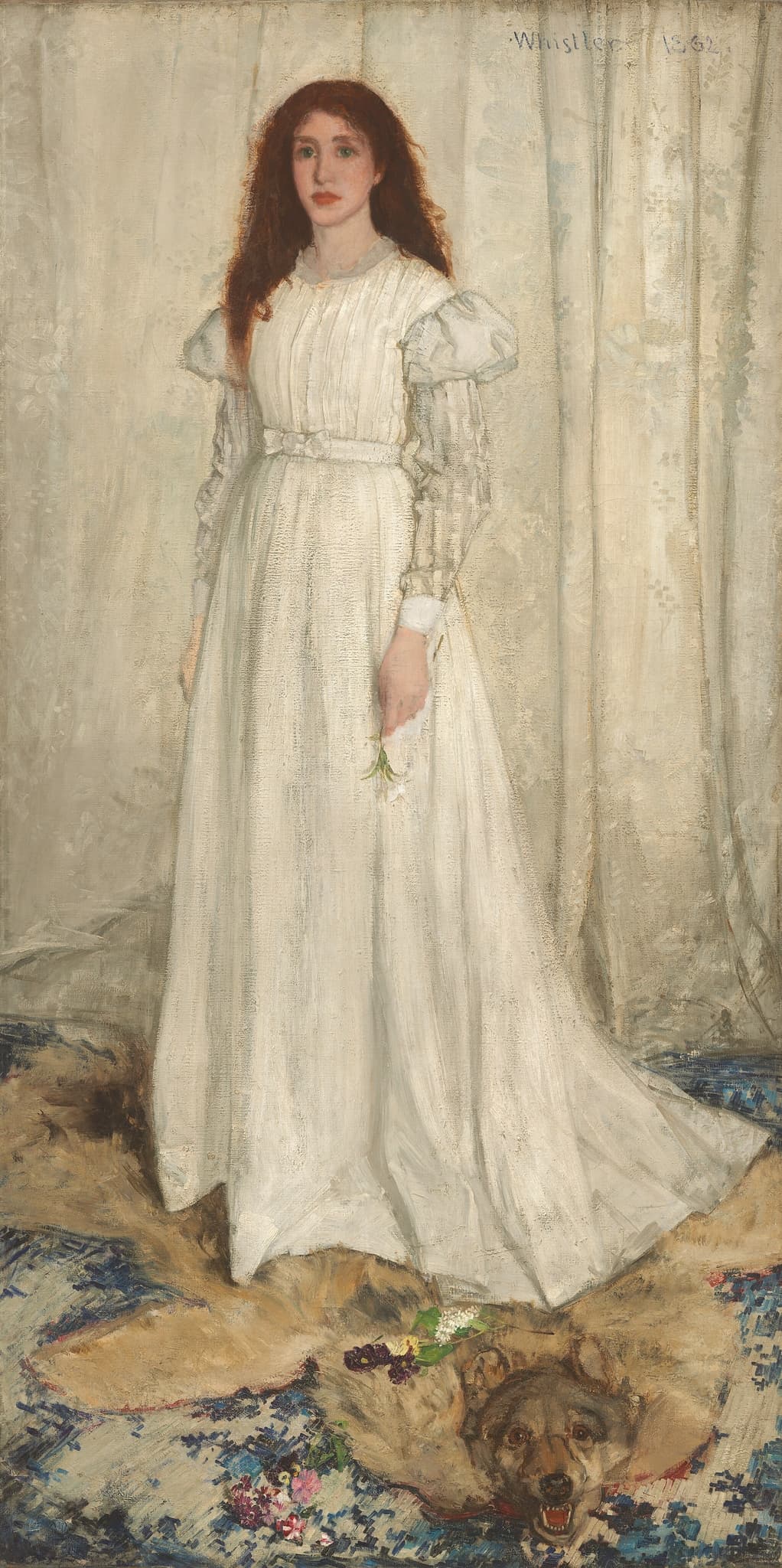
Symphony in White, No. 1: The White Girl
James Abbott McNeill Whistler • Oil on canvas
View more by James Abbott McNeill Whistler →Valuation Analysis
Valuation context. This estimate assumes the painting is the autograph oil "Symphony in White, No. 1: The White Girl" by James A. M. Whistler in sound condition with clean, museum‑quality provenance. The canonical canvas is held by the National Gallery of Art (accession 1943.6.2), which means there is no modern public‑sale record for this exact picture and any market price must therefore be hypothetical and derived from comparable sales, institutional demand and scarcity dynamics [1].
Comparables and empirical anchors. Public auction data for top Whistler oils provide the principal anchors. Christie’s modern benchmark (a major Whistler oil sold in 2000 for US$2,866,000) suggests a mid‑single‑digit million public‑market ceiling when adjusted for inflation and market movement; other realized sales (museum acquisitions and recent single‑owner offerings) sit in the low‑to‑mid millions or high six‑figures, illustrating a pattern of sporadic but real demand for museum‑quality works [2][3][4]. These comparables inform both a cautious auction estimate and a higher private/institutional ceiling.
Why USD 3–10 million. The lower bound (USD 3M) represents a conservative private‑sale valuation above typical auction outcomes for comparable important Whistler oils, acknowledging that top works at major houses often land in the high six‑figures to low millions. The upper bound (USD 10M) accounts for the premium that a canonical, museum‑grade canvas would command in a competitive institutional or private acquisition campaign—particularly when marketed to museums or deep‑pocket collectors and when guarantees/third‑party commitments are present. If offered at open auction without institutional guarantees, the work would be likelier to realize toward the lower end of this band.
Caveats and next steps. Key risks that would materially reduce value include: attribution uncertainty (studio replica or later copy), compromised condition or heavy restorations, and incomplete provenance. To refine this estimate I recommend obtaining a high‑resolution image set, a certified conservator condition report, technical imaging and pigment analysis, and catalogue‑raisonné / scholarly confirmations. With those documents, a sale‑venue specific estimate (guaranteed private sale vs. auction) and a route‑to‑market plan can be produced.
Bottom line. For an unquestioned autograph, museum‑quality "Symphony in White No. 1," a responsible market window is USD 3,000,000–10,000,000. I can refine this to a sale‑venue estimate on receipt of conservation, provenance and catalogue‑raisonné documentation, or run a targeted comparables memo for auction versus private treaty positioning.
Key Valuation Factors
Art Historical Significance
High ImpactSymphony in White No. 1 occupies a central place in Whistler’s early development and in the triptych of works that defined his ‘Symphonies in White’ theme. The painting exemplifies his tonal restraint, compositional economy and conceptual framing of painting-as-music—an approach that both alienated and fascinated contemporary critics and that now anchors major scholarship. Its association with model and collaborator Joanna Hiffernan and repeated citation in catalogue raisonnés and exhibition histories further elevates its cultural capital. Because canonical works are scarce and often imprisoned in public collections, when an autograph, museum-quality canvas of this importance becomes available it commands marked collector and institutional interest, producing a premium over ordinary 19th‑century pictures.
Provenance & Exhibition History
High ImpactThe known chain of ownership—from Whistler’s household to Harris Whittemore and eventual gift to the National Gallery of Art in 1943—is exceptionally strong. Continuous family‑to‑institution provenance removes many market uncertainties about title and authenticity and reduces buyer risk, which materially supports price. A substantial exhibition and publication record compounds this effect by demonstrating the work’s scholarly acceptance and visibility, creating institutional claims and bolstering buyer confidence. Conversely, absence of such a provenance or gaps in documentation would attract a significant discount. Institutional ownership (NGA) also means the painting has no modern sale record, which makes any market figure hypothetical but reliably elevated compared with poorly documented works.
Condition & Technical Authentication
High ImpactCondition and technical authentication are primary value determinants for 19th‑century oils. A canvas in original, stable condition with minimal invasive conservation will realize top prices; significant lining, overpainting or instability will depress value. Technical work—X‑ray, infrared reflectography, pigment and binder analysis—confirms authorship credentials and reveals studio practices consistent with Whistler. For a hypothetical market offering of this painting, independent conservation documentation and technical confirmation would move a valuation from speculative to market‑ready. Conversely, adverse technical findings or a history of heavy restoration would justify steep downward adjustments from the headline range.
Market Comparables & Recent Sales
Medium-high ImpactComparable auction results show a broad band: important Whistler oils have historically sold from mid‑six‑figures to low‑millions at public auction, with the modern Christie’s benchmark (2000) and several institutional acquisition results forming the upper public market anchors. Smaller portraits and lesser‑known oils trade substantially lower. Comparables must be adjusted for inflation, sale venue, guarantee presence, and buyer composition; private treaty sales involving institutions can exceed public prices. Because the NGA painting lacks a sale history, comparables serve as directional anchors rather than direct price certainties, supporting a cautious auction estimate and a higher private‑sale ceiling if institutional competition occurs.
Supply, Rarity & Buyer Demand
Medium ImpactMost canonical Whistler canvases reside in museums, so supply for top‑tier oils is extremely constrained. This scarcity concentrates demand among institutional buyers and a small cohort of high‑net‑worth private collectors, which can produce premium pricing in private or brokered sales. Demand spikes tend to follow major museum exhibitions or new scholarship that re‑frames a work’s importance. However, the buyer pool for late‑19th‑century Aesthetic Movement works is narrower than for broadly collectible names, and ambiguous attribution or poor condition quickly reduces bid depth. The rarity factor therefore supports the valuation ceiling but also increases volatility around transaction events.
Sale History
Symphony in White, No. 1: The White Girl has never been sold at public auction.
James Abbott McNeill Whistler's Market
James Abbott McNeill Whistler is a well‑established, collectible 19th‑century artist whose market is selective and driven by condition, provenance and scholarship. Works on paper and prints trade more frequently and at accessible price points, while major oils are rarely offered and, when they appear, attract concentrated institutional and private interest. Public auction evidence places many important oils in the high six‑figure to low‑million bracket, with precedent for mid‑single‑digit million results in exceptional circumstances. Collectors and institutions prize provenance and catalogue‑raisonné documentation; the market reward accrues to canonical, well‑published works rather than to peripheral studio pieces.
Comparable Sales
Harmony in Grey, Chelsea in Ice
James Abbott McNeill Whistler
High-quality oil by the same artist; established the modern public auction high for Whistler oils and therefore sets a public‑market ceiling/reference point.
$2.9M
2000, Christie's New York
~$5.3M adjusted
Violet and Blue: Among the Rollers
James Abbott McNeill Whistler
Important oil with institutional buyer — shows that museum‑quality Whistler oils entering the market can achieve low‑to‑mid millions (incl. premium).
$1.0M
2006, Cottone Auctions (sold on behalf of the Detroit Institute of Arts)
~$1.6M adjusted
Portrait of Lucas Alexander Ionides
James Abbott McNeill Whistler
Recent strong sale for a Whistler portrait — useful to show current collector demand and price levels for well‑provenanced, exhibition‑worthy portraits.
$542K
2024, Bonhams, New Bond Street
~$552K adjusted
Howth Head, Near Dublin
James Abbott McNeill Whistler
Recent mid‑six‑figure sale of a Whistler oil — demonstrates the lower end of the active secondary market for Whistler paintings and the variability by scale/subject.
$239K
2023, Christie's (American/19th-century sale)
~$250K adjusted
Current Market Trends
The market for 19th‑century Aesthetic Movement and Whistler works is stable rather than speculative. Demand is selective, responding to exhibition schedules and fresh scholarship. Supply constraints (major works in museums) support prices at the top end, while smaller or uncertain attributions trade variably. Recent notable sales show sporadic strong results but no emergent auction record in the past few years; institutional interest and private‑sale dynamics remain the principal drivers of upside.
Sources
- National Gallery of Art — Symphony in White, No. 1: The White Girl (artwork page and provenance)
- Christie's — James McNeill Whistler (artist page and auction archives; Christie’s modern benchmark sale 2000)
- Antiques and The Arts Weekly — Cottone Auctions: Violet and Blue: Among the Rollers (2006; museum acquisition example)
- Bonhams — Press release / sale details: Portrait of Lucas Alexander Ionides (25 Sep 2024; recent strong portrait result)