How Much Is Symphony in White, No. 2: The Little White Girl Worth?
Last updated: May 1, 2026
Quick Facts
- Methodology
- comparable analysis
Symphony in White, No. 2 (1864–65) is held in the Tate Britain collection and is effectively off‑market; a hypothetical market value for a saleable, museum‑quality example with secure provenance and clean condition is USD 2,000,000–12,000,000. The band is anchored to historical auction highs for major Whistler oils and recent mid‑market sales of comparable oils, but any actual sale would be highly conditional on deaccession permissions, condition, and exhibition/publication pedigree.
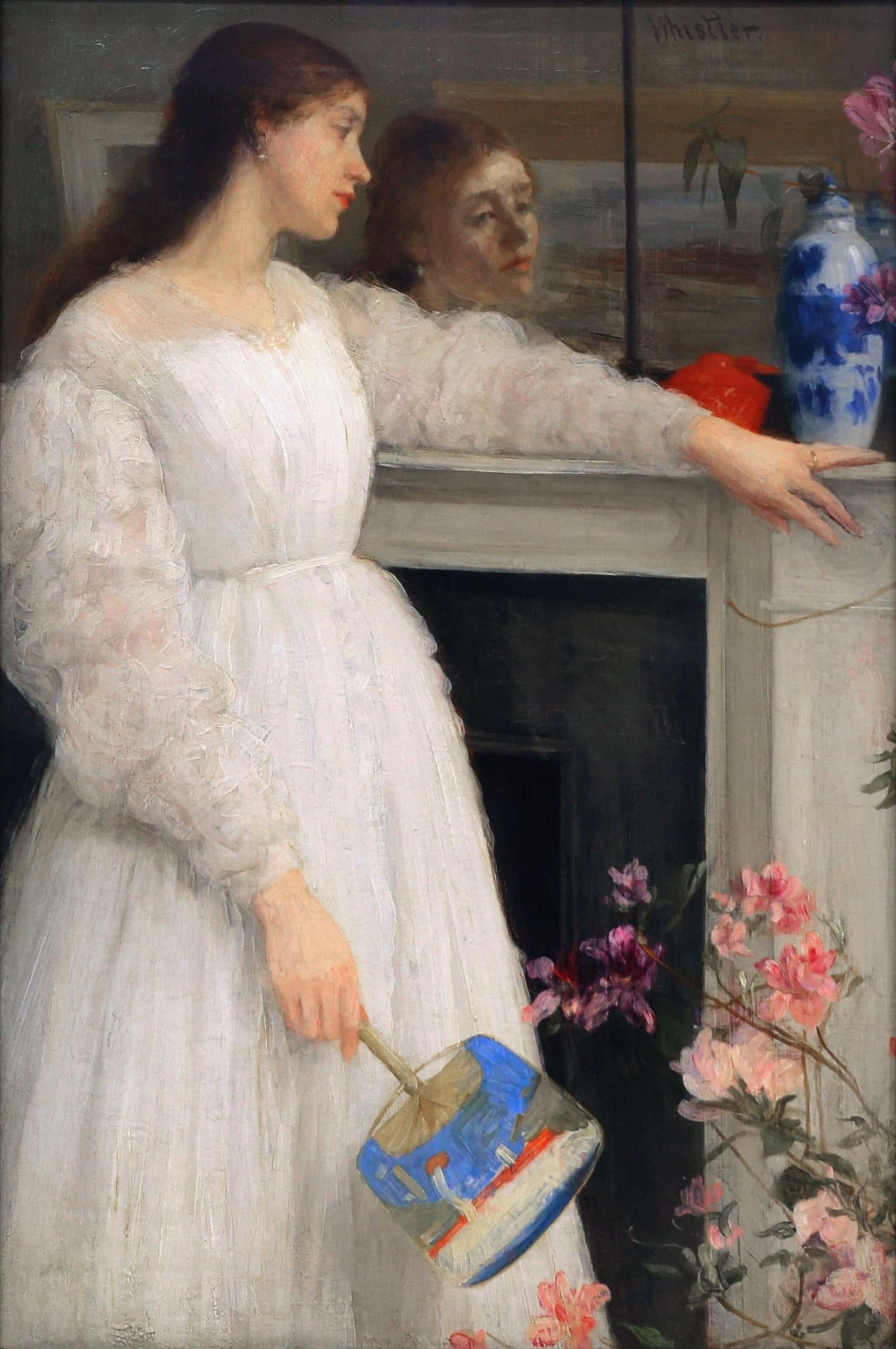
Symphony in White, No. 2: The Little White Girl
James Abbott McNeill Whistler, 1864 • Oil on canvas
View more by James Abbott McNeill Whistler →Valuation Analysis
Current custodial status and valuation purpose. Symphony in White, No. 2 (1864–65) is catalogued in Whistler scholarship and held by Tate Britain (Acc. N03418); because it is a public‑collection work the painting is not an ordinary market lot and this valuation is therefore hypothetical: it represents the realistic market range that a securely‑provenanced, saleable museum‑quality example in good condition could be expected to achieve today, were it to be legitimately offered for sale [1][2].
Method and anchors. The estimate uses a comparables‑based approach: museum‑quality Whistler oils that have reached the secondary market provide the best anchors (notably a historically cited Christie’s public‑sale high for a major oil and several more recent mid‑market sales of single‑owner oils). Those comparables indicate typical realized outcomes in the mid‑six‑figure to low‑millions; they inform the lower and upper bounds of the band given differences in size, condition, exhibition history and rarity [3][4].
Reasoning behind the USD 2M–12M band. The low end (~USD 2M) reflects a conservatively priced, saleable large oil of good but not exceptional condition, limited exhibition/publication history, or some conservation intervention. The high end (~USD 12M) reflects a best‑case trophy scenario: a pristine, large studio canvas with uninterrupted, distinguished provenance, multiple major exhibitions and illustrations in standard catalogue entries — a picture that would qualify as a top institutional or prize private acquisition. Because comparable trophy Whistler oils have historically sold in the low millions (and because museum paintings rarely come to auction), the upper bound is intentionally conservative relative to speculative headline prices but recognizes premium bidding for rare, fresh‑to‑market institutional quality works [3][4].
Caveats and market mechanics. Public‑collection status materially constrains liquidity: deaccessioning carries legal, ethical and institutional hurdles and can materially change buyer composition (often limiting bidders to institutions or highly circumscribed private buyers). Condition (relining, overpaint, craquelure), discovered restorations, or unresolved attribution issues would depress the realized value; conversely, recent high‑profile scholarship, a major retrospective, or direct loans to blockbuster exhibitions would lift buyer interest and could push results toward the upper part of the band [1][2][3].
Practical next steps if a sale is contemplated. Confirm the catalogue raisonné entry; secure a full condition and technical report; obtain written pre‑sale opinions from leading nineteenth‑century specialists at Christie’s and Sotheby’s; and consider timing a sale to institutional visibility (e.g., retrospectives). If the painting remains in the Tate collection, note that market valuation is academic unless an exceptional and documented deaccession path is pursued [1][2].
Key Valuation Factors
Art Historical Significance
High ImpactSymphony in White, No. 2 is a key work within Whistler’s early 'white' series and represents an important stage in his move toward tonal subtlety and the Aesthetic Movement. The painting’s date (1864–65), Royal Academy exhibition history (1865), and association with model Joanna Hiffernan make it materially important to scholars. High art‑historical significance elevates market interest among institutions and specialist collectors because the work contributes directly to canonical narratives about the artist’s development. When a canvas carries demonstrable scholarly importance, it commands premium attention in both institutional and high‑end private markets, provided condition and provenance are secure.
Condition & Conservation
High ImpactCondition is a primary driver of value for a mid‑19th century oil. Original paint surface integrity, presence or absence of relining/overpainting, varnish discoloration, craquelure patterns and any historic restorations all materially affect price. A well‑documented technical report (X‑radiography, IR, pigment analysis) that shows an original, stable surface will support the upper part of the valuation band; conversely, extensive conservation work, unstable paint layers, or invasive restorations materially reduce marketability and net proceeds. Buyers at the multi‑million level expect full conservation transparency and may require conservation guarantees.
Provenance & Exhibition History
High ImpactClean, continuous provenance and an established exhibition/publication history multiply value. This painting’s recorded chain (early ownership by John Gerald Potter, later Arthur Studd, and bequest to the National Gallery/Tate) provides gold‑standard institutional provenance that underpins both scholarly and market confidence. Works with multiple major loans and catalogue illustrations attract institutional buyers and competitive bidding. Any gaps, disputed ownership, or limited documentation will suppress buyer confidence and the price multiple, whereas strong provenance and publication can add materially to realized value.
Comparables & Market Liquidity
Medium ImpactComparable sales show that Whistler oils move irregularly and typically in the mid‑six‑figure to low‑seven‑figure range; rarity of large oils on the market creates episodic spikes when top examples appear. Historical anchors (a reported Christie’s high for a major Whistler oil) and recent single‑owner sales (examples in 2021–2024) provide practical pricing anchors. However, liquidity is limited: most supply is prints and works on paper, so oil prices are case‑by‑case and sensitive to timing, presentation, and competing institutional demand.
Legal & Institutional Status
High ImpactBecause the work is in the Tate collection, legal and institutional constraints are decisive. Deaccession policies, national treasure/export restrictions and museum ethics shape whether and how the work could enter the market; many public‑collection works are effectively non‑marketable. If a deaccession were to occur, sale mechanics (direct institutional transfer vs. public auction) will strongly influence realized price and buyer pool. This factor alone can disqualify a straightforward market sale and must be resolved before the valuation is actionable.
Sale History
Symphony in White, No. 2: The Little White Girl has never been sold at public auction.
James Abbott McNeill Whistler's Market
James Abbott McNeill Whistler is an established 19th‑century master with strong museum representation internationally. The secondary market is segmented: the most frequent offerings are prints, etchings and pastels (often valued in the low‑thousands to mid‑five‑figures), while oils of museum quality are rare and typically achieve mid‑six‑figure to low‑seven‑figure results when they appear. Historical auction anchors place the public auction high in the low millions, but recent sales (2021–2024) show more activity in the mid‑six figures. Institutional provenance, exhibition history and condition remain the primary value multipliers.
Comparable Sales
Harmony in Grey, Chelsea in Ice
James Abbott McNeill Whistler
Large, museum-quality Whistler oil that has been cited as the artist's public-auction high; a useful high-anchor for market potential of major Whistler oils.
$2.9M
2000, Christie's (reported auction record)
~$5.2M adjusted
Whistler Smoking
James Abbott McNeill Whistler
Recent single-owner offering of a Whistler oil (reported sale ≈ US$1.2M) — shows modern market demand for mid/upper-tier Whistler oils post‑2020.
$1.2M
2021, Christie's New York
~$1.4M adjusted
Portrait of Lucas Alexander Ionides
James Abbott McNeill Whistler
Fresh-to-market, historically important Whistler oil sold in 2024 (family provenance). Demonstrates current buyer interest for mid‑quality/sized oils with good provenance.
$542K
2024, Bonhams, New Bond Street
~$553K adjusted
Howth Head, Near Dublin
James Abbott McNeill Whistler
Recent mid‑market Whistler oil sold at Christie’s (2023) — useful as a lower‑end oil comparable for scale and buyer activity.
$239K
2023, Christie's, American / 19th-century sale
~$249K adjusted
Whistler watercolor seascape (family provenance)
James Abbott McNeill Whistler
Recent sale of a Whistler work on paper — not directly comparable by medium/scale but useful to show breadth of active demand and pricing for non‑trophy works.
$82K
2024, Merrill (regional specialist sale)
~$84K adjusted
Current Market Trends
The market for 19th‑century painters like Whistler has been selective: top‑end activity cooled in 2024–25 while demand for well‑documented, museum‑quality works remains. Works on paper and prints continue to supply the market; large oils are episodic and can outperform when tied to major exhibitions or scholarship. The Tate Britain retrospective (2026) and renewed institutional programming may produce a localized uplift in attention but will not eliminate the fundamental liquidity constraints for large museum works.