How Much Is Symphony in White, No. 3 Worth?
Last updated: May 1, 2026
Quick Facts
- Methodology
- comparable analysis
The canonical Symphony in White, No. 3 (c.1865–67) is held by the Barber Institute and therefore not market‑circulating; as a theoretical market/insurance benchmark a fully authenticated, full‑scale autograph oil in good condition with strong provenance would likely be in the $3.0M–$12.0M range. Variants, studies or works with uncertain attribution/condition are far lower—typically in the $100k–$1.5M band.
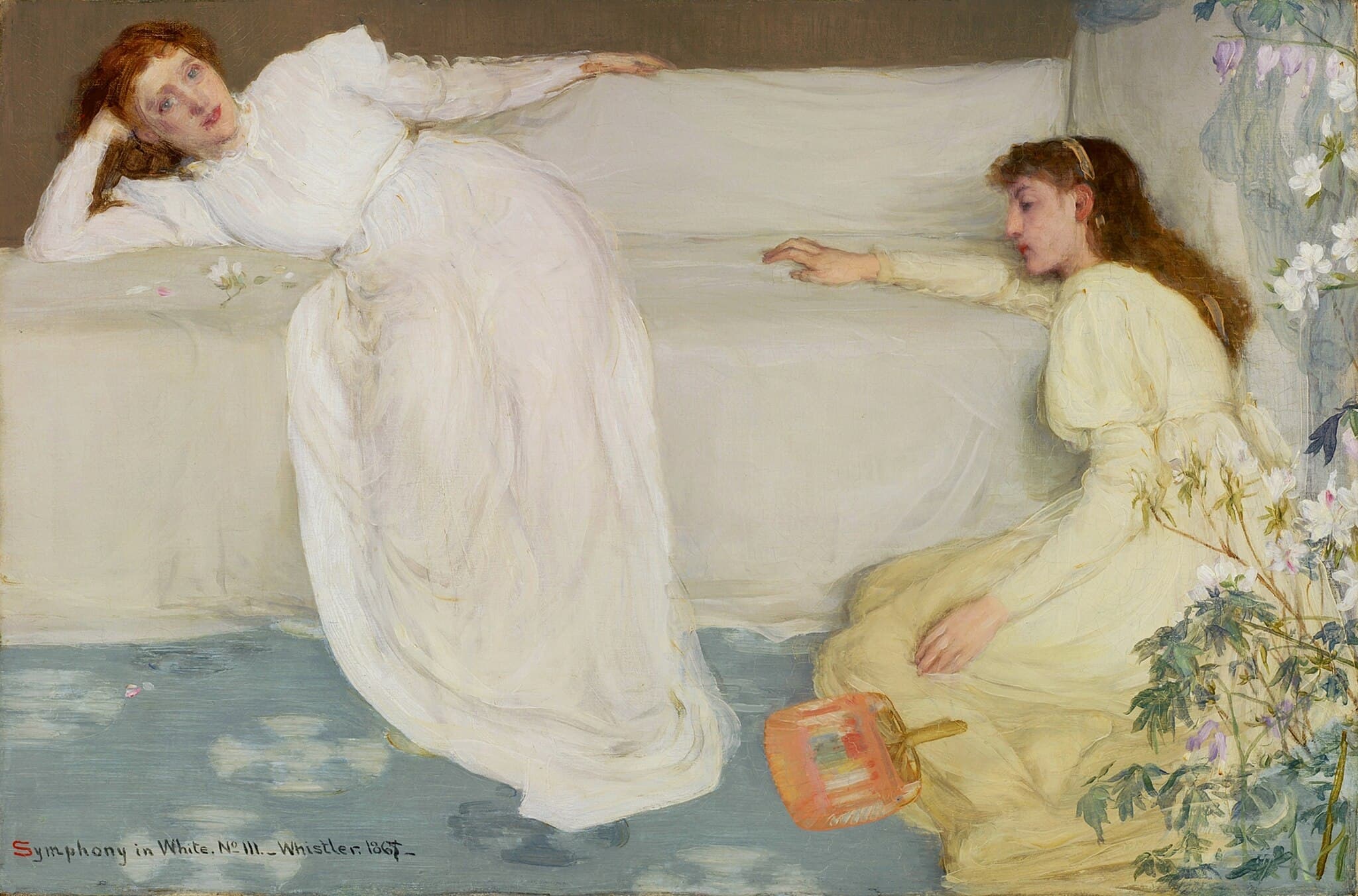
Symphony in White, No. 3
James Abbott McNeill Whistler • Oil on canvas
View more by James Abbott McNeill Whistler →Valuation Analysis
Using a comparable‑analysis approach, I value James Abbott McNeill Whistler’s Symphony in White, No. 3 (c.1865–67) as hypothetically worth approximately $3,000,000–$12,000,000 if the autograph, full‑scale oil with catalogue‑level provenance and sound conservation were offered on the open market. The canonical canvas is in the Barber Institute of Fine Arts (accession 39.24) and has not been recorded as a modern public sale; therefore these numbers are theoretical and serve as a market/insurance benchmark rather than a realized hammer price [1].
Comparables and market logic: Published auction comparables for Whistler oils are limited but instructive. A commonly cited benchmark is the reported Christie’s sale of Harmony in Grey, Chelsea in Ice (2000) at c. $2.6–2.9M; when adjusted for inflation and normal market movement since 2000, that sale implies a mid‑millions comparable that supports the lower half of the stated band for museum‑quality oils [2]. Recent specialist‑house results (for example, a strong portrait sale at Bonhams in 2024) and high results for select works on paper demonstrate that buyer interest exists across formats, but the market for canonical, salon‑scale Whistler oils is episodic and driven by provenance, literature and institutional interest [3].
Key qualifiers: If the object available is a study, studio replica, or a painting with uncertain attribution or compromised condition, market value typically contracts sharply—commonly into the high five‑figure to low seven‑figure range (roughly $100,000–$1,500,000). Inclusion in the catalogue‑raisonné, early high‑profile owners, published scholarship and a transparent technical dossier (X‑radiography, pigment analysis, cross‑section) are essential to reach the top of the range. Conversely, heavy overpainting, relining without documentation, or significant gaps in provenance materially reduce marketability and price.
Practical next steps: To refine this valuation into a sale‑ready appraisal provide high‑resolution recto/verso images, exact dimensions, visible labels/stamps, a full provenance chain and a current conservation report. Commission an in‑person appraisal by a 19th‑century paintings specialist at a major auction house and consult the Whistler catalogue‑raisonné and the University of Glasgow database entry for catalogue confirmation [1]. Because institutional programming and publications can move demand, coordinating sale timing with major exhibitions or catalogue activity will materially influence final outcomes [4].
Seller strategy and ceiling rationale: The upper end of the band reflects an exceptional outcome: competitive private‑treaty interest or museum competition, undisputed autograph status, immaculate condition and outstanding provenance/exhibition history. Such a result is possible but uncommon; absent those conditions, expect realizations toward the lower/mid portion of the stated range.
Key Valuation Factors
Art Historical Significance
High ImpactSymphony in White, No. 3 belongs to a key early series in Whistler’s practice that demonstrates his developing aesthetic around color, harmony and salon subject matter. While not as universally iconic as Arrangement in Grey and Black No. 1, the Symphony group is important within his oeuvre and well represented in scholarship. Museum ownership (Barber Institute) further confirms canonical status and enhances cultural value; works from this group that possess documented autograph status and exhibition history are therefore eligible for premium pricing compared with anonymous studio pieces or later copies.
Attribution & Authenticity
High ImpactAttribution is the single most decisive commercial factor. A confirmed autograph by Whistler (supported by catalogue‑raisonné entry and technical analysis) can raise value by multiple factors versus a studio or workshop version. Authentication relies on connoisseurship plus technical methods (X‑radiography, pigment analysis, ground/stretcher study) and literature/exhibition provenance. Any unresolved doubts materially lower buyer confidence and price; therefore documented, peer‑reviewed authentication is essential to access the top market tier.
Provenance & Exhibition History
High ImpactEarly distinguished ownership, continuous provenance, and prominent exhibition/publication entries substantially increase market value. The canonical canvas’s presence in early collections and its museum accession strengthen institutional interest and signal buyer confidence. Works that can be tied to named collectors, historic exhibitions, or prominent publications (catalogue essays, monographs) will attract higher bids; gaps or unverified transfers create attribution and title risk that depress prices and reduce the pool of qualified buyers.
Condition & Conservation
Medium ImpactPhysical state directly affects both marketability and price. Structural issues (tear, severe craquelure, unstable relining), extensive overpainting, or evidence of invasive restoration will lower the estimate; conversely, original varnish, stable canvas and reversible conservation raise buyer confidence. A current, detailed conservation report is required for a sale or insurance valuation; costs and visibility of necessary treatment are priced by buyers into offers and can shift expectations by tens of percent depending on severity.
Market Comparables & Liquidity
Medium ImpactWhistler’s auction market is episodic: prints/pastels are frequently traded and can show strong prices, while salon‑scale oils appear less often and set the headline benchmarks. Historic auction highs for oils date to late 20th/early 21st century and, when adjusted, support multi‑million theoretical values for museum‑quality canvases. Because supply is limited and some of the canonical works remain museum‑held, liquidity for top‑tier oils is constrained—selling often requires private‑treaty negotiation or a high‑profile single‑lot auction placement to elicit competitive bids.
Sale History
Symphony in White, No. 3 has never been sold at public auction.
James Abbott McNeill Whistler's Market
James Abbott McNeill Whistler occupies a secure place in 19th‑century art markets: academically significant and collectible, with demand strongest for museum‑quality oils, major pastels and works with strong provenance. Public auction highs for oils have historically been in the low‑to‑mid millions, while prints and pastels can command substantial prices in dedicated sales. The market is specialist and episodic—major results require the right combination of attribution, provenance and institutional interest. Collectors and institutions remain the core buyer base for top examples.
Comparable Sales
Harmony in Grey, Chelsea in Ice
James Abbott McNeill Whistler
Reported auction high for Whistler oils; same artist and medium (oil) and therefore the principal public-market benchmark for major Whistler paintings (sale year reported as 2000; exact day not specified in source summary).
$2.9M
2000, Christie's (reported)
~$5.2M adjusted
White and Pink / The Palace (pastel)
James Abbott McNeill Whistler
High-value work-on-paper (pastel) sale for Whistler showing strong collector demand for top-quality non-oil works; useful for gauging depth of market though medium and typical price level differ from large autograph oils.
$650K
2012, Doyle, New York
~$887K adjusted
Portrait of Lucas Alexander Ionides
James Abbott McNeill Whistler
Recent specialist-sale result for a Whistler oil (portrait) that exceeded estimates—illustrates current demand for quality oils outside museum-held canon and situates typical mid-six-figure outcomes for non-iconic oils.
$544K
2024, Bonhams, New Bond Street (London)
~$558K adjusted
Nocturne (print)
James Abbott McNeill Whistler
Record-level result for a Whistler work on paper (print) demonstrating strong collector prices for prime examples of works on paper; helps illustrate the gap between top paper/print prices and major oil-painting benchmarks.
$282K
2010, Swann Galleries
~$405K adjusted
Current Market Trends
The immediate market is specialist but showing episodic strength: institutional programming and high‑profile retrospectives tend to lift visibility and demand. Recent specialist‑house results show appetite for well‑provenanced oils and portraits; works on paper remain the most liquid entry points. Timing consignments to coincide with major exhibitions or catalogue publications can materially improve outcomes.
Sources
- Whistler Paintings (University of Glasgow) — catalogue entry for Symphony in White, No. 3
- Christie's — artist page and reported benchmark sale (Harmony in Grey, Chelsea in Ice)
- Antique‑Collecting / coverage of Bonhams New Bond Street sale (Whistler portrait, 25 Sep 2024)
- Tate / institutional programming (press/release context for retrospective influence on market)