How Much Is Lucca Madonna Worth?
Last updated: April 29, 2026
Quick Facts
- Methodology
- comparable analysis
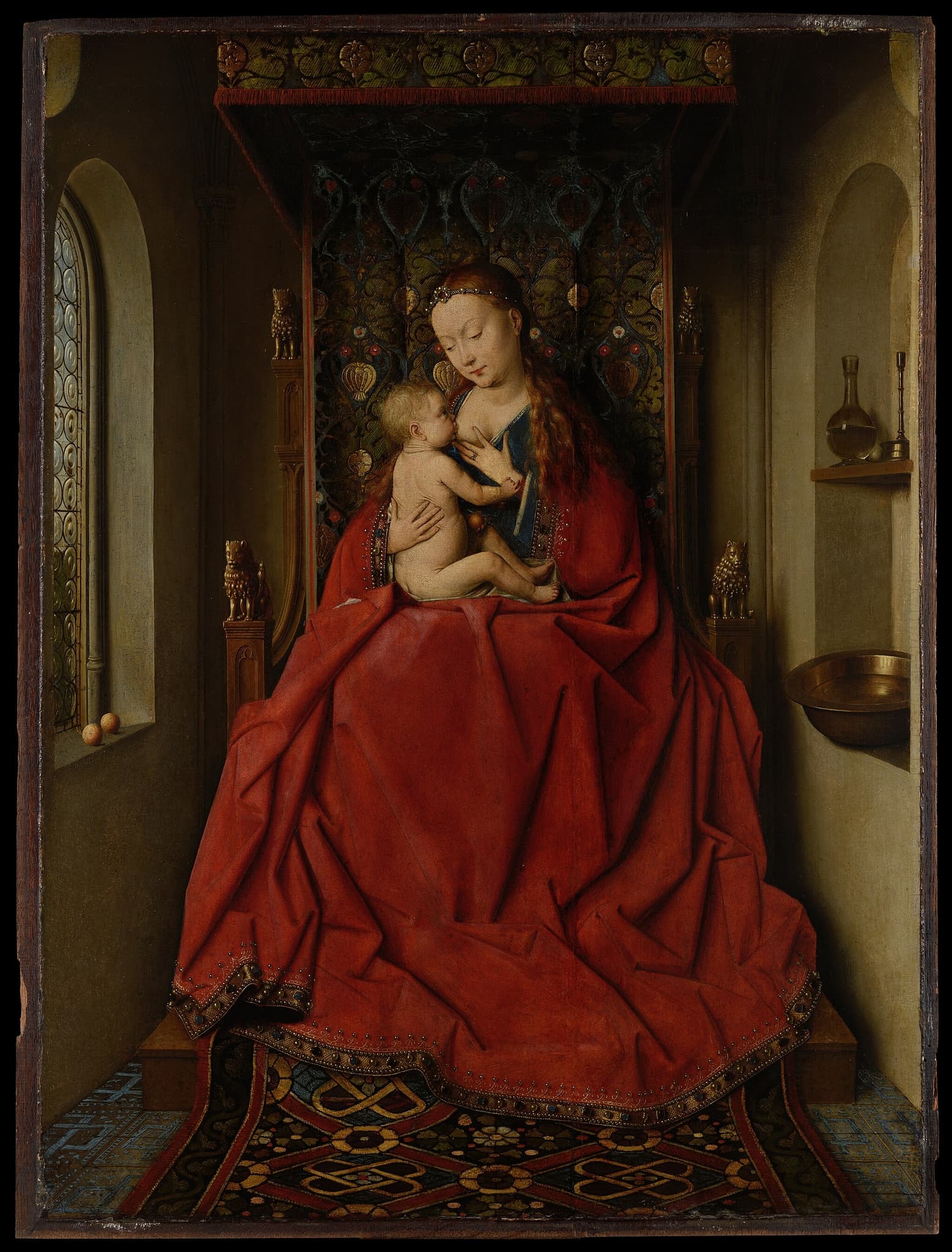
Hypothetical open‑market value for the Lucca Madonna (Jan van Eyck, Städel Inv. 944) is estimated at $100–150 million, assuming an unquestioned autograph attribution, strong condition and clean title. This is a theoretical market appraisal anchored to Old Master blockbuster comparables and recent institutional purchase behaviour; actual sale is highly unlikely while held by the Städel and subject to export/patrimony constraints [1][2].
Valuation Analysis
Estimated value: $100–150 million (theoretical). The Lucca Madonna is a securely institutionalized Jan van Eyck panel in the Städel collection (accession 1850) and was lent publicly only recently; because it is museum‑held and of high scholarly interest, any market value is necessarily hypothetical and contingent on provenance/condition/authority confirmation [1].
Why this range: the top end is anchored to the demonstrated private‑buyer appetite for unique, canonical pre‑1600 masterpieces (the extreme upper bound indicated by the Salvator Mundi auction) while the lower bound is informed by recent high‑quality Northern Renaissance institutional purchases and large Old Master auction precedents [3][4][5]. With an accepted autograph attribution, the Lucca Madonna would sit above routine Netherlandish market transactions (>US$20m) and plausibly in the low‑ to mid‑hundreds of millions among the very small pool of tradeable canonical Renaissance pictures.
Key drivers: attribution certainty and technical corroboration (dendrochronology, infrared reflectography, pigment and binder analyses, underdrawing comparators) are decisive; when scholarship and technical data align with van Eyck’s hand, buyers pay a large premium. Conservation‑grade condition and demonstrably original paint layers increase sale value materially. Conversely, workshop attribution, significant overpainting, or unresolved provenance/legal encumbrances would suppress market value toward the lower end of the spectrum or below [2].
Market mechanics and likelihood of sale: given Städel ownership and likely cultural patrimony considerations, a public auction is improbable. If a sale were to occur it would almost certainly be a private treaty sale to an institution or a high‑net‑worth collector capable of navigating export and title issues; that sale route tends to preserve price privacy but can support valuations in the range given here (driven by scarcity and institutional demand) [1][5].
Risk and sensitivity: the valuation is highly sensitive to three binary questions: (A) is the panel an accepted autograph van Eyck; (B) is the condition and conservation history favourable; (C) is title unencumbered and exportable? Negative answers to any of these move valuation down by an order of magnitude; positive confirmations push valuation toward the high end of the stated range [2][3].
Recommendation: for a transactible appraisal, secure high‑resolution recto/verso images and full conservation/technical reports, obtain the Städel provenance file and legal/title opinion, and commission dendrochronology and IRR comparisons with established van Eyck works. With those dossiers in hand the range can be tightened and a sale strategy (private treaty vs institutional placement) can be developed.
Key Valuation Factors
Art Historical Significance
High ImpactJan van Eyck is foundational to Early Netherlandish painting and his autograph panels are among the rarest high‑value objects in the Old Masters market. The Lucca Madonna’s scholarly acceptance as a van Eyck work and its long museum provenance (Städel acquisition 1850) give it elevated cultural capital. That significance creates a strong scarcity premium: collectors and institutions prize canonical works for display, research and reputation, and are prepared to pay materially for them. However, the painting’s market standing is also relative — it is not the Ghent Altarpiece in scale or fame, so while significant, its ceiling sits below the most iconic single‑work records but well above routine Netherlandish sales.
Attribution Certainty & Technical Evidence
High ImpactTechnical confirmation (infrared reflectography, underdrawing comparators, dendrochronology, pigment and binder analyses) is essential. A fully corroborated autograph attribution to van Eyck converts cultural importance into market currency and is the single largest upside driver. If IRR and dendrochronology align with dated autograph panels and underdrawing/brushwork match van Eyck’s known practice, buyer confidence will rise and the work will command a premium. Conversely, any credible doubt — a workshop hand, later retouching confusing technical signatures, or lack of dendrochronological fit — will materially reduce valuation and buyer interest.
Provenance & Legal Title
High ImpactClean, continuous provenance back to the Lucca/Parma ducal collections and documented Städel accession (1850) materially support marketability. Any gaps, contested transfers, or restitution claims create legal and reputational risk that suppresses market value and can block export or sale. Additionally, national patrimony/export controls for works of cultural importance, and institutional policies (museums’ inalienability rules), commonly preclude or complicate transfer — reducing practical sale options and therefore realizable value even when scholarly attribution is secure.
Condition & Conservation
High ImpactCondition is a monetary linchpin. A panel with original paint, minimal invasive restoration, and a straightforward conservation history retains maximum market value. Heavy overpaint, large losses, or problematic past restorations reduce both aesthetic integrity and technical comparability, lowering price expectations substantially. A full conservation report (stability of ground, craquelure pattern, varnish history, cleaning records) is required to quantify adjustments; museums and insurers will insist on this documentation prior to underwriting or negotiating a high‑value transaction.
Market Demand & Buyer Pool
High ImpactDemand is concentrated: primary buyers for canonical van Eyck panels are large museums and a very small number of ultra‑high‑net‑worth private collectors. This narrow buyer base reduces liquidity but supports high prices when a work of unquestioned quality and provenance appears. Recent institutional purchases in the Northern Renaissance field demonstrate museums are willing to pay multi‑million sums via private treaty for important pieces; the Lucca Madonna’s combination of rarity and scholarly interest would place it squarely in that competitive institutional bidder set.
Sale History
Lucca Madonna has never been sold at public auction.
Jan van Eyck's Market
Jan van Eyck occupies the top tier of the Early Netherlandish market: canonical, scarce, and almost entirely museum‑held. There are effectively no recent public auction sales of undisputed van Eyck autograph panels; price formation is therefore theoretical and driven by institutional demand, technical scholarship, and rare private treaty transactions. This scarcity and institutional concentration produce a high ceiling but low liquidity: when provenance/attribution are secure, values for autograph works move into the tens or low hundreds of millions, but opportunities to realize that value are extremely rare.
Comparable Sales
Salvator Mundi
Leonardo da Vinci
Unique, record public sale for a pre-1600 Old Master; establishes an extreme upper market ceiling for one-of-a-kind canonical Renaissance masterpieces and demonstrates the scale of private demand for singular, securely attributed works.
$450.3M
2017, Christie's New York
~$576.4M adjusted
The Massacre of the Innocents
Peter Paul Rubens
Pre-Leonardo benchmark Old Masters auction sale — a canonical, high-value Baroque masterpiece. Useful as a high-end Old Masters comparable for blockbuster institutional/private interest in historically important works.
$76.7M
2002, Sotheby's London
~$130.4M adjusted
The Virgin and Child with Saints Louis and Margaret (large Netherlandish altarpiece)
Anonymous / 16th-century Netherlandish (reported)
Recent museum private acquisition of a Northern Renaissance/Netherlandish altarpiece (reported at £16.42M / ≈ $20M). Provides a realistic institutional price level for high-quality Northern Renaissance works and a market-floor reference for museum-quality pieces.
$20.0M
2025, National Gallery (London) — private treaty acquisition
Current Market Trends
The Old Masters and Early Netherlandish market is niche and low‑liquidity but showed selective recovery in 2025 driven by high‑quality consignments and institutional purchases. Demand is strongest for well‑provenanced, technically authenticated works; museum private‑treaty acquisitions continue to set practical price benchmarks rather than public auctions.
Sources
- Städel Museum — Lucca Madonna (collection entry)
- Louvre press materials — Van Eyck exhibition (loan of Lucca Madonna)
- Christie’s press — Salvator Mundi auction 2017
- Forbes coverage — Rubens Massacre of the Innocents (Sotheby’s 2002)
- National Gallery (London) press — 2025 Northern Renaissance private acquisition